

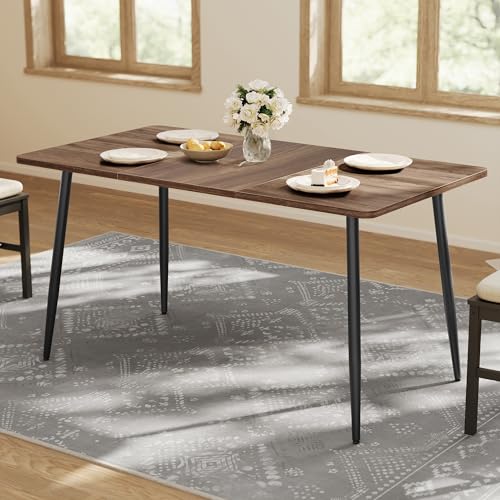


What Counts as a Small Rectangular Dining Table?
There is no single industry definition, but in practice a rectangle small dining table generally measures between roughly 30 and 48 inches in length and 28 to 36 inches in width. Tables at the compact end of that range seat two diners comfortably, while slightly longer models seat four with two chairs along each long side.
The rectangle shape is the key advantage. Because the table's footprint is longer than it is wide, it slides into narrow galley kitchens, alongside walls, and into corners that would waste space around a round table of the same seating capacity. If you are still deciding between shapes, the broader guide to a rectangular dining table covers how the proportions behave in larger rooms as well.
Small rectangular tables also tend to be more versatile. Many are designed as multi-purpose surfaces — dining by evening, a laptop desk by day, a homework station after school. That flexibility is one of the main reasons compact buyers gravitate toward this format.
How to Measure Your Space Before You Buy
Measurements are the single most important step in this purchase, and they are where most buyers get it wrong. Start with the room's usable floor area, then subtract door swings, radiator space, and any fixed furniture. What remains is the true footprint available for a dining table.
Next, apply the clearance rule: plan for at least 36 inches of free space on the sides where people sit and walk. That distance allows a chair to slide out and a person to pass behind it. In tight rooms, 30 inches is workable on the side that sits against a wall, provided no one needs to walk behind that row.
Finally, check the table height. Most dining tables sit between 28 and 30 inches from floor to tabletop. Measure your existing chairs against that figure — a mismatch of more than an inch or two will feel uncomfortable at every meal. For seat-specific guidance, the padded dining chairs guide explains how seat height and table height interact.
| Table Length | Typical Seating | Best For |
|---|---|---|
| Around 30–36 inches | 2 diners | Studio apartments, breakfast nooks, two-person households |
| Around 40–48 inches | 3–4 diners | Couples who host occasionally, small families, home offices |
| 48 inches and slightly above | 4 diners comfortably | Dedicated small dining rooms with adequate walkway space |
If you are working within a very tight footprint, the rectangular table small reference guide breaks down even more compact configurations. For households that expect to seat four regularly, a rectangle dining table for 6 shows what that step up in capacity looks like.
Rectangle vs. Round vs. Square in a Small Room
Each shape has a distinct spatial personality, and the right answer depends on your room rather than a universal rule.
- Rectangular: Best for narrow rooms and wall placement. Seats more people per square foot along the long sides. Can feel cramped if pushed into the center of a very small square room.
- Round: Softer circulation because there are no corners, but inefficient against straight walls and awkward in galley layouts.
- Square: A good middle ground for roughly square rooms, but often less flexible when it comes to doubling as a workspace.
For most compact apartments and kitchens, the rectangular format wins on pure efficiency. If you are furnishing a space that also needs storage and display, pairing the table with a slim sideboard keeps the room from feeling furniture-heavy — the rattan sideboards collection includes narrow options that suit tight walls.
Materials: Which Surface Suits Your Household?
Material choice affects durability, maintenance, and how open or closed-in the room feels. The main options break down as follows.
Solid wood is the most durable construction and can be refinished repeatedly over its lifetime, making it a long-term investment. It suits households that want a piece to age gracefully. A real wood dining table guide covers grain, joinery, and finish options in more depth. Reclaimed and character-wood versions add texture and story — the reclaimed wood dining table overview is worth reading if you like that aesthetic.
Glass tops visually lighten a small room because they let light and sightlines pass through. They are easy to wipe clean but show smudges and require more frequent attention. The rectangle glass top reference explains how thickness and edge treatment affect durability.
Laminate and veneered surfaces deliver solid performance at entry-level and mid-range tiers. They resist scratches and moisture well, need minimal maintenance, and are a sensible choice for households with young children. Look for reinforced edges and a solid core on the better-specified models.
Pedestal bases deserve a special mention for small rooms. A central pedestal frees up legroom and makes it easier to arrange chairs at the corners, which improves usable seating. The pedestal dining table base guide covers stability and weight distribution; the rectangular pedestal dining table page shows how the format applies to rectangular tops specifically.
Quality Tiers: What to Expect at Each Level
Rather than thinking in terms of specific figures, it helps to understand how construction and materials shift across the market's quality tiers. Use the table below as a general orientation.
Entry-Level Tier
Engineered wood or laminate tops, basic hardware, and simpler joinery. Well-specified for the category, suitable for light daily use, and a practical starting point for first apartments. Expect straightforward assembly and limited refinishing options.
Mid-Range Tier
Veneered or solid-wood tops, sturdier frames, and better hardware. Typically offers a wider range of finishes and sizes. A solid choice for the tier — durable enough for daily family use and usually backed by clearer warranty terms.
Premium & Luxury Tiers
Solid hardwood construction, reinforced joinery, and refined finishes. Heavy-duty build quality intended to be a long-term investment. Often available in custom dimensions, which matters when a standard size will not fit your room.
Feature-rich models at each tier tend to share the same pattern: better base geometry, smoother edges, and more thoughtful proportions. A high-end tier table usually earns its position through construction and longevity rather than surface styling alone.
Style Directions for Compact Rectangular Tables
Small rooms reward restraint, but they do not have to be plain. Three approaches work particularly well with a compact rectangular table.
Modern minimalist relies on clean lines, a single material family, and a light or mid-tone finish. It maximizes the perception of space and pairs naturally with slim padded bar stools at a kitchen counter nearby.
Farmhouse and rustic brings warmth through visible grain and slightly heavier proportions. The trade-off is visual weight, so keep the surrounding furniture light. The rectangular wood table overview covers how to balance grain and finish in tighter rooms.
Scandinavian-influenced designs use tapered legs and pale timber to keep the footprint feeling airy. Combine with a rattan table accent or woven seating for texture without bulk.
Whatever the style, keep the table's visual weight proportionate to the room. A heavily carved base in a small space will crowd the floor, while a slim four-leg or pedestal design keeps sightlines open.
Practical Features Worth Looking For
- Rounded or eased edges: Safer in tight rooms where chairs and hips brush the tabletop, and gentler on the eye.
- Reinforced apron and corner blocks: The most common failure point on compact tables is wobble at the joints. Check for glued and screwed corner blocks.
- Adjustable leveling feet: Essential on uneven floors and common in older apartments.
- Seating flexibility: Tables with a wider apron or pedestal base let you place chairs at the short ends, effectively increasing capacity without a larger footprint.
- Finish protection: A factory-applied polyurethane or lacquer finish resists moisture and daily wear far better than an unfinished surface.
If you plan to pair the table with fabric seating, read the padded dining room chairs guide for advice on matching seat height and fabric durability to a compact setup.
Small-Space Layout Ideas That Actually Work
Against the wall. Push the long side against a wall and use the two outer chairs as the primary seats. This frees up an entire side of the room for circulation and is the most space-efficient arrangement in narrow apartments.
In a breakfast nook. A compact rectangular table set perpendicular to a window bench creates a natural banquette. Bench seating on one side adds capacity without the chair pull-out clearance a second row would need. The rectangle dining table with bench and chairs guide covers this configuration in detail.
As a kitchen island extension. Some compact rectangular tables are designed to butt up against an island, extending prep space during the day and dining space in the evening. A slim pendant lighting for kitchen island and dining table arrangement ties the two zones together visually.
In a home office corner. A 30-by-48-inch table doubles as a desk with room for a monitor, keyboard, and a clear writing area. Choose a model with a sturdy top and a stable base — wobble is far more noticeable at desk height than it is during meals.
For rooms that need to shift between dining and hosting, the broader rectangle dining table set collection shows how table-and-chair combinations are typically matched for proportion.
Care and Maintenance for Longevity
Compact tables take more daily contact than large ones, simply because they are used more often and in more ways. A few habits make a real difference.
Wipe spills promptly, especially on wood and veneered surfaces, and avoid leaving standing water near seams. Use coasters and trivets for hot dishes — heat marks are difficult to remove and often permanent on laminate. Dust with a soft, slightly damp cloth rather than abrasive pads, which dull the finish over time.
For wood surfaces, apply a furniture conditioner periodically to prevent drying and fine cracking, particularly in heated rooms during winter. If scratches appear, the refinishing wood table guide explains when a spot repair is enough and when a full refinish makes more sense. Keep the table out of direct, prolonged sunlight to avoid uneven fading across the top.
Check the base hardware every few months and tighten any loose bolts. On four-leg tables, minor wobble is usually a tightening issue rather than structural failure. On pedestal tables, inspect the connection between the column and the top, which takes the most stress.
Common Buying Mistakes to Avoid
- Buying before measuring the clearance. A table that fits the room but leaves no walkway will feel cramped every day.
- Ignoring chair height. Confirm the table height matches your existing chairs, or buy a matched set.
- Overestimating seating. A 36-inch table seats two, not four. Be honest about how many people need to sit down at once.
- Choosing visual weight over proportion. A heavy base or dark finish in a small room shrinks the space perceptually.
- Skipping assembly checks. Unbox and inspect the table promptly, and keep packaging until you have confirmed there is no transit damage.
Frequently Asked Questions
A rectangle small dining table measuring roughly 30 by 48 inches is a practical choice for compact apartments, comfortably seating two to four people while leaving enough walkway clearance around the table.
Allow at least 36 inches of clearance on all sides so chairs can slide out and people can walk behind them comfortably. In tighter rooms, 30 inches is workable if the table sits against a wall.
Yes. A table around 48 inches long by 30 inches wide seats four comfortably, with two chairs per long side. Tables closer to 36 inches long are better suited to two diners.
Solid wood offers the most durable construction and can be refinished over time. Glass tops visually open up tight rooms, while laminate and veneered surfaces deliver solid performance at entry-level and mid-range tiers.
A pedestal base frees up legroom and makes seating easier to arrange, which suits tight corners. Four-leg bases provide a traditional look and steadier feel, but the corner legs can restrict chair placement in small rooms.
Yes. Many mid-tier and premium compact tables are designed as multi-use surfaces for dining, working, and homework. Choose a model with a sturdy top, a comfortable height of about 28 to 30 inches, and enough depth for a laptop and monitor.
Final Checklist Before You Decide
- Room dimensions measured, including door swings and fixed furniture
- Clearance of 30–36 inches confirmed on seating and walkway sides
- Table height matched to chair seat height (28–30 inches is typical)
- Material chosen for your household's use pattern and maintenance tolerance
- Base type selected — pedestal for corner flexibility, four-leg for traditional stability
- Seating capacity confirmed honestly for daily use
- Finish protection and warranty terms reviewed
- Assembly and delivery requirements checked before ordering
Get these points right and a compact rectangular table becomes one of the most hard-working pieces of furniture in the home — dining surface, workspace, and gathering point in a footprint that fits the room you actually have.