
Rectangle Dining Table for 6: The Complete Buying Guide
Everything you need to know about choosing a six-seater rectangular dining table — dimensions, materials, base styles, seating clearance, and styling — so you can buy with confidence.
Start With SizingWhy a rectangle dining table for 6? The six-seater rectangle is the most popular dining table format in homes worldwide — and for good reason. It balances generous seating with efficient use of floor space, works in both long narrow rooms and open-plan layouts, and offers a familiar, sociable arrangement where everyone can see and talk to one another. This guide walks you through every decision point so you can choose a table that fits your room, your family, and your long-term needs.
Dimensions & Seating Space for a 6-Person Rectangle Table
Getting the dimensions right is the single most important step. A table that is too small feels cramped; one that is too large overwhelms the room and blocks circulation. For six adults, the following ranges work well:
| Dimension | Recommended Range | Why It Matters |
|---|---|---|
| Table Length | 60–72 inches (152–183 cm) | Allows two people per long side and one at each end with room for place settings. |
| Table Width | 36–40 inches (91–102 cm) | Provides enough depth for plates, glassware, and serving dishes without overreach. |
| Table Height | 28–31 inches (71–79 cm) | Standard dining height that pairs with typical chair seat heights. |
| Per-Person Width | 24 inches (61 cm) minimum | Ensures elbow room and comfortable eating space. |
| Per-Person Depth | 12–15 inches (30–38 cm) | Space for place setting, plate, and glass. |
When in doubt, measure your current table and compare how it feels. If you regularly host six but sometimes need more, consider an extendable model — discussed in a later section. For narrower rooms, a rectangle small dining table can still seat six if you prioritize length over width.
Room Clearance & Layout Planning
Dimensions alone don't tell the whole story. The space around the table matters just as much as the table itself. Use these clearance guidelines:
- 36 inches minimum between the table edge and any wall or furniture — this lets chairs pull out and people walk behind seated diners.
- 42–48 inches for main walkways or high-traffic paths behind the table.
- 24 inches between the table edge and a sideboard or buffet if you only need to access it while seated.
If you are comparing shapes, our guide to the rectangular dining table covers broader layout considerations that apply to six-seater configurations as well.
Tabletop Materials: Which Is Right for You?
The material determines durability, maintenance, and the visual character of the table. Here is how the main options compare:
| Material | Tier | Best For | Key Considerations |
|---|---|---|---|
| Solid Oak | Premium | Families wanting a long-term investment | Dense grain, resists wear, can be refinished |
| Solid Maple | Premium | Clean, contemporary interiors | Smooth even texture, takes stain well |
| Solid Walnut | Luxury | Statement pieces and formal dining | Rich dark tone, distinctive grain, refined finish |
| Engineered Wood with Veneer | Mid-range | Stable surfaces in variable humidity | Consistent appearance, less prone to movement |
| Glass Top | Mid-range to premium | Smaller rooms and light-filled spaces | Visually opens the room, easy to wipe clean |
| Marble or Stone Top | Luxury | Formal dining and design-led interiors | Heavy, requires sealing, striking appearance |
For wood-focused buyers, the guide to real wood dining table options provides deeper detail on grain, finish, and care. If you prefer the look of glass over wood, a rectangle glass top can make a six-seater feel lighter in a compact room.
Base & Leg Styles: Four-Leg vs. Pedestal
The base affects legroom, stability, and visual weight. The two main configurations are:
Four-Leg (Corner Leg) Base
- Classic, familiar look that suits many styles
- Very stable and straightforward to assemble
- Easy to match with standard dining chairs
- Legs at corners can limit end-seat legroom
Pedestal Base (Single or Double)
- Unobstructed legroom on all sides
- Easier to slide chairs in and out
- Great for end seats and tucking chairs under
- Can be heavier and harder to move
A pedestal table is often the better choice if you regularly seat people at the ends or want maximum flexibility for chair placement. Four-leg designs remain popular for their traditional proportions and easy pairing with parson dining chairs.
Fixed vs. Extendable: Which Should You Choose?
A fixed table is simplest: no mechanisms, no moving parts, and typically a sturdier build. An extendable table, by contrast, adds flexibility for holidays and gatherings. For a six-seater, an extendable model can be a smart hedge if you occasionally host eight.
- Fixed: Best if your room is precisely sized for six and you rarely need more seats.
- Extendable: Best if you entertain, host family events, or want future-proofing. Look for a smooth, reinforced mechanism.
- Butterfly/self-storing leaves: Convenient because the leaf stores inside the table — no extra storage needed.
If you want flexibility across both six and eight seats, compare the rectangle dining table for 8 as well — many extendable six-seaters grow into that range.
Seating & Chair Pairing for Six
The right chairs complete the table. For a six-seater, you typically pair four side chairs along the long sides and two end chairs (or two more side chairs if the ends are not used). Consider:
- Chair seat height: Should leave about 10–12 inches between seat and tabletop.
- Chair width: Around 18–22 inches per chair keeps six seats comfortable.
- Style harmony: Mixing an upholstered end chair with slimmer side chairs adds visual interest.
For comfort-focused buyers, padded dining chairs offer cushioned support for long meals. If you like a tailored silhouette, parson dining chairs work especially well with rectangular tables.
Rectangle vs. Oval vs. Round: A Quick Comparison
| Shape | Best For | Seating Efficiency | Room Fit |
|---|---|---|---|
| Rectangle | Long rooms, open-plan spaces, six or more diners | High — maximizes seats along length | Excellent in rectangular rooms |
| Oval | Softening a rectangular footprint | Good — similar to rectangle with rounded ends | Works in long rooms, gentler look |
| Round | Square rooms and intimate conversation | Moderate — six fits but less elbow room | Best for square or compact rooms |
If you are weighing shapes, our overview of the oval wooden dining table explains when an oval might better suit your room.
Styling & Finishing Touches
Once the table and chairs are in place, styling brings the room together. A few practical ideas for a six-seater:
- Table linens: A runner down the center works better than a full cloth on a long rectangular table — it defines the center without hiding the wood.
- Centerpiece: Keep it low and narrow so sightlines stay open. A long bowl or a row of small vases works well.
- Lighting: Hang a linear pendant or chandelier centered over the table, with the bottom about 30–34 inches above the surface.
- Place settings: For casual meals, simple placemats protect the surface and add color.
Frequently Asked Questions
What size rectangle dining table seats 6 comfortably?
A table measuring roughly 60–72 inches long and 36–40 inches wide seats six adults comfortably. Allow at least 24 inches of table width per person and 12–15 inches of depth per place setting.
How much clearance do I need around a six-seater dining table?
Leave a minimum of 36 inches between the table edge and walls or other furniture. For main walkways, aim for 42–48 inches so people can pass behind seated diners comfortably.
Which wood is best for a rectangle dining table for 6?
Oak, maple, and walnut are all excellent. Oak offers robust grain and durability, maple provides a smooth even texture, and walnut delivers a rich dark tone. All are premium materials suited to long-term use.
Can a rectangle dining table for 6 fit in a small room?
Yes — choose a narrower table around 32–36 inches wide and position it lengthwise along the room. A pedestal base or an extendable design can help maximize legroom and flexibility in tighter spaces.
Should I choose four legs or a pedestal base?
Pedestal bases offer more legroom on all sides and make it easier to tuck chairs in, which is helpful at the ends. Four-leg designs are traditional, very stable, and easy to pair with standard chairs. Choose based on how often you seat people at the ends.
Recommended Rectangle Dining Tables for 6
⚠️ AFFILIATE DISCLOSURE: This website contains affiliate links. As an affiliate Associate, we earn from qualifying purchases. If you make a purchase through these links, we may receive a small commission at no additional cost to you. Read our full affiliate policy.

Rectangle Dining Table for 4-6 People,Wooden Table with Heavy Duty Legs
Check price on Amazon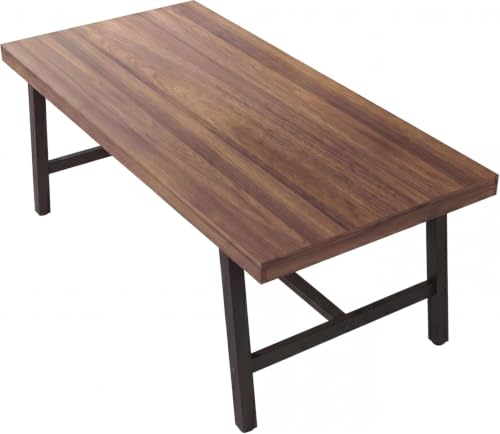
GarveeHome Industrial Dining Table for 6-8, 70.87" Heavy Duty Rectangular Kitchen Table with 2"×2" Metal Legs & Wood Top, Large Dining Table for Home Office, Dining (Brown, 71" Non-Extendable)
Check price on Amazon
Plank+Beam Classic 72 Inch Dining Table, Rectangular, Pecan Wirebrush | Non-Toxic Finishes, Versatile Design, Farmhouse Design, Elegant Details, Easy Assembly, Quick Setup, Solid Wood
Check price on Amazon
Farmhouse Dining Table for 6, Rectangle Dining Table, Kitchen Table Oak | Large Modern Wood Table for Home Office & Family Gathering - Sturdy Design
Check price on Amazon
Garvee 71" Farmhouse Dining Table for 4-6, Kitchen Table w/Thick Tabletop, Wood Strip Base, Wider Legs, Large Rectangular Dining Room Table for Kitchen, Apartment & Family Gatherings, Walnut
Check price on Amazon
Rectangle Dining Table for 4-6 People,Wooden Table with Heavy Duty Legs
Check price on Amazon
IDEALHOUSE 62" Long Dining Table for 6-8, Wooden Kitchen Dinner Table | Rectangle Table with Double Robust Pedestal, Grille Design, Modern Table for Dining Room, Kitchen & Living Area, Light Oak
Check price on Amazon