
Rectangular Extendable Dining Table: The Complete Buying Guide
One table, two moods: compact for everyday meals, extended for gatherings. Learn how to choose the right rectangular extendable dining table for your space, style, and hosting needs.
START THE GUIDEA rectangular extendable dining table is one of the most practical investments for a dining room, kitchen, or open-plan living space. It gives you the linear seating and clean sightlines of a classic rectangular table while adding the flexibility to lengthen the surface when guests arrive. For households that host occasionally but do not want a large table dominating the room every day, this format solves a genuine design problem.
If you are researching this category, you likely already know you want a rectangular profile rather than a round or oval table. The remaining questions are usually about size, extension mechanism, material, and long-term care. This guide walks through each of those decisions in detail, so you can compare options confidently and choose a table that fits both your room and the way you live.
Who this guide is for: homeowners and renters in the research stage who have identified a rectangular extendable dining table as their preferred format and now need clear, practical criteria to evaluate specific models before making a purchase.
What You Will Find in This Guide
- What Is a Rectangular Extendable Dining Table?
- Why Choose an Extendable Rectangular Table
- Sizes and Seating Capacity
- Extension Mechanisms Explained
- Materials and Finishes
- Buying Criteria Checklist
- Space Planning and Clearance
- Matching Your Interior Style
- Care and Maintenance
- Frequently Asked Questions
What Is a Rectangular Extendable Dining Table?
A rectangular extendable dining table features a rectangular top that can be lengthened, usually by inserting one or two leaves. In its closed position, the table serves as a standard rectangular dining table for daily meals. When extended, the surface grows along its long axis, adding seating positions at each end and sometimes along the sides. The extension is typically supported by a sliding rail system, a butterfly leaf that folds and stores inside the table, or a draw-leaf mechanism that pulls out from the ends.
This category is distinct from fixed rectangular tables, which cannot change size, and from drop-leaf tables, which hinge downward rather than extend horizontally. The extendable rectangular format is especially useful in rooms where the everyday footprint must stay modest but the occasional hosting capacity needs to be generous.
Everyday Footprint
The closed table keeps a predictable rectangular outline that fits neatly against a wall or centered under a pendant light.
Expandable Capacity
Adding one or two leaves increases seating from a compact four-seater to six, eight, or more depending on the table length.
Linear Seating
Rectangular tops place diners side by side, which works well for conversation flow and for serving platters down the center.
Why Choose an Extendable Rectangular Table
The appeal of this format is flexibility without compromise. A fixed rectangular table forces you to choose between a size that feels cramped during holidays and one that feels oversized on a Tuesday evening. An extendable rectangular table resolves that tension: the closed position is the everyday configuration, and the extended position is reserved for guests, holidays, and special occasions.
There are several practical reasons this format is popular in both apartments and family homes:
- Adaptable hosting: Seating capacity grows when you need it, without a permanent large footprint.
- Efficient room use: The closed table leaves more circulation space for walkways and adjacent furniture.
- Clean linear design: Rectangular profiles suit modern, farmhouse, industrial, and transitional interiors alike.
- Easy platter service: The long center axis accommodates serving dishes, centerpieces, and buffet-style spreads.
- Long-term versatility: The same table works through different life stages, from a couple’s first apartment to a family with visiting relatives.
If you are comparing formats, it helps to look at how a rectangular extendable table sits alongside other options. A rectangle dining set pairs the table with matching chairs for a coordinated look, while a oval kitchen table softens the edges but offers a different seating geometry. The rectangular extendable format remains the most space-efficient choice when you want linear seating that can grow.
Recommended Rectangular Extendable Dining Tables and Matching Furniture
⚠️ AFFILIATE DISCLOSURE: This website contains affiliate links. As an affiliate Associate, we earn from qualifying purchases. If you make a purchase through these links, we may receive a small commission at no additional cost to you. Read our full affiliate policy.

GarveeHome 63-83" Extendable Dining Table, Industrial Rectangular Dining Room Table for 6-8 People, Expandable Kitchen Table with Heavy Duty Metal Frame for Dining Room, Kitchen & Parties, Brown
Check price on Amazon
71-87 Inch Extendable Dining Room Table, Rustic Wooden Kitchen Table 6-10 | STHOUYN Expandable Dining Table, Farmhouse Rustic Style, Rectangular Wooden Top, Seats 6-10, Brown Kitchen or Dining Room
Check price on Amazon
Einhomn Extendable Dining Table for 4-6, 63" Modern Kitchen Table, Farmhouse Dining Room Tables for Dining, Kitchen, Office, Living Room, Rectangular Wooden Tables, Space Saving (Walnut)
Check price on Amazon
LEYAOYAO Extendable Dining Table for 4-6,63"–79" Kitchen Table (Brown) | Farmhouse,Wood,Rectangular,Sturdy Construction,Easy Assembly,Versatile for Kitchen,Living Room,Dining Room,Home Office
Check price on Amazon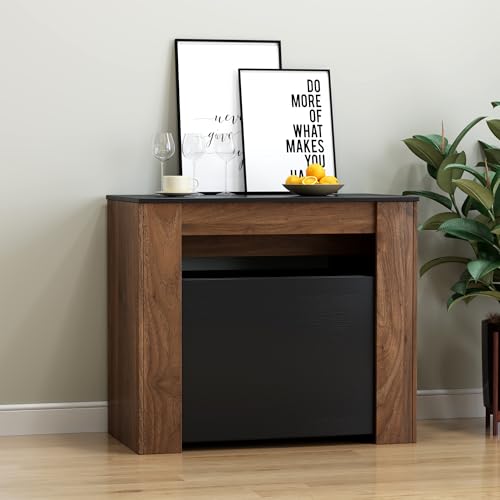
Varelynn 20”-118” Extendable Dining Room Table for 2-12, Walnut & Black | Expandable Console Table, Modern Multifunctional Furniture, Space Saving Design for Family Dining and Holiday Gatherings
Check price on Amazon
86 in Extendable Dining Table for 6 8 10 People,59"-86" Farmhouse Rectangle Extending Dining Table w/Removable Leaves Space Saving,Wooden Adjustable Tables for Kitchen Office Living Room (Brown)
Check price on Amazon
NORDEVERRA 63"-83" Extendable Dining Table for 6-8 People, Natural Oak | Farmhouse Expandable Kitchen Table with Sturdy Wooden Top and Legs, Modern Dining Room Table for Kitchen
Check price on Amazon
70-93IN Extendable Rectangular Dining Table with Storage for 8 10 12,93''Modern Farmhouse Expandable Kitchen Table,Fluted Wood Door Long Wooden Tables,Double Pedestal Base for Kitchen,Dinner,Walnut
Check price on AmazonSizes and Seating Capacity
Size is the first practical filter when choosing a rectangular extendable dining table. The closed length determines your everyday footprint, while the extended length determines your maximum hosting capacity. Standard rectangular dining tables are commonly available in closed lengths that seat four to six people, and extended lengths that accommodate six to ten or more depending on the model.
As a general guide, allow about 24 inches of table width per person seated along the long side, and treat each end position as an additional seat when the table is extended. A table that seats four in the closed position often seats six when one leaf is added, and eight when two leaves are added, depending on the extension length.
| Configuration | Typical Seating | Best For |
|---|---|---|
| Closed, compact rectangular | 4 people | Apartments, kitchens, everyday family meals |
| Closed, standard rectangular | 6 people | Dining rooms with moderate space |
| Extended with one leaf | 6 to 8 people | Weekend hosting and family gatherings |
| Extended with two leaves | 8 to 10+ people | Holidays, celebrations, large households |
If your hosting needs are consistently large, it may be worth comparing a dedicated large-format table such as a 10-seater dining table or a 12-seater dining table against an extendable model. The extendable rectangular table remains the better choice when the large configuration is occasional rather than daily.
Extension Mechanisms Explained
The extension mechanism is the component that most affects daily usability, long-term durability, and storage requirements. There are three main systems used in rectangular extendable dining tables, and each has a distinct personality.
Butterfly Leaf
A self-storing leaf folds in half and sits inside the table when closed. You lift the top slightly and unfold the leaf into place. It is convenient because there is no separate storage, but the mechanism should be checked for smoothness and locking security.
Draw-Leaf
Leaves slide out from each end and rest on rails, often with a support leg that folds down. Draw-leaf tables are stable and easy to operate, and the leaves remain attached to the table, so there is nothing to store separately.
Separate / Drop-In Leaf
Leaves are stored elsewhere and dropped into the center opening when needed. This system often offers the largest extension and the most stable center support, but it requires storage space and a two-person lift for heavier leaves.
When comparing models, pay attention to how the mechanism behaves under load. A mid-range table usually offers a smoother rail action than an entry-level model, while a premium or luxury table may include reinforced steel rails, locking pins, and a synchronized opening action. The mechanism should feel controlled, not loose, and the table should remain level when fully extended.
Materials and Finishes
Material choice affects weight, durability, maintenance, and how the table ages. Rectangular extendable dining tables are commonly built from solid wood, engineered wood with veneer, glass, marble or stone, and metal. Each material suits a different lifestyle and interior direction.
| Material | Strengths | Considerations |
|---|---|---|
| Solid wood (oak, walnut, mahogany) | Durable construction, repairable surface, warm natural grain | Heavier table; needs humidity awareness and periodic conditioning |
| Engineered wood with veneer | Stable surface, wide range of finishes, lighter weight | Veneer can chip at edges; avoid prolonged moisture exposure |
| Glass top with wood or metal base | Visual lightness, easy wipe-clean surface, modern look | Shows fingerprints and smudges; needs careful handling of edges |
| Marble or stone top | Luxury appearance, cool surface, strong visual presence | Heavy; porous stone needs sealing; extension mechanisms must be robust |
| Metal base with wood top | Industrial character, strong frame, easy to level | Check powder coating and joint welds for finish quality |
For a warm, traditional dining room, a mahogany dining room table or an oak dining table and chairs set offers a classic reference point. For a lighter, more contemporary look, a rectangular glass dining table with wood base or a rectangular glass top dining table with wood base combines visual openness with a grounded base.
Buying Criteria Checklist
Before you commit to a specific rectangular extendable dining table, run through the criteria below. These are the factors that separate a table you will enjoy for years from one that becomes a compromise.
- Closed length vs. extended length: Confirm both measurements and map them against your room and your maximum guest count.
- Seating geometry: Check whether the extended configuration adds end seats, side seats, or both, and how many chairs fit comfortably.
- Mechanism type and smoothness: Test or review the butterfly, draw-leaf, or drop-in system for ease of use and stability.
- Table width: A width of roughly 36 to 40 inches supports platters and centerpieces without crowding place settings.
- Height and legroom: Standard dining height is around 30 inches; check apron depth and leg placement for chair clearance.
- Material and finish: Match the material to your maintenance preferences and interior style, not just the look in photos.
- Base stability: A pedestal or trestle base can free up corner legroom, while four-leg bases offer a traditional look.
- Leaf storage: Decide whether you want self-storing leaves or have a safe place to store separate leaves.
- Assembly and delivery: Heavier solid wood and stone tables may require professional delivery and assembly.
- Warranty and returns: Check the manufacturer’s coverage for the mechanism, which is the most wear-prone component.
If you prefer a coordinated package, a 5-piece dining room set or a rectangle dining set can simplify the buying decision by pairing the table with matching seating. For a more custom look, choose the table first and then select modern dining chairs set of 4 or a 4 dining room chairs set that fits the table’s proportions.
Space Planning and Clearance
An extendable table only delivers its benefit if the room can accommodate the extended configuration. Plan for two footprints: the closed table plus everyday clearance, and the extended table plus hosting clearance. As a rule of thumb, allow 30 to 36 inches of clearance around the table so chairs can be pulled out and people can walk behind seated diners.
Measure the room’s longest open dimension and subtract the extended table length. The remainder is the total clearance available on both ends combined. If the extended table would block a doorway, pinch a walkway, or crowd a sideboard, consider a model with a more modest extension or look at a compact alternative such as a kitchen table with chairs that fit underneath.
Also consider the table’s relationship to lighting. A rectangular table works well under a linear pendant or a pair of pendants spaced evenly along the centerline. If the table extends, check that the lighting still feels balanced over the extended length.
Matching Your Interior Style
Rectangular extendable dining tables are available across nearly every design language, which makes them easy to integrate into an existing scheme. The key is to match the table’s proportions, material, and base style to the room’s dominant aesthetic.
Modern and Minimalist
Look for clean lines, slim legs or a streamlined pedestal, and finishes such as matte white, pale oak, or glass. A rectangular kitchen table with pedestal base keeps the floor plan visually open.
Farmhouse and Rustic
Reclaimed or distressed wood, trestle bases, and warm finishes suit this style. A reclaimed wooden dining table or a rustic dining table set brings texture and character.
Mid-Century Modern
Tapered legs, walnut tones, and geometric profiles define this look. A mid-century modern dining table and 6 chairs set captures the style with coordinated seating.
Transitional and Classic
Balanced proportions, subtle molding, and rich wood tones work well in traditional and transitional rooms. Pair with upholstered seating for a softer finish.
If you want to explore more design directions, the dining room styles section covers additional aesthetics and space solutions.
Care and Maintenance
A rectangular extendable dining table has two care priorities: the tabletop surface and the extension mechanism. Both benefit from a simple, consistent routine.
- Wipe spills promptly with a soft, slightly damp cloth, then dry the surface to prevent moisture rings.
- Use coasters and trivets for hot dishes and beverages, especially on wood and veneer surfaces.
- Condition solid wood periodically with a furniture conditioner suited to the finish to maintain the surface and reduce dryness.
- Keep the mechanism clean: Remove dust and crumbs from rails and leaf storage areas, and avoid forcing the extension if it feels stiff.
- Lubricate moving parts sparingly according to the manufacturer’s instructions, using a product appropriate for the rail material.
- Control humidity: Solid wood expands and contracts with moisture changes, so maintain a stable indoor environment.
- Avoid direct sunlight on the same spot for long periods, which can fade finishes and dry wood unevenly.
For a deeper routine, see the care and maintenance section, which covers wood polish, upholstery cleaning, and scratch repair in more detail.
Frequently Asked Questions
What is a rectangular extendable dining table?
A rectangular extendable dining table has a rectangular top that can be lengthened by adding one or more leaves. It works as a compact everyday table when closed and expands to seat more guests when needed.
What extension mechanisms are common?
Butterfly leaf (self-storing fold-in leaf), draw-leaf (leaves slide out from the ends), and separate or drop-in leaf systems. Each differs in ease of use, leaf storage, and how the table behaves when fully extended.
How much space should I allow around the table?
Allow roughly 30 to 36 inches of clearance on all sides so chairs can be pulled out comfortably. Plan for the extended table length plus clearance, not just the closed footprint.
Which material is best for a rectangular extendable dining table?
Solid wood offers durability and repairability; engineered wood with veneer is stable and versatile; glass and stone deliver specific visual effects; metal bases add structural strength. The best choice depends on your maintenance preferences and interior style.
Can I use a rectangular extendable table in a small dining room?
Yes, if the closed footprint fits the room and the extended configuration is used only when the space can accommodate it. Measure both configurations and confirm chair clearance before choosing a model.
How do I care for the extension mechanism?
Keep rails and storage areas free of dust and crumbs, avoid forcing the extension, lubricate moving parts sparingly per the manufacturer’s guidance, and check locking pins or supports before each use.
Ready to Compare Rectangular Extendable Dining Tables?
Use the criteria in this guide to evaluate models with confidence. Start with your closed footprint, confirm the extended capacity, and choose a mechanism and material that match your daily routine.
Explore Recommended Options