
Rectangular Glass Top Dining Tables: The Complete Buying Guide
Everything you need to know about choosing a rectangular glass top dining table — glass types, base styles, seating capacity, and how to match one to your space.
START READINGWhy rectangular glass top tables deserve a closer look: A rectangular glass top dining table brings an open, airy quality that solid tops simply cannot match. The transparent surface keeps sightlines clear, making compact dining rooms feel larger and open-concept spaces feel connected. But not all glass tops are equal — the difference between a well-made table and a disappointing one comes down to glass thickness, tempering, edge finishing, and the base that supports it all.
This guide walks you through every decision point, from understanding tempered versus annealed glass to matching a base material with your interior style. By the end, you will know exactly which configuration suits your household, your room, and your entertaining habits.
What Defines a Rectangular Glass Top Dining Table?
A rectangular glass top dining table pairs a flat, rectangular pane of glass with a structural base — typically metal, solid wood, or a combination of both. The glass serves as the eating surface while the base provides stability and visual character. This construction differs from a full glass table where the legs themselves are glass, and from a glass-topped wood table where a thin glass layer protects a wooden surface underneath.
The appeal of the rectangular form is practical: it seats more people along straight edges, fits neatly against walls, and works with bench seating on one or both long sides. When you combine that geometry with a glass surface, you get a table that visually recedes into the room while still offering a generous dining footprint.
If you are weighing shapes, our guide to the wood rectangle dining table offers a useful comparison for how rectangular proportions behave in real rooms.
Glass Types: Tempered, Laminated, and What They Mean for You
The single most important specification on any glass top table is the glass itself. Here is how the common options compare.
Tempered Glass
Tempered glass is heat-treated to increase strength — typically four to five times stronger than ordinary annealed glass of the same thickness. When it breaks, it shatters into small, blunt-edged fragments rather than sharp shards. For a dining table that will see daily use, tempered glass is the baseline expectation. Most reputable makers specify it, and you should treat its absence as a red flag.
Laminated Glass
Laminated glass sandwiches a plastic interlayer between two glass panes. If the glass cracks, the interlayer holds the pieces together, preventing them from falling apart. Some premium tables combine tempered and laminated construction for both strength and breakage containment. This is a worthwhile upgrade for households with young children or heavy entertaining schedules.
Thickness Matters
Thicker glass resists flexing and feels more substantial under hand. Entry-level tables often use thinner panes, while mid-range and premium tables step up to heavier glass with polished edges. A glass top that visibly flexes when you press on it is a sign of insufficient thickness for the span.
Edge Finishing
Flat-polished edges are the mark of a quality glass top. Rough or unfinished edges are uncomfortable to lean against and can chip over time. Beveled edges add a subtle decorative touch and soften the profile.
Base Materials: Metal, Wood, and Mixed Construction
The base determines the table's stability, style, and how well it ages. Three broad categories dominate the market.
Metal Bases
Steel and aluminum bases are the most common pairing for glass tops because metal offers high strength-to-weight ratio and a slim visual profile. Powder-coated finishes resist scratching and corrosion. Look for reinforced joints and adjustable leveling feet — a glass top amplifies any wobble, so a rigid base is essential. A table with metal dining table legs in a matte black or brushed finish suits modern and industrial interiors equally well.
Wood Bases
Solid wood or wood veneer bases bring warmth that balances the coolness of glass. A wood table base in oak, walnut, or ash pairs beautifully with a glass top for a transitional look. Wood bases need to be substantial enough to carry the glass safely — thin, decorative legs are risky under a heavy pane.
Mixed and Pedestal Construction
Some designs combine a central pedestal with a glass top, which frees up legroom and works well in smaller rooms. A rectangle pedestal dining table configuration is worth considering if you want maximum seating with minimal obstruction underneath. Trestle-style bases are another popular choice for long rectangular tops.
Entry-Level Tier
Thinner tempered glass, simple tubular metal legs, basic powder coating. Suitable for light use in compact spaces.
Mid-Range Tier
Heavier tempered glass with polished edges, reinforced metal or solid wood bases, adjustable feet for stability.
Premium Tier
Laminated or thick tempered glass, precision-welded bases, premium finishes, and thoughtful details like beveled edges.
How Many People Will It Seat?
Rectangular glass tops come in a range of lengths. As a practical rule, allow about 24 inches of table width per person along the long edge. The table below maps common sizes to comfortable seating.
| Table Length | Comfortable Seating | Best For |
|---|---|---|
| 48 inches | 4 people | Small dining rooms, apartments, breakfast areas |
| 60 inches | 6 people | Standard family dining, everyday meals |
| 72 inches | 6–8 people | Larger families, occasional entertaining |
| 84 inches and above | 8–10 people | Formal dining rooms, frequent hosting |
Remember that glass tops show the chairs underneath, so choose seating that complements the base. Our guide to a dining room chairs set of 4 can help you coordinate. For compact rooms, a small rectangular dining table in glass keeps the footprint light while still seating four comfortably.
Style Matching and Room Placement
Glass tops are stylistically flexible, but they do lean modern. A few pairing principles help.
Modern and Minimalist
Pair a clear glass top with slim black metal legs for a clean, contemporary look. Keep the surrounding decor simple so the transparency does the work. Our kitchen table modern guide explores related options if you are furnishing an open kitchen-dining space.
Transitional and Warm
A wood base softens the glass and bridges traditional and contemporary interiors. Add upholstered chairs and a textured rug to bring warmth. A mid-century modern table silhouette with a glass top is a classic transitional choice.
Small Spaces
Glass is a natural fit for compact rooms because it does not visually crowd the space. Place the table near a window if possible — light passing through the glass multiplies the airy effect. A dining table 60 inches long in glass typically seats six without overwhelming a modest room.
Outdoor and Sunroom Use
Standard interior glass tops are not designed for outdoor exposure. If you want the look for a covered patio or sunroom, look for weather-rated construction. Our modern outdoor dining table with umbrella hole guide covers the considerations for outdoor surfaces.
Care and Maintenance for Glass Top Tables
Glass is easy to clean but not indestructible. A few habits keep it looking clear for years.
- Use coasters and trivets. Hot dishes can thermal-shock glass. Always place hot cookware on a trivet.
- Clean with a glass cleaner and microfiber cloth. Avoid abrasive pads that can dull the surface.
- Wipe spills promptly. Acidic liquids left on the surface can etch glass over time.
- Check the base regularly. Tighten any loose fasteners and adjust leveling feet so the glass sits flat.
- Avoid dragging heavy objects across the surface. Lift rather than slide.
If you are comparing glass against solid wood for longevity and upkeep, our dining solid wood table guide offers a useful contrast in maintenance expectations.
Recommended Rectangular Glass Top Dining Tables
⚠️ AFFILIATE DISCLOSURE: This website contains affiliate links. As an affiliate Associate, we earn from qualifying purchases. If you make a purchase through these links, we may receive a small commission at no additional cost to you. Read our full affiliate policy.

Augeno 24x48 inch Rectangle 1/4" Thick Flat Polished Edge Clear Glass Table Top with 6 Bumpers - 24 x 48 Rectangular Tempered & Scratch Resistant Replacement Glass for Dining, Coffee & Patio Tables
Check price on Amazon
ORVIANA 36x60 Inch Rectangle 1/4" Thick Flat Polished Edge Tempered Glass Table Top with 6 Bumpers Glass Table Tops Cut to Size, Scratch & Heat Resistant, Coffee, Patio & End Tables
Check price on Amazon
Btikita 24" x 48" Tempered Glass Table Top Rectangle 3/8" Thick Flat Polished Edge Top Protector for Dining, Patio, Coffee Table (24x48 inch)
Check price on Amazon
WEKEOT 24"x48" Rectangle Tempered Glass Table Top 3/8" Thick Flat Polish Eased Corners Side Table Replacement Clear Glass Tables Top for Living Room Patio Table Tops
Check price on Amazon
OstepDecor Clear Table Cover Protector 24 x 48 Inch, 2mm Thick Plastic Mat | Cut to Size, Waterproof & Anti-scratch PVC Table Protector for Dining Room Table, Dresser Vanity Countertop & Hardwood Floor
Check price on Amazon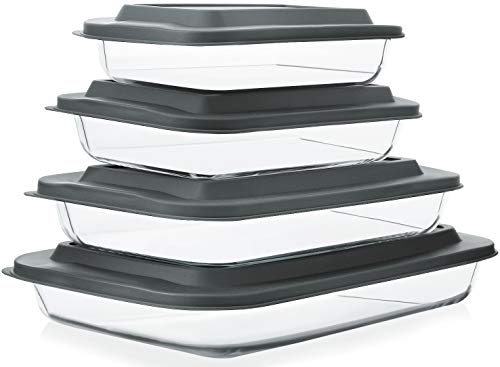
M MCIRCO 8 Piece Deep Glass Baking Dish with Lids, BPA free,Gray | Rectangular Glass Bakeware Set, Baking Pans for Lasagna, Casserole Dishes, Microwave, Oven, Freezer, Dishwasher
Check price on Amazon
Pyrex Deep Glass Baking Dish with Plastic Lid, Deep Casserole Dish | Preheated oven, freezer & microwave safe
Check price on AmazonFrequently Asked Questions
Is tempered glass always used on dining tables?
Not always, but it should be. Tempered glass is stronger and breaks into safer fragments. If a product listing does not specify tempered glass, ask the seller before purchasing.
Can a glass top dining table support heavy dishes and serving platters?
Yes, when the glass is properly tempered and thick enough for its span. Use trivets for hot items and distribute weight evenly rather than concentrating it in one spot.
How do I stop a glass top from wobbling?
Most wobble comes from an uneven floor or loose base joints. Adjustable leveling feet solve floor unevenness; check and tighten base fasteners periodically.
Does glass scratch easily?
Glass is more scratch-resistant than wood but not immune. Avoid abrasive cleaners and never slide ceramic or metal objects across the surface.
What chairs work best with a glass top table?
Because the glass is transparent, chair backs and seats are visible from above. Choose chairs that look good from all angles and complement the base material. Upholstered chairs add warmth; metal chairs keep the look consistent.
Is a glass top table suitable for a family with young children?
Yes, with precautions. Choose tempered or laminated glass, keep hot items on trivets, and consider rounded corners where available. Laminated glass offers extra breakage containment.
Ready to Choose Your Rectangular Glass Top Table?
Browse our curated selection of rectangular glass top dining tables and compare features, sizes, and base styles side by side.
EXPLORE OPTIONS