
Wood Rectangle Dining Table: The Complete Buying & Style Guide
From solid oak to warm walnut, learn how to choose a rectangular wood dining table that fits your room, your family, and your style — with confidence and clarity.
Start the GuideA wood rectangle dining table is one of the most practical and enduring pieces of furniture you can invest in. Its straight edges make efficient use of space, its generous surface suits everything from weeknight dinners to holiday gatherings, and the natural warmth of wood brings an inviting character that few other materials can match. If you have already decided that a rectangular wood table is right for your home, this guide will help you move from “I know what I want” to “I know exactly which one to choose.”
Below, we break down wood species, sizing, base styles, finishes, seating, and care — plus a quality-tier framework that helps you compare options without relying on any single store’s catalog. By the end, you will understand the trade-offs that matter most and be ready to explore specific models with confidence.
What You’ll Learn on This Page
Why Choose a Wood Rectangle Dining Table?
Rectangular wood tables dominate dining rooms for good reason. They maximize seating along a straight line, pair naturally with sideboards and buffets against a wall, and create a clear visual anchor in open-plan spaces. Compared with round tables, a rectangle typically seats more people in the same footprint — especially when placed lengthwise in a narrow room.
Wood itself adds durability and repairability. Unlike glass or stone tops, solid wood can be sanded and refinished when scratches accumulate, extending the life of the table for decades. If sustainability matters to you, look for tables made from responsibly sourced timber; our guide to sustainable wood explains what to look for in certification and reclaimed options.
- Efficient seating: Straight edges allow place settings to be spaced evenly along both long sides.
- Room-friendly footprint: Fits neatly against walls and in narrow dining areas.
- Style versatility: Works with farmhouse, modern, mid-century, and transitional interiors.
- Repairable surface: Solid wood can be sanded and refinished over time.
- Strong visual anchor: Defines the dining zone in open-concept layouts.
Wood Types & Species: What Actually Matters
The species of wood affects hardness, grain pattern, color, and how the table ages. Here is a practical comparison of the most common choices for a rectangular dining table.
- Oak: Dense and durable with a pronounced, open grain. Red oak has warmer tones; white oak is cooler and more contemporary. Excellent for high-traffic family tables.
- Walnut: Rich, dark brown tones with a smooth, tight grain. Walnut is softer than oak but visually luxurious and ages gracefully. A popular pick for mid-century and modern interiors.
- Maple: Hard, light-colored, and even-grained. Maple takes stain well and suits minimalist and Scandinavian-inspired rooms.
- Pine: A softer wood with rustic character and visible knots. Best suited to farmhouse and casual settings where patina is welcome.
- Rubberwood / Parawood: A dense, practical hardwood often used in mid-range furniture. It takes paint and stain well and offers solid durability for everyday use.
- Mango and Acacia: Exotic hardwoods with dramatic grain and warm tones. Common in rustic and globally inspired collections.
Beyond species, construction matters just as much. Solid wood planks, veneered engineered wood, and mixed-material tops each have trade-offs. A solid top is heavier and can be refinished multiple times; a high-quality veneer over a stable core resists warping and can look nearly identical. For a deeper look at solid wood construction, see our overview of solid wood dining tables.
Sizing & Seating Capacity: Get the Numbers Right
Size is the single most common regret in dining table purchases. Too small and the table feels cramped; too large and chairs collide with walls. Use the guidelines below as a starting point, then measure your room carefully.
- Per person: Allow 24 inches of table width and 24–30 inches of linear space per place setting.
- Seats 4: Roughly 48–60 inches long and 30–36 inches wide.
- Seats 6: Roughly 60–72 inches long and 36–40 inches wide.
- Seats 8: Roughly 84–96 inches long and 38–40 inches wide.
- Clearance: Leave at least 36 inches between the table edge and walls or other furniture for chair pull-out and walkways.
If your room is tight, a small rectangular dining table with a pedestal base can free up legroom and reduce visual clutter. For growing families or frequent entertainers, a table with leaves lets you extend the surface for holidays and collapse it for everyday use. If you prefer a fixed table but want a more generous length, a 60-inch dining table is a versatile middle ground that seats six comfortably.
| Table Length | Typical Seating | Best For |
|---|---|---|
| 48–54 inches | 4 people | Apartments, breakfast nooks, small dining rooms |
| 60–66 inches | 6 people | Standard family dining rooms |
| 72 inches | 6–8 people | Larger families, open-plan spaces |
| 84–96 inches | 8–10 people | Formal dining rooms, frequent hosting |
Rectangular vs. Round vs. Oval: Which Shape Fits Your Room?
Rectangular tables excel in narrow rooms and against walls, but they are not the only option. Here is how the shapes compare so you can confirm your choice.
- Rectangle: Best for long, narrow rooms and formal dining areas. Maximizes seating along straight lines and pairs naturally with sideboards.
- Round: Great for square rooms and small spaces. Encourages conversation and has no corners to navigate around. See our guide to a round wood dining table if you are considering this shape.
- Oval: A softer alternative to rectangular, with the seating efficiency of a rectangle and the flow of a round table. Works well in transitional interiors.
If your room is long and narrow, a rectangle is almost always the most efficient choice. If your room is square and compact, a round table may feel more balanced. If you love the length of a rectangle but want softer edges, an oval is the compromise.
Base & Leg Styles: Pedestal, Trestle, or Four Legs?
The base affects legroom, stability, and visual weight. Each style has trade-offs worth knowing before you commit.
- Four legs: Classic and stable. Corner legs can limit seating at the ends of the table, so check that end chairs fit between the legs.
- Pedestal: One or two central columns free up legroom on all sides. Excellent for smaller rooms and for tables where you want to seat people at the ends. A rectangle pedestal dining table is a strong choice for tight spaces.
- Trestle: A-frame or trestle bases add farmhouse character and often provide a wide, stable footprint. Trestle tables pair beautifully with benches.
- Metal legs: A wood top with metal dining table legs creates an industrial or modern look and can reduce visual bulk.
Consider how people will enter and exit the table. If you frequently seat guests at the ends, a pedestal or trestle base with open ends is more comfortable than a four-leg design with corner posts.
Finishes & Edge Profiles: The Details That Define the Look
Finish determines both appearance and protection. Here is what to compare:
- Lacquer and polyurethane: Durable, moisture-resistant, and easy to wipe clean. Common on family tables.
- Oil and wax: Soak into the wood for a natural, matte look. They require more frequent reapplication but are easy to spot-repair.
- Distressed and washed finishes: Add farmhouse or coastal character. Check that the distressing is sealed so it does not trap crumbs or moisture.
- Edge profiles: Straight edges look modern; chamfered or rounded edges are softer and more forgiving with children. A thick apron adds visual weight; a slim apron feels lighter.
If you have a specific color scheme in mind, a white and wood dining table can bridge farmhouse and modern styles, while a wood slab table showcases the natural grain as a focal point.
Matching Chairs & Benches to Your Wood Table
The right seating makes a wood rectangle table feel complete. Consider these pairings:
- Wood chairs: A classic match. Choose a finish that either matches the table or contrasts intentionally (dark table, light chairs). Our guide to wood dining chairs covers comfort and construction.
- Upholstered chairs: Add softness and comfort for long dinners. A set of four dining room chairs is a practical starting point for a six-seat table.
- Benches: A wood table with bench seating is ideal for families with children and casual farmhouse settings. Benches tuck neatly underneath when not in use.
- Mixed seating: Pair chairs on one side with a bench on the other for a relaxed, collected look. A rectangular dining table with bench and chairs is a popular configuration.
Match seat height to table height: standard dining tables are about 30 inches high and pair with chairs around 18 inches seat height. Counter-height and bar-height setups require different proportions — see our explainer on counter height vs. bar height if you are considering a taller table.
Quality Tiers Explained: How to Compare Tables Fairly
Rather than comparing individual listings, group tables into quality tiers. This helps you understand what you are paying for in construction, materials, and longevity — without relying on any single store’s labels.
| Tier | Typical Construction | Best For |
|---|---|---|
| Entry-level | Veneered engineered wood or mixed hardwood with a factory finish; simpler joinery | First apartments, occasional use, renters |
| Mid-range | Solid rubberwood or mixed solid hardwood; reinforced joinery; durable lacquer finish | Everyday family dining, busy households |
| Premium | Solid oak, walnut, or maple; mortise-and-tenon joinery; oil or high-grade lacquer finish | Long-term family tables, design-conscious rooms |
| Luxury | Select-grade solid hardwood, book-matched tops, hand-finished details, custom sizing | Formal dining rooms, heirloom-quality investments |
Within each tier, look for tables that are well-specified for the category: sturdy corner blocks, smooth-gliding extensions, and finishes that resist water rings. A mid-range table with excellent joinery often outperforms a premium table with rushed assembly. For more on comparing solid wood options, visit our wood table overview or explore wood dining table sets that include matching seating.
Care & Maintenance for a Wood Rectangle Dining Table
A wood table will last for decades with simple habits. Keep these guidelines in mind:
- Daily: Wipe spills promptly with a soft, damp cloth. Avoid soaking the surface.
- Protection: Use coasters, trivets, and placemats. Felt pads under decor prevent scratches.
- Sunlight: Avoid direct, prolonged sunlight, which can fade or unevenly darken the finish.
- Humidity: Keep indoor humidity relatively stable to minimize expansion and contraction. See our guide to humidity control for details.
- Conditioning: Reapply furniture wax or wood conditioner every few months, especially on oiled finishes.
- Repair: Light scratches can often be buffed out; deeper marks may need a touch-up pen or professional refinishing.
For a deeper dive into finishes and protection, see our guides to table pads and wood polish and conditioner.
Buying Checklist: Before You Choose a Wood Rectangle Dining Table
Run through this checklist before you finalize your choice:
- Measure twice: Confirm table length, width, and clearance for chairs and walkways.
- Confirm wood type: Solid, veneered, or mixed material — and whether the finish suits your maintenance habits.
- Test the base: Check legroom and stability; pedestal and trestle bases suit different seating plans.
- Plan seating: Decide between chairs, benches, or a mix, and confirm seat height compatibility.
- Consider extensions: If you host occasionally, a leaf table adds flexibility without a second table.
- Review the finish: Matte or gloss, distressed or smooth — and whether it resists water rings and crumbs.
- Check delivery and assembly: Large tables may require two-person assembly; confirm doorway clearances.
- Read the warranty: Understand what the finish and structural warranty cover before you commit.
If you are furnishing a complete dining room, pair your table with a wood sideboard for storage and serving, and browse our buying guides for coordinated choices.
Recommended Wood Rectangle Dining Tables & Matching Seating
⚠️ AFFILIATE DISCLOSURE: This website contains affiliate links. As an affiliate Associate, we earn from qualifying purchases. If you make a purchase through these links, we may receive a small commission at no additional cost to you. Read our full affiliate policy.

Rectangle Dining Table for 4-6 People,Wooden Table with Heavy Duty Legs
Check price on Amazon
Plank+Beam Classic 72 Inch Dining Table, Rectangular, Pecan Wirebrush | Non-Toxic Finishes, Versatile Design, Farmhouse Design, Elegant Details, Easy Assembly, Quick Setup, Solid Wood
Check price on Amazon
71-87 Inch Extendable Dining Room Table, Rustic Wooden Kitchen Table 6-10 | STHOUYN Expandable Dining Table, Farmhouse Rustic Style, Rectangular Wooden Top, Seats 6-10, Brown Kitchen or Dining Room
Check price on Amazon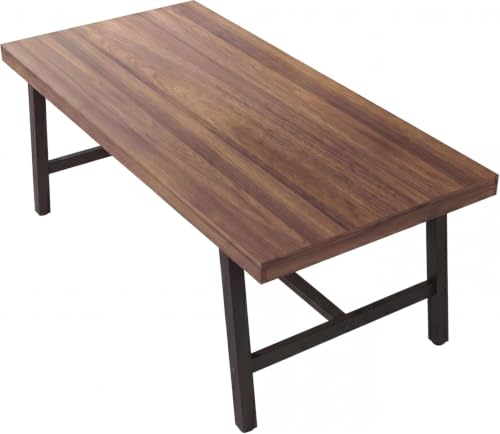
GarveeHome Industrial Dining Table for 6-8, 70.87" Heavy Duty Rectangular Kitchen Table with 2"×2" Metal Legs & Wood Top, Large Dining Table for Home Office, Dining (Brown, 71" Non-Extendable)
Check price on Amazon
Farmhouse Dining Table for 6, Rectangle Dining Table, Kitchen Table Oak | Large Modern Wood Table for Home Office & Family Gathering - Sturdy Design
Check price on Amazon
SLEKVERSA 71" Farmhouse Dining Table for 6-8 Person, Large Rectangular Wood Dining Room Table Only, Rock-Strong Thick Base & Heavy Duty Triangular Legs for Kitchen, Office & Restaurant, Natural Wood
Check price on Amazon
LITTLE TREE Dining Table for 4-6 People, Wooden Table, Rectangle Furniture with Heavy Duty Legs, Modern Kitchen Table for Home, Dining Room, Brown
Check price on Amazon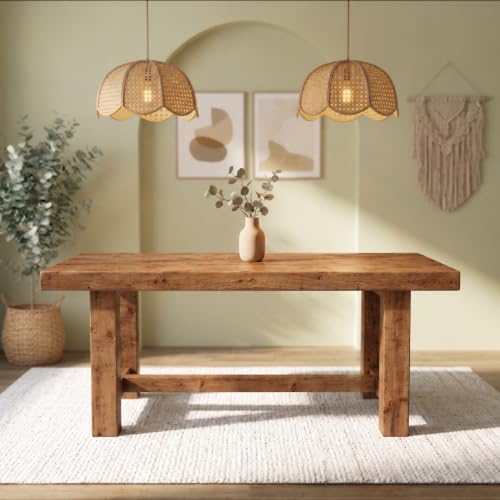
TRIBEWOOD 63-Inch Solid Wood Rectangular Dining Table for 4-6 People | Farmhouse Kitchen Table with Trestle Base, Real Wood Dining Tables for Dining Room,Apartment ,Elegant Details, Easy Assembly
Check price on AmazonFrequently Asked Questions
What is the best wood for a rectangle dining table?
Oak, walnut, and maple are among the most popular choices. Oak offers durability and a prominent grain, walnut provides a rich dark tone and smooth texture, and maple delivers a clean, even appearance. The best choice depends on your desired style and daily use.
What size wood rectangle dining table seats six?
A table measuring roughly 60 to 72 inches long and 36 to 40 inches wide comfortably seats six adults. Allow about 24 inches of table width per person and at least 24 to 30 inches of linear space per place setting.
How do I protect a wood rectangle dining table?
Use coasters, trivets, and felt pads underneath decor, avoid direct sunlight, control indoor humidity, and reapply a quality wood conditioner or furniture wax every few months. Table pads add an extra layer of protection during meals.
Can a wood rectangle dining table work in a small room?
Yes. Choose a narrower, shorter rectangular model or a small rectangular dining table with a pedestal base to free up legroom. Allow at least 36 inches of clearance around the table for chair pull-out.
Ready to Find Your Perfect Wood Rectangle Dining Table?
You now have the framework to compare wood species, sizing, bases, finishes, and quality tiers with confidence. Explore our recommended models above, or continue reading our care and styling guides to make your choice last for years.
Explore Recommended Tables