
Round Wooden Table: The Complete Buying Guide
Everything you need to choose the perfect round wooden dining table — from size and wood species to style, seating capacity, and room layout.
A round wooden table is one of the most versatile and inviting pieces of furniture you can bring into a home. Unlike rectangular tables that can feel rigid or formal, a round wooden dining table encourages conversation, softens the flow of a room, and works beautifully in spaces of nearly any size. Whether you are furnishing a compact breakfast nook, an open-plan kitchen, or a formal dining room, understanding how to evaluate a round wooden table will help you make a confident, long-term investment.
This guide walks you through the critical decisions buyers face: choosing the right diameter for your household, understanding wood species and construction quality, matching a style to your interior, and planning the layout so your table feels spacious rather than cramped. By the end, you will have a clear framework for selecting a round wooden table that fits your room, your lifestyle, and your design sensibilities.
Quick Summary: A round wooden table with a 36–42 inch diameter seats four comfortably, a 48–54 inch diameter seats six, and a 60 inch or larger diameter seats eight or more. Solid hardwood construction (oak, maple, walnut) outlasts veneered or composite builds. Pedestal bases maximize legroom and are the preferred base style for round tables.
Why Choose a Round Wooden Table?
Round tables have a distinct set of advantages that make them a smart choice for many households. The shape eliminates corners, which is a meaningful safety benefit for families with young children. It also means no one is stuck at a "head" position — every seat feels equally valued, which naturally promotes conversation. From a spatial perspective, a round table can often fit into a room where a rectangular table of comparable seating capacity would feel crowded, because the absence of corners reduces the visual and physical footprint.
Wood as a material adds warmth, natural texture, and long-term durability. A well-constructed round wooden table can serve a family for decades and often becomes a cherished heirloom. Wood also pairs gracefully with virtually every design style, from mid-century modern to rustic farmhouse and contemporary minimalist interiors.
Advantages
- No corners — safer for children and easier traffic flow
- Encourages conversation among all diners
- Fits compact and awkward spaces more gracefully
- Visually softens a room compared to angular furniture
- Timeless aesthetic that suits many interior styles
Considerations
- Less efficient for seating large groups than rectangular tables
- Larger round tables can be harder to reach across for serving
- Tablecloths and runners require round-specific sizing
- Pedestal bases may have a slight wobble if not well-built
Choosing the Right Diameter for Your Space
The single most important decision when buying a round wooden table is the diameter. Too small and the table feels cramped; too large and it overwhelms the room. The guide below assumes standard place settings with approximately 24 inches of linear space per person.
| Diameter | Seats | Best For | Room Minimum |
|---|---|---|---|
| 30–36 in | 2–3 | Breakfast nooks, apartments, kitchens | 8 x 8 ft |
| 36–42 in | 4 | Small dining rooms, everyday family meals | 9 x 9 ft |
| 42–48 in | 4–5 | Standard dining rooms, growing families | 10 x 10 ft |
| 48–54 in | 6 | Medium dining rooms, entertaining | 11 x 11 ft |
| 54–60 in | 6–8 | Large dining rooms, formal settings | 12 x 12 ft |
| 60–72 in | 8–10 | Spacious formal dining, holiday gatherings | 14 x 14 ft |
Beyond the table itself, plan for clearance. You need at least 36 inches from the table edge to walls or other furniture for comfortable chair pull-out. High-traffic zones benefit from 42–48 inches. If your room is tight, consider a 40-inch round table or a 42-inch round table — both are excellent size options for four-person households with limited floor area.
For very small spaces, a round wood dinette table offers a compact footprint that still feels like a proper dining surface. If you need flexibility for occasional guests, a round dining table with a leaf lets you expand seating when hosting without permanently occupying extra floor space.
Understanding Wood Species and Construction
The wood species affects durability, appearance, and long-term maintenance. Here is how common options compare.
Hardwood Species
- Oak — Dense, open grain, highly durable. Excellent for daily family use. Accepts stains and finishes well. A classic choice for a round oak dining table.
- Maple — Hard and fine-grained with a smooth, even appearance. Resists wear well and suits contemporary and traditional interiors alike.
- Walnut — Rich, dark brown tone with elegant grain. Premium in appearance and softer than oak or maple, but still durable. Ideal for a statement piece.
- Mahogany — Deep reddish-brown, traditional and formal. A mahogany dining room table carries a classic, heirloom quality.
- Cherry — Warm reddish tone that deepens with age. Moderately hard, excellent for traditional and transitional styles.
Entry-Level and Mid-Tier Species
- Pine — Soft wood with a rustic character. Best for light-duty use or accent tables. Prone to denting under heavy use.
- Rubberwood — Often used in entry-level furniture. Acceptable for occasional use but less resistant to wear than hardwoods.
- Reclaimed wood — Environmentally friendly and full of character. A reclaimed wooden dining table brings instant rustic charm, though surfaces may be uneven.
Construction Quality
Solid wood construction is the gold standard for longevity. Veneered MDF or particleboard cores are common at entry-level tiers and can be acceptable for light use, but they are more vulnerable to moisture damage and edge chipping. When evaluating a table, check the following:
- Joinery — Look for mortise-and-tenon or doweled joints rather than staples or screws alone.
- Base style — A pedestal base with a wide, weighted foot provides stability and maximizes legroom. Four-leg bases on round tables can crowd knees.
- Finish — A quality polyurethane or lacquer finish protects against spills and daily wear. Matte and satin finishes are more forgiving than high-gloss.
- Tabletop thickness — 1 inch or thicker indicates a substantial, durable top. Thinner tops may flex or warp over time.
Matching a Round Wooden Table to Your Design Style
Round wooden tables span every aesthetic. The key is matching the table's wood tone, base style, and detailing to the surrounding room.
Farmhouse and Rustic
Distressed finishes, reclaimed timber, and chunky turned pedestals define the farmhouse look. Pair with Windsor-style chairs or rattan wicker chairs for an earthy, relaxed feel. A rustic dining table set often bundles a matching round table and chairs for a cohesive result.
Mid-Century Modern
Slim tapered legs, warm walnut or teak tones, and clean lines characterize mid-century round tables. These pair beautifully with upholstered or molded chairs and work especially well in open-plan living areas.
Contemporary and Minimalist
Light oak or ash with a simple pedestal or cross base creates a clean, airy look. Keep chair profiles slim and avoid ornate detailing. A round table with four chairs in a neutral finish is a classic minimalist setup.
Traditional and Formal
Rich mahogany or cherry with turned pedestals and decorative aprons suit formal dining rooms. Pair with upholstered chairs for a polished, elegant composition.
Pairing Chairs and Seating with a Round Table
Round tables offer flexibility in chair selection. You can use matching chairs for a formal look, or mix styles for an eclectic feel. Key considerations:
- Seat height — Standard dining tables are 28–30 inches high and pair with 17–19 inch seat-height chairs. For counter-height round tables, look at counter height stools with backs and arms.
- Chair width — Keep chair widths under 20 inches so multiple chairs can tuck around the curve without overlapping.
- Armless vs. armed — Armless chairs tuck more easily under a round table and allow more seating density. Armed chairs add comfort but consume more perimeter space.
- Upholstery — An upholstered set such as a round dining table set with upholstered chairs adds comfort and a polished look for formal dining.
If you are furnishing from scratch, a bundled round table with four chairs or a 3-piece dinette set simplifies the process and guarantees proportional fit.
Layout and Placement Tips
Placement dramatically affects how a round wooden table feels in a room. Follow these guidelines:
- Center the table in the dining zone or under a light fixture for visual balance.
- Maintain 36 inches of clearance on all sides for chair pull-out; 42–48 inches in walkways.
- Use a round rug slightly larger than the table to anchor the composition and protect flooring.
- Hang a pendant or chandelier 30–36 inches above the tabletop for balanced lighting.
- Leave breathing room between the table and sideboards or buffets — at least 36 inches for traffic flow.
In open-plan spaces, a round table helps define the dining zone without the hard visual stop a rectangular table creates. For apartment dining, a 42-inch round dinette table or a kitchenette table set is often the ideal solution.
Care and Maintenance Essentials
A round wooden table will last for decades with proper care. Protect the finish with coasters and trivets, wipe spills promptly with a soft damp cloth, and avoid harsh chemical cleaners. Dust regularly with a microfiber cloth and apply a wood conditioner every six to twelve months depending on use. Keep the table away from direct sunlight and heat sources to prevent fading and cracking, and maintain indoor humidity between 35% and 55% to minimize seasonal movement in the wood.
Recommended Round Wooden Tables and Dining Furniture
⚠️ AFFILIATE DISCLOSURE: This website contains affiliate links. As an affiliate Associate, we earn from qualifying purchases. If you make a purchase through these links, we may receive a small commission at no additional cost to you. Read our full affiliate policy.

LITTLE TREE Round Dining Table for 4-6 People, 47 Inches Dining Room Table with Wooden Pedestal Base, Brown Dinner Tables, Circle Kitchen Tables for Kitchen, Living Room(Table Only)
Check price on Amazon
Jocoevol Round Dining Table for 4,Kitchen Dining Room Circle Dinner Pedestal Table,Space Saving Wood Kitchen & Dining Room Furniture (Vintage, 46In)
Check price on Amazon
VASAGLE 47-Inch Round Dining Table for 4-6 People, Pedestal Kitchen Table | Contemporary, with Wooden Pedestal Base and 3-Height Adjustable Storage Shelf, Thickened Tabletop, Oak Beige
Check price on Amazon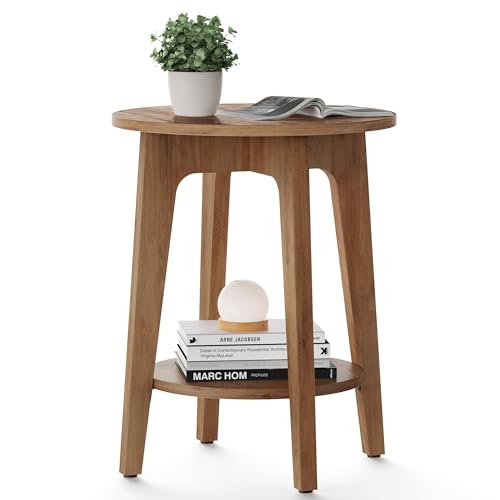
VASAGLE Round Side Table with Lower Shelf, End Table for Small Spaces | Nightstand with Tapered Legs, Curved Transitions, for Living Room, Bedroom, Honey Brown, MAEZO Collection ULET283T41
Check price on Amazon
LITTLE TREE Round Dining Table for 4-6 People, 47 Inches Dining Room Table with Wooden Pedestal Base, Modern Dinner Table, Circle Kitchen Tables for Dining Room, Kitchen, Living Room(Table Only)
Check price on AmazonRound Wooden Table Buying Checklist
Before you commit, run through this checklist to make sure your choice aligns with your room and household:
- Diameter measured against your room dimensions with 36-inch clearance on all sides.
- Seating capacity matches your typical household plus one or two occasional guests.
- Wood species appropriate for your use intensity — solid hardwood for daily family use, softer or veneered options for light use.
- Base style — pedestal preferred for legroom; check for stability and weighted foot.
- Finish — matte or satin for forgiveness; confirm it is food-safe and water-resistant.
- Chair compatibility — verify seat height, width, and whether chairs tuck under comfortably.
- Assembly and delivery — confirm whether assembly is required and what tools are included.
- Warranty — check coverage for frame, finish, and hardware.
Frequently Asked Questions
What size round wooden table seats four people comfortably?
A round wooden table with a diameter of 36 to 42 inches typically seats four people comfortably. This size provides ample elbow room while fitting well in compact dining areas. For a slightly more spacious feel, a 42-inch diameter is the sweet spot for most four-person households.
Which wood type is best for a round dining table?
Oak and maple offer exceptional durability for daily use, while walnut and mahogany provide premium aesthetics. Pine and rubberwood serve as solid entry-level options for lighter use or accent settings. Match the species to your use intensity and design preferences.
How much clearance should I leave around a round table?
Allow at least 36 inches of clearance from the table edge to walls or other furniture for comfortable chair pull-out and walkway space. For high-traffic areas, 42 to 48 inches is ideal to keep the space feeling open and functional.
Can a round wooden table work in a small apartment?
Yes — round tables are actually one of the best choices for small spaces because they eliminate corners and allow smoother traffic flow. A 30–36 inch diameter table seats two to three people and fits comfortably in a compact kitchen or dining nook.
Are pedestal bases better than four-leg bases for round tables?
For most round tables, a pedestal base is preferred because it maximizes legroom and eliminates the knee-striking corners of four-leg designs. However, a well-built four-leg base can work well on smaller diameters. Always check for stability and a weighted or wide foot.
Final Thoughts
A round wooden table is more than a piece of furniture — it is the anchor of daily meals, holiday gatherings, and quiet morning coffees. By prioritizing the right diameter, choosing a durable wood species, and planning your layout with proper clearance, you can select a table that serves your household beautifully for years. Use the checklist above, compare your shortlisted options across tiers and construction quality, and invest with confidence in a round wooden table that fits your room and your life.