
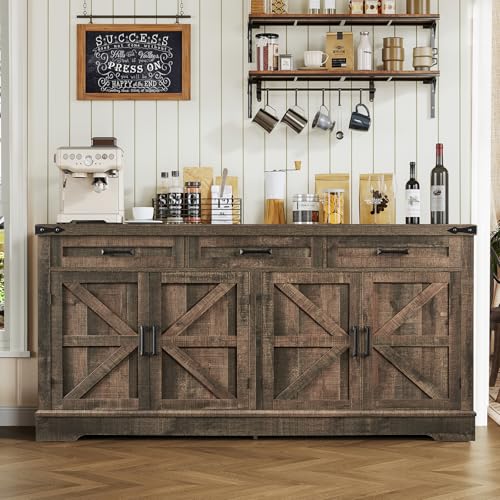


Why a Rustic Sideboard Works in Modern Dining Rooms
A rustic sideboard solves a problem that most dining rooms share: a need for generous storage without sacrificing visual warmth. Modern dining spaces often lean toward clean lines and smooth surfaces, which can feel sterile over time. A weathered wood sideboard introduces organic texture, visible grain, and a sense of history that softens the room instantly.
Beyond aesthetics, a rustic sideboard is genuinely practical. It holds linens, serveware, candles, and board games out of sight while keeping them close to the table. The top surface works as a serving station during gatherings and as a display area the rest of the year. For homeowners who entertain regularly, this combination of storage and staging is hard to beat.
Designers frequently pair a rustic sideboard with a rustic dining table and rustic dining chairs to create a cohesive look. If you are building an entire dining room around this aesthetic, our guide to rustic dining covers the full furniture set, while the rustic dining tables collection explores table options in depth.
Anatomy of a Rustic Sideboard: Doors, Drawers & Open Shelves
Understanding the internal layout of a sideboard is just as important as its exterior finish. The right configuration depends on what you plan to store and how often you need to access it.
Drawers
Drawers are best for flatware, napkins, placemats, and small serving utensils. Look for dovetail joinery and metal glides on mid-range and premium models; entry-level sideboards often use stapled or nailed drawer boxes that loosen over time. Deep drawers work well for table linens, while shallow drawers suit cutlery and candles.
Cabinet Doors
Cabinet doors hide larger items such as platters, mixing bowls, and stacked dinnerware. Sliding doors save floor clearance in narrow rooms, while hinged doors offer easier full access. Glass doors add a display element but require tidier organization inside. For more storage configurations, explore sideboards with glass doors and sideboards with drawers.
Open Shelves & Hutches
Open shelving invites display — cookbooks, ceramics, woven baskets, and greenery. Some rustic sideboards include a hutch top that adds vertical storage and a focal point. A sideboard with hutch is excellent for formal dining rooms where you want to show off glassware and decorative pieces. If you prefer a lower profile, open shelves at the base work well for baskets that hide clutter.
Adjustable Shelving
Adjustable interior shelves are a small feature with a large payoff. They let you reconfigure the cabinet as your storage needs change — tall pitchers one season, stacked bowls the next. Check whether the shelf pegs are metal or plastic; metal pegs hold heavier loads without sagging.
Wood Species, Finishes & Distressing Techniques
The wood species determines the sideboard's grain pattern, weight, and long-term behavior. Rustic styles emphasize natural imperfections, so species with strong grain and character tend to work best.
Popular Wood Species
- Oak: Dense and durable with pronounced grain. Oak sideboards age gracefully and suit both farmhouse and industrial interiors.
- Pine: Softer and lighter in tone, pine brings a relaxed cottage feel. It dents more easily than oak, which some homeowners embrace as part of the rustic character.
- Reclaimed Elm: Salvaged from old buildings and boats, reclaimed elm offers unmatched texture and history. No two pieces look alike.
- Mango Wood: A warm-toned hardwood often used in mid-tier sideboards. Mango is durable, sustainable, and takes stain well.
- Acacia: Known for dramatic grain contrast and natural water resistance, acacia suits coastal and global-inspired rustic rooms.
Finishes & Distressing
Rustic sideboards typically use one of three finish approaches: natural oil and wax finishes that highlight grain, distressed painted finishes that reveal wood underneath, or whitewashed finishes that soften the wood tone. Each finish affects maintenance — oiled wood needs periodic reconditioning, while painted surfaces touch up easily but can chip.
Distressing techniques include hand-scraping, wire-brushing, and rub-through edges. These details are aesthetic, but they also help hide everyday wear. If you prefer a lighter look, a white sideboard cabinet delivers rustic charm with a brighter palette.
Sizing Rules: Width, Depth, Height & Clearance
Measure twice before ordering. A sideboard that overwhelms the wall or blocks traffic will feel wrong regardless of how beautiful the finish is.
Standard Dimensions
- Width: 40–72 inches for most dining room sideboards. A 48-inch sideboard suits a small dining room; 60–72 inches works in larger spaces.
- Depth: 18–22 inches. Deeper sideboards hold more but eat into walkway space.
- Height: 30–36 inches for a standard sideboard; 36–42 inches for counter-height models; hutches add 24–36 inches on top.
Clearance Guidelines
Leave at least 12 inches between the sideboard and adjacent walls or doorways so the piece does not feel cramped. In front of the sideboard, allow 36 inches of clearance so drawers and doors open fully and guests can move comfortably. If the sideboard sits opposite the dining table, verify that chairs pulled out still leave a walkway.
Proportion Check
A sideboard should be roughly two-thirds the width of the dining table it accompanies, or slightly wider than half the wall it occupies. Tape the footprint on the floor and stand back to judge proportion before committing. If your room is compact, a small dining room layout guide can help you balance furniture placement.
Rustic Sub-Styles: Farmhouse, Reclaimed, Industrial & Coastal
"Rustic" is an umbrella term. Narrowing down the sub-style keeps your dining room coherent.
Farmhouse
Farmhouse rustic sideboards feature painted or whitewashed finishes, X-brace detailing, and cup pulls. They pair naturally with a rustic farmhouse dining table and shiplap or beadboard walls. For a full farmhouse composition, see rustic farmhouse tables.
Reclaimed & Salvaged Wood
Reclaimed sideboards celebrate nail holes, knots, and weathered patinas. They work best as statement pieces in otherwise restrained rooms. Pair with matte black hardware and neutral walls to let the wood tell its story.
Industrial Rustic
Industrial rustic combines wood with iron legs, riveted metal panels, or pipe-style hardware. The look suits loft apartments and open-plan homes. A sideboard with metal casters adds mobility for flexible entertaining.
Coastal Rustic
Coastal rustic uses limewashed or driftwood finishes, lighter wood tones, and relaxed hardware. It pairs well with rustic wood dining tables in pale finishes and natural fiber rugs.
Traditional Rustic
Traditional rustic leans toward darker stained woods, carved details, and bun feet. These sideboards suit formal dining rooms and pair well with a sideboard and buffet cabinet setup that includes a hutch.
Tier Comparison: Essential, Balanced, and Top-Tier Sideboards
Rustic sideboards vary widely in construction quality. The table below compares tiers using quality descriptors rather than figures, so you can judge where a given model sits in the market.
| Tier | Construction | Hardware | Best For |
|---|---|---|---|
| Essential tier | Engineered wood with wood veneer; stapled drawer boxes; basic back panel | Standard pulls, plastic shelf pegs | First apartments, guest rooms, seasonal use |
| Balanced tier | Solid wood fronts with engineered sides; dovetail or reinforced drawer joints; adjustable shelves | Metal glides, solid metal pulls, anti-tip kit included | Primary dining rooms, regular entertaining |
| Top-tier | Fully solid wood or reclaimed hardwood; mortise-and-tenon joinery; solid wood back panel | Soft-close glides, hand-forged hardware, leveling feet | Heirloom-quality dining rooms, heavy daily use |
Balanced-tier sideboards are usually the sweet spot for most homes: they offer solid drawer construction and adjustable shelving at a level of investment that still feels reasonable. Top-tier pieces reward long-term ownership with repairability and structural integrity, while essential-tier models serve well in low-traffic spaces or as a starter piece.
Quick Buyer's Checklist
- Confirm the width, depth, and height against your wall measurements.
- Check whether the drawer boxes are dovetailed or stapled.
- Verify the sideboard includes an anti-tip strap.
- Inspect shelf adjustability and peg material.
- Ask about the back panel material for moisture resistance.
- Review the finish type to plan maintenance.
- Confirm delivery and assembly requirements before ordering.
Styling Your Sideboard: Practical Decor Ideas
Once the sideboard is in place, styling determines how well it functions day to day. The goal is a surface that looks intentional but remains usable for serving.
The Rule of Three Zones
Divide the top into three zones: a display zone, a functional zone, and an open zone. For example, a vase and candle on one end, a tray with serving pieces in the middle, and a clear space on the other end for plating food during gatherings.
Layer Heights
Mix tall, medium, and low objects to create visual rhythm. A tall lamp or vase anchors the composition, a stack of bowls or books adds mid-level interest, and a low tray or small sculpture grounds the arrangement. Avoid placing objects of the same height in a straight line.
Functional Decor
Keep serving pieces on the sideboard so they are ready when needed. A tray corrals salt and pepper sets and small condiments; a basket holds cloth napkins; a cake stand can display fruit between meals. These items look decorative while earning their place.
Wall Treatment Above
A large mirror above the sideboard bounces light and makes the dining room feel larger. A gallery wall or a single oversized art piece adds personality. If the sideboard has a hutch, keep the wall behind it simple so the hutch remains the focal point.
Seasonal Rotation
Rotate a few decorative accents seasonally — greenery in spring, gourds in autumn, evergreen branches in winter. A small rotation keeps the sideboard feeling fresh without requiring a full restyle. For tabletop coordination, browse table decor and settings.
Care & Maintenance for Long-Lasting Wood
A rustic sideboard is built to show character, but it still needs routine care to stay structurally sound.
- Dust weekly with a soft microfiber cloth to prevent grit from scratching the finish.
- Wipe spills immediately with a slightly damp cloth, then dry the surface.
- Condition oiled wood every three to six months with a beeswax or wood conditioner appropriate to the finish.
- Keep out of direct sunlight and away from heating vents to prevent cracking and uneven fading.
- Use coasters and trivets under hot dishes and drinks to protect the top surface.
- Check hardware periodically and tighten screws on pulls and hinges.
- Maintain indoor humidity between 40 and 60 percent to reduce seasonal wood movement.
If scratches appear, a matching wood repair marker or a light application of wax can blend minor marks. For deeper repairs, consult our scratch repair tips. Painted rustic finishes may chip at edges over time; touching up with matching paint is straightforward and often adds to the distressed character.
Frequently Asked Questions
What wood is best for a rustic sideboard?
Solid oak, pine, reclaimed elm, and mango wood are popular choices. Oak offers durability and prominent grain, pine provides a softer farmhouse feel, reclaimed elm brings unique character, and mango wood delivers warm tones with an eco-friendly edge. Each wood type responds differently to finishes and aging, so consider your room's humidity and traffic before deciding.
How do I measure my space for a rustic sideboard?
Measure the wall length where the sideboard will stand, then subtract at least 12 inches on each side for breathing room and door swing. Standard rustic sideboards range from 40 to 72 inches wide, 18 to 22 inches deep, and 30 to 36 inches tall. Allow 36 inches of clearance in front for drawers and doors to open fully, and tape the footprint on the floor before ordering.
Can a rustic sideboard work in a modern dining room?
Yes. A weathered wood sideboard creates a striking contrast against clean white walls, glass tables, and minimalist lighting. Choose a sideboard with streamlined hardware and a lighter wash to bridge rustic and modern aesthetics. Pairing one statement rustic piece with contemporary surroundings is a proven interior design technique that adds warmth without overwhelming the space.
What should I store in a rustic sideboard?
Use drawers for flatware, napkins, and small serveware; cabinets for larger platters, linens, and board games; and open shelves for display pieces. Keep heavy items on the bottom shelves to maintain stability. If the sideboard has a hutch, reserve upper shelves for glassware and decorative accents that you want visible during meals and gatherings.
How do I maintain a rustic wood sideboard?
Dust weekly with a soft cloth, wipe spills immediately, and apply a wood conditioner or beeswax polish every three to six months. Keep the sideboard away from direct sunlight and heat sources to prevent cracking and fading. For painted or distressed finishes, avoid harsh chemical cleaners and use a damp cloth with mild soap only when necessary.
Ready to Choose Your Rustic Sideboard?
Use the buyer's checklist above, match the sideboard's width and depth to your wall measurements, and decide whether your storage needs lean toward drawers, cabinets, or display shelving. With those three decisions settled, the right rustic sideboard becomes a straightforward choice.
View Recommended Sideboards