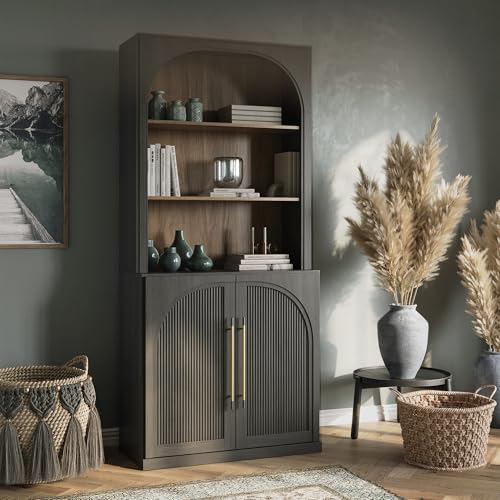
What Is a Sideboard with Hutch?
A sideboard with hutch is a two-part dining room furniture piece: a lower sideboard cabinet that provides closed storage (doors, drawers, and sometimes a wine rack or adjustable shelving) topped by a hutch — an open or glass-fronted upper unit designed for display. Together, they create a vertical storage and display solution that keeps serveware, dinnerware, linens, and bar essentials organized while showcasing decorative pieces.
Unlike a standalone sideboard cabinet, the hutch adds height and display capacity — ideal for dining rooms with limited floor space but available wall height. If you prefer a lower, more streamlined footprint, a standard sideboard with drawers or a curved sideboard may suit your room better.
Sideboard with Hutch vs. Separate Pieces
Buying a matched sideboard and hutch as one unit offers visual cohesion and a guaranteed fit between the two parts. However, modular setups (a sideboard paired with a wall-mounted hutch or open shelving) give you flexibility to change the arrangement later. Consider these trade-offs:
| Configuration | Best For | Key Consideration |
|---|---|---|
| Integrated sideboard + hutch | Cohesive traditional or farmhouse dining rooms | Verify total height clears ceiling fixtures and window trim |
| Sideboard + wall-mounted hutch | Rentals and flexible layouts | Requires secure wall anchoring for safety |
| Sideboard + open shelving above | Modern and minimalist spaces | Less dust protection for displayed items |
| Hutch-top only (no base cabinet) | Small dining rooms needing display only | Limited concealed storage |
Key Dimensions to Check Before Buying
Measure twice — a sideboard with hutch is difficult to return and easy to mis-size. Use this checklist:
- Width: Leave at least 36 inches of clearance in front of the unit for doors and drawers to open fully. A unit that is too wide can crowd walkways between the table and wall.
- Depth: Standard sideboard depth is 15–20 inches; hutches are usually shallower (10–14 inches). Confirm the deeper base does not block traffic flow.
- Height: Total height (base + hutch) commonly ranges from 60 to 84 inches. Measure from floor to ceiling and account for light fixtures, crown molding, and window casings.
- Counter height: The serving surface of the base should sit around 36 inches — comfortable for buffet service and food prep.
Materials and Construction Quality
Material choice affects durability, maintenance, and style. Match the sideboard with hutch to your dining table and chairs where possible — solid wood pieces like a walnut dining table pair naturally with a walnut sideboard or a walnut buffet.
| Material | Durability | Best For | Maintenance |
|---|---|---|---|
| Solid hardwood (oak, walnut, maple) | High — long-term investment | Formal dining rooms, heirloom pieces | Occasional polish; avoid direct sun |
| Engineered wood with veneer | Moderate — stable in humidity | Mid-range setups, modern finishes | Dust regularly; avoid standing water |
| Painted MDF | Moderate — prone to chipping at edges | Farmhouse and cottage styles | Touch-up paint for chips |
| Metal frame + wood shelves | High frame strength | Industrial and loft interiors | Check hardware tightness periodically |
Construction details that signal a well-built unit include dovetail drawer joints, soft-close hinges, adjustable shelving pins, and a finished back panel (important if the unit sits away from the wall). For a vintage-inspired look, explore vintage mid-century modern credenzas and sideboards or a vintage sideboard cabinet.
Hutch Configurations: Open, Glass, or Mixed
Open hutch
Best for displaying decorative bowls, cookbooks, and plants. Easy access but requires regular dusting. Works well in casual dining rooms and open-concept spaces.
Glass-front hutch
Protects dinnerware from dust while keeping it visible. Ideal for showcasing a dinnerware set or heirloom china. Choose tempered glass for safety.
Mixed hutch (glass doors + open shelving + drawers)
The most versatile option: concealed storage for clutter, glass display for showpieces, and open shelves for everyday items. This is the most popular configuration for family dining rooms.
How to Style a Sideboard with Hutch
- Start with the base surface: Treat the sideboard counter as a buffet station. Leave one-third clear for serving, and group a tray, a lamp, and a small plant on the remaining space.
- Create rhythm on the hutch: Alternate heights and textures. Place tall vases next to stacked plates, and lean a small framed print against the back panel.
- Use negative space: Resist filling every shelf. Empty space makes the displayed items feel curated rather than crowded.
- Layer lighting: If the hutch has interior lighting or puck lights, use warm bulbs to highlight glassware and ceramics.
- Rotate seasonally: Swap in summer table decor or holiday accents to keep the piece feeling fresh.
Placement and Room Layout
The most common placement is against the longest uninterrupted dining room wall, opposite or adjacent to the table. Avoid blocking windows, heating vents, or traffic paths between the kitchen and dining area. In open-concept homes, a sideboard with hutch can act as a visual divider between the dining and living zones — choose a finished back panel for this arrangement.
For small dining rooms, a narrower unit (under 50 inches wide) with a shallow hutch keeps the room feeling open. Pair it with a small kitchen table and chairs to preserve floor space.
Care and Maintenance Basics
- Dust the hutch shelves weekly with a microfiber cloth.
- Use coasters and felt pads under decorative objects to prevent scratches.
- Keep the unit out of direct sunlight to prevent fading and veneer lifting.
- Check and tighten hinges and shelf pins every few months.
- For wood surfaces, use a pH-neutral furniture polish — avoid silicone-based products.
For broader furniture care guidance, see our sustainable wood care resource.
Tier Guide: What to Expect at Each Level
| Tier | Typical Construction | Best For |
|---|---|---|
| Entry-level | Engineered wood, basic hardware, painted finish | First apartments, rental spaces, temporary setups |
| Mid-range | Solid wood frame with veneer panels, soft-close hinges | Family dining rooms, everyday use |
| Premium | Solid hardwood throughout, dovetail drawers, adjustable shelving | Long-term homes, formal dining spaces |
| Luxury | Hand-finished hardwoods, custom hardware, interior lighting | Statement pieces for design-led interiors |
Higher tiers generally offer smoother drawer mechanisms, more stable joinery, and better resistance to humidity changes. Mid-range models often deliver the best balance of durability and design flexibility for most households.