
Space Saving Table: The Complete Buying Guide for Compact Dining
Everything you need to choose a space saving table that fits your room, your lifestyle, and your guest list — without compromising on style or durability.
What You Will Learn on This Page
- Why a space saving table is a smart investment
- The main types of space saving tables compared
- How to measure your room and choose the right size
- Materials, build quality, and tier guidance
- Seating capacity and chair pairing tips
- Placement ideas for small rooms and apartments
- Common mistakes to avoid
- Frequently asked questions
Why a Space Saving Table Is a Smart Investment
A space saving table is more than a piece of furniture — it is a practical solution for modern living. Urban apartments, compact kitchens, and multi-purpose rooms all benefit from a table that adapts to daily needs. Unlike a fixed rectangular table that permanently occupies floor area, a space saving design lets you reclaim your room when the meal is over.
Homeowners researching this category are usually in a specific situation: they know they need a smaller dining solution, but they are unsure which configuration actually works in their floor plan. The decision hinges on three factors — daily seating needs, occasional guest capacity, and how the table interacts with doors, walkways, and kitchen counters. Getting these right means the table becomes an asset rather than a constant obstacle.
Beyond practicality, a well-chosen compact table can still deliver a welcoming dining experience. Many designs now pair folding or drop-leaf mechanisms with solid wood tops, round pedestal bases, and clean silhouettes that look intentional rather than improvised. If your priority is a dedicated compact dining surface, our guide to the space saving dining table covers layout-specific recommendations in more depth.
The Main Types of Space Saving Tables Compared
There is no single "best" space saving table — each mechanism suits a different daily routine. The comparison below helps you match a design to how you actually live.
| Type | How It Works | Best For | Tier & Quality Notes |
|---|---|---|---|
| Drop-leaf table | One or two hinged leaves fold down or up along the sides. | Kitchens with a wall or window on one side; daily use by one or two people. | Entry-level to premium; look for reinforced hinges and a leaf support leg on wider models. |
| Folding table | Legs fold flat or the table collapses entirely for storage. | Rentals, studio apartments, occasional dining, and rooms that double as workspaces. | Starter tier to mid-range; heavy-duty locking leg mechanisms separate durable models from flimsy ones. |
| Extendable / butterfly table | Hidden leaves slide out from the center or ends to increase length. | Households that seat two daily but host four to six regularly. | Mid-range to premium; smooth-glide leaf tracks and solid joinery matter most here. |
| Wall-mounted table | Attached to the wall with brackets; folds down when needed. | Very tight kitchens, breakfast corners, and multi-use rooms with no free floor space. | Essential tier to mid-tier; wall anchoring quality and load ratings are critical. |
| Round pedestal table | Single central base with no corner legs, so chairs tuck in easily. | Small square-ish rooms and breakfast nooks where flow around the table matters. | Entry-level to luxury; a wide, weighted base prevents wobble and supports daily use. |
| Gateleg table | Leaves supported by swinging gate-like legs; folds to a narrow console. | Rooms that need a console most of the day and a dining surface at mealtimes. | Mid-range to high-end tier; traditional joinery often means excellent long-term durability. |
If your kitchen doubles as a dining area, a dedicated space saving kitchen table format — typically a drop-leaf or small round model — usually outperforms a folding table because it stays anchored and ready for daily meals. For pure flexibility in a studio or multi-purpose room, folding designs remain the most adaptable option.
How to Measure Your Room and Choose the Right Size
Measurement is the step most buyers rush, and it is the most common source of returns. Before comparing any models, complete this simple process:
- Map the usable floor area. Mark door swing zones, walkways, radiator positions, and any fixed furniture. The table must fit inside the remaining clear zone, not the room's full dimensions.
- Reserve chair clearance. Plan for at least 36 inches (about 90 cm) of clear space on every side where a chair is used, so guests can push back and others can pass behind them.
- Check the open footprint. For drop-leaf and extendable models, measure the table with leaves fully open. This is the real footprint during hosting, and it is often far larger than the closed size.
- Verify height. Standard dining height is 28 to 30 inches (71–76 cm). Counter-height tables sit around 34 to 36 inches and pair with taller stools — see our standard kitchen table height reference before mixing chairs and tables.
- Test the walkway. With chairs tucked in, you should still have a comfortable path through the room. If not, step down one table size rather than accepting a squeeze.
Materials, Build Quality, and Tier Guidance
Mechanism quality separates a table that survives years of daily folding from one that loosens within months. Evaluate construction before aesthetics.
Top surface
- Solid wood tops offer the most durable surface for daily meals and can be refinished later; they sit in the mid-range to premium tiers depending on species and joinery.
- Engineered wood with quality veneer is common in entry-level and essential tiers and performs well when the edges are sealed properly.
- Glass and stone tops resist staining and scratches well; glass suits compact round designs, while stone adds weight that helps stability on pedestal bases.
Frame and mechanism
- Look for reinforced hinges, metal leaf supports, and locking leg joints. These are the exact components that fail first on folding models.
- Heavy-duty steel hardware and solid wood frames indicate a table built for regular opening and closing rather than occasional use.
- For wall-mounted tables, confirm the mounting hardware is rated for the table's loaded weight, not just its own weight.
A mid-range folding or drop-leaf table typically offers noticeably smoother mechanisms and tighter tolerances than entry-level equivalents, which matters if you fold the table daily. Premium models add better wood species, finer finishes, and more stable pedestal bases. If you prefer natural materials, browsing solid wood dining tables helps you understand what to expect from wood construction before choosing a folding or extendable variant.
Seating Capacity and Chair Pairing Tips
Seating capacity depends on the table's open dimensions and the chair type, not just the listed "seats four" label.
- Bench seating uses floor space efficiently along one wall and works well with rectangular drop-leaf tables; our guide to the small storage bench explains how storage benches double as seating.
- Stackable chairs free up floor area between meals and suit folding tables perfectly; stackable dining room chairs are the most practical pairing for multi-purpose rooms.
- Tuck-under chairs matter more than chair count. If chairs cannot slide under the closed table, you lose the space benefit; check small kitchen table with chairs that fit underneath for dimension guidance.
- Round tables seat more people per square foot because there are no corner legs to block knees and chairs can angle inward.
For a clearer picture of complete seating arrangements, our roundup of small kitchen table sets covers matched table-and-chair combinations so you are not balancing dimensions across separate purchases.
Placement Ideas for Small Rooms and Apartments
Placement decisions often determine whether a compact table feels intentional or cramped. Consider these configurations:
- Against a wall with one leaf up. The most common drop-leaf setup: the closed leaf faces the wall, and the open leaf provides two to three settings.
- In a window alcove. A round pedestal table fits a bay or window recess naturally and avoids blocking circulation.
- Shared with the living area. In open-plan studios, position the table behind a sofa to define zones. Our article on a sofa and dining table in the same small room covers spacing rules for this layout.
- Wall-mounted in a galley kitchen. Fold-down tables keep the walking path clear except during meals.
- Near storage. Pair the table with a slim small sideboard to hold dishes and linens, so the tabletop stays clear for eating.
Common Mistakes to Avoid
- Buying by closed dimensions only. Always check the open footprint, since hosting requires the extended size.
- Ignoring chair clearance. A table that fits the wall but leaves no room to pull out a chair is unusable.
- Overlooking mechanism durability. Daily folding demands reinforced hinges and locking legs, not light-duty fittings.
- Skipping height verification. Counter-height tables and standard chairs do not mix; confirm both before purchase.
- Choosing style before function. A beautiful table that blocks a doorway will be moved or replaced sooner than expected.
Ready to Compare Space Saving Tables?
Our curated selection below features compact and folding tables chosen for practical room footprints and solid construction. Explore the options, compare their mechanisms and specifications, then decide which configuration matches your daily routine.
Recommended Space Saving Tables & Compact Dining Solutions
⚠️ AFFILIATE DISCLOSURE: This website contains affiliate links. As an affiliate Associate, we earn from qualifying purchases. If you make a purchase through these links, we may receive a small commission at no additional cost to you. Read our full affiliate policy.

IDEALHOUSE FoldingTable, Drop Leaf Dining Table with 6 Wheels and 2-Layer Storage Shelf, Space Saving Table for Small Spaces (Slate Oak, 47.2" D x 23.6" W x 29.5" H)
Check price on Amazon
IDEALHOUSE FoldingTable, Drop Leaf Dining Table with 6 Wheels and 2-Layer Storage Shelf, Space Saving Table for Small Spaces (Slate Oak, 50.1" D x 31.4" W x 29.5" H)
Check price on Amazon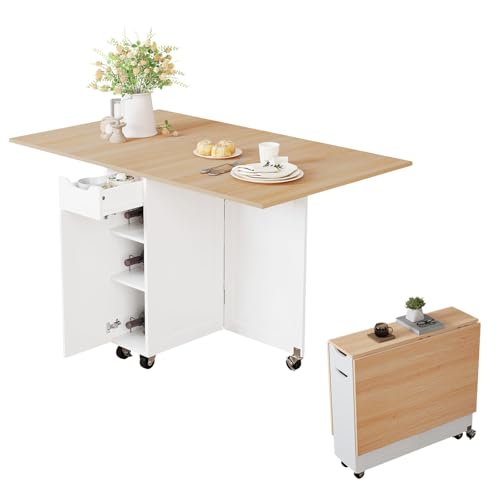
Folding Dining Table, Space Saving Kitchen Table with 6 Wheels(Light Brown) | Dinner Table with Drawer and Storage and Shelves, Space Saving Dining Table with 6 Wheels for Small Spaces
Check price on Amazon
Jocoevol Folding Dining Table for Small Spaces, Foldable Kitchen Table with Drawer, 2-Tier Storage Shelf & Wheels, Space Saving Dining Table for 2 4, Farmhouse, Natural
Check price on Amazon
Extendable Dining Table with Charging Station, Convertible Folding Console Table for 6-8 People, Space-Saving Dining Table with LED Lights, Wood Rectangle Kitchen Table for Homes, Walnut (No Chairs)
Check price on Amazon
VASAGLE Folding Desk, Small Computer Desk, Foldable Table 31.5 Inch | One-Piece Desktop,Folding Table for Bedroom, Balcony, Camping, Easy Assembly, Rustic Brown, ULWD151KD01
Check price on Amazon
CHOEZON Folding Dining Table, Movable Dining Table, Expandable Kitchen Table, Versatile Table with 6 Wheels and 2-Tier Shelf, for Dining, Living Room, Apartment, Rustic Brown TCZ01BF
Check price on AmazonFrequently Asked Questions
What is the most space efficient table type for a small dining room?
Drop-leaf and wall-mounted folding tables are generally the most space efficient because they fold flat when not in use. Round pedestal tables also maximize seating within a small footprint since chairs can tuck in around the base without corner legs interfering.
How much clearance is needed around a space saving table?
Allow at least 36 inches (about 90 cm) of clear space on each side where chairs are used. This gives seated guests room to push back and lets others walk behind them comfortably. In tight rooms, prioritize clearance on the side facing the main walkway.
Are extendable tables a good choice for apartments?
Yes. Extendable and butterfly-leaf tables keep a compact daily footprint and expand only for guests, making them one of the most versatile solutions for apartment dining. Check that the extension mechanism glides smoothly, since it will be used regularly.
Can a space saving table work in a studio apartment?
Absolutely. Folding tables and wall-mounted designs are especially suited to studios because they can be cleared away or folded flat for other activities. Positioning the table near a window or behind a sofa helps define a dining zone without blocking the room's flow.
What should I check before ordering online?
Confirm the closed and open dimensions, table height, leaf support type, hinge material, and the load rating for wall-mounted models. Also verify the return policy for oversized items, since compact furniture is heavy and awkward to ship back.