
Steel Table Leg: The Complete Buying Guide for Strength, Style & Stability
From hairpin legs to industrial box frames, steel table legs are the backbone of modern furniture. Learn how to choose the right profile, finish, and load rating for your dining table, desk, or DIY build.
Explore Recommended LegsWhy steel table legs matter: The legs are the most stressed part of any table. They carry the full load, absorb lateral forces from leaning and sliding, and set the visual tone of the entire piece. A well-chosen steel leg delivers decades of stability; a poorly matched one wobbles, scratches floors, and can fail under heavy use. This guide covers everything you need to make an informed decision.
Types of Steel Table Legs
Steel legs are not a single product category. They span a wide range of constructions, from minimalist hairpin rods to fully welded box frames. Each type suits different table sizes, aesthetics, and load requirements. Below are the most common profiles you will encounter.
Hairpin Legs
Bent steel rods that form a distinctive V shape. Lightweight, easy to install, and ideal for small side tables and desks. Best for light-duty use in modern and mid-century settings.
Square Tube Legs
Straight square-section tubes with a clean industrial profile. Strong and versatile, they suit dining tables, benches, and workstations where a crisp, structured look is desired.
U-Shaped Legs
A single bent tube forming a U or wishbone shape. Distributes load well across the width of the table and offers generous legroom. Popular for farmhouse and industrial styles.
Box Frame Legs
Fully welded rectangular frames that provide maximum rigidity and lateral stability. The go-to choice for large dining tables and heavy stone or solid wood tops.
Adjustable Legs
Threaded or telescoping steel legs that compensate for uneven floors. Common in commercial and multi-use spaces where tables must be leveled precisely.
Pedestal & Column Legs
Central steel columns with spreader bases. Maximize seating around a table and eliminate corner-leg collisions. Frequently specified for restaurants and cafés.
Steel Grades and Finishes Explained
Not all steel is equal. The grade and coating determine how a leg resists rust, scratches, and daily wear. Here is what to look for.
Steel Grades
- Standard mild steel: The most common material for table legs. It is strong, easy to weld, and takes powder coating well. Suitable for indoor residential use.
- High-grade steel: Denser and more uniform, offering better resistance to denting and deformation. Preferred for large tables and heavy loads.
- Stainless steel: Naturally rust-resistant and ideal for outdoor tables, kitchens, and humid environments. A long-term investment that requires minimal maintenance.
Finishes and Coatings
- Powder coating: The standard finish for indoor steel legs. It is durable, chip-resistant, and available in matte, satin, and textured black, white, and custom colors.
- Rust-proof finish: Electroplated or galvanized treatments for outdoor and damp environments. Look for explicit rust-proof labeling.
- Clear lacquer over raw steel: Preserves the industrial look while slowing oxidation. Requires periodic reapplication for best results.
- Brass or bronze plating: A luxury-tier finish that brings warmth to steel without sacrificing strength.
Load Capacity and Stability: What to Check
Legs are usually the weak point when a table wobbles. Before buying, evaluate three dimensions of strength.
- Vertical load rating. Each leg should be rated for the total table weight divided by the number of legs, plus a safety margin. Heavy solid wood or stone tops demand box frames or thick square tubes.
- Lateral rigidity. Thin hairpin legs can flex side to side. For large tables, choose legs with cross-bracing or a box frame that locks the two ends together.
- Floor protection. Check whether the legs ship with adjustable glides or rubber foot caps. These protect hard floors and compensate for minor unevenness.
If you are building a dining table from scratch, pair your legs with a proven top such as a solid wood dining table with bench and chairs setup, or explore ready-made 5-piece dining sets that already include compatible bases.
Steel Table Leg Comparison by Tier
Use this table to match a leg type to your project. Tiers describe market positioning and construction quality, not specific figures.
| Leg Type | Tier | Best For | Load Character |
|---|---|---|---|
| Hairpin Legs | Entry-Level | Side tables, desks, light decor | Light-duty |
| Square Tube Legs | Mid-Range | Dining tables, benches, workstations | Balanced |
| U-Shaped Legs | Mid-Range | Farmhouse and industrial tables | Good lateral support |
| Box Frame Legs | High-End Tier | Large dining tables, stone tops | Heavy-duty |
| Adjustable Legs | Professional-Grade | Commercial spaces, uneven floors | Leveling + durable |
| Pedestal Legs | Commercial-Grade | Restaurants, cafés, social dining | Maximum seating freedom |
Pairing Steel Legs With the Right Table Top
The leg and the top must work as a system. A few practical pairings will save you from regret.
- Solid wood tops: Pair with square tube or box frame legs. Wood expands and contracts, so ensure the mounting plate allows slight movement. A walnut dining table top looks especially striking on matte black steel.
- Glass tops: Choose low-profile steel legs with wide mounting plates and rubber pads to distribute pressure. Hairpin legs work well for small glass side tables.
- Stone and marble tops: These are extremely heavy and must sit on box frames or pedestal columns rated for heavy-duty use. Never mount stone on hairpin legs.
- Outdoor tops: Specify stainless steel or rust-proof coated legs. Pair with a teak outdoor dining table with umbrella hole top for a weather-ready combination.
Recommended Steel Table Legs
⚠️ AFFILIATE DISCLOSURE: This website contains affiliate links. As an affiliate Associate, we earn from qualifying purchases. If you make a purchase through these links, we may receive a small commission at no additional cost to you. Read our full affiliate policy.

VEVOR Set of 2 Steel Table Legs, 28”Height 23”Wide Dining Table Legs,Heavy Duty 3.1" Square Box Section Square Table Legs, 28x23x3.1 Inch Black Industrial Country Style Metal Dining Legs
Check price on Amazon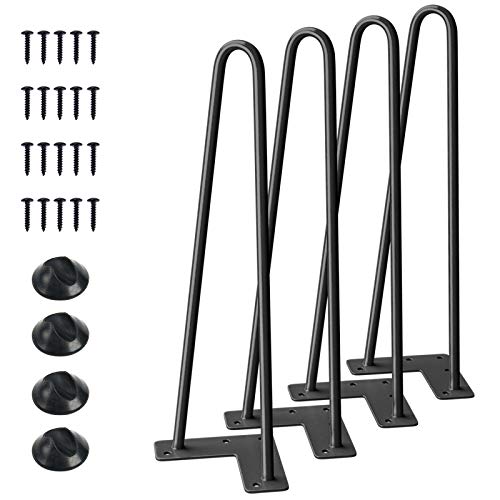
SMARTSTANDARD 16" Hairpin Furniture Legs, Black 4PCS | Metal Home DIY Projects for Nightstand, Coffee Table, Desk, etc with Rubber Floor Protectors
Check price on Amazon
DorBuphan Table Legs Metal 2 PCS for DIY Tables, Desks, and Bench | Black Steel Table Legs 28" H x 24" W, Heavy Duty and Stable
Check price on Amazon
VEVOR 28 Inch Adjustable Furniture Legs, Square Reinforced Steel Office Table Legs Set of 2 for DIY, Max Load 1000 lbs Heavy Duty Desk Legs, Quick Instalation & Rich Accessories Legs Black
Check price on Amazon
QLLY 28 inch Square Adjustable Metal Table Legs, Sturdy Heavy Duty Furniture Legs with Leveling Feet, Set of 4, Black for Workbench, Industrial Desk and Custom DIY Furniture
Check price on Amazon
TIEOU Metal Table Legs Heavy Duty T Shape Metal Desk Legs 28” Height 35” Wide Industrial Table Legs, Black Table Legs, Modern Table Legs Set of 2
Check price on Amazon
VEVOR Adjustable Table Legs, 24-40 in Square Steel Furniture Legs, 1200 lbs Max Load Heavy Duty, Quick Installation, Ideal for Home Office Desk DIY, Coffee Dinner Bar Tables, Workbenches, 4 PCS, Black
Check price on AmazonInstallation Tips and Common Mistakes
Even premium legs can perform poorly if installed carelessly. Follow these guidelines.
- Pre-drill mounting holes. Steel mounting plates have pre-drilled holes, but wood tops still need pilot holes to prevent splitting.
- Use the right fasteners. Match screw length to top thickness. For stone or composite tops, use threaded inserts rather than direct screws.
- Check square before tightening. Measure diagonals from leg to leg. A table that is square will not wobble even on a slightly uneven floor.
- Install glides last. Add adjustable glides or felt pads after the table is assembled and tested on its final floor.
For space-conscious layouts, steel legs make compact tables especially stable. See how they work in small dining tables for 4 and 2-person dining tables.
Frequently Asked Questions
Are steel table legs strong enough for a heavy dining table?
Yes, provided the leg type matches the load. Box frame and square tube legs are rated for heavy solid wood and stone tops. Hairpin legs, by contrast, are intended for lighter furniture such as desks and side tables.
Will steel legs scratch my floor?
Not if fitted with the correct glides or rubber caps. Most steel legs ship with foot protection. For hard floors, add felt pads; for uneven surfaces, use adjustable leveling glides.
Can I use indoor steel legs outdoors?
Only if they are stainless steel or have an explicit rust-proof finish. Standard powder-coated mild steel will corrode in damp or outdoor conditions over time.
How many legs does a dining table need?
Four legs is the standard for stability. Very long tables may benefit from a central pedestal or a six-leg configuration to prevent sagging. Box frames distribute load differently and can support larger spans with just two end frames.
What is the difference between hairpin and U-shaped legs?
Hairpin legs use bent rods that flex more and suit lighter loads. U-shaped legs use a continuous bent tube that spreads load across the table width, offering better rigidity for dining use.
Do steel legs work with DIY tabletops?
Absolutely. Steel legs are among the most popular choices for DIY builds because they arrive pre-welded and need only basic drilling. A table and chairs set base can often be upgraded with steel legs for a fresh industrial look.
Ready to choose? Measure your tabletop, estimate the total load, and select a leg type from the comparison above. Then browse the recommended steel table legs below to find a profile that matches your style and strength needs.