


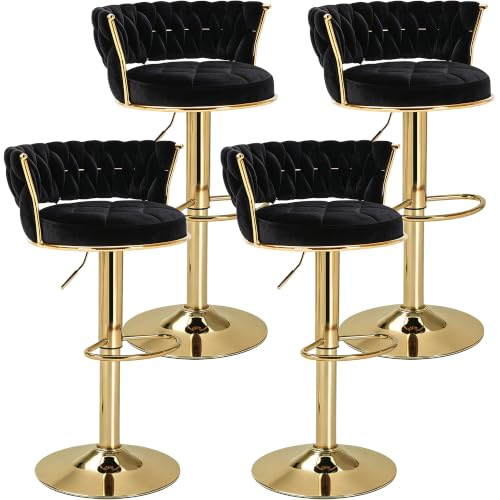
What Makes a Great Set of Four Swivel Bar Stools?
Swivel bar stools with backs and arms set of 4 are one of the most practical seating investments for a kitchen island or a home bar. The combination of a 360-degree swivel seat, a supportive backrest, and armrests delivers a level of comfort that basic backless stools simply cannot match. But not every set is built the same way. The right choice depends on your counter height, the amount of daily use, the material palette of your room, and how much seating space you can realistically allocate.
Before comparing specific products, it helps to understand the four pillars of a good set: correct height, a smooth swivel mechanism, durable frame construction, and upholstery that suits your household. Each pillar influences the others. A beautifully upholstered stool with a wobbly swivel base will frustrate you within weeks, while a rock-solid frame paired with the wrong seat height will never feel comfortable no matter how well it is made.
Start with Height: Counter vs Bar
Height is the single most common mistake buyers make. Counter height and bar height are not interchangeable. Counter height stools generally pair with kitchen islands and counters that stand around 36 inches from the floor, while bar height stools are designed for bars and pub tables closer to 42 inches. As a rule of thumb, you want roughly 9 to 12 inches of clearance between the seat top and the underside of the counter or bar.
If you are still mapping out your seating zone, our guide on bar height vs counter height stools breaks down the measurements in detail. For a quick sanity check, measure from the floor to the counter surface, subtract your desired clearance, and compare that figure to the seat height listed for any set you are considering. A set that is two inches off will feel awkward every single day.
The Swivel Mechanism: Smoothness and Longevity
The swivel is the defining feature of this category, and it is also where quality tiers diverge most visibly. Entry-level sets often use a simple nylon or plastic bearing ring that works fine initially but can develop a gritty, uneven rotation over time. Mid-range sets typically upgrade to a steel ball-bearing swivel plate, which delivers smoother rotation and better weight distribution. Top-tier and commercial-grade sets frequently use heavy-duty steel swivels rated for continuous use, sometimes with a self-centering or memory-return function.
A good swivel should rotate quietly and evenly, with no wobble when you lean to one side. If you can test a floor model in person, spin it several times and listen for grinding or clicking. Online, look for product descriptions that mention ball-bearing construction and weight capacity ratings — these are strong signals of build quality.
Backs and Arms: Comfort That Earns Its Keep
Backrests and armrests transform bar stools from occasional perches into genuine seating. A low backrest supports the lumbar area during long conversations, while armrests reduce shoulder fatigue and make it easier to get in and out of the seat. For households that use the island as a primary dining spot, backs and arms are close to essential.
The trade-off is footprint. Stools with arms need more clearance between each other and more space to slide under the counter. If your island has a tight overhang or you plan to tuck the stools fully underneath, measure the arm width and compare it to the spacing between the stool positions. Upholstered models with high backs also read as more formal, which suits some interiors better than others — a consideration we cover in our dining room styles section.
Comfort & Support
Padded seats, lumbar-friendly backrests, and armrests make a set of four suitable for daily meals and long hosting sessions, not just quick coffee breaks.
Mobility & Flow
The 360-degree swivel lets guests turn toward the kitchen or the conversation without scraping chair legs across the floor — a quiet win in open-plan homes.
Visual Cohesion
A matched set of four delivers a coordinated look around an island, avoiding the mismatched-stool effect that undermines a carefully planned kitchen.
Materials and Construction: What to Look For
Most swivel bar stools with backs and arms fall into a few material families. Each has a distinct personality and maintenance profile.
Metal Frames with Upholstered Seats
Steel and iron frames are the workhorses of this category. They are rigid, resist wobble, and pair naturally with padded seats in fabric, faux leather, or genuine leather. Look for powder-coated finishes on metal frames — a rust-proof finish matters especially if the stools sit near a sink or in a humid climate. High-grade steel with a reinforced base plate is a hallmark of mid-range and premium sets. Our metal dining table legs guide discusses frame construction principles that apply equally here.
Wood Frames
Solid wood frames — often rubberwood, oak, or walnut — bring warmth and suit farmhouse, transitional, and mid-century interiors. Walnut in particular pairs beautifully with upholstered seats. Our walnut bar stools overview explores the grain and finish options available in this material. Wood frames require a little more care around moisture, so wipe up spills promptly and keep the stools away from direct dishwasher steam.
Upholstery Choices
Faux leather (PU or PVC) is the most common choice in this category because it wipes clean, resists staining, and holds its shape well. Fabric — linen blends, bouclé, or performance weaves — feels softer and more premium but needs spot cleaning and occasional deep cleaning. Genuine leather sits at the top of the durability ladder and develops a patina over time. If the stools will be used by children or around messy meals, faux leather or a performance fabric is the pragmatic pick.
Footrests and Base Design
Never overlook the footrest. A well-placed footrest takes pressure off the legs and is one of the clearest comfort differentiators between tiers. Look for a footrest that is integrated into the frame rather than bolted on as an afterthought. Base design matters too: a four-leg base is stable but takes up floor space, while a round pedestal base with a weighted plate saves room and swivels more freely. If you have hardwood floors, check whether the base ships with glides or pads — adding felt pads is a cheap, effective safeguard.
How to Choose the Right Set for Your Space
A set of four is ideal for islands that seat four, but the geometry of your island matters as much as the seat count. As a general guide, allow about 24 inches of width per stool, plus a few inches of breathing room between them. If your island overhang is shallow, low-back or mid-back models with compact arms will tuck in more easily than tall, winged backrests.
Style-wise, swivel stools with backs and arms sit comfortably in farmhouse, transitional, and modern industrial kitchens. In a light coastal kitchen, a fabric-upholstered set in a neutral tone keeps things airy. In a darker, moodier space, faux leather in a deep tone with a black metal frame feels intentional and grounded. Our guides on warm neutral palettes and dark and moody tones can help you match the stools to your existing palette.
Quality Tiers at a Glance
To keep comparisons practical without anchoring to any specific figures, we use a tier system that describes where a set sits in the market relative to others in its category.
| Tier | Typical Construction | Best For |
|---|---|---|
| Starter tier | Basic metal frame, nylon swivel ring, padded faux-leather seat, simple footrest | Occasional seating, secondary bars, rental spaces |
| Mid-range | Reinforced steel frame, ball-bearing swivel, high-density foam, better upholstery | Daily family meals, kitchen islands in busy homes |
| Premium | Heavy-duty steel or solid hardwood frame, smooth swivel, premium fabric or leather | Primary dining islands, design-forward kitchens |
| Commercial-grade | Reinforced welds, continuous-use swivel, contract-grade upholstery | Home bars with heavy entertaining, hospitality-style spaces |
Mid-range sets usually deliver the best balance for most homes: the swivel is smoother and the frame more rigid than starter-tier models, while the jump to premium is often about upholstery refinement and design detail rather than raw durability. For most families, a well-specified mid-range set of four is a long-term investment that will hold up for years of daily use.
Care and Maintenance for Longevity
Swivel stools with upholstery need modest but consistent care. Wipe faux leather with a damp cloth and mild soap weekly, and avoid abrasive cleaners that dull the finish. Fabric seats benefit from vacuuming with a soft brush attachment and prompt blotting of spills. Check the swivel plate and base screws every few months; a loose bolt is the most common cause of wobble and is easily tightened with a wrench.
For wood-framed sets, use a wood conditioner occasionally and keep the stools out of direct sunlight to prevent fading. Our care and maintenance hub covers furniture-specific routines in more depth, and if you are refreshing an older set, upholstery fabric for chairs offers guidance on choosing replacement covers.
Frequently Asked Questions
What is the difference between counter height and bar height swivel stools?
Counter height stools typically have a seat height of 24 to 26 inches and pair with 36-inch counters, while bar height stools have a seat height of 28 to 30 inches and pair with 42-inch bars. Always measure from floor to counter or bar top before choosing, and aim for 9 to 12 inches of clearance between the seat and the counter underside.
Are swivel bar stools with backs and arms comfortable for long seating?
Yes, models with padded upholstery, supportive backrests, and armrests are designed for extended seating. Look for high-density foam, breathable fabric or faux leather, and an integrated footrest to reduce leg fatigue during long meals or gatherings.
How many stools fit around a typical kitchen island?
Allow roughly 24 inches of width per stool plus a few inches between them. A standard island that is 6 to 7 feet long comfortably seats three to four stools; measure your overhang and arm width carefully, since armrests increase the footprint.
How do I protect hardwood floors from swivel stool bases?
Choose stools with felt glides or rubberized feet, or add adhesive felt pads to the base. A round area rug beneath the seating zone also prevents scratches, reduces noise, and anchors the seating area visually.
Can a set of four swivel stools be used outdoors?
Only if the set is explicitly rated for outdoor use. Standard upholstered swivel stools are designed for indoor environments; moisture and UV exposure will degrade the frame finish and upholstery. For covered patios, look for weather-resistant coatings and outdoor-rated fabrics.