
What Is Bar Height vs Counter Height Stools
Understand the exact differences in stool height, seating clearance, and surface pairing so you can choose the right seating for your kitchen island, breakfast bar, or pub table with confidence.
Quick answer: Counter height stools are typically 24 to 27 inches tall and pair with surfaces around 36 inches high. Bar height stools are typically 28 to 33 inches tall and pair with surfaces around 40 to 42 inches high. The deciding factor is not the stool itself but the height of the surface it will tuck under — and the gap you leave between the seat and the underside of that surface. This guide breaks down both categories, explains the ergonomics, and helps you match stools to your space.
Bar Height vs Counter Height Stools: The Core Difference
Both counter stools and bar stools are designed for elevated seating, but they serve different surface heights. Confusing the two is one of the most common seating mistakes in kitchen and dining design. A stool that is too tall leaves no knee clearance and forces an awkward perch. A stool that is too short puts the seated person's chin near the surface. Getting the category right is the foundation of comfortable elevated seating.
The term bar height stool refers to seating built for pub-style bars and raised counters, while counter height stools are built for standard kitchen islands and breakfast counters. The companion guide on counter height vs bar height stools covers the same distinction from the opposite angle. If you want a broader comparison of how these heights fit into full dining layouts, the guide on the difference in counter height and bar height is a useful companion read.
| Feature | Counter Height Stools | Bar Height Stools |
|---|---|---|
| Typical seat height | 24 to 27 inches | 28 to 33 inches |
| Matching surface height | About 35 to 37 inches | About 40 to 42 inches |
| Seat-to-surface clearance | About 9 to 12 inches | About 9 to 12 inches |
| Common locations | Kitchen islands, breakfast bars, peninsulas | Pub tables, home bars, raised bar counters |
| Footrest position | Roughly 6 to 9 inches above the floor | Roughly 9 to 12 inches above the floor |
| Typical market tier | Entry-level to premium | Entry-level to luxury |
| Best for | Everyday family dining at the island | Entertaining, pub-style tables, home bars |
What Are Counter Height Stools?
Counter height stools are the workhorse of modern kitchen seating. They are designed to slide under a countertop that stands roughly 36 inches from the floor — the standard height of most kitchen islands, peninsulas, and breakfast bars in residential homes. Because that surface height is so common, counter stools are the most widely purchased category of elevated seating.
A well-proportioned counter stool leaves a gap of about 9 to 12 inches between the top of the seat and the underside of the counter. That clearance is what allows a person to cross their legs, rest their hands comfortably, and get in and out without banging their knees. Stools in the 24 to 27 inch seat height range are the standard match for a 36 inch counter.
Where Counter Height Stools Fit Best
- Kitchen islands — the most common application, especially in open-concept kitchens where the island doubles as a casual dining spot.
- Breakfast bars and peninsulas — raised sections of a counter that face into the kitchen or living area.
- Pass-through counters — service counters between a kitchen and a dining or family room.
- Casual dining nooks — counter-height tables that sit between a standard dining table and a pub table in height.
Counter stools are generally the safer choice for households with children and older adults because the lower seat height is easier to mount and dismount. The slightly lower center of gravity also makes them more stable for everyday use.
Advantages
- Comfortable for daily family use
- Easier for children and seniors to use
- Widest selection of styles and tiers
- Pairs with the most common island height
Limitations
- Not suitable for true pub-height bars
- Less dramatic visual presence in a room
- May feel low at a raised bar counter
What Are Bar Height Stools?
Bar height stools are built for surfaces that stand around 40 to 42 inches from the floor. These surfaces are typically found at pub-style tables, home bar counters, and raised bar sections that are intentionally set higher than a standard kitchen counter. The extra height creates a more social, face-to-face seating arrangement and a stronger visual statement in a room.
The seat height range for bar stools is generally 28 to 33 inches, again maintaining that 9 to 12 inch clearance between the seat and the underside of the bar. Because the seat is higher, bar stools usually feature a more pronounced footrest to keep legs supported and posture natural. Without a properly positioned footrest, a bar stool becomes fatiguing after a short period.
Where Bar Height Stools Fit Best
- Pub tables and pub-style dining sets — high-top tables designed for casual meals and socializing.
- Home bar counters — dedicated bar areas in basements, living rooms, or dedicated entertaining spaces.
- Raised bar sections — two-tier islands where the bar side is intentionally set higher than the prep side.
- Outdoor bar setups — patio bar counters and outdoor entertaining zones, where a taller perch suits standing guests who move around.
Bar height seating is more common in entertaining-focused spaces than in everyday family kitchens. The higher seat is less accessible for young children and requires more effort to mount, so it is often paired with adult-oriented bar areas rather than primary family dining zones. If you are furnishing an outdoor entertaining space, the guide to outdoor bar furniture covers how bar height seating fits into patio layouts.
Advantages
- Strong visual presence and social atmosphere
- Ideal for entertaining and standing-guest flow
- Works well with pub tables and dedicated bars
- Keeps seated guests closer to standing eye level
Limitations
- Harder for children and some adults to use
- Requires a properly placed footrest for comfort
- Narrower style selection than counter stools
- Not compatible with standard 36 inch counters
How to Measure for the Right Stool Height
The single most reliable method is to measure from the floor to the underside of the surface where the stool will sit. Do not measure to the top of the countertop, and do not rely on the nominal height of the island. The underside measurement is what determines usable knee clearance.
- Measure floor to underside of the surface. Use a tape measure from the floor straight up to the bottom edge of the counter or bar. This is the number that matters most.
- Subtract your target clearance. Aim for a gap of 9 to 12 inches between the top of the stool seat and the underside of the surface. A 10 inch gap is a comfortable middle ground for most people.
- Match the result to a stool category. If the underside measures around 36 inches, you need counter height stools. If it measures around 40 to 42 inches, you need bar height stools.
- Check the footrest height. The footrest should sit roughly 6 to 9 inches above the floor for counter stools and 9 to 12 inches above the floor for bar stools. A footrest that is too low leaves legs dangling; too high and the knees are pushed up.
- Account for counter overhang. If the counter has a deep overhang, a stool with a slightly wider base or a backrest may still tuck in comfortably. Verify that the stool's footprint fits under the overhang.
If you are planning a full elevated dining setup rather than just island seating, the guide to pub style dining table and chairs explains how bar height tables and stools work together as a matched set. For a compact version of the same concept, see the pub table and chairs overview.
Matching Stool Style to Your Space
Once the height category is settled, style and material choices determine how the seating fits the room. Both counter and bar height stools are available across a wide range of designs, from simple backless stools to fully upholstered swivel seats. The tier descriptors below are based on construction quality and market positioning rather than any specific figure.
Backless Wood or Metal Stools
Simple, straightforward stools with a solid build and a basic footrest. These are a solid choice for the tier when the seating is used occasionally or when the island is in a secondary space.
Best for: Casual kitchen islands, rental properties, short-term seating.
Upholstered Seat Stools
A padded seat and a reinforced frame make these comfortable for longer meals. Many mid-tier models add a low backrest for support without becoming bulky.
Best for: Everyday family islands, breakfast bars used daily.
Swivel Stools with Backs and Arms
Smooth swivel mechanisms, contoured backs, and premium upholstery. These are well-specified for the category and suit spaces where the seating is a design focal point.
Best for: Entertaining islands, open-concept kitchens, home bars.
Solid Wood and Designer Frames
Hardwood frames, hand-finished details, and tailored upholstery. A long-term investment for a room where the bar seating is part of the architectural statement.
Best for: Formal home bars, luxury kitchens, statement islands.
Material choices also matter for durability. Metal legs and frames generally offer heavy-duty support and are easy to maintain. The guide to metal dining table legs explains the same construction principles applied to stool frames. For a warm, natural look, walnut is a popular option — see the walnut bar stools selection for the bar height category and the walnut bar chairs range for models with a backrest. If a coastal or textured look suits the room better, rattan bar stools with backs bring a lighter, woven visual to the space.
For a vintage or industrial feel, vintage bar stools and western bar stools offer distinctive silhouettes. Swivel models with arms are particularly practical at an island where people turn to face the kitchen — the swivel bar stools with backs and arms category covers this format, and multi-pack options are available in the set of 4 swivel bar stools with backs and arms listing. For seating without arms, see the set of 4 swivel bar stools with backs.
Ready to Choose Your Stools?
Use the measurement method above to confirm whether your space needs counter height or bar height seating, then explore the styles that match your kitchen or bar layout.
Explore Bar and Counter StoolsCommon Mistakes to Avoid
- Choosing by look instead of measurement. A stunning stool that is two inches too tall will be uncomfortable every single day. Measure first, then shop.
- Ignoring the footrest. The footrest is not decorative. Without proper leg support, even a well-padded seat becomes tiring at elevated heights.
- Mixing heights at one surface. Keep all stools at the same height along a single counter or bar. Mixed heights look inconsistent and create uneven seating.
- Forgetting the overhang. Confirm that the stool's base and any backrest will actually fit under the counter overhang without blocking knee space.
- Overlooking seat width for wider users. Standard stool seats are around 15 to 17 inches wide. Wider seats with a higher weight rating are available in most tiers and are worth confirming before purchase.
Frequently Asked Questions
What is the difference between bar height and counter height stools?
Counter height stools are typically 24 to 27 inches tall and pair with counters around 36 inches high. Bar height stools are typically 28 to 33 inches tall and pair with bars around 40 to 42 inches high. The key difference is the seat-to-surface clearance, which should be about 9 to 12 inches in both cases.
How do I know which stool height I need?
Measure from the floor to the underside of your counter or bar surface. For counter height surfaces around 36 inches, choose stools with a seat height of 24 to 27 inches. For bar height surfaces around 40 to 42 inches, choose stools with a seat height of 28 to 33 inches. Aim for a 9 to 12 inch gap between the seat and the underside of the surface.
Can I use bar height stools at a counter height island?
It is not recommended. Bar height stools at a counter height island leave too little knee clearance, making seating uncomfortable and potentially unsafe. Always match the stool height to the surface height for proper ergonomics.
Are bar height stools or counter height stools better for families with children?
Counter height stools are generally the better choice for families with young children. The lower seat height makes it easier for children to climb up and down safely, and the seated position is closer to the floor, which reduces the risk of a fall.
Do bar height stools always need a footrest?
Yes, a footrest is strongly recommended on bar height stools. At a seat height of 28 to 33 inches, legs that dangle without support create pressure on the back of the thighs and lead to fatigue quickly. A footrest positioned 9 to 12 inches above the floor keeps the seated posture natural.
Recommended Bar Height and Counter Height Stools
⚠️ AFFILIATE DISCLOSURE: This website contains affiliate links. As an affiliate Associate, we earn from qualifying purchases. If you make a purchase through these links, we may receive a small commission at no additional cost to you. Read our full affiliate policy.
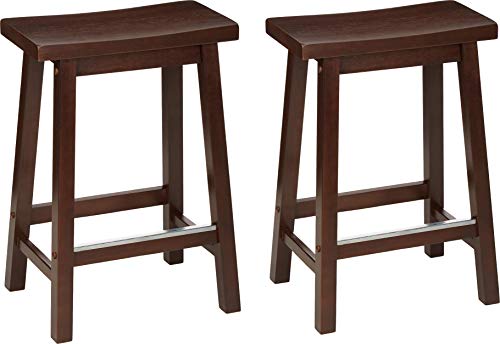
Amazon Basics Solid Wood Saddle-Seat Counter Height Bar Stools for Kitchen Island with Footrest, 24-Inch Height, Walnut, Set of 2
Check price on Amazon
DUMOS 24 Inch Counter Height Bar Stools Set of 4, Kitchen Island, Brown | Backless Saddle Seat, PU Leather, Metal Base Footrest for Dining Room, Kitchen
Check price on Amazon
VATROS Counter Height Bar Stools Set of 3, FSC Certified Upholstered Faux Leather Barstools with Back, Metal Base, 27" Seat Height, Modern Upholstered Counter Stools for Kitchen Island,(Walnut Brown
Check price on Amazon
Yongqiang 26" Metal Bar Stools Set of 4, Barstools with Back Large Seat | Modern Farmhouse Counter Height Chairs, Rusty High Back Bar Chairs For Kitchen Island, Dining Room, Easy Assembly
Check price on Amazon
HOOBRO Bar Stools, Set of 2 Bar Chairs, 23.6 Inch Saddle Stools, Kitchen Counter Seat with Footrests, Industrial Barstools for Dining Room, Kitchen, Counter, Rustic Brown and Black BF02MD01
Check price on Amazon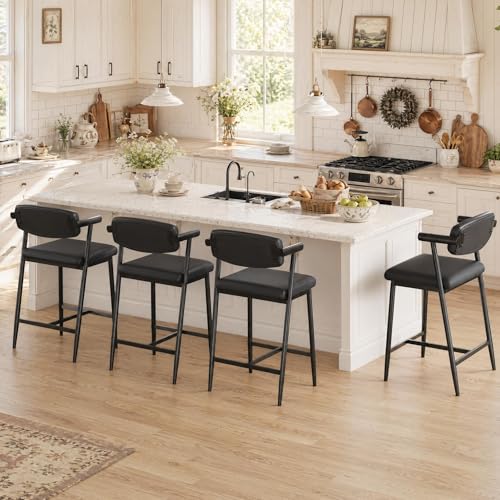
Garvee Bar Stools Set of 4 with Arms, Counter Height Metal Tall Bar Stools with Back & Footrest, Wider Seat, Sturdy Frame, 26" High Bar Chairs for Kitchen Island, Counter, Easy Assembly, Rustic Black
Check price on Amazon