
Table Place Setting: The Complete Guide to Perfect Dining Arrangements
Learn plate placement, cutlery order, glassware positioning, and napkin folding so every meal — from weeknight dinner to formal celebration — looks effortlessly polished.
Why place settings matter: A well-set table tells guests you care before the first course arrives. Proper placement also makes dining easier — everything sits where the hand naturally reaches for it. This guide walks through the exact rules professionals use, plus flexible shortcuts for casual meals.
What Is a Table Place Setting?
A place setting is the arrangement of dinnerware, cutlery, glassware, and napkin at each individual dining position. It defines the "footprint" a guest can use without bumping into a neighbor's dishes. Standard etiquette places the center of each setting roughly 24 inches (60 cm) apart, giving diners room for plates, elbows, and glasses.
The classic rule that governs all settings is simple: work from the outside in. Utensils are laid out in the order they will be used — the outermost fork is for the first course, and you move inward with each subsequent course. Once you understand this principle, formal settings stop feeling intimidating.
Whether you're planning a holiday feast, a dinner party, or simply upgrading your everyday meals, mastering place settings pairs naturally with choosing the right tablecloths and table runners to frame the arrangement. If you're still selecting the base layer of your table, browse our guide to table dinner ideas for inspiration.
The Core Placement Rules Every Setting Follows
Regardless of how elaborate a table becomes, these foundational rules never change:
- The plate anchors everything. The dinner plate sits dead center, about one inch from the table edge. All other items radiate from it.
- Forks go left, knives and spoons go right. This keeps the dominant hand free for cutting and lifting.
- Knife blades face the plate. This is a safety rule as much as an aesthetic one — the sharp edge points inward.
- The napkin goes left of the forks in formal settings, or on the plate for decorative effect.
- Glassware sits upper right, above the knives, never in the path of the plate.
- Butter plate sits upper left, with its butter knife laid across it horizontally or at a diagonal.
- Dessert utensils go above the plate — fork with tines toward the diner and spoon below it, or side-by-side when presented together.
Formal Setting Layout at a Glance
Salad fork
Dinner fork
Butter plate (upper left)
Soup spoon
Water glass (upper right)
Wine glasses (upper right)
These basic rules apply to every table style you might choose, from modern minimalism to farmhouse warmth. If you're building out a cohesive dining space around your settings, our guides on table place setting basics and tables for two offer practical context for smaller layouts.
Casual Table Setting: Practical Everyday Dining
The casual setting strips away anything not needed for a normal meal. It's the version most households use on weeknights and the one you should learn first, because every formal setting is just an expanded casual setting.
What You Need
- Dinner plate in the center
- One fork to the left of the plate
- One knife (blade facing the plate) and one spoon to the right
- Water glass above the knife
- Napkin folded on the plate or set to the left
That's it. No salad fork, no extra wine glasses, no butter plate. The casual setting works for breakfast, lunch, dinner, and anything in between, and it's forgiving if guests arrive unexpectedly.
Tip: Even a casual setting benefits from consistency. Keep the same order for cutlery and glassware every night so everyone in the household instinctively knows where their utensils sit.
For households that lean into a relaxed, seasonal style, our collection of summer tables shows how a simple casual setting can be dressed up with greenery and light linens.
Informal Table Setting: The Dinner-Party Standard
The informal setting is the sweet spot for dinner parties, birthday celebrations, and weekend gatherings. It adds a salad fork, a bread plate, and a wine glass without the full formality of a multi-course arrangement.
How to Build It
- Left of the plate: salad fork on the outside, dinner fork closer to the plate, napkin further left (or folded on the plate)
- Right of the plate: dinner knife closest to the plate, then soup spoon, then a second spoon if serving dessert
- Above the plate: dessert spoon and fork, laid horizontally
- Upper left: bread-and-butter plate with a butter knife resting across it
- Upper right: water glass and one or two wine glasses
This setting is flexible enough to handle a three-course meal without overwhelming the table. It pairs beautifully with table runners that leave room for centerpieces, and with dinnerware sets that include salad plates sized for the outer fork.
If your table is a round or compact shape, refer to our notes on tables for small spaces to ensure place settings don't crowd the centerline.
Formal Table Setting: The Full Multi-Course Arrangement
Formal settings appear at weddings, holiday dinners, and milestone celebrations. Their hallmark is completeness: every course gets its utensil, every beverage gets its glass, and the table looks symmetrical from any seat.
The Full Formal Layout
- Center: dinner plate, often with a charger plate beneath it
- Far left: napkin, then fish fork, salad fork, dinner fork — or simply salad fork and dinner fork depending on the menu
- Inner left (optional): service plate or charger visible under the dinner plate
- Right of plate: dinner knife, fish knife, soup spoon — all blades facing the plate
- Above plate: dessert spoon and dessert fork
- Upper left: bread plate with butter knife
- Upper right: water goblet closest to plate, then white wine glass, then red wine glass in service order
Formal settings can look busy, but the outside-in rule keeps them intuitive. The guest simply picks up the outermost utensil for each course. When done, all cutlery is placed together on the plate, tines up, at roughly the four o'clock position.
Pro tip: Never place more than three utensils on each side of the plate. If a menu requires additional courses, bring clean utensils out between courses rather than crowding the setting.
For tables intended for larger gatherings, our page on table and chairs configurations shows how to space settings so each guest has comfortable elbow room.
Cutlery Order Explained: The Outside-In Rule
Cutlery order is the single most misunderstood part of place settings. The rule is elegant: use from the outside in. The fork furthest from the plate is for the first course; as courses progress, you move inward toward the plate.
Left Side, From Outside In
- Salad fork (if salad is served before the main)
- Fish fork (if fish is a separate course)
- Dinner fork (closest to the plate)
Right Side, From Inside Out
- Dinner knife (closest to the plate)
- Fish knife (if needed)
- Soup spoon (outermost)
Above the Plate
Dessert fork and spoon rest horizontally above the dinner plate, fork on top with tines pointing right, spoon below with bowl pointing left. This keeps them out of the way during the main course.
When the meal is complete, all utensils are placed parallel on the plate with handles at four o'clock and tines or bowls facing up — the universal signal that you've finished.
Combining proper cutlery order with well-chosen table linens and a set of dinnerware sets creates a setting that feels intentional and calm, even at large gatherings.
Glassware Positioning: Where Every Glass Belongs
Glassware follows a clear rule: it sits in the upper-right quadrant of the setting, above the knives and to the right of the plate. No glass should ever block the diner's access to food.
The Standard Arrangement
- Water glass: closest to the plate, positioned directly above the dinner knife
- White wine glass: just to the right and slightly behind the water glass
- Red wine glass: behind and right of the white wine glass
- Champagne flute (optional): furthest right, unless it's the only wine glass in use
If you're only setting one wine glass, place it beside the water glass in a straight line. If you're serving beer or cocktails, align the glass with the water glass to keep the table visually balanced.
Glassware also plays a decorative role. For example, colored stemware can echo the palette of your tablecloths, and a simple water goblet pairs beautifully with a linen table runner. If you're outfitting a bar cart or secondary station nearby, our guide to swivel bar stools may be useful for adjacent seating.
Napkin Placement and Folding Techniques
Napkins are where place settings get personal. They signal formality, carry color, and give you a chance to be creative without breaking the rules.
Where the Napkin Goes
- Casual: folded in half or quarters, placed to the left of the forks
- Informal: folded in a simple rectangle or triangle on the dinner plate
- Formal: folded and placed on the plate, often with a napkin ring or a decorative fold
Popular Folding Styles
- The square fold: fold the napkin in quarters, smooth, and lay flat. Timeless and fast.
- The triangle fold: fold in half diagonally, then fold the long edge upward to create a pocket for cutlery.
- The roll: roll the napkin tightly, secure with a ring or a strip of twine, and place on the plate for a modern look.
- The fan: pleat the napkin from one corner, tuck into a glass or napkin ring — elegant for formal occasions.
Napkins should be pressed and clean, roughly 18 to 20 inches square for dinner, and 12 to 16 inches for lunch. If your napkins match the tablecloths or contrast with the table runners, the setting gains an instant sense of cohesion. For seasonal looks, consider matching napkins to the palette in our summer tables guide.
Common Place Setting Mistakes to Avoid
Even careful hosts make these errors. None are disastrous, but fixing them elevates the setting immediately.
- Knife blade facing outward. Blades should always point toward the plate.
- Crowding the setting. Keep at least 24 inches between place-setting centers.
- Placing glassware in front of the plate. Glasses belong upper right, never obstructing access to the plate.
- Putting the dessert spoon on the right side of the plate. Dessert utensils go above the plate to avoid confusing the outside-in order.
- Forgetting the butter plate. In informal and formal settings, the bread plate sits upper left.
- Mismatched spacing. Use a ruler or measuring tape the first few times you set a table until spacing becomes second nature.
- Overloading with more than three utensils per side. Add utensils between courses instead.
Quick check: Before guests arrive, stand at the head of the table and look down. Every setting should look mirror-identical. If one side feels off-balance, something is misaligned.
Casual vs. Informal vs. Formal: Side-by-Side Comparison
Use this reference to choose the right level of setting for the occasion. Each tier builds on the one before it.
| Element | Casual | Informal | Formal |
|---|---|---|---|
| Dinner plate | Yes | Yes | Yes, often on a charger |
| Forks (left) | One | Two (salad, dinner) | Two to three |
| Knife & spoon (right) | One each | Knife, spoon, optional dessert spoon | Knife, fish knife, soup spoon |
| Butter plate | Optional | Yes | Yes |
| Water glass | Yes | Yes | Yes, plus wine glasses |
| Napkin position | Left or on plate | On plate or left | Folded on plate |
| Dessert utensils | None | Above plate | Above plate |
| Essential / Balanced / Top-tier | Everyday | Dinner parties | Celebrations |
Recommended Table Place Setting Essentials
⚠️ AFFILIATE DISCLOSURE: This website contains affiliate links. As an affiliate Associate, we earn from qualifying purchases. If you make a purchase through these links, we may receive a small commission at no additional cost to you. Read our full affiliate policy.
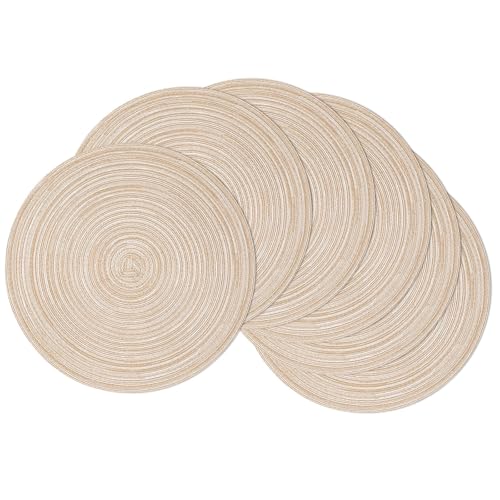
SHACOS 15 inch Round Placemats Set of 6, Cotton Polyester Woven Braided Place Mats, Washable Heat Resistant Circle Table Mats for Dining Table (Beige, 6)
Check price on Amazon
Leetaltree Beige Placemats Set of 4 - Heat-Resistant, Non-Slip Table Mats, Washable Woven Vinyl for Indoor & Outdoor Dining
Check price on Amazon
6 Sets Boho Table Runner and Woven Round Placemats Set, Khaki, 12x72" | Woven Placement for Dining with Boho Mats, Wood Bead Rings, Cloth Napkins, Burlap Runner Table Setting for Christmas Kitchen
Check price on Amazon
Handmade Heat Resistant 13" Round Woven Placemats Set of 8, Wicker Boho No Chemical Natural Water Hyacinth Place Mats, Farmhouse Table Mats for Kitchen Dining Table,Home Decorations,Wedding
Check price on Amazon
SHACOS Round Braided Placemats Set of 4 Washable Place Mats for Dining Tables 15 inch Non Slip Kitchen Table Mats (Beige, 4)
Check price on Amazon
Juvale 10 Pack Gold Vinyl Placemats - 14.4" x 14.4" Round Table Mats and Plate Chargers with Leaf Design for Elegant Table Decor and Protection - Stylish Charger Plates for Events and Wedding Parties
Check price on AmazonFrequently Asked Questions About Table Place Settings
What is the correct order of cutlery in a formal place setting?
Cutlery is arranged in order of use from the outside inward. Forks sit to the left of the plate, starting with the salad fork on the far left, then the dinner fork. Knives and spoons sit to the right, with the dinner knife closest to the plate, followed by the soup spoon and dessert spoon. Dessert utensils may be placed above the plate.
Where should the water glass and wine glasses be positioned?
Glassware belongs at the upper right of the place setting, above the knives. The water glass sits closest to the plate and slightly forward. Wine glasses are positioned behind and to the right of the water glass in the order they will be used, typically white wine before red wine.
How do I set a casual table place setting?
A casual setting needs only a dinner plate, one dinner fork on the left, one knife (blade facing the plate) and one spoon on the right, a water glass above the knife, and a napkin either folded on the plate or placed to the left. This keeps everyday meals practical while still looking tidy.
Which side does the napkin go on in a place setting?
The napkin can be placed to the left of the forks, or folded and set on the dinner plate as a decorative centerpiece. For formal settings, a folded napkin on the plate is common, while casual settings often use the left-side placement so guests can reach it easily.
Do I need to use a charger plate?
No. Charger plates are decorative and optional. They sit under the dinner plate and are removed before the main course is served, or left in place if they're made of a material that can handle moisture and heat. Many hosts skip chargers entirely for informal meals.
How much space should be between place settings?
Allow about 24 inches (60 cm) between the centers of each place setting. This gives guests enough room for plates, glasses, and elbows without crowding. For narrower tables, refer to our guide on tables for small spaces for layout adjustments.
Putting It All Together
Place settings are one of the simplest ways to elevate a meal, and they cost nothing beyond attention to detail. Start with the casual setting and add elements as occasions call for them. Once the outside-in rule becomes muscle memory, you'll set a table in minutes — and your guests will notice the difference.
If you're building a complete dining space, pair your settings with thoughtful choices in tablecloths, table runners, and dinnerware sets. For a quick visual refresh, browse our summer tables inspiration, or explore table and chairs configurations to make sure your seating suits the number of place settings you plan to use.