


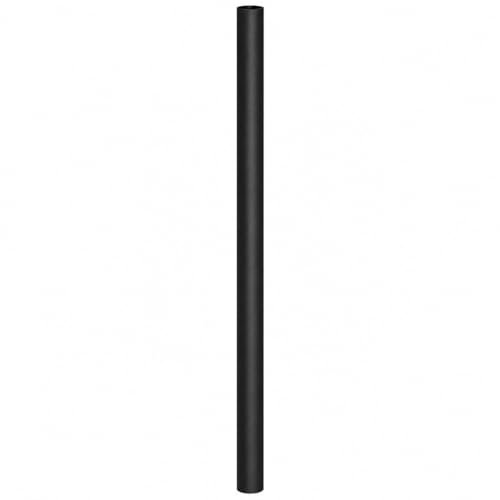

Why a Bar Height Table Needs an Extension Pole
Bar height tables are designed for standing-height seating, with the tabletop typically positioned around 40 to 42 inches above the ground. That extra height is what makes a bar table so useful for high-top patios, smaller balconies, and outdoor gathering spaces where people want to stand and talk. The catch is that most umbrellas are built around a standard dining height table, where the tabletop sits closer to 28 or 30 inches.
When you drop a standard umbrella into the hole of a bar table, the canopy ends up only a short distance above the tabletop. Tall guests find the fabric brushing their heads, the pole blocks the view across the table, and the umbrella looks visually compressed. An umbrella extension pole for a bar height table solves this by adding length between the base and the canopy. The canopy rises to a comfortable clearance, the hub sits above eye level, and the whole assembly looks proportionate to the taller table.
The extension pole also matters for airflow. A canopy that is too low traps heat and blocks breezes right where guests sit. Raising the canopy improves ventilation and makes the shaded area feel larger, which is one of the main reasons people choose a patio umbrella in the first place. If you are still sorting out the table itself, our guide to a tall bar table covers how height, footprint, and material choices affect the outdoor setup.
How to Size an Umbrella Extension Pole
Sizing is the step where most buyers get stuck, so it helps to work through it in a fixed order. You need three measurements before you shop: the height of the bar tabletop from the ground, the total pole length of your current umbrella, and the canopy clearance you want above the tallest person who will sit under it.
Step 1: Measure the bar table height
Measure from the ground to the top surface of the bar table, not to the underside of the tabletop. Most bar tables land in the 40 to 42 inch range, but some counters and high-top tables vary by an inch or two. Write the number down; you will subtract it from your total target height in a moment.
Step 2: Decide on canopy clearance
Clearance is the space between the top of the table and the underside of the open canopy. For comfortable seating, plan for at least 12 inches above the head of your tallest regular guest. If your tallest guest is 6 feet 4 inches, the underside of the canopy should sit around 6 feet 4 inches plus 12 inches, or roughly 7 feet 4 inches from the ground. That figure is a working target, not a hard rule, but it prevents the umbrella from feeling cramped.
Step 3: Compare to your current pole length
Now subtract the bar table height from your target canopy underside height. The result is the total pole length you need between the table and the hub. Compare that to the length of the pole that came with your umbrella. If your umbrella pole is shorter, the difference is the extension you need. Add a small margin, typically an inch or two, so you can fine-tune the canopy position rather than locking it in at the exact minimum.
Worked example
Suppose your bar table is 42 inches high and your tallest guest is 6 feet 2 inches (74 inches). With 12 inches of clearance, you want the canopy underside around 86 inches from the ground. That means you need about 44 inches of pole between the table and the hub. If your umbrella pole is 38 inches above the table in its current setup, an extension of roughly 6 to 8 inches would bring the canopy to the right height.
If you are still choosing a table and umbrella as a matched pair, the table umbrella with base guide explains how canopy size and table footprint should relate, and it is worth reading before you lock in your pole measurements.
Pole Diameter and Fit
Extension poles are not universal. The single most common reason an extension pole does not work is a diameter mismatch between the extension and the original pole. Patio umbrella poles usually fall in the 1.5 to 2 inch range, with 1.5 inch and 1.875 inch being especially common. Some premium market umbrellas use thicker poles, and small balcony umbrellas sometimes use thinner ones.
Measure the outside diameter of your current pole with a caliper or a tape measure wrapped around the circumference and divided by pi. Write down the number. When you shop for an extension, match that diameter exactly, or choose an extension system that is sold as a matched pair with its own upper and lower pole sections. Mismatched diameters lead to wobble, and wobble is the beginning of every stability problem with raised umbrellas.
Also check how the canopy attaches. Some umbrellas use a finial that screws onto the top of the pole, others use a hub that slides over the pole and is secured with a pin, and some use a threaded collar. Your extension pole needs to preserve that attachment point, either by extending the pole below the hub or by using an adapter that matches the original thread and pin spacing.
| Pole tier | Typical construction | Best for | Stability notes |
|---|---|---|---|
| Entry-level | Thin-walled aluminum, simple pin lock | Occasional use on calm patios | Works for light canopies; pair with a heavy base |
| Mid-range | Thicker aluminum or steel, collar or threaded connector | Regular seasonal use | Good balance of rigidity and weight; solid for most homes |
| Premium | Reinforced aluminum or stainless steel, precision fit | Frequent use and larger canopies | Minimal flex at the joint; handles breezier sites |
| Commercial-grade | Heavy-gauge steel, welded collars, powder-coated finish | Hospitality and windy locations | Highest rigidity; requires a substantial base |
Materials and Finish
Outdoor umbrellas live in sun, rain, and humidity, so the pole material matters as much as the length. Aluminum is the most common choice because it resists rust and stays light enough to handle when you raise and lower the canopy. Steel is stronger and more rigid, but it needs a proper powder-coated finish to resist corrosion. Stainless steel sits at the top of the range for durability and is a common choice in coastal areas where salt air accelerates rust on lesser metals.
Look for a rust-proof finish and, if the pole is steel, a coating that covers the inside of the tube as well as the outside. Seams and pin holes are where corrosion starts, so a well-sealed connector is a good sign. If the pole is going to stay outside year-round, a weather-resistant coating is worth prioritizing. Our overview of sustainable wood care is a useful companion read if your table has a timber top that also needs seasonal protection.
Wooden poles exist but are uncommon for extension setups. A wooden extension adds weight and is harder to seal at the joint. If your umbrella came with a wooden pole and you love the look, a wooden extension is available, but check that the joint is reinforced and that both sections are treated for outdoor use.
Connector Types Explained
The connector is the joint between the original pole and the extension. It is the part that takes the most stress when wind pushes on the canopy, so it deserves close attention. There are three main designs.
Pin-and-hole connectors
A pin passes through holes in both pole sections and locks them together. This is the simplest and most common design on entry-level and mid-range umbrellas. It is easy to adjust because you can choose among several holes, but it can develop play over time if the holes wear. Choose a pin with a spring clip or a threaded locking pin rather than a loose cotter pin.
Collar connectors
A collar slides over the joint and tightens with a screw or cam lever, compressing the two pole sections together. Collar connectors distribute stress more evenly than a single pin and are less prone to wobble. They are common on premium umbrellas and on extension poles sold for larger canopies.
Threaded connectors
The two pole sections screw together with matching threads. This is the most rigid option when the threads are well machined, but it is less forgiving of a mismatch. Threaded connectors are common on stainless steel poles and on commercial-grade setups. They are harder to adjust on the fly, so you want to get the length right the first time.
Fit check before you buy
Confirm three things: the outside diameter of your current pole, the attachment method at the canopy hub, and the connector type on the extension. If any one of these does not match, the extension will either not fit or will fit loosely. When in doubt, buy an extension system that includes both the upper and lower pole sections so the parts are guaranteed to work together.
Stability, Weight, and Wind
Raising the canopy changes the physics of the whole assembly. A taller pole gives the wind more leverage, and that leverage transfers down through the table and into the base. The base is the real anchor, so an extension pole should always be paired with a base that is heavy enough and wide enough for the canopy size you are using. A small base under a large canopy is the most common failure point in outdoor umbrella setups.
Choose a base rated for your canopy diameter and, if your patio is exposed to gusts, consider going one size up. Fillable bases are popular because they are easier to move when empty, but check the filled weight and make sure the base footprint is wide enough to resist tipping. If you are setting up on a balcony, a weighted base designed for compact spaces is usually the better choice than a full-size patio base.
Consider how the umbrella attaches to the table. Some bar tables include an umbrella hole and a built-in collar that stabilizes the pole near the tabletop. If your table has that collar, use it; it reduces sway at the table level and takes stress off the base. If the table has no hole, you will need a freestanding base, and the umbrella should not be leaned against the table for support.
During strong wind, close the umbrella. No extension pole or base makes an open canopy safe in a storm. A closed umbrella also lasts longer because the fabric and ribs are not constantly flexing. For broader outdoor setup planning, our guide to summer tables covers how shade, seating, and table placement work together on a patio.
Installation Walkthrough
Installing an extension pole is a straightforward job, but doing it in the right order prevents most fit and stability problems. Here is a practical sequence.
- Set up the base and table first. Place the base where you want it, then position the bar table around it. If the table has an umbrella hole, line the hole up with the base receiver.
- Assemble the pole sections on the ground. Join the lower pole, the extension, and the upper pole before threading the canopy on. It is much easier to check the fit at ground level than with the canopy overhead.
- Insert the pole through the table. Feed the assembled pole down through the table hole and into the base receiver. If the table has a stabilizing collar, secure it now.
- Attach the canopy. Slide the canopy onto the top of the pole and secure the hub or finial according to the manufacturer's instructions. Do not over-tighten threaded parts, since that can strip the thread or crack the hub.
- Open the canopy slowly. Open it partway first and check that the ribs clear the pole and that the fabric is not pinched at the hub. Then open it fully.
- Test for sway. Gently push the canopy from the side and watch the joint between the original pole and the extension. A small amount of flex is normal; a visible wobble means the connector is not tight enough or the diameter is mismatched.
- Adjust clearance. If the canopy sits too low, move the extension to a higher setting on the pin or collar. If it sits too high, lower it. Aim for the clearance you planned in the sizing step.
What an Extension Pole Will and Will Not Work With
Extension poles are designed for center-pole market umbrellas and patio umbrellas, where the pole passes through the table or stands in a freestanding base. They are not designed for cantilever or offset umbrellas. A cantilever umbrella is a complete system with a side arm, and its frame is engineered around a fixed pole height. Adding an extension changes the load path the frame was built for and can void the warranty or create a safety problem.
They also are not a fix for a pole that is too short because the umbrella was designed for a different table. If the canopy is small and the ribs are short, raising the canopy may leave the shade area too small for the bar table footprint. In that case, the better move is to choose a larger canopy rather than extending a small one. The umbrella for a table guide helps match canopy size to table size.
For picnic-style setups with benches, a dedicated picnic umbrella and base is usually the better route, and our umbrella for a picnic table article explains why the base and pole are matched differently for those tables.
Care and Maintenance
An extension pole adds one more joint to maintain, but the routine is simple. Wipe the pole and connector down a few times a season with a damp cloth to remove dust and pollen. Inspect the connector for rust or wear, especially if the pole is steel. A light coat of silicone spray on the pin or collar keeps the joint moving smoothly without attracting grit.
At the end of the season, close the canopy, remove the extension if you can store it indoors, and clean the joint before storage. If you leave the umbrella up year-round, check the base and connector after storms and tighten anything that has loosened. Replacing a worn pin is inexpensive and much easier than repairing a bent pole.
Buying Checklist
Before you buy, run through this checklist to confirm the extension will work with your setup.
- Bar table height measured from the ground to the tabletop.
- Canopy clearance target based on your tallest regular guest.
- Current pole length and the extension length you need.
- Outside pole diameter matched to the extension.
- Connector type compatible with your canopy hub.
- Base weight and footprint rated for the canopy size.
- Table umbrella hole and stabilizing collar present or a freestanding base planned.
- Pole material and finish suitable for your climate.
If you are also refreshing the table itself, the tall kitchen table guide covers how high-top tables fit into kitchen and patio layouts, and the table and chairs overview is useful for coordinating seating around the bar table.