
Tall Kitchen Table: Complete Buying Guide & Design Tips
Everything you need to choose the right tall kitchen table for your breakfast nook, open-plan kitchen, or casual dining space — height, materials, seating, and layout explained.
Explore Top PicksWhy a tall kitchen table deserves careful consideration: A tall kitchen table sits between a standard dining table and a bar counter, making it one of the most versatile pieces you can add to a kitchen or breakfast area. It raises the eating surface for easier standing conversations, pairs naturally with open-plan layouts, and often looks more compact than it actually is. But height, stool pairing, and material choice all interact in ways that are easy to get wrong.
This guide walks you through the key decisions step by step so you can buy with confidence — from understanding counter-height versus bar-height dimensions to matching stools, planning clearance, and selecting a surface material that will hold up to daily family use.
What Is a Tall Kitchen Table?
A tall kitchen table is an elevated dining surface designed for casual eating, food prep, and socializing in or near the kitchen. Unlike a standard dining table, which typically stands around 28 to 30 inches high, a tall kitchen table raises the eating surface to counter height (roughly 34 to 36 inches) or bar height (roughly 40 to 42 inches). This extra height makes it comfortable to perch on a stool rather than sit in a traditional dining chair, and it visually bridges the gap between kitchen counters and a formal dining area.
In open-concept homes, a tall kitchen table often functions as a casual zone that separates the cooking area from the living space without building a wall. In smaller kitchens, it can double as an island extension, a homework station, or a weekend brunch spot. The format is flexible by design, which is exactly why it has become a staple in modern kitchen planning.
Counter Height vs. Bar Height: Understanding the Difference
The single most important decision when shopping for a tall kitchen table is choosing between counter height and bar height. The two categories serve different purposes and require different seating, so it helps to match them to how you actually use your kitchen.
Counter-height tables usually sit at 34 to 36 inches, aligning closely with standard kitchen countertops. This makes them feel integrated with the kitchen workflow and slightly more comfortable for older family members and children. Bar-height tables rise to 40 to 42 inches, matching traditional bar counters. They create a more distinct, pub-style atmosphere and work well when you want the table to stand apart as a social focal point.
| Category | Typical Height | Best For | Stool Seat Height |
|---|---|---|---|
| Standard dining table | 28–30 in | Formal dining, long meals | Standard dining chairs |
| Counter-height tall table | 34–36 in | Everyday breakfasts, homework, kitchen overflow | 24–26 in |
| Bar-height tall table | 40–42 in | Casual entertaining, pub-style nooks, standing socializing | 28–30 in |
If you are unsure which height suits your home, start by measuring your existing kitchen counter. A counter-height table that matches it will feel visually cohesive, while a bar-height table will read as a distinct piece of furniture. Either can work beautifully, but the two should not be mixed casually in the same sightline unless you have a deliberate design reason.
How to Choose the Right Size for Your Space
Size is the second major decision, and it is where many buyers underestimate how much room a table plus stools actually requires. A tall kitchen table needs more breathing room than its footprint suggests because stools pull out in every direction.
Seating capacity and table dimensions
- Two-person tall tables: usually 30 to 36 inches square or round, ideal for a corner breakfast spot or a narrow galley kitchen.
- Four-person tall tables: typically 48 to 54 inches long when rectangular, or 40 to 45 inches in diameter when round.
- Six-person tall tables: generally 60 to 72 inches long, best suited to open-plan kitchens with generous floor area.
As a planning rule, allow at least 24 inches of table edge per person and 30 inches of clear floor space around the perimeter for stool movement. If your kitchen is tight, a round or square table maximizes usable seating without long, awkward corners.
Small kitchens and breakfast nooks
For compact kitchens, tall kitchen tables have a real advantage: many pair with backless stools that tuck fully under the tabletop, reducing the effective footprint when the table is not in use. If your space is limited, explore our guide to tables for small spaces for layout strategies that work alongside a taller format. For a dedicated nook, our breakdown of upholstered corner breakfast nooks with storage explains how built-in seating can complement a tall table without crowding the room.
Similarly, if your goal is a two-person breakfast spot, a two-person dining table guide can help you compare footprints before committing to a taller configuration.
Material and Finish Options
The material of your tall kitchen table determines not just how it looks, but how it ages through daily breakfasts, homework sessions, and holiday baking spills. Here is how the main categories compare.
Solid wood
Solid wood remains the most popular choice for tall kitchen tables because it can be refinished and repaired over time, making it a long-term investment. Oak, maple, and walnut are common options, each with distinct grain character. A well-sealed solid wood top handles daily use well, though it will show patina over the years — which many homeowners consider a feature rather than a flaw. Our guide to sustainable wood care covers how to protect and maintain a wood surface for the long run.
Marble and stone tops
Stone surfaces bring a premium, restaurant-quality feel to a tall kitchen table. They are cool to the touch, resistant to heat, and visually striking. The trade-off is weight and the need for periodic sealing against stains. If you love the stone look but want a more approachable entry point, explore our notes on marble-top tables for what to expect in care and construction.
Glass and tempered glass
Glass tops keep a tall table visually light, which is helpful in smaller kitchens where a solid wood block might feel heavy. Tempered glass is the safety standard for dining surfaces, and modern versions are easy to wipe clean. Our guide to tempered glass dining tables explains the difference between tempered and standard glass and why it matters for a busy kitchen.
Laminate and engineered surfaces
For households with young children or heavy daily use, engineered surfaces offer a practical balance of durability and easy cleaning. They resist scratches and moisture well and are typically found in the entry-level and mid-range tiers of the market. If you want a surface you can wipe down without worry after every meal, this category is worth a close look.
Pairing Stools With Your Tall Kitchen Table
A tall kitchen table is only as comfortable as the stools around it. The right pairing depends on the table height, the look you want, and how much floor space you can spare.
Backless vs. backed stools
Backless stools tuck fully under the table and keep sightlines open, which makes them ideal for small kitchens and open-plan layouts. Backed stools offer more support for longer meals and homework sessions, and they visually anchor the table. If comfort is a priority, our collection of swivel bar stools with backs shows how a supportive stool can transform a casual table into an everyday dining spot.
Swivel and upholstered options
Swivel mechanisms make it easier to get in and out in tight spaces, and they are especially useful around round or square tall tables where seating angles vary. Upholstered seats add warmth and comfort for longer sittings. For a cohesive look, browse swivel counter stools with backs and upholstered counter stools to compare silhouettes against your table height.
Stools for bar-height tables
Bar-height tables need taller stools, typically with a seat height of 28 to 30 inches. A backrest becomes more important at this height because the seat is further from the floor and the posture is more upright. Our guide to swivel bar stools with backrest covers the ergonomics of taller seating in detail.
Design and Placement Ideas
Where you place a tall kitchen table matters as much as what you buy. Here are a few proven configurations that work in real homes.
Breakfast nook anchor
In a dedicated nook, a tall table with two or four stools creates a casual, café-like feel. Pair it with a bench along one wall to add flexible seating without crowding the room. Our guide to table and bench seat combinations explains how to balance heights so the bench and stools feel intentional together.
Open-plan divider
In open-concept homes, a tall table often marks the boundary between kitchen and living space. The raised surface creates a visual break without blocking sightlines. Keep the base visually light — slim legs or a pedestal — so the table reads as a divider rather than a wall.
Island extension
If your kitchen island is already counter height, a counter-height tall table placed at the end can act as a natural extension for extra seating. Keep the finishes related so the two surfaces feel like a set rather than an accident. For more layout inspiration, explore our ideas for summer table settings when you want to dress the surface for seasonal entertaining.
Small-space solution
In apartments and compact kitchens, a round tall table with two backless stools is often the most efficient option. The round shape avoids sharp corners in tight traffic paths, and the stools disappear underneath when not in use. If your space is very limited, our guide to tall circle tables covers the practical dimensions and placement considerations.
Comfort, Safety, and Everyday Practicality
A tall kitchen table changes posture and movement patterns, so a few practical details are worth planning for before purchase.
- Footrest support: At counter or bar height, feet dangle without support. Choose stools with built-in footrests, or add a table with a stretcher bar that doubles as a footrest.
- Stability: Taller tables have a higher center of gravity. Look for wide bases, cross-bracing, or pedestal designs that resist wobble, especially in households with children.
- Edge safety: Rounded or beveled edges are gentler on hips and elbows in tight spaces and reduce the risk of bumps in high-traffic kitchens.
- Seating for children and older adults: Counter height is generally easier to climb onto than bar height. If multi-generational comfort matters, counter height is the safer default.
- Surface protection: Tall tables often double as prep surfaces, so use table pads or trivets to protect the finish from hot pans and spills.
Care and Maintenance Basics
Because a tall kitchen table sits in the busiest room of the house, it sees more daily wear than a formal dining table. A simple maintenance routine keeps it looking its best.
Wipe spills promptly, especially on wood and stone surfaces where moisture can seep into seams. Use coasters under hot mugs and trivets under serving dishes. For wood tables, apply a furniture conditioner a few times a year to maintain the finish. For glass tops, a microfiber cloth and a mild glass cleaner are sufficient. If your table has a metal base, check the hardware periodically and tighten any loose bolts — taller tables are more sensitive to wobble when fasteners loosen.
If you want to go deeper into surface care, our guides on sustainable wood care and table pads and protectors cover long-term protection in more detail.
Common Mistakes to Avoid
- Mismatching table and stool heights. Always confirm the seat height against the table height before buying. A two-inch mismatch is noticeable in daily use.
- Ignoring clearance. Stools need room to pull out. Measure the full footprint including pulled-out seating, not just the tabletop.
- Choosing bar height in a small kitchen. Bar height looks dramatic but can feel towering in a compact space. Counter height is usually the more comfortable default.
- Overlooking the base design. A heavy top on a narrow base will wobble at height. Check the base footprint relative to the tabletop.
- Buying stools before the table. Lock in the table height first, then choose stools that match it precisely.
Recommended Tall Kitchen Tables & Stool Pairings
⚠️ AFFILIATE DISCLOSURE: This website contains affiliate links. As an affiliate Associate, we earn from qualifying purchases. If you make a purchase through these links, we may receive a small commission at no additional cost to you. Read our full affiliate policy.

AWQM 5-Piece Dining Table Set, Kitchen Table Set for 4 (White) | Counter Height Table & 4 Upholstered Bar Stools, Compact Dining Set for Small Spaces, Dining Room, Kitchen,Easy to Assemble
Check price on Amazon
GIANTEX 5-Piece Dining Table Set W/Counter Height Table & 4 Bar Stools, Industrial Kitchen Dining Set W/Footrest & Backrest, Space-Saving Dinette Set for Pub, Dining Room, Restaurant (Mix Brown)
Check price on Amazon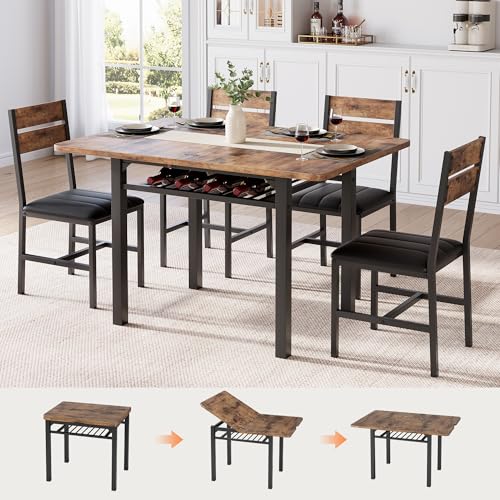
MapleGrace Extendable Dining Table Set for 4 with Built-in Shelf Rack Brown | Kitchen Table Set with 4 PU Leather Upholstered, Wood Dining Room Chairs for Dining & Small Spaces
Check price on Amazon
MAHANCRIS Bar Table, 35.4-Inch Counter Height Pub Table with Charging Station, Rectangular Dining Table with Wine Rack and Glass Holder, High Top Cocktail Tables, for Kitchen (Only Table)
Check price on Amazon
Tribesigns 62.2" Tall Dining Table for 4-6, Counter Height Kitchen Table | High Top Dining Room Table with Footrest, Industrial Bar Height Table for Living Room, Pub, Black
Check price on Amazon
Jocoevol Round Dining Table for 4,Kitchen Dining Room Circle Dinner Pedestal Table,Space Saving Wood Kitchen & Dining Room Furniture (Black, 46In)
Check price on Amazon
VECELO Small Bar Table and Chairs Tall Kitchen Breakfast Nook with Stools/Dining Set for 2, Storage Shelves, Space-Saving, Retro
Check price on AmazonFrequently Asked Questions
What height is considered a tall kitchen table?
A tall kitchen table typically falls into the counter-height category at around 34 to 36 inches, or the bar-height category at around 40 to 42 inches. Standard dining tables sit at roughly 28 to 30 inches, so a tall table offers a noticeably elevated eating surface suited to casual breakfast areas and open-plan kitchens.
How many chairs fit around a tall kitchen table?
Most rectangular tall kitchen tables seating four measure about 48 to 54 inches long, while six-seat versions run 60 to 72 inches. A round tall table around 40 to 45 inches in diameter comfortably seats four. Always allow at least 24 inches of width per place setting and 30 inches of clearance around the table for chair movement.
Is a tall kitchen table good for small spaces?
Yes, a tall kitchen table can be an excellent choice for compact kitchens because its elevated surface draws the eye upward and creates visual breathing room below. Many models pair with backless or low-profile stools that tuck neatly underneath, freeing up floor area in tight breakfast nooks.
What stools pair best with a tall kitchen table?
For a counter-height table around 34 to 36 inches, choose stools with a seat height of roughly 24 to 26 inches. For a bar-height table around 40 to 42 inches, pair it with stools offering a seat height of about 28 to 30 inches. Always leave 10 to 12 inches between the seat and the underside of the tabletop for comfortable legroom.
Can a tall kitchen table be used as a prep surface?
Yes, many homeowners use their tall kitchen table as a secondary prep or homework surface. If you plan to do this, choose a durable, easy-to-clean top such as sealed wood, stone, or tempered glass, and use protective pads or trivets for hot items and sharp tools.
Ready to Choose Your Tall Kitchen Table?
Compare our recommended tall kitchen tables and stool pairings above, then check availability at your preferred retailer. Every option is selected to match a specific height, material tier, and space requirement covered in this guide.
Compare Features