
White Oak Kitchen Table: The Complete Buying Guide
Everything you need to know about choosing a white oak kitchen table — from grain patterns and finish options to sizing, durability, and long-term care. Make a confident, informed decision for your home.
Why a White Oak Kitchen Table Deserves Your Attention
A white oak kitchen table is more than just a piece of furniture — it is the heart of your kitchen, a gathering place for family meals, morning coffee, and evening conversations. White oak has become one of the most sought-after materials for kitchen and dining tables, and for good reason.
Unlike red oak, which carries warm pinkish undertones, white oak features a cooler, more neutral color palette with tones ranging from pale cream to light tan and subtle gray-brown. This makes it remarkably versatile, fitting seamlessly into modern farmhouse, Scandinavian, contemporary, and transitional interiors alike.
In this guide, we will walk you through every aspect of buying a white oak kitchen table: the material's characteristics, construction methods, size considerations, style options, and maintenance requirements. By the end, you will have a clear understanding of what to look for and how to choose a table that will serve your household for years to come.
What Makes White Oak Special?
White oak (Quercus alba) is a hardwood native to North America, prized for its strength, density, and beautiful grain. Understanding its properties will help you appreciate why it is such a popular choice for kitchen tables.
Density and Durability
White oak ranks high on the Janka hardness scale, making it resistant to dents, scratches, and general wear. This is particularly important for kitchen tables, which endure daily use — from hot plates and accidental spills to homework sessions and craft projects. A solid white oak table can last for generations with proper care.
Grain and Texture
White oak has a distinctive, tight grain with prominent rays that create a beautiful visual texture. The grain is generally straighter and more subdued than red oak, giving it a refined, elegant appearance. When finished with a clear coat or light stain, the grain remains visible, adding depth and character to the table surface.
Color Versatility
The natural color of white oak is a light, neutral tan with subtle gray and olive undertones. This neutrality means it can be finished in virtually any style — from a natural clear coat that highlights its raw beauty to a dark walnut stain or a whitewashed look. It also pairs well with a wide range of color palettes and other materials.
Workability
White oak is relatively easy to work with, which is why furniture makers favor it for complex designs. It accepts stains, paints, and finishes well, allowing for a wide range of aesthetic possibilities. This workability also means that repairs and refinishing are more straightforward compared to some other hardwoods.
Pros and Cons of White Oak Kitchen Tables
Before you commit to a white oak table, it is worth weighing the advantages against the considerations. Here is a balanced look:
✅ Advantages
- Exceptional durability: Resists scratches, dents, and daily wear — ideal for busy kitchens.
- Timeless aesthetic: Neutral tones and elegant grain suit virtually any interior style.
- Long-term investment: A well-made white oak table can last decades and even appreciate in character.
- Refinishable: Solid wood can be sanded and refinished multiple times, extending its life.
- Stable material: Properly kiln-dried white oak resists warping and cracking better than many other woods.
- Versatile finishing options: Accepts stains, paints, and natural finishes beautifully.
⚠️ Considerations
- Heavier weight: Solid oak tables are substantial and may require two people to move.
- Susceptible to moisture: Without proper sealing, white oak can absorb spills and stain.
- Requires maintenance: Periodic oiling or sealing is needed to keep it looking its best.
- Can be sensitive to humidity: Extreme humidity changes may cause minor expansion or contraction.
- Higher upfront investment: Quality solid white oak commands a premium compared to veneer or softer woods.
Understanding Construction Quality and Tiers
Not all white oak kitchen tables are created equal. The construction method and material grade significantly impact durability, appearance, and longevity. Here is how to navigate the market:
Solid Wood vs. Veneer
Solid white oak tables are made from thick planks of oak throughout the top and often the base. These are the most durable and can be refinished multiple times. They represent a long-term investment and are typically found in the premium and luxury tiers.
White oak veneer tables feature a thin layer of real oak over a core of plywood or engineered wood. While they offer the look of oak at a more accessible position in the market, they cannot be refinished as many times and may be more susceptible to moisture damage at the edges. These are common in the entry-level and mid-range tiers.
Quality Tiers at a Glance
| Tier | Construction | Best For |
|---|---|---|
| Entry-Level | Veneer over engineered wood; basic joinery | Occasional use, rental spaces, first apartments |
| Mid-Range | Solid wood top with engineered base; improved joinery | Everyday family use, moderate traffic |
| Premium | Solid white oak throughout; mortise-and-tenon joinery | High-traffic households, long-term daily use |
| Luxury | Hand-selected solid oak; traditional joinery; custom finishes | Design-focused homes, heirloom-quality furniture |
When evaluating a table, look for details like the thickness of the top (thicker is generally more durable), the type of joinery used (mortise-and-tenon is a mark of quality), and whether the base is solid wood or a composite. These factors often separate the mid-tier from the high-end tier.
Choosing the Right Size for Your Kitchen
Size is one of the most critical factors in selecting a white oak kitchen table. A table that is too large will crowd your space and impede movement, while one that is too small will feel inadequate for your household's needs.
Seating Capacity and Table Dimensions
As a general guideline, allow 24 inches (60 cm) of table width per person for comfortable seating. Here are common configurations:
- Small tables (seats 2–4): Typically 36–48 inches long and 30–36 inches wide. Ideal for compact kitchens or breakfast nooks. Consider a small kitchen table set or a round table for 4 for tighter spaces.
- Medium tables (seats 4–6): Usually 60–72 inches long and 36–40 inches wide. The most common size for family kitchens. A dining table that seats 6 is a versatile choice.
- Large tables (seats 6–8): 72–96 inches long and 36–42 inches wide. Suitable for open-plan kitchens and larger families. Explore a dining room table set of 8 if you frequently host.
Clearance and Circulation
Beyond the table itself, you need to account for clearance around it. Allow at least 36 inches (90 cm) of space between the table edge and walls or other furniture to allow chairs to be pulled out comfortably. In tighter spaces, you can reduce this to 30 inches (75 cm), but it may feel cramped.
Also consider the shape of your kitchen. Rectangular tables work well in long, narrow spaces, while round wood dining tables can improve flow in compact or square rooms by eliminating sharp corners.
Style and Finish Options for White Oak Tables
One of the greatest advantages of white oak is its versatility. Whether you prefer a clean, modern look or a warm, rustic feel, there is a finish that will suit your vision.
Natural and Clear Finishes
A clear matte or satin finish allows the natural beauty and grain of the white oak to take center stage. This is a popular choice for Scandinavian and modern minimalist interiors, where the focus is on natural materials and understated elegance. A natural finish will show the wood's subtle color variations and grain patterns most clearly.
Whitewashed and Light Stains
Whitewashing involves applying a light, semi-transparent white stain that enhances the grain while giving the wood a soft, airy appearance. This finish is ideal for coastal, farmhouse, and Shabby Chic styles. It brightens a room and pairs beautifully with pastel or neutral color palettes.
Dark and Moody Stains
For a more dramatic look, white oak can be stained in darker tones — from medium walnut to deep espresso. The tight grain of white oak takes dark stains well, resulting in a rich, sophisticated appearance. This style works well in industrial lofts, modern traditional spaces, and rooms with bold color schemes.
Painted Finishes
While some purists may hesitate to paint oak, a painted finish can be a beautiful way to incorporate a white oak table into a colorful or eclectic space. A painted base with a natural oak top is a popular combination that balances visual interest with warmth.
For those who love the modern aesthetic, a modern kitchen table in white oak with a sleek profile and minimalist legs can be the perfect centerpiece.
Care and Maintenance for Your White Oak Table
A white oak kitchen table is a long-term investment. With proper care, it will age gracefully and remain a beautiful focal point in your home for many years. Here are the essential maintenance practices:
Daily Care
- Wipe spills promptly: Use a soft, damp cloth to clean up spills immediately. Do not let liquids sit on the surface.
- Use coasters and placemats: Protect the table from heat, moisture, and scratches by using trivets and placemats during meals.
- Dust regularly: A microfiber cloth or a slightly damp cloth is sufficient for daily dusting.
Periodic Maintenance
- Re-oil or re-seal annually: If your table has an oil finish, reapply a food-safe oil (such as tung oil or linseed oil) once or twice a year to maintain its water resistance and sheen. For polyurethane or lacquer finishes, check for signs of wear and consider professional refinishing when needed.
- Avoid harsh chemicals: Do not use abrasive cleaners, ammonia, or bleach on your white oak table. These can damage the finish and dry out the wood.
- Control humidity: Wood expands and contracts with changes in humidity. Keep your kitchen's humidity level relatively stable (between 40% and 60%) to minimize movement and prevent cracking.
If you are looking for more in-depth guidance, our care and maintenance guide covers wood care in detail, and you can also explore natural cleaners for safe, eco-friendly options.
White Oak vs. Other Popular Table Materials
White oak is an excellent choice, but it is helpful to see how it compares to other common materials used for kitchen tables:
| Material | Durability | Style Versatility | Best For |
|---|---|---|---|
| White Oak | Very High | Excellent | Long-term, high-traffic family kitchens |
| Pine | Moderate | Good (rustic focus) | Rustic, farmhouse, casual settings |
| Maple | Very High | Good (finer grain) | Modern, minimalist kitchens |
| Marble | High (but stains) | High (luxury focus) | Elegant, formal dining spaces |
| Glass | Moderate | High (modern) | Small spaces, contemporary kitchens |
Compared to pine, white oak is significantly harder and more durable. Compared to marble, white oak is warmer, more forgiving of impact, and easier to maintain. For a deeper dive into material comparisons, explore our guide to marble and stone and sustainable wood options.
Practical Shopping Tips for White Oak Tables
When you are ready to buy, keep these tips in mind to ensure you make a confident choice:
- Inspect the grain: High-quality white oak should have a tight, consistent grain with minimal knots. Visible, natural grain variations are normal and often desirable, but avoid tables with excessive knots or fillers if you prefer a cleaner look.
- Check the joinery: Look for tables that use traditional joinery methods like mortise-and-tenon or dovetail joints. These are signs of quality construction that will stand up to daily use.
- Ask about the finish: Inquire about the type of finish used — whether it is an oil, polyurethane, or lacquer — and how to maintain it. Some finishes offer better water resistance, which is important in a kitchen setting.
- Consider the base design: The base can significantly impact the table's stability and style. A wood table base in a pedestal or trestle style offers stability, while four-legged designs are classic and versatile.
- Think about extendability: If you occasionally host larger groups, consider a table with leaves. A dining table with leaves can expand to accommodate more guests when needed.
- Read reviews and warranties: Before purchasing, read reviews from other buyers and understand the warranty terms. A solid warranty is a good indicator of the manufacturer's confidence in their product.
Top White Oak Kitchen Tables & Matching Essentials
⚠️ AFFILIATE DISCLOSURE: This website contains affiliate links. As an affiliate Associate, we earn from qualifying purchases. If you make a purchase through these links, we may receive a small commission at no additional cost to you. Read our full affiliate policy.

NORDEVERRA 63"-83" Extendable Dining Table for 6-8 People, Natural Oak | Farmhouse Expandable Kitchen Table with Sturdy Wooden Top and Legs, Modern Dining Room Table for Kitchen
Check price on Amazon
GDFStudio Rectangle Extendable Dining Table for 6-8,63"-79" Large Kitchen Table, Aged Wood Finish, Robust Pedestal Base, Thick Edges, Farmhouse Extendable Space-Saving Furniture, White Oak
Check price on Amazon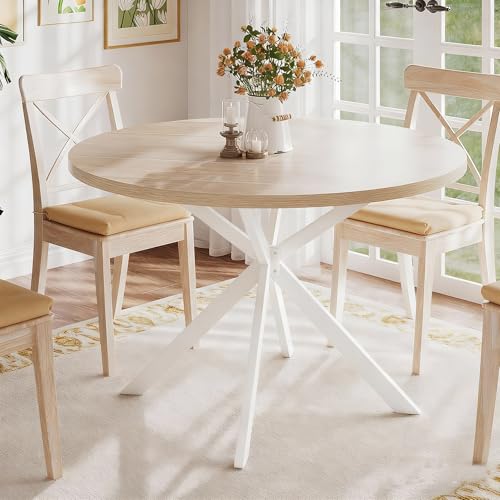
ChooChoo 47.2 Inch Round Dining Table for 4 | Farmhouse Wood Kitchen Table, Circle Dinner Table for Kitchen & Dining Room, Natural Oak & White
Check price on Amazon
LITTLE TREE Round Dining Table for 4-6 People, 47 Inches Dining Room Table with Wooden Pedestal Base, Circle Kitchen Tables for Dining Room, Kitchen, Living Room, Oak
Check price on Amazon
Zevemomo 63"-78.7" Extendable Dining Table for 6-8, Farmhouse Kitchen Table | Rectangular Expandable Dining Room Table with U-Shaped Legs Wooden Dinner Table for Kitchen Office Living Room-Oak
Check price on Amazon
Plank+Beam Classic 72 Inch Dining Table, Rectangular, Pecan Wirebrush | Non-Toxic Finishes, Versatile Design, Farmhouse Design, Elegant Details, Easy Assembly, Quick Setup, Solid Wood
Check price on AmazonReady to Choose Your White Oak Kitchen Table?
Now that you understand the ins and outs of white oak kitchen tables, you are well-equipped to make an informed decision. Browse our recommended products above and find the perfect centerpiece for your kitchen.
Explore Recommended TablesFrequently Asked Questions
Is white oak a good material for a kitchen table?
Yes, white oak is an excellent choice for a kitchen table. It is dense, durable, and resistant to daily wear, making it well-suited for the busiest room in the house. Its neutral color and beautiful grain also make it a versatile design element that works with many interior styles.
How do I prevent my white oak table from getting water stains?
To prevent water stains, always use coasters and placemats, and wipe up spills immediately with a dry or slightly damp cloth. Ensure your table has a proper finish (such as polyurethane or a well-maintained oil finish) that provides a barrier against moisture. Periodic re-oiling or re-sealing will also help maintain its water resistance.
Can I paint a white oak kitchen table?
Yes, white oak can be painted. However, it requires proper preparation: sand the surface, apply a primer designed for bare wood, and then apply a high-quality paint. Many people choose to paint the base while leaving the top natural for a contemporary two-tone look. Keep in mind that painting is a permanent choice that is difficult to reverse compared to a stain or clear finish.
How often should I oil my white oak table?
If your table has an oil finish, it is generally recommended to re-oil it every 6 to 12 months, depending on usage. A good indicator is when water stops beading on the surface — that is a sign it is time to reapply. Always use a food-safe oil and follow the manufacturer's instructions.
What is the difference between white oak and red oak?
White oak and red oak differ primarily in color and grain. White oak has a cooler, more neutral tone with subtle gray and olive undertones, while red oak has a warmer, pinkish hue. White oak also has a tighter, more closed grain and is generally more resistant to moisture, making it a preferred choice for kitchen and dining furniture.