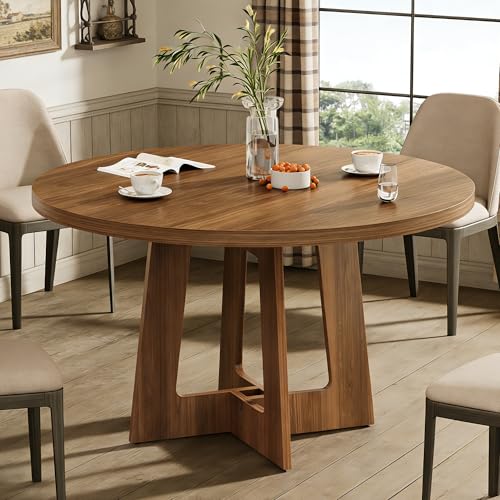
Round Wood Dining Table: The Complete Buying Guide
Round wood dining tables bring warmth, flow, and conversation-friendly seating to any dining space. This guide breaks down sizes, wood types, base styles, seating capacity, and care so you can choose the right table with confidence.
Explore Recommended TablesA round wood dining table is one of the most versatile pieces you can bring into a home. Because there are no sharp corners, traffic moves around it more naturally, and everyone seated at the curve can see and talk to everyone else. Wood adds warmth and character that glass and metal simply cannot match, and a well-built round table can serve a family for decades. Whether you are furnishing a compact breakfast nook, an open-plan apartment, or a formal dining room, this guide walks you through every decision that matters before you commit.
Why Choose a Round Wood Dining Table
Round tables solve several problems at once. In a small room, the curved edge softens the visual weight of a large surface and makes the space feel less boxed in. In an open-plan layout, a round table creates a natural gathering point without the hard lines that can chop a room into segments. And for households that entertain often, the circular shape removes the awkward "head of the table" dynamic, which encourages easier conversation.
Wood as a material adds another layer of value. Solid wood frames and tops can be sanded and refinished, meaning small scratches and dents do not end a table's life. Wood also develops a patina over time, so a dining solid wood table often looks better in its tenth year than its first. For buyers comparing shapes, our guide to round tables for four shows how much seating a compact round top can realistically deliver.
Round Wood Dining Table Size Guide
The single most important decision is diameter. Too small and chairs crowd each other; too large and the table overwhelms the room. The rule of thumb is to allow about 24 inches of table edge per person, and to leave at least 30 inches of clearance between the table edge and walls or other furniture so chairs can pull out comfortably.
| Table Diameter | Comfortable Seating | Best Room Fit |
|---|---|---|
| 30–36 inches | 2–3 people | Breakfast nooks, apartments, small kitchens |
| 40–44 inches | 4 people | Small dining rooms, open-plan corners |
| 48–54 inches | 5–6 people | Mid-size dining rooms, family kitchens |
| 60 inches and above | 6–8 people | Formal dining rooms, large open spaces |
If you are working with a tight footprint, a small round table in the 36-inch range paired with two or three chairs can turn a forgotten corner into a real dining destination. For households of four, a 44-inch top is the sweet spot. Larger families or hosts who regularly seat six should look at 54-inch models or consider a round table with eight chairs if the room allows it.
Pedestal Base vs. Leg Base
Round wood tables generally come in two structural families, and the choice affects both comfort and style.
Pedestal Bases
A pedestal base concentrates support in the center, which frees up legroom around the entire circumference. This is why pedestal tables are so popular in small rooms: you can slide chairs in from any angle without hitting a corner leg. Pedestal designs range from simple single columns to sculpted four-foot spreads. A well-engineered pedestal with a wide floor spread stays stable even at 54 inches, and many models include levelers to handle uneven floors. If you want a classic silhouette with generous seating flexibility, a round dining room table and chairs set built around a pedestal is a strong starting point.
Four-Leg Bases
Leg bases offer a traditional, grounded look and often feel more visually stable. The trade-off is that corner legs can interfere with chair placement, especially on smaller tables, and they eat into legroom. On tables of 48 inches and above, this is usually a minor issue. On tables under 40 inches, a four-leg base can make seating three or four people feel tighter than the diameter suggests.
Choosing the Right Wood
Wood species determine durability, grain character, and how the table ages. Here is how the most common options compare by market tier.
| Wood Type | Tier | Characteristics | Best For |
|---|---|---|---|
| Oak | Top-tier | Hard, open grain, excellent durability | Busy family dining, farmhouse and rustic styles |
| Walnut | Premium | Rich dark grain, dense, refined look | Formal dining rooms, mid-century and modern interiors |
| Maple | Mid-tier | Fine grain, light color, takes stain well | Bright, airy dining spaces and casual kitchens |
| Cherry | Mid-tier | Warm tone that deepens with age | Traditional and transitional dining rooms |
| Rubberwood / Pine | Essential tier | Softer, easy to work, entry-level construction | Starter apartments, casual breakfast areas |
If longevity is the priority, oak and walnut are the standout choices; both hold up to daily use and refinish beautifully. Maple and cherry offer a balanced tier of durability and appearance that suits most households. For buyers furnishing a first apartment or a secondary dining space, rubberwood and pine are solid choices for the tier, provided you use coasters and trivets. Our article on sustainable wood sourcing is worth reading if responsible forestry matters to you.
Finishes and Edge Profiles
Finish affects maintenance as much as appearance. A matte or satin lacquer is forgiving of fingerprints and everyday wear, while high-gloss finishes show smudges and scratches more readily. Oil-and-wax finishes feel natural and can be spot-repaired at home, but they need reapplication every few months.
Edge profiles matter for comfort, especially on round tables where forearms rest on the curve. A softly rounded or beveled edge is more comfortable than a sharp square profile, and it is less prone to chipping. When browsing listings, look closely at edge photos; this is often where lower-tier construction reveals itself.
Matching Chairs to a Round Wood Table
Chair selection can make or break a round table. A few practical guidelines:
- Seat height: Standard dining chairs (17–19 inch seat height) pair with standard 28–30 inch table heights. If you choose a counter-height table, you will need counter stools instead; our explainer on counter height vs. bar height covers the measurements.
- Chair width: Keep total chair width around the table edge under 24 inches per person to avoid shoulder crowding.
- Style balance: A pedestal table pairs well with upholstered or curved-back chairs. A farmhouse-style round table often looks best with slat-back or Windsor chairs. A wood dining chair in a matching or complementary tone keeps the look cohesive.
- Arm chairs: Arm chairs need more clearance and can limit how many fit around a small round top. On tables under 44 inches, armless chairs are usually the safer choice.
If you are building a set from scratch, a coordinated dining room chairs set of four is an efficient way to keep proportion consistent across the table. For a softer, more elegant look, an upholstered option such as the Elena linen upholstered rolling dining armchair adds comfort and a touch of formality.
Round Wood Tables in Small and Open Spaces
In small dining rooms, the round shape is a genuine advantage. With no corners, you can tuck the table closer to walls and still move around it. A 36–40 inch round table with two or three chairs can fit into footprints where a rectangular table of similar seating would feel cramped. Pair it with a small wood dining table in a light finish to keep the room feeling open.
In open-plan homes, a round table defines the dining zone without hard visual barriers. It works especially well near a kitchen island or a window, and it reads as a deliberate design choice rather than leftover space. If your layout includes a kitchen island, our guide to the kitchen island table concept shows how the two can work together.
For very compact apartments, a drop-leaf or expandable option may be worth considering. A round dining table with leaf lets you keep a small footprint day to day and extend for guests. You can also explore a dining table with expandable interior leaves if flexibility is a priority.
Design and Styling Ideas
Round wood tables are forgiving canvases. A few directions that work well:
- Warm minimalism: Keep the table bare or add a single ceramic bowl. Choose chairs with clean lines and a natural finish.
- Modern farmhouse: Pair a rustic round top with a pedestal base and add a linen runner, woven placemats, and a simple centerpiece of seasonal branches.
- Mid-century modern: A walnut round table with tapered-leg chairs and a sculptural pendant light above.
- Coastal and light: A whitewashed or light oak round table with slipcovered chairs and a soft, airy table setting.
Because the table is round, a circular centerpiece (a low bowl, a ring of candles, or a round tray) echoes the shape and looks more intentional than a rectangular arrangement. For seasonal styling, browse our seasonal settings ideas, and if you are drawn to a lighter palette, a white wood dining table can anchor a bright dining room beautifully.
Care and Maintenance for Wood Tables
Wood is durable but not indestructible. A few habits dramatically extend the life of a round wood dining table:
- Dust with a soft, dry cloth weekly. Avoid paper towels, which can micro-scratch the finish.
- Use coasters, trivets, and placemats. Heat and moisture are the two biggest enemies of wood finishes.
- Wipe spills immediately with a slightly damp cloth, then dry.
- Keep the table out of direct sunlight and away from heat sources; UV exposure causes uneven fading.
- Maintain indoor humidity around 35–55 percent. Wood expands and contracts with humidity swings, which can cause cracks over time.
- Reapply a wood conditioner or furniture wax every three to six months, depending on the finish type.
For a deeper dive, our care and maintenance resources cover specific treatments for scratches, rings, and dull finishes.
Round vs. Rectangular: A Quick Comparison
Rectangular tables maximize seating per square foot and suit long rooms and formal banquet-style dinners. Round tables maximize flow, conversation, and flexibility in smaller or oddly shaped rooms. If your dining room is narrow or your layout has awkward corners, round usually wins. If you regularly host eight or more people in a dedicated dining room, a rectangle is often the more efficient choice. Buyers who prefer straight edges and defined seating positions can browse our wood rectangle dining table guide, and those considering mixed materials should see the marble top round dining table overview.
Mistakes to Avoid When Buying
- Ignoring chair clearance: Measure the room with chairs pulled out, not just the table footprint.
- Choosing a top without checking the base: A beautiful top on an unstable pedestal is a daily frustration.
- Overlooking the finish: A finish that does not match your household's habits will age badly.
- Buying too small for your household: A table that seats four is tight for a family of five once serving dishes are on the table.
- Skipping leveling checks: Round tables rock noticeably on uneven floors; confirm the base has adjustable levelers.
Frequently Asked Questions
How many people can a round wood dining table seat?
A 36-inch round table comfortably seats 2–3 people, a 44-inch seats 4, a 54-inch seats 5–6, and a 60-inch seats 6–8. Allow roughly 24 inches of edge per person for comfortable dining.
Is a pedestal base or leg base better for a round wood dining table?
A pedestal base frees up legroom and makes seating more flexible around the curve, which is ideal for small rooms and tables up to 54 inches. Four-leg bases offer a classic look and visual stability, but corner legs can interfere with chair placement on smaller tops.
What is the best wood for a round dining table?
Oak and ash are top-tier for durability and grain character. Maple and cherry are balanced-tier choices with fine grain and a warm patina over time. Pine and rubberwood are essential-tier options suited to casual or starter dining spaces. Walnut is a premium-tier hardwood prized for its rich, dark grain.
How do I care for a solid wood round dining table?
Dust regularly with a soft cloth, use coasters and trivets, avoid direct sunlight and humidity swings, and reapply a wood conditioner or wax every few months. Wipe spills immediately and never use abrasive cleaners.
Recommended Round Wood Dining Tables & Chairs
⚠️ AFFILIATE DISCLOSURE: This website contains affiliate links. As an affiliate Associate, we earn from qualifying purchases. If you make a purchase through these links, we may receive a small commission at no additional cost to you. Read our full affiliate policy.

LITTLE TREE Round Dining Table for 4-6 People, 47 Inches Dining Room Table with Wooden Pedestal Base, Brown Dinner Tables, Circle Kitchen Tables for Kitchen, Living Room(Table Only)
Check price on Amazon
DM Furniture 47" Round Dining Table with Wooden Pedestal Base, Reclaimed Pine Wood Dinner Table for 4, Heavy Duty Pedestal Table for Kitchen/Dining Room/Living Room/Restaurant, Walnut
Check price on Amazon
Jocoevol Round Dining Table for 4,Kitchen Dining Room Circle Dinner Pedestal Table,Space Saving Wood Kitchen & Dining Room Furniture (Vintage, 46In)
Check price on Amazon
LITTLE TREE Round Dining Table for 4-6 People, 47 Inches Dining Room Table with Wooden Pedestal Base, Modern Dinner Table, Circle Kitchen Tables for Dining Room, Kitchen, Living Room(Table Only)
Check price on Amazon
TRIBEWOOD 47" Solid Wood Dining Table for 4-6, Round Kitchen Table | Farmhouse Kitchen & Dining Room Table with Curved Wood Legs and Stable Cross Support, Circle Dinner Table, Rustic Brown
Check price on Amazon