
Wishbone Chairs: The Complete Buying & Styling Guide
Everything you need to know about the iconic Y-back dining chair — design heritage, materials, comfort, sizing, and how to style wishbone chairs in modern and classic dining rooms.
Start the GuideWhy wishbone chairs matter: Few dining chairs balance sculptural beauty and everyday comfort as gracefully as the wishbone chair. This guide walks you through its design story, the materials that separate excellent examples from ordinary ones, and the practical checks that help you choose the right wishbone chairs for your table, room, and lifestyle — before you commit.
What Is a Wishbone Chair?
A wishbone chair is a lightweight wooden dining chair defined by three signature features: a steam-bent, rounded top rail that curves like a pair of shoulders, a distinctive Y-shaped back splat that connects that rail to the seat, and a woven seat traditionally made from paper cord. The shape of the back splat — a central stem splitting into two curved arms — is what gives the chair its name, since it resembles a wishbone.
The chair is also widely known as the Y chair or by its original model designation, CH24. Its combination of a minimal wooden frame and a hand-woven seat makes it one of the most recognizable dining chairs in the world. Because the frame is slim and the silhouette is open, wishbone chairs read as visually light — a quality that makes them especially useful in smaller dining rooms, open-plan kitchens, and spaces where a heavy table needs visual balance.
In practical terms, a wishbone chair is a side chair, not an armchair. It is designed to tuck neatly under a dining table, and its lack of arms means it works well in tight seating arrangements where you need to fit several chairs along one edge of a table. If you are building a dining set from scratch, wishbone chairs are frequently paired with round and oval tables, but they also work with rectangular wood tables, as you will see in the sizing section below. For a broader look at seating options, explore our dining chairs category.
Designer
Hans J. Wegner, Danish modernist, first developed the chair in the late 1940s.
Also Known As
Y chair, CH24, wishbone dining chair, Wegner wishbone chair.
Signature Detail
Y-shaped back splat, steam-bent top rail, woven paper-cord seat.
Design History & Heritage
The wishbone chair was designed by Hans J. Wegner, one of the central figures of Danish mid-century modern design. Wegner was fascinated by the structural logic of traditional Chinese chairs — particularly the round-backed wooden chairs of the Ming dynasty — and spent years studying how their curved rails and joinery could be translated into modern production methods. The wishbone chair, introduced around 1949, was the result of that study.
The chair's most famous technical achievement is its steam-bent top rail. Bending a single piece of solid wood into a smooth, continuous curve without weakening it is difficult, and doing it at scale requires careful control of moisture, heat, and drying time. This is one reason why the quality of a wishbone chair varies so much between manufacturers: the bending process, the wood species, and the finishing all shape how the chair looks and how long it lasts.
Over the decades, the wishbone chair moved from a specialist piece of Danish furniture to a global design icon. It appears in mid-century interiors, Scandinavian-minimalist homes, modern farmhouse dining rooms, and contemporary apartments. Its staying power comes from restraint: it has no decorative carving, no upholstery, and no hardware on show — just wood and woven cord arranged with precision. If you enjoy this design language, our mid-century modern collection explores related pieces.
Anatomy of a Wishbone Chair
Understanding the components helps you evaluate quality when you shop. A wishbone chair is built from a small number of parts, but each one matters:
- Top rail (bow): The steam-bent curved rail that wraps around the back. Look for a smooth, even curve with no visible splitting at the bend. On high-end chairs, the grain follows the curve continuously.
- Y-back splat: The central piece that forms the wishbone shape. It should be firmly joined to both the top rail and the seat frame, with no play or creaking.
- Seat frame: The wooden frame that holds the woven seat. Check that the joints are tight and that the frame does not flex excessively when you press on the seat.
- Paper-cord seat: Traditionally woven from twisted paper cord, this seat is both durable and breathable. The weave should be tight and even, with consistent tension across the seat.
- Legs and stretchers: Four tapered legs connected by stretchers for rigidity. Tapered legs contribute to the chair's light appearance; stretchers prevent the legs from splaying over time.
- Finish: Soap-treated, oiled, or lacquered. Each finish changes the look and the maintenance routine, which we cover in the care section.
When comparing chairs, pay attention to the joinery rather than the surface. A chair with beautiful grain but loose joints will not hold up to daily family meals. A chair with modest grain but tight, well-executed joinery is the better long-term investment.
Materials & Build Quality
The two materials that define a wishbone chair are the wood of the frame and the cord of the seat. Both vary significantly across the market, and both affect comfort, durability, and appearance.
Wood Species
Wishbone chairs are most commonly made from beech, ash, oak, and walnut. Beech is a traditional choice: it is dense, takes a bend well, and has a subtle, even grain. Ash is slightly lighter in color with a pronounced grain and is popular for natural and soap-treated finishes. Oak offers excellent durability and a warmer tone, while walnut brings a darker, more luxurious character. Solid wood frames are preferable to veneered or composite frames, especially at the top rail where the bend places stress on the material.
Paper Cord Seat
The woven seat is typically made from twisted paper cord, sometimes called paper yarn. Quality cord is tightly twisted, resistant to stretching, and woven under consistent tension. Cheaper cord may loosen or fray sooner, particularly in households with heavy daily use. Some chairs use natural or synthetic cord in a range of colors, from pale natural to black, which changes the chair's visual weight considerably.
Joinery and Hardware
High-end wishbone chairs use traditional wood joinery — mortise-and-tenon and dowel joints — with minimal visible hardware. Mid-range examples often combine wood joinery with screws or bolts at hidden stress points, which is acceptable if the hardware is properly recessed and reinforced. Avoid chairs where the Y-splat or top rail shows movement or gaps at the joints.
Finish Options
Common finishes include soap treatment (a pale, matte, traditional Scandinavian look), clear oil or lacquer (warmer and more protective), and painted finishes in white, black, and muted tones. Soap-treated chairs require more frequent maintenance but develop a beautiful patina; lacquered chairs are the most forgiving for busy households. If you are pairing chairs with a white oak dining table, a soap-treated or natural ash wishbone chair is a natural match.
Tier Comparison: Entry to Luxury
Wishbone chairs sit across a wide spectrum of quality. Rather than focusing on figures, it helps to understand what each tier typically delivers. The table below uses universal quality descriptors so you can map any product you encounter to a tier and know what to expect.
| Tier | Typical Construction | Seat Weave | Best For |
|---|---|---|---|
| Entry-level | Beech or mixed hardwood, partial machine bending, some visible hardware | Machine-woven or thinner paper cord | Occasional use, staging, short-term furnishing |
| Mid-range | Solid beech or ash, controlled steam bending, mostly wood joinery | Hand-finished woven cord with consistent tension | Daily family dining, apartments, first dining sets |
| Premium | Solid oak or walnut, precise steam bending, traditional joinery throughout | Hand-woven natural or black paper cord, tightly tensioned | Long-term daily use, design-conscious dining rooms |
| Luxury | Select hardwood, artisan bending and finishing, near-invisible joinery | Expert hand-weave with premium cord, optional leather or upgraded weave | Collector pieces, formal dining rooms, heirloom furniture |
As a rule, mid-range models usually offer the best balance of durability and refinement for everyday households, while premium and luxury examples reward buyers who value craftsmanship and intend to keep the chairs for many years. Entry-level chairs can work well in low-traffic settings but tend to show wear sooner under heavy daily use.
Comfort & Ergonomics
Wishbone chairs have a reputation for being surprisingly comfortable for a chair with no upholstery. That comfort comes from three design details: the gently curved top rail supports the upper back, the shaped seat distributes weight, and the woven cord has a small amount of natural give that softens the seat. The absence of arms keeps the chair open and easy to move, though it also means there is no arm support for lingering after-dinner conversations.
Seat Height and Table Clearance
Most wishbone chairs are designed with a seat height in the standard dining range, which suits typical dining tables. The critical check is clearance between the seat and the table apron: you want enough room for your legs to move comfortably, and the chair's back should tuck under the table edge without hitting the apron. If your table has a deep apron or a thick top, measure the available clearance before committing.
Long-Meal Comfort
For meals that stretch over several hours, the woven seat's tension matters. A well-tensioned paper-cord seat stays supportive, while a loose weave bottoms out and becomes uncomfortable. If you frequently host long dinners, choose chairs with a tightly woven seat and consider a seat cushion designed for wishbone chairs. Cushions also add warmth and can tie the chairs to your table linens and color scheme.
Who Should Consider Alternatives
Wishbone chairs are not the best choice for everyone. If you need arm support, if you have limited mobility and need a chair that is easy to push up from, or if you want deep upholstered comfort for hours of sitting, an upholstered dining chair may serve you better. For households with very young children, the woven seat is durable but can be harder to wipe clean than a smooth seat.
Sizing & Table Pairing
Wishbone chairs are compact, which makes them flexible but also means you should plan the seating arrangement carefully. The key dimensions to check are seat height, seat width, and overall depth, plus the clearance under your table.
How Many Chairs Fit?
Because wishbone chairs have no arms, they can be placed closer together than armchairs. Along a rectangular table, allow roughly the width of the chair plus a small gap between chairs. Around a round table, the chair's slim frame lets you fit more seats than bulky alternatives. For a formal, symmetrical look, pair an even number of chairs with a wood oval dining room table or a white round table.
Table Style Pairings
- Round and oval tables: The most classic pairing. The curves of the table echo the chair's bent top rail.
- Rectangular wood tables: Works well when the table has slim legs and a simple apron. See our wood rectangle dining table options.
- Pedestal tables: A white oak dining table with a pedestal base keeps the visual weight low and lets the chairs shine.
- Mixed seating: Combine wishbone chairs with a bench on one side, such as a backless dining bench, for a relaxed family layout.
Room Size Considerations
In compact dining rooms, the visual lightness of wishbone chairs helps the space feel less crowded. Leave enough room behind the chairs to pull them out — a common mistake is to push chairs tight against a wall. If space is very limited, a small dining room layout guide can help you plan clearances.
Styling Wishbone Chairs
Wishbone chairs are remarkably adaptable. Their neutral, sculptural form works with many interior styles, and the choice of wood tone and seat color determines how they read in a room.
Scandinavian and Minimalist
Natural ash or soap-treated beech wishbone chairs with a pale wood table are the quintessential Scandinavian pairing. Keep the palette light and layer in texture through table runners and simple dinnerware sets. A neutral warm neutral palette keeps the focus on the chair's silhouette.
Mid-Century Modern
Walnut or teak-toned wishbone chairs pair beautifully with tapered-leg tables and vintage-inspired lighting. This is the setting where the chair's design heritage is most visible. Explore our mid-century modern ideas for complementary pieces.
Modern Farmhouse
Black or painted wishbone chairs add contrast to a rustic wood table and a wood buffet. Mixing a bench on one side creates an informal, family-friendly arrangement.
Contemporary and Open-Plan
In open-plan spaces, wishbone chairs define the dining zone without blocking sightlines. Pair them with a white marble dining table for a crisp, contemporary look, or with a glass and metal table for a lighter feel.
Mixing Chairs
Wishbone chairs mix well with other wood chairs when the tones are related. If you mix, keep the seat heights consistent and repeat one material — for example, all natural wood frames — to keep the arrangement coherent. Our wood dining chairs and woven dining room chairs collections offer compatible options.
Care & Maintenance
Wishbone chairs are straightforward to maintain, but the right routine depends on the finish.
- Soap-treated wood: Clean with a mild soap solution and a soft cloth, then dry immediately. Re-soap periodically to maintain the pale matte finish. Avoid harsh detergents.
- Oiled wood: Wipe with a slightly damp cloth and re-oil once or twice a year, following the manufacturer's instructions. Oil nourishes the wood and helps it resist drying and cracking.
- Lacquered wood: Wipe with a damp cloth. Avoid abrasive cleaners and solvents. Lacquer is the easiest finish for busy households.
- Paper-cord seat: Dust regularly with a soft brush or vacuum attachment. Blot spills immediately — paper cord absorbs moisture. Do not scrub aggressively, as this can fray the cord. For deeper cleaning, use a barely damp cloth and let the seat dry fully away from direct heat.
- General protection: Keep chairs out of direct sunlight to slow fading and drying, and use trivets and coasters on the table rather than placing hot items near the chair frames.
If a paper-cord seat eventually loosens or frays, it can usually be re-woven by a specialist. On quality frames, re-weaving is a practical long-term option that extends the chair's life considerably. For broader furniture care advice, see our dining care and maintenance section.
Buying Checklist for Wishbone Chairs
- Check that the top rail curve is smooth and free of splits or filler at the bend.
- Press down firmly on the seat — the weave should feel tight and evenly tensioned.
- Inspect the Y-splat joint at the top rail and seat frame for gaps or movement.
- Confirm the wood is solid at the stress points (top rail and seat frame), not veneered over composite.
- Measure seat height and table apron clearance before ordering a set.
- Decide on finish based on maintenance preference: soap, oil, or lacquer.
- Consider seat color (natural vs. black cord) against your table and flooring.
- If buying a set, confirm all chairs are from the same production batch for consistent tone.
- Check the return policy and whether replacement seats or cord kits are available.
- For daily family use, prioritize a mid-range or premium tier with hand-woven cord.
Recommended Wishbone Chairs & Matching Dining Seating
⚠️ AFFILIATE DISCLOSURE: This website contains affiliate links. As an affiliate Associate, we earn from qualifying purchases. If you make a purchase through these links, we may receive a small commission at no additional cost to you. Read our full affiliate policy.

Forsho Wishbone Chairs Set of 2, Rattan Dining Chairs (Walnut) | 100% Solid Ash Wood, Curved Armrests, Mortise & Tenon Joinery, 300 LBS Capacit, Non-Slip Felt Padsy, Fully Assembled
Check price on Amazon
VODUR Y Chairs Set of 2, Solid Ash Wood Dining Chairs (Natural) | Handwoven Paper Cord Seat, 300 LBS Capacity, Mortise & Tenon Joinery, CNC-Polished Silky-Smooth Touch, Fully Assembled
Check price on Amazon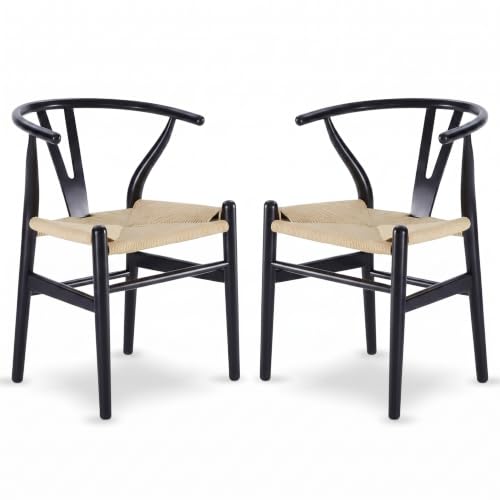
Forsho Wishbone Chairs Set of 2, Dining Chairs (Black Frame + Natural Cord) | 100% Solid Ash Wood, Curved Armrests, Handwoven Paper Cord Seat, 300 LBS Capacity, Fully Assembled, Non-Slip Felt Pads
Check price on Amazon
Polynices Y Chairs Set of 2, Rattan Dining Chairs (Walnut) | 100% Solid Ash Wood, Ergonomic Y Back, Mortise & Tenon Joinery, 300 LBS Capacity, Fully Assembled, Non-Slip Felt Pads
Check price on Amazon
Tomile Wishbone Chairs Set of 2, Dining Chairs (Black Frame + Natural Cord) | Solid Ash Wood Frame, Handwoven Seat, CNC-Polished Silky-Smooth Touch, Ergonomic Y Back, 300 LBS Capacity, Fully Assembled
Check price on Amazon
Yaheetech Dining Chairs Set of 4 Mid Century Modern Woven Chairs Wood Color | Paper Twine Dining Room Chairs with Curved Backrests, Metal Frame, Footpads for Dining Room Kitchen Living Room
Check price on AmazonReady to Choose Your Wishbone Chairs?
Use the checklist above, compare the tiers, and match the chair's wood tone to your table. When you are ready, explore current options and availability through the product links on this page.
View Chair OptionsFrequently Asked Questions
What is a wishbone chair?
A wishbone chair is a lightweight wooden dining chair with a distinctive Y-shaped back splat, a steam-bent rounded top rail, and a woven paper-cord seat. It was designed by Hans J. Wegner and is also known as the Y chair or CH24.
Are wishbone chairs comfortable for long meals?
Yes, when the woven paper-cord seat is well tensioned and the seat height suits your table. The curved back rail supports the upper back, and the shaped seat distributes weight. For very long dinners, a fitted seat cushion can add extra comfort.
What table pairs best with wishbone chairs?
Round and oval tables are the classic pairing, but wishbone chairs also work well with rectangular wood tables that have slim legs and a simple apron. A table with a pedestal base helps keep the arrangement visually light.
How many wishbone chairs fit around a table?
Because wishbone chairs have no arms, they can be placed closer together than armchairs. Along a rectangular table, allow roughly the chair width plus a small gap. Around a round table, the slim frame lets you fit more seats than bulkier chairs.
Can the paper-cord seat be repaired or replaced?
Yes. On quality frames, the paper-cord seat can be re-woven by a specialist when it loosens or frays, which extends the chair's life considerably. Some manufacturers also offer replacement seat kits.
Are wishbone chairs suitable for households with children?
They are durable, but the woven seat requires prompt spill cleanup and is harder to wipe clean than a smooth seat. A lacquered finish is the most forgiving for busy family dining rooms.
Continue exploring related dining furniture guides: compare wishbone chairs with other wooden dining room chairs, browse wood dining tables to pair with your seating, or read our measurement guide before you order. For a wider view of dining room layouts, see our dining room styles section.