
Wooden Card Tables: The Complete Buying Guide
Everything you need to choose a sturdy, stylish wooden card table for game nights, puzzles, crafts, and compact dining. Compare sizes, wood types, folding mechanisms, and top product picks before you decide.
See Recommended TablesWhy Choose a Wooden Card Table
A wooden card table brings together the stability of solid construction with the warmth of natural materials. Unlike lightweight plastic folding tables that shift and flex under pressure, a well-built wooden table stays planted during tense hands of poker, marathon puzzle sessions, or family board game nights. The surface feels better under cards and puzzle pieces, and the table itself fits naturally into living rooms, dens, and dining areas.
Wooden card tables also earn their place beyond game night. Many owners use them as compact dining surfaces in apartments, as craft and hobby stations, or as a secondary table during holidays and gatherings. The best models combine a smooth, sealed playing surface with legs that lock firmly into place, so the table transitions from storage to use in seconds.
If you are still comparing broader furniture options for a multi-use room, our guide to dining area furniture covers how card tables fit alongside larger pieces, while the foldable leaf table overview is useful if you need a surface that expands for guests.
Sizes and Shapes That Actually Work
Most wooden card tables fall between 30 and 36 inches square. That footprint seats four players comfortably, with enough room for cards, chips, and drinks without crowding. Round and octagonal designs are equally popular because every player sits at the same distance from the center, which matters for games that require reaching across the table.
Square tables
Square tops are the classic card table shape. They maximize playing surface per inch of floor space, tuck neatly into corners, and pair well with four folding chairs. A 34-inch square is a practical mid-range choice for most living rooms.
Round and octagonal tables
Round tables soften the visual footprint and make small rooms feel less boxed in. Octagonal tops split the difference, giving each player a defined edge while keeping the center reachable. If you want a compact round option for a breakfast nook or game corner, the 36-inch round dining table guide explains how that size performs in real rooms.
Height considerations
Standard card tables sit around 28 to 30 inches high, matching most dining chairs. Taller counter-height versions work with bar stools but are less comfortable for long card sessions. For dedicated game rooms, standard height with folding chairs remains the most practical combination.
Wood Types and Finish Quality
The wood species and finish determine how a card table holds up to spilled drinks, shuffling cards, and constant folding. Here is how the main options compare:
- Solid hardwood (oak, maple, birch): The top-tier choice for durability and long-term use. These tables resist dents, hold their shape through repeated folding, and can be refinished if the surface ever wears. They are heavier, which is actually an advantage for stability.
- Engineered wood with hardwood veneer: A balanced option that delivers a flat, smooth playing surface with consistent grain patterns. Mid-range veneer tables handle regular game nights well and typically cost less than solid hardwood.
- Pine and rubberwood: Common in entry-level and starter-tier models. Lighter and more prone to dents, but acceptable for occasional use, puzzle tables, or kids' game stations.
- MDF with laminate or painted finish: The most practical surface for craft use and families with young children. It cleans easily and resists moisture, though it will not have the warmth of real wood grain.
Finish check: Look for a sealed, smooth top with rounded or beveled edges. A felt or baize inlay is a bonus for card games because it prevents cards from sliding and muffles shuffling sounds.
For broader comparison of hardwood construction techniques, the mango hardwood dining table guide explains how dense hardwoods behave over time, and the wooden kitchen table and chairs overview covers finish durability for daily-use surfaces.
Folding vs. Fixed-Leg Designs
Folding wooden card tables are the most common configuration because they store flat behind a sofa or in a closet. The key is the hinge and leg-lock system. Entry-level folding tables often use simple friction locks that develop wobble over time. Mid-range and premium models use reinforced hinges, cross-bracing, or a locking ring that keeps the legs rigid during play.
Fixed-leg wooden card tables feel the most stable and are ideal if the table has a permanent spot in a game room or den. They do not fold, but they eliminate the wobble issue entirely and often feature sturdier aprons and leg joinery.
If portability matters more than permanence, a drop-leaf folding dining table offers a similar space-saving approach with a larger surface for meals. For pure game use, a dedicated folding card table remains the lightest option.
Features Worth Checking Before Purchase
- Leg locking mechanism: Test or read reviews for wobble. A table that shifts during play ruins the experience.
- Playing surface: Smooth sealed wood, felt inlay, or a removable top. Felt is best for cards; sealed wood is best for puzzles and crafts.
- Weight and folded dimensions: Confirm the folded size fits your storage space before ordering.
- Edge profile: Rounded edges are safer for families with children and more comfortable when resting arms during long games.
- Cup holders or chip trays: Some game-specific models include recessed holders. These are helpful but reduce flat surface area.
- Chair compatibility: Standard height tables pair with most folding chairs. If you plan to use existing dining chairs, check the apron clearance.
If you need matching seating, the folding chairs guide covers options that pair well with card tables, and folding picnic table benches are worth reviewing if the table will double as outdoor seating.
Tier Comparison Table
Use this table to match construction quality to your intended frequency of use. Tiers reflect market position, not specific figures.
| Tier | Typical Construction | Best For | Durability Notes |
|---|---|---|---|
| Starter tier | Pine or rubberwood, basic friction leg locks | Occasional game nights, kids' activities, puzzle tables | Light use; may develop slight wobble over time |
| Mid-range | Engineered wood with veneer, reinforced hinges | Regular family game nights, multi-purpose craft and dining use | Solid choice for the tier; stable with proper locking legs |
| Premium | Solid hardwood, cross-braced folding mechanism | Frequent card games, dedicated game rooms, long-term use | Heavy-duty build; refinishable surface |
| Luxury / professional-grade | Hardwood with felt inlay, custom joinery, fixed or locking legs | Serious card players, poker nights, upscale dens | Commercial-grade stability; heirloom-level construction |
Multi-Purpose Use Cases
A wooden card table earns its footprint when it handles more than one job. Consider these common secondary uses:
- Puzzle table: A sealed wood top with a slight lip keeps pieces contained. Many families leave a puzzle in progress for days.
- Craft and hobby station: The smooth surface wipes clean after painting or model building. Add a protective mat for messy projects.
- Compact dining: In small apartments, a 32 to 34-inch square table seats two to four for casual meals. Pair it with dinette chairs for a cohesive look.
- Kids' activity table: Lower-height models work well for children's art projects and homework. The kids table and chairs guide covers child-scale options.
- Holiday overflow seating: Set up a card table in a den or corner when guests arrive and the main dining table fills up.
If the table will live in a dining room year-round, the kitchen and dining room tables guide helps you decide between a dedicated dining table and a multi-purpose card table.
Care and Maintenance Basics
Wooden card tables are simple to maintain, but a few habits extend their life significantly:
- Wipe spills promptly with a soft cloth to prevent moisture rings.
- Use coasters under drinks, especially on unsealed or veneer surfaces.
- Store folding tables upright and fully dry to prevent warping and hinge rust.
- Apply a wood conditioner or furniture wax a few times per year on solid hardwood tops.
- Keep the table out of direct sun to avoid fading and finish cracking.
- Check and tighten leg bolts or hinge screws periodically.
For deeper repairs, such as re-gluing a loose leg or refinishing a scratched top, the chair repair guide covers wood joinery techniques that apply equally to card table frames.
Frequently Asked Questions
What is the best size for a wooden card table?
Most wooden card tables measure between 30 and 36 inches square, which comfortably seats four players. Round and octagonal designs are also popular because they allow everyone to reach the center easily.
Are folding wooden card tables sturdy enough for regular use?
Yes, mid-range and premium folding wooden card tables use reinforced hinges and locking mechanisms that provide a stable playing surface. Entry-level models may wobble slightly, so look for tables with cross-bracing or a locking leg system if you play often.
Can a wooden card table double as a dining or puzzle table?
Absolutely. Many wooden card tables work well as puzzle tables, craft stations, or compact dining surfaces for small spaces. Look for models with a smooth, sealed top and a comfortable height of around 28 to 30 inches.
What wood types are best for card tables?
Solid hardwood options such as oak, maple, and birch offer the best durability for long-term use. Engineered wood with a hardwood veneer provides a stable, smooth playing surface at a more accessible tier, while pine and rubberwood are common in entry-level models.
Do I need a felt surface for card games?
Felt or baize is optional but helpful. It prevents cards from sliding, muffles shuffling, and protects the wood underneath. A sealed wood top works fine for casual play and is better for puzzles and crafts.
Recommended Wooden Card Tables for Game Night
⚠️ AFFILIATE DISCLOSURE: This website contains affiliate links. As an affiliate Associate, we earn from qualifying purchases. If you make a purchase through these links, we may receive a small commission at no additional cost to you. Read our full affiliate policy.

Stakmore Classic Straight Edge Square Wood Folding Table, 32 in, Fruitwood | Foldable for Storage in Small Spaces, Wooden Tabletop Furniture, for Cards, Board Games, Dining, and Extra Seating
Check price on Amazon
Stakmore Classic Straight Edge Square Wood Folding Table, 32 in, Cherry | Foldable for Storage in Small Spaces, Wooden Tabletop Furniture, for Cards, Board Games, Dining, and Extra Seating
Check price on Amazon
Solid Wood Flip-Top Folding Console to Dining Convertible Table
Check price on Amazon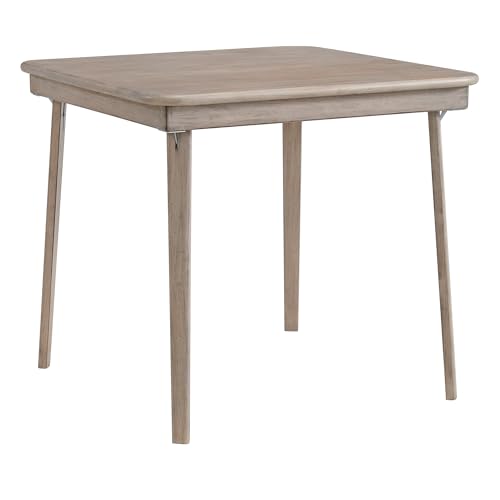
Stakmore Classic Straight Edge Square Wood Folding Table, 32 in, Driftwood | Foldable for Storage in Small Spaces, Wooden Tabletop Furniture, for Cards, Board Games, Dining, and Extra Seating
Check price on Amazon