
Wrought Iron Chairs: Complete Buying Guide & Design Ideas
Explore construction quality, style families, comfort factors, and care routines for wrought iron chairs used in dining rooms, kitchens, sunrooms, and patios — so you can choose a set that lasts for years.
Why wrought iron chairs deserve a closer look: Wrought iron is one of the oldest chair-making materials still in active production. Its dense, fibrous structure allows furniture makers to bend, twist, and weld it into graceful scrollwork that stays rigid under load. That combination of visual elegance and structural strength is why wrought iron chairs remain a staple in both classic dining rooms and modern outdoor patios. This guide walks you through everything a careful buyer should check before committing to a set.
What Wrought Iron Chairs Are
Wrought iron is a low-carbon iron alloy that is worked in a solid state — heated until soft, then hammered, bent, and twisted into shape. Unlike cast iron, which is poured into molds, wrought iron is shaped by hand or machine through forging. This produces a fibrous internal grain that gives the metal exceptional tensile strength and resistance to fatigue. For chairs, that matters: a well-made wrought iron frame can flex slightly under a seated person's weight without cracking, then return to its original form.
In the furniture trade, the term “wrought iron chairs” is used somewhat loosely. Genuine wrought iron is relatively rare in mass-market furniture today. Most chairs sold under this label are made from mild steel that is forged, welded, and finished to resemble traditional wrought iron. These steel chairs often deliver the same visual character and comparable durability, and many are more resistant to rust when properly coated. When you shop, the practical question is not whether the metal is technically wrought iron, but whether the construction is solid, the joints are sound, and the finish will protect the frame over time.
Wrought iron chairs appear in several product families: formal dining chairs with upholstered seats, bistro-style café chairs, garden chairs with open lattice backs, bar and counter stools, and accent chairs for sunrooms or entryways. If you are building a coordinated dining space, it helps to understand how iron chairs pair with other materials. For a warmer, more traditional look, many homeowners mix iron seating with a white and wood dining table; for a cleaner contemporary effect, an iron chair set can sit alongside a white marble dining table.
Construction & Quality Signals
Two wrought iron chairs can look identical in a product photo and still differ enormously in how they age. The difference usually comes down to joint construction, metal thickness, seat support, and finish preparation. The checklist below covers the signals that separate a durable set from one that will wobble or corrode within a few seasons.
Joint Type
Fully welded joints are the strongest option for load-bearing areas such as the seat frame and the connection between the back post and the rear legs. Look for continuous weld beads that are smooth and fully fused, not spot welds with visible gaps. Riveted or bolted joints are acceptable on decorative scrollwork and on chairs designed for easy disassembly, but they should be tight and reinforced with washers. Avoid chairs where the seat frame is held only by small tack welds — those are the first joints to fail.
Metal Thickness and Weight
Heavier chairs are not automatically better, but very light iron chairs usually indicate thin-wall tubing. A sturdy dining chair typically has a frame made from steel or iron stock in the range of 1.2 mm to 2 mm wall thickness, with thicker stock at the seat rails and rear legs. Pick up the chair by the backrest: a well-built chair feels balanced and substantial, not hollow or tippy.
Seat Support
On upholstered wrought iron chairs, the seat platform matters as much as the frame. Good chairs use a solid wood or plywood seat board, or a welded metal pan, rather than a thin sheet of flexible material. On open-frame chairs with woven or slatted seats, check that the seat slats are thick enough not to sag and that they are attached with welded tabs rather than self-tapping screws into thin metal.
Feet and Floor Protection
Look for welded foot caps or replaceable glides. Wrought iron legs can scratch hard flooring and can rust at the base if the finish is worn. Chairs with threaded adjustable glides are easier to level on uneven floors and easier to replace when worn.
Finish Preparation
A durable finish starts with surface preparation. Quality makers sandblast or chemically clean the frame before powder coating. Poorly prepared frames develop rust blisters under the coating within a year or two, especially in humid climates. If you are comparing chairs in person, run a finger along the inside of the legs and under the seat — a smooth, fully covered surface is a good sign.
Style Families to Know
Wrought iron chairs span a wide design range, from ornate Victorian reproductions to pared-back industrial silhouettes. Knowing the main style families helps you narrow the field and match chairs to the rest of your dining room.
Traditional Scrollwork
Curled scrolls, floral motifs, and lattice backs inspired by 19th-century garden furniture. Best for classic dining rooms, sunrooms, and cottage-style interiors.
Bistro & Café
Compact proportions, round or bentwood-style backs, and often a mesh or perforated seat. A natural fit for small kitchens, breakfast nooks, and patios.
Industrial Minimal
Straight lines, exposed welds, and matte black or graphite finishes. Pairs well with reclaimed wood tables and open shelving.
Modern Geometric
Angular frames, negative-space backs, and mixed finishes such as iron with brass accents. Suits contemporary and transitional dining rooms.
Outdoor Garden
Open lattice backs, drainage-friendly seats, and weather-resistant coatings. Designed for patios, porches, and poolside dining.
Upholstered Iron Dining
Iron frames with padded seats and backs in leather, linen, or performance fabric. The most comfortable option for long dinner parties.
Style choice is largely a matter of context, but there is one practical rule worth following: the more ornate the chair, the more visual weight it carries. A heavily scrolled iron chair can look magnificent around a substantial table, but it can overwhelm a small apartment dining nook. Conversely, a slim geometric iron chair can disappear visually in a large formal room. If you are unsure, choose a chair whose silhouette is simple from the back and slightly more detailed from the front — that balance works in most rooms.
Dining Room vs. Outdoor Use
The same style of chair can be sold for indoor and outdoor use, but the construction requirements differ. Indoor wrought iron chairs prioritize comfort, floor protection, and finish variety. Outdoor chairs must additionally resist moisture, UV exposure, and temperature cycling.
Indoor Dining Chairs
Indoor iron chairs usually have upholstered or wood seats, smoother finishes, and glides designed for hardwood or tile. If the chairs will sit on hardwood, choose nylon or felt glides rather than bare metal feet. If you have a white dining room table set and want to add iron accent chairs, look for models with soft neutral upholstery to keep the palette cohesive. Many buyers pair iron chairs with a wrought iron dining room table with glass top to create a matched metal-and-glass dining group.
Outdoor and Patio Chairs
Outdoor wrought iron chairs need a coating engineered for exterior exposure — typically a polyester powder coat or a multi-layer wet paint system with rust-inhibiting primer. Stainless steel or galvanized hardware at bolted joints helps prevent corrosion. Seats should drain: mesh, slatted, or perforated designs are better than solid upholstered seats that hold water. If your outdoor space includes a full dining group, an wrought iron outdoor table and chairs set is a common way to keep the style consistent across the table and seating.
One more consideration: outdoor iron chairs get heavier use from sun, rain, and garden debris. A chair that looks charming indoors may have powder-coated feet that chip when dragged across a stone patio. Look for reinforced feet or add stick-on patio glides to protect both the chair and the surface.
Comfort & Ergonomics
Iron chairs have a reputation for being stiff, but that reputation is largely a product of poor seat design rather than the material itself. A well-designed iron chair can be comfortable for a two-hour dinner. The key variables are seat height, seat depth, back angle, and cushioning.
- Seat height: Standard dining chairs sit at roughly 45–48 cm from floor to seat top. Counter-height chairs sit around 60–65 cm, and bar-height chairs around 75 cm. Match the chair height to your table rather than guessing.
- Seat depth: A comfortable dining seat depth is roughly 40–45 cm. Deeper seats encourage slouching at a dining table; shallower seats feel precarious.
- Back angle: A slight backward rake of 5–10 degrees supports the spine without pushing the sitter away from the table. Fully upright backs are fine for short meals but tiring for long ones.
- Cushioning: On upholstered iron chairs, look for high-resilience foam at least 5 cm thick. Removable seat cushions are easier to clean and replace.
- Armrests: Dining chairs with arms need to fit under the table apron; otherwise they force the sitter to lean forward. Measure your table apron height before choosing armed chairs.
If comfort is a top priority, consider an upholstered iron dining chair with a gently curved back. If you prefer the open look of a metal chair but want more give, a seat cushion designed for metal chairs can transform the experience. For households that entertain often, it is worth testing a chair for a full evening before buying a set of six or eight.
Tier Comparison Overview
Wrought iron chairs occupy several distinct market positions. The table below uses universal quality tiers rather than specific figures, so you can compare chairs on construction and expected longevity regardless of where you shop.
| Tier | Typical Construction | Best For | Expected Longevity |
|---|---|---|---|
| Entry-Level | Thin-wall steel tubing, spot-welded joints, single-layer powder coat | Occasional seating, light-use breakfast nooks, seasonal patio accents | Moderate; finish may need touch-ups after a few seasons |
| Mid-Range | Fuller-gauge steel or iron, continuous welds at load points, two-layer coating | Everyday family dining, covered patios, sunrooms | Good; solid choice for the tier with routine care |
| Premium | Heavier forged frames, reinforced seat platforms, premium powder coat or hand-finished paint | Formal dining rooms, high-use outdoor dining, hospitality-style setups | Long-term investment with proper maintenance |
| Luxury / Commercial-Grade | Hand-forged iron, traditional joinery techniques, multi-stage corrosion protection, designer upholstery | Design-led dining spaces, restaurants, covered verandas | Decades with periodic refinishing |
Most households are best served by the mid-range or premium tiers. Entry-level chairs can work well in low-traffic areas, but if the chairs will be used daily by adults and children, the stronger joints and better coating of the mid-range tier tend to be more efficient in the long run. Premium and commercial-grade chairs make sense when the seating is part of the room's permanent design statement or when the chairs will be exposed to weather year-round.
Finishes & Rust Protection
Finish quality is the single biggest factor in how long a wrought iron chair will look good. The finish serves two purposes: it protects the metal from moisture and oxygen, and it defines the chair's visual character. The main finish categories are powder coating, wet paint, and plated or patinated finishes.
Powder Coating
Powder coating is the most common finish on modern iron chairs. A dry powder is electrostatically applied and then cured under heat, forming a hard, continuous film. Quality powder coats resist chipping and fading well, especially when the metal underneath has been properly cleaned and primed. Matte and satin powder coats hide minor scratches better than high-gloss finishes.
Wet Paint and Hand-Finished Patina
Traditional wrought iron is often finished with multiple coats of paint, sometimes with a hand-rubbed patina that mimics aged metal. These finishes look richer but are more vulnerable to chipping at contact points. They are a good choice for indoor chairs that will not be dragged across rough surfaces.
Rust Protection
Even the best finish can be breached. To maximize rust resistance, look for chairs with coated or capped feet, sealed weld areas, and hardware that is stainless or galvanized. In coastal or humid climates, plan to inspect the chair feet and joint areas once or twice a year and touch up any chips promptly. A rust-proof finish is only as good as its maintenance.
Color choice also affects perceived durability. Dark finishes such as matte black, graphite, and deep bronze hide scuffs well and suit both traditional and industrial interiors. Light finishes such as ivory, dove gray, and warm white brighten a room and pair naturally with white furniture. If your dining room leans toward white pieces — for example, a white sideboard or a white oak dining table — an iron chair in a warm white or soft gray finish will tie the room together more gracefully than a stark black frame.
Matching Chairs to Tables
Wrought iron chairs can be matched with many table materials, but a few combinations work especially well. The goal is to balance visual weight and to avoid a room that feels either too heavy or too flimsy.
- Iron chairs + glass-top table: A classic pairing. The transparency of glass keeps the room light while the iron provides structure. A wrought iron glass top dining table and chairs set is a ready-made version of this look.
- Iron chairs + wood table: Adds warmth and softens the metal's formality. A wood dining table in a medium or dark tone pairs well with black or bronze iron chairs.
- Iron chairs + marble table: A premium combination that works in formal dining rooms. Keep the chair silhouette simple so the stone remains the focal point.
- Iron chairs + white table: A fresh, airy look for coastal and cottage interiors. A white round table with four iron bistro chairs is a particularly efficient use of space in a small dining area.
Proportion matters as much as material. As a rule of thumb, the chair back should rise at least 20–25 cm above the tabletop for a balanced look. If the chairs are visually taller than the table, the room can feel top-heavy; if they are much shorter, the table can look undersized. Before buying a set, measure your table height and apron depth and compare them with the chair's seat height and arm height.
Care & Maintenance
Wrought iron chairs are low-maintenance compared with upholstered wood furniture, but they are not maintenance-free. A simple routine will keep the finish intact and prevent rust from taking hold.
Routine Cleaning
Wipe the frame with a soft damp cloth and a mild soap solution every few weeks. Avoid abrasive pads and harsh chemical cleaners, which can dull the finish or strip wax. Dry the chair thoroughly after cleaning, especially around joints and feet where water can collect.
Outdoor Maintenance
Outdoor chairs should be rinsed and dried periodically, particularly after rain or exposure to garden sprinklers. Inspect the feet and the lower legs for paint chips; these are the areas most likely to rust first. Touch up chips with a matching enamel paint before rust spreads. If the chair has removable cushions, store them indoors during prolonged wet weather.
Long-Term Protection
Applying a coat of clear furniture wax to indoor iron chairs once or twice a year adds a sacrificial layer that helps resist scuffs. For outdoor chairs, a silicone-free metal protectant can slow oxidation in humid climates. Avoid oil-based products that attract dust and grit.
If rust does appear, remove it promptly with a fine abrasive pad or a commercial rust remover, then touch up the area with a rust-inhibiting primer and matching topcoat. Small repairs done early are the difference between a chair that lasts for years and one that needs replacing. For broader furniture care advice, the site's care and maintenance section covers related topics such as wood polishing and upholstery cleaning.
Shopping Checklist
Before you commit to a wrought iron chair set, run through this checklist. It covers the details that are easy to overlook in a product listing but make a significant difference in daily use.
- Measure first: Confirm the table height, apron depth, and available floor space. Remember to allow 60–75 cm of clearance behind each chair for pulling out.
- Check the joint construction: Look for full welds at the seat frame and rear leg connections. Avoid chairs with visible gaps or spot welds at stress points.
- Confirm the finish system: Powder coat or multi-layer paint with rust-inhibiting primer. For outdoor use, verify the finish is rated for exterior exposure.
- Evaluate seat comfort: Seat height, depth, and back angle should match the intended use. Test an upholstered version if you plan long meals.
- Check floor protection: Glides should be replaceable and appropriate for your flooring.
- Plan the delivery path: Iron chairs are heavy and awkward to carry. Check doorway and stair access before ordering a large set.
- Verify the return policy and warranty: A generous return window lets you test a chair in your own space.
- Consider the full set: If you need a complete dining group, compare the chair dimensions with the table before buying. A matched wrought iron table and chair set removes the guesswork.
If you are furnishing a breakfast nook or a small apartment dining area, a smaller-scale iron chair can make the space feel more open. Pair it with a compact round table and a narrow white small table or console nearby to keep traffic flowing. For larger rooms, a set of six to eight chairs around a long table is the standard arrangement.
Recommended Wrought Iron Chairs & Matching Dining Pieces
⚠️ AFFILIATE DISCLOSURE: This website contains affiliate links. As an affiliate Associate, we earn from qualifying purchases. If you make a purchase through these links, we may receive a small commission at no additional cost to you. Read our full affiliate policy.

Incbruce 300lbs Patio Chairs Set of 4 Outdoor Dining Chairs, Metal Frame Stackable Patio Dining Chairs, Wrought Iron Black Outdoor Chair with Armrest for Garden, Poolside, Backyard
Check price on Amazon
Omelaza 4 Pieces Outdoor Dining Chairs, Patio Bistro Wrought Iron Stackable Chairs with Armrest for Garden, Porch, Backyard, Black - Supports 250 lbs
Check price on Amazon
FDW | Metal Dining Chairs | Set of 4, Black | 330lbs Load | Stackable Tolix Side Chairs with Backrest | Non-Slip Feet | Indoor/Outdoor Use | Ideal for Kitchen & Restaurants
Check price on Amazon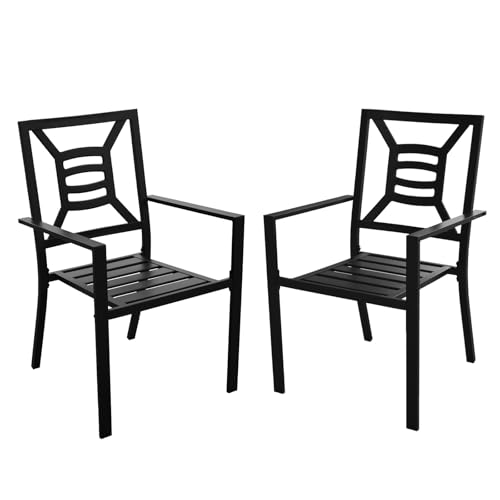
ADRERIC Outdoor Dining Chairs Set of 2, High-Back Metal Patio Dining Chairs | All-weather Wrought Iron Stackable Armchairs with Breathable Slatted Seats for Stylish Backyard, Porch, and Pool Deck dining
Check price on Amazon
VINGLI Patio Chairs Set of 2 - Stackable Outdoor Cast Aluminum Dining Chairs with Vintage Black Finish and Floral Pattern, Metal Armchairs for Poolside, Backyard, Balcony (with Cushion)
Check price on Amazon
Omelaza 2 Pieces Outdoor Dining Chairs, Patio Bistro Wrought Iron Stackable Chairs with Armrest for Garden, Porch, Backyard, Black - Supports 250 lbs
Check price on Amazon
Puntogen Stackable Black Metal Mesh Patio Dining Chairs Set of 2, Iron Outdoor Backyard Garden Porch Outdoor Dining Chairs
Check price on Amazon
PATIO-IN 2 Piece Outdoor Cast Aluminum Dinning Chairs, Patio Bistro Chair Set with Armrests, Patio Dinning Chairs for Patio Furniture Garden Deck (Black)
Check price on AmazonReady to Compare Wrought Iron Chair Options?
Browse the recommended sets above to compare construction details, finishes, and seating capacities. Whether you are outfitting a formal dining room or a covered patio, the right iron chair set can anchor the space for years.
View Recommended ChairsFrequently Asked Questions
Are wrought iron chairs comfortable for long meals?
They can be. The key is choosing a chair with a correctly angled back and a seat cushion of adequate thickness. Many iron chairs are sold with upholstered seats or accept add-on cushions. If you routinely host long dinners, test the chair for at least an hour before buying a full set.
Can wrought iron chairs be used outdoors year-round?
Yes, provided the finish is rated for exterior use and the chair has drainage-friendly seat construction. Powder-coated iron chairs are common on patios, but even the best finish benefits from periodic inspection. In climates with heavy snow or salt air, consider storing chairs or using covers during the harshest months.
How do I prevent rust on iron chair legs?
Keep the feet dry and inspect them regularly. Replace worn glides, touch up paint chips promptly, and avoid leaving the chairs standing in water. A coat of clear wax or a metal protectant adds an extra barrier, especially in humid or coastal environments.
Will wrought iron chairs scratch my hardwood floor?
Bare metal feet can scratch hardwood. Choose chairs with nylon or felt glides, or add stick-on floor protectors. Replace glides when they wear thin, and lift the chair rather than dragging it when repositioning.
What table height works with standard wrought iron dining chairs?
Standard dining chairs are designed for tables roughly 75 cm high. If you have a counter-height table, choose counter-height iron chairs; for bar-height tables, choose bar-height chairs. Measuring both the table and the chair before buying avoids the most common mismatch.
How many chairs should I buy for my dining table?
Allow about 60 cm of table edge per chair. A 180 cm rectangular table typically seats six comfortably; a 240 cm table seats eight. Round tables seat four to six depending on diameter. Always account for armrests, which require more space than armless chairs.