
Wrought Iron Glass Top Dining Table and Chairs: The Complete Guide
Everything you need to know about choosing, sizing, styling, and caring for a wrought iron glass top dining set — from frame construction and glass safety to seating comfort and room layout.
Start Your ResearchWhy this guide matters: A wrought iron glass top dining table and chairs set blends sculpted metal artistry with the light, airy look of glass. But the combination raises real questions — is the glass strong enough, will the frame wobble, how many chairs fit, and how do you keep both materials looking new? This guide answers those questions in plain language so you can choose with confidence.
You will find construction details, size and seating guidance, style matching, care routines, and a practical buying framework. Use the sections below to compare options at every tier, from entry-level to premium.
What Is a Wrought Iron Glass Top Dining Table and Chairs Set?
A wrought iron glass top dining table and chairs is a furniture set where the table base and chair frames are built from wrought iron — a low-carbon iron that is worked (or "wrought") by hand or machine into decorative, structural shapes. The tabletop is a sheet of glass, typically tempered, resting on or inset into the iron frame. The chairs usually share the same iron construction, often with decorative scrollwork, lattice patterns, or simple geometric lines.
This combination is popular because it solves a common design tension: iron brings visual weight, durability, and old-world character, while glass keeps the room feeling open and reflects light. The result is a set that can read as rustic, industrial, traditional, or even modern depending on the finish and silhouette.
Wrought iron itself has a long history in furniture making. Unlike cast iron, which is poured into molds and can be brittle, wrought iron is shaped through heating and hammering, giving it a fibrous structure that is tough and slightly flexible. Modern "wrought iron" furniture often uses mild steel formed in similar ways, sometimes with powder-coated or hand-rubbed finishes. When you shop, look for heavy-duty frames, reinforced joints, and rust-proof finishes — these are the markers of a set that will hold up over years of daily meals.
If you are still exploring broader table options, our guide to wrought iron dining room tables with glass tops covers additional frame styles and layout considerations. You can also browse wrought iron chairs to see how chair designs pair with different table silhouettes.
Why Choose a Wrought Iron Glass Top Dining Set?
Strengths of the Combination
- Heavy-duty iron frames resist wobbling and shifting during meals
- Glass tops are easy to wipe clean and resist everyday stains
- Open visual footprint makes small dining rooms feel larger
- Decorative ironwork adds character without bulk
- Tempered glass handles normal dining heat and light impacts
- Works across styles: rustic, industrial, traditional, coastal
- Long-term investment when the finish is maintained
Trade-Offs to Understand
- Glass shows fingerprints and smudges more than wood
- Iron frames are heavy; moving the set requires planning
- Bare metal chairs can feel firm without cushions
- Cheaper finishes may chip or rust over time
- Glass edges need careful handling during assembly
- Scraping sounds are possible if chairs are dragged
The strengths usually win for households that want a durable, low-clutter dining centerpiece. A wrought iron frame does not flex or creak like some lightweight metal sets, and the glass top makes place settings pop — plates, linens, and centerpieces read clearly against the reflective surface. If your dining area is compact, the see-through top is a genuine advantage: it breaks up visual mass and lets light travel across the room.
The trade-offs are manageable with the right habits. Coasters and trivets protect the glass from extreme heat, felt pads under chair legs prevent scraping, and a weekly wipe-down keeps both materials looking sharp. For a deeper look at chair styles that match iron tables, see our vintage wrought iron chairs overview.
Wrought Iron Frame Construction: What to Look For
Joint Quality and Weld Integrity
Run your hand along the joints where legs meet the apron or stretchers. Smooth, continuous welds are a good sign; rough, pitted, or incomplete welds invite wobble and rust. On quality sets, joints are often reinforced with gussets or cross-bracing, especially on larger tables where leverage increases.
Frame Gauge and Weight
Thicker iron stock and a heavier overall frame generally mean better stability. A table that feels solid when you press down on one corner is less likely to rock or shift. Chairs should feel grounded too — a well-built iron chair will not flex noticeably when you lean back.
Finish and Rust Protection
Look for powder-coated, rust-proof, or hand-rubbed finishes. Powder coating is durable and resists chipping better than thin paint. If the set will live in a humid climate, ask specifically about rust-resistant treatment and check for coverage inside joints and under the table apron, where moisture collects.
Feet and Floor Protection
Adjustable leveling glides are a small feature with big benefits: they compensate for uneven floors and reduce rocking. Rubber or felt caps also protect hard flooring and dampen noise. If the set you like lacks them, add adhesive felt pads — an easy upgrade.
Understanding the Glass Top
Tempered vs. Annealed Glass
Always choose tempered glass for a dining table. Tempering creates internal stress that makes the glass several times stronger than standard annealed glass and causes it to break into small, dull-edged pieces rather than sharp shards. Reputable sets specify tempered glass; if a listing is vague, ask the seller directly.
Thickness and Edge Work
Most dining glass falls in the 8 mm to 12 mm range. Thicker glass feels more substantial and resists flex, but the frame must be designed to support it. Check the edge finish too: polished or beveled edges are smoother and less prone to chipping than raw-cut edges.
Support and Attachment
Glass should rest on rubber or felt pads at contact points, not directly on metal. Suction cups or brackets may secure the top; make sure they are intact and correctly positioned. A glass top that shifts slightly when nudged is usually fine if it is properly padded — but a top that visibly rocks or overhangs too far is a red flag.
Heat and Impact
Tempered glass handles normal dining use well, but sudden extreme temperature changes and hard impacts near the edge are the main risks. Use trivets for hot dishes and avoid dropping heavy objects on the surface. With reasonable care, a quality glass top lasts many years.
Sizing Your Wrought Iron Glass Top Table and Chairs
Getting the size right is the difference between a set that feels generous and one that feels cramped. Start with the room, then work backward to the table.
Clearance Rules
- 36 inches of clearance around the table is the standard for comfortable chair pull-out and walking space.
- Allow at least 24 inches of table width per diner for place settings; 30 inches is more comfortable for formal meals.
- Leave 12 to 18 inches between the table edge and a wall or sideboard where people sit.
Common Shapes and Seating
| Table Shape | Typical Seating | Best For |
|---|---|---|
| Round, 42–48 in | 4 diners | Compact dining rooms, breakfast nooks, conversation-friendly meals |
| Round, 54–60 in | 4–6 diners | Family dining, open-plan kitchens, flexible seating |
| Rectangular, 60–72 in | 6 diners | Everyday family meals, small gatherings |
| Rectangular, 72–84 in | 6–8 diners | Formal dining rooms, holiday hosting |
| Oval, 60–72 in | 6 diners | Softening angular rooms, easy circulation around edges |
Measure your room's length and width, subtract the clearance you need on each side, and compare the result to the table dimensions. For tight spaces, a round table often seats more people comfortably than a rectangle of similar footprint. If you are weighing a glass set against solid alternatives, our wood dining table guide can help you compare the feel and maintenance of each material.
Matching Wrought Iron Chairs to the Table
Proportion and Seat Height
Standard dining tables are about 30 inches high, and standard dining chairs have an 18-inch seat height. Keep the seat-to-table clearance at roughly 10 to 12 inches so legs fit comfortably under the apron. If the table is counter height, you need counter stools instead — our guide to countertop stools covers height matching in detail.
Comfort Upgrades
Bare iron seats are fine for short meals but can feel firm for long dinners. Seat cushions, tie-on pads, or slipcovers add comfort without hiding the ironwork. Look for cushions with non-slip backing so they stay put when diners slide in and out.
Style Pairing
Scrollwork chairs suit traditional and romantic settings; clean-lined iron chairs lean industrial or modern; lattice-back designs bridge rustic and coastal looks. Mixing chair styles is acceptable if the finishes match, but keep the seat heights consistent for visual rhythm.
If you are exploring chair alternatives, our wooden dining room chairs guide shows how wood seats can soften an iron table, while wicker dining chairs add texture for a lighter, breezier feel.
Style Guide: Making the Set Work in Your Room
Finish and Color Direction
- Black or dark bronze iron: classic, grounding, works with almost any wall color.
- White or cream iron: airy and coastal; pairs well with light woods and soft textiles.
- Rustic or distressed finishes: farmhouse and industrial rooms; pairs with reclaimed wood and linen.
- Gold or brass accents: glam and transitional spaces; use sparingly to avoid visual noise.
Glass and Room Light
Glass reflects windows and lighting, so placement matters. A table under a chandelier or pendant will pick up sparkle; a table near a window will bounce daylight across the room. If glare is a concern, choose a table with a slightly textured or smoked glass top, or position it perpendicular to the main light source.
Textiles and Centerpieces
Because iron and glass are hard materials, soften the look with table runners, cloth napkins, and a low centerpiece. A runner also protects the glass and reduces smudge visibility. For seasonal ideas, our table runners collection and dinnerware sets guide offer practical starting points.
Room Anchors
A rug under the table defines the dining zone and reduces chair-scrape noise. Choose a rug large enough to pull chairs out while staying on the rug. If your room has a sideboard or buffet, keep the style consistent — our wooden sideboard guide shows how storage pieces can complement iron and glass.
Care and Maintenance for Iron and Glass
Daily Habits
- Wipe the glass with a microfiber cloth after meals to prevent smudge buildup.
- Use coasters and trivets for hot dishes and drinks.
- Lift chairs rather than dragging them to avoid scraping the floor and frame.
- Dry the iron frame promptly if it gets wet; moisture is the main rust risk.
Weekly and Monthly Cleaning
For glass, use a mild glass cleaner or a diluted vinegar solution and a soft cloth. Avoid abrasive pads and ammonia-heavy products that can leave streaks or dull the surface. For the iron frame, dust with a dry cloth and wipe with a slightly damp cloth only when needed, then dry immediately. Check joints and feet for paint chips; touch up small chips with matching enamel to prevent rust from spreading.
Seasonal Checks
Every few months, inspect the glass support pads and replace any that are compressed or missing. Tighten any accessible bolts or screws. If the set lives near a humid area or open window, apply a thin coat of furniture wax to the iron frame once or twice a year for extra protection.
For broader maintenance routines, our dining care and maintenance hub covers wood, metal, and glass care in one place.
How Wrought Iron Glass Tops Compare to Other Materials
| Material | Durability | Maintenance | Style Range | Best For |
|---|---|---|---|---|
| Wrought iron + glass | Heavy-duty frame; tempered glass resists daily use | Wipe glass; dry iron; touch up chips | Rustic, industrial, traditional, coastal | Open, airy dining rooms; durable everyday sets |
| Solid wood | Strong; refinishable; can dent | Dust, polish, protect from moisture | Farmhouse, modern, traditional | Warm, family-friendly rooms; long-term refinishing |
| Marble top | Very durable; stains possible without sealing | Seal periodically; wipe spills promptly | Luxury, modern, classic | Formal dining; statement tables |
| Glass + chrome | Sturdy but lighter visual weight | Polish chrome; clean glass | Modern, minimalist, industrial | Compact modern apartments |
If you are leaning toward a white or light finish, our white marble dining table and white oak dining table guides offer useful comparisons on look and upkeep.
Buying Guide: How to Choose the Right Set
Step 1: Define the Room and Seating Need
Measure the dining area and decide how many people must sit comfortably on an ordinary day. Add one or two seats for flexibility if space allows. This determines the table shape and chair count before style enters the picture.
Step 2: Choose the Frame and Finish Tier
Use a consistent tier system to compare options:
| Tier | What to Expect | Best For |
|---|---|---|
| Entry-level | Lighter frame stock, simpler welds, basic powder coat, standard tempered glass | Occasional dining, starter homes, light daily use |
| Mid-range | Thicker frame, reinforced joints, better finish coverage, polished glass edges | Everyday family meals, balanced durability and design |
| Premium | Heavy-duty construction, hand-finished details, thick tempered glass, superior rust protection | Long-term investment, formal dining, high-use households |
Step 3: Inspect the Glass Specification
Confirm tempered glass, check thickness, and look for polished edges. Ask about replacement options; a good seller can supply a replacement top if needed years later.
Step 4: Test Comfort and Stability
If shopping in person, press down on a corner of the table to check for rocking. Sit in a chair and lean back gently; excessive flex is a warning sign. Online, read reviews that mention wobble, finish durability, and assembly experience.
Step 5: Plan Delivery and Assembly
Iron and glass sets are heavy and require two people for safe assembly. Clear the delivery path, check the box for glass damage before signing, and follow the assembly instructions for pad placement and bolt tightening.
Recommended Wrought Iron Glass Top Dining Table and Chairs Sets
⚠️ AFFILIATE DISCLOSURE: This website contains affiliate links. As an affiliate Associate, we earn from qualifying purchases. If you make a purchase through these links, we may receive a small commission at no additional cost to you. Read our full affiliate policy.

SUNCROWN 5-Piece Outdoor Wrought Iron Chairs and Table Patio Dining Furniture Set - 4 Stackable Metal Chairs, 1 Steel Slat Bistro Table for Garden Backyard Deck
Check price on Amazon
Gizoon Black 7 Piece Glass Dining Table Set, Kitchen Table with Chairs | PU Leather Modern Dining Room Furniture,Dining Table Sets,Space Saving Table and Chairs Set for Home, Kitchen, Living Room
Check price on Amazon
Giantex 5 Piece Dining Table Set, Kitchen Dining Set with Tempered Glass Table Top and 4 Chairs, Dinette Set for 4 for Breakfast Nook Dining Room Kitchen (Transparent)
Check price on Amazon
SUNCROWN 5-Piece Outdoor Dinging Set, Wrought Iron Chairs and Table Patio Dining Furniture Set - 4 Stackable Metal Chairs, 1 Steel Slat Bistro Table for Garden Backyard Deck
Check price on Amazon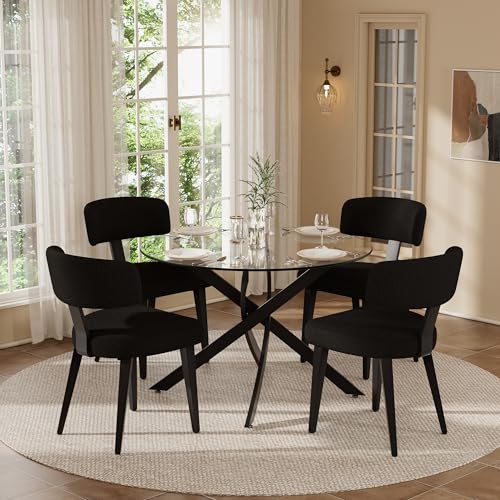
KATBOC Small Dining Table Set for 4, 36" Round Kitchen Table with 4 Teddy Boucle Dining Chairs, Tempered Glass Top with Metal Legs(All Black)
Check price on Amazon
Flash Furniture Glass Dining Table with 4 Chairs, Black, 5-Piece Set | Commercial Grade, Umbrella Hole, Tempered Glass
Check price on Amazon
VINGLI 40'' Outdoor Dining Table with Umbrella Hole, All Weather Round Patio Table, Waterwave Tempered Glass Top and Metal Frame, for Garden Porch Balcony Yard
Check price on Amazon
ModaWhly Glass Dining Table Set for 4, 5-Piece Round Gold Kitchen Table Set with 4 Black Upholstered Chair, Tempered Glass Dining Room Table for Small Living Room, Kitchen
Check price on AmazonFrequently Asked Questions
Is a wrought iron glass top dining table durable enough for daily use?
Yes. A mid-range or premium set with a heavy-duty frame and tempered glass is designed for daily meals. The main risks are edge impacts on the glass and rust on uncoated iron, both of which are manageable with pads, coasters, and routine drying.
How do I prevent chairs from scratching the floor and the table frame?
Add felt pads under chair legs and lift chairs rather than dragging them. For the table frame, check that chair backs do not strike the apron when pushed in; a small gap or a bumper pad on the chair back can prevent metal-on-metal contact.
Can I use a wrought iron glass top set on a covered porch or sunroom?
Only if the set is rated for that environment. Indoor sets may rust in humid or damp conditions, and glass can suffer stress from temperature swings. Look for weather-resistant coating and outdoor-rated glass if the space is not fully climate-controlled.
What is the best way to clean smudges from the glass top?
Use a microfiber cloth and a mild glass cleaner or diluted vinegar. Wipe in a circular motion, then buff with a dry section of the cloth. Avoid paper towels that can leave lint and abrasive powders that can scratch.
Can I replace the glass top later if it breaks?
Often yes, if the frame shape is standard. Contact the manufacturer or a local glass supplier with the exact dimensions and edge profile. Tempered glass must be cut and tempered to size, so a custom replacement is usually the safest route.
Ready to Choose Your Wrought Iron Glass Top Dining Set?
Use the guidance above to match frame quality, glass safety, seating comfort, and room size. Compare the recommended sets, check availability, and bring home a dining centerpiece built for everyday life.
View Recommended Sets