
Banquette Seating for Kitchen: The Complete Guide
Turn an unused kitchen corner into a cozy, hard-working dining nook. Learn how to choose the right banquette style, size, storage setup, and materials for your space — and make every meal feel like a special occasion.
Explore Recommended OptionsKitchens are the busiest rooms in most homes, yet the dining zone often gets whatever space is left over. That is exactly where banquette seating for a kitchen shines. A banquette — a bench-style seat, often built into a corner or along a wall — can turn a few square feet into a welcoming breakfast nook, homework station, and gathering spot. It seats more people than freestanding chairs in the same footprint and can hide storage underneath.
This guide walks you through the decisions that matter: layout, dimensions, storage, upholstery, and how to pair a bench with the right table. Whether you are remodeling a kitchen, fitting out a small apartment, or simply replacing a wobbly breakfast table set, you will find clear, practical guidance here. By the end, you should feel confident comparing options and choosing the banquette that fits your home and your daily routine.
What Is Kitchen Banquette Seating?
A banquette is a long, bench-style seat, usually upholstered, that is either built into a wall or corner or freestanding against one. In a kitchen, it is most often paired with a table to form a compact dining nook. Unlike a standard chair-and-table setup, a banquette pushes seating right up against the wall, freeing floor space for walkways and work zones.
There are two broad approaches. Built-in banquettes are constructed on site and fixed to the wall, often with custom cushioning and integrated storage. Freestanding banquettes are ready-made pieces you can position, move, and take with you if you relocate. Both can work beautifully in a kitchen; the right choice usually comes down to your budget tier, DIY comfort level, and how long you plan to stay in the home.
Why a Banquette Works So Well in a Kitchen
Banquettes are popular for good reasons. They solve several problems at once:
- Space efficiency: A bench seats two to three people in the width of one or two chairs, because people slide in rather than pull chairs out.
- Cozy atmosphere: Pulling seating close to the wall creates an intimate, restaurant-style feel that makes everyday meals feel a little more special.
- Storage potential: Lift-up seats, drawers, and cubbies can hold table linens, board games, or small appliances. Explore banquette seating with storage if organization is a priority.
- Family friendly: Kids can climb in easily, and there are no chair legs to trip over in a busy kitchen.
- Design anchor: A built-in bench gives a kitchen a deliberate dining zone rather than a table floating in open space.
If your kitchen has an awkward corner, a window alcove, or a stretch of wall that never quite found a purpose, a banquette is often the most efficient way to reclaim it.
Types of Kitchen Banquette Seating
Banquettes come in several configurations. The best choice depends on the shape of your kitchen and how many people you need to seat.
| Type | Best For | Key Considerations |
|---|---|---|
| Corner banquette | Square or L-shaped kitchen corners | Maximizes corner space; often paired with a round or square table |
| Straight-wall banquette | Long empty walls and open-plan kitchens | Simple to build; can be extended in modules |
| U-shaped banquette | Dedicated breakfast nooks | Seats the most people; needs a wider footprint |
| Freestanding bench | Renters and flexible layouts | Portable; no installation; may have less storage |
| Banquette dining set | Anyone wanting a coordinated look | Bench and table sold together; simpler shopping decision |
Corner layouts are especially popular in compact kitchens because they use the least floor area per seat. If you are working with a tight corner, a corner banquette is usually the most space-efficient solution. For a fully coordinated setup, a banquette dining set removes the guesswork of matching bench and table heights.
Measuring Your Space Before You Buy
Getting the dimensions right is the single most important step. A banquette that is too deep feels cramped; one that is too shallow is uncomfortable to sit on for long. Use the following guidelines as a starting point, then adjust to your family's comfort preferences.
- Seat depth: About 18 to 20 inches is comfortable for most adults. Deeper seats feel loungier but take more floor space.
- Seat height: Standard dining height is roughly 17 to 19 inches from floor to seat top. Match this to your table height.
- Table clearance: Allow at least 12 inches between the seat front and the table edge so people can slide in comfortably.
- Per-person width: Plan about 24 inches of bench width per adult; 18 to 20 inches for children.
- Walkway: If the banquette sits along a traffic path, leave about 36 inches for people to pass behind seated diners.
Sketch your kitchen layout to scale, including doors, windows, and appliance clearances. Then mark out the bench, table, and walkway zones. This simple step prevents the common mistake of ordering a banquette that fits the wall but leaves no room to move around it.
Storage Options That Earn Their Keep
One of the biggest advantages of a kitchen banquette is the chance to add storage without adding furniture. There are several common approaches:
- Lift-up seats: The seat cushion hinges upward, revealing a large compartment for bulky items like linens, seasonal decor, or small appliances.
- Pull-out drawers: Drawers under the seat are easy to access and great for tableware, napkins, or kids' craft supplies.
- Open cubbies: Open shelves keep everyday items visible and reachable, and they can double as a spot for baskets.
- End cabinets: A banquette that extends to the wall can include a narrow cabinet at one end for taller items.
Storage adds weight and structure, so built-in models with storage tend to be a longer-term investment than simple freestanding benches. If you are weighing options, compare a storage banquette with a kitchen bench with storage to see which fits your installation comfort level. For a simpler, mobile solution, a banquette seat or a freestanding bench banquette can still provide seating without construction.
Materials, Upholstery & Durability
Kitchens are hard on furniture: spills, crumbs, sticky hands, and the occasional bumped knee. Choose materials that can take it.
Frames and bases. Solid wood and high-grade engineered wood are the most common choices. Solid wood offers durability and can be refinished; engineered wood with a quality veneer is stable and consistent. Painted MDF is common for built-ins because it takes paint smoothly. Look for reinforced joinery and a solid build if the banquette will see daily use.
Upholstery. Performance fabrics are designed to resist stains and wipe clean, which makes them a smart pick for family kitchens. Faux leather and vinyl are easy to wipe and stand up well to spills. If you prefer natural fabrics, choose tight weaves and consider removable, washable covers.
Cushioning. High-density foam holds its shape longer than soft foam. A medium-firm seat is generally the most comfortable for dining because it supports you without feeling hard.
For busy households, prioritize cleanable surfaces and sturdy construction over delicate detailing. That trade-off almost always pays off in the long run.
Comfort and Ergonomics
A banquette is only useful if people actually want to sit on it. Comfort comes down to a few details:
- Seat depth and height: Match these to your table so knees fit comfortably under the top and feet rest flat on the floor.
- Back support: A slightly angled backrest is more comfortable than a straight vertical one. Some banquettes include loose back cushions you can adjust.
- Cushion firmness: Medium-firm foam is the sweet spot for meals; very soft cushions bottom out quickly.
- Access: Slide-in seating is cozy but less convenient for people with mobility limitations. If that is a concern, leave one end open or pair the bench with a freestanding chair.
If you want to soften a harder bench or extend its life, consider adding back chair cushions or a tailored seat pad. Small comfort upgrades often make the difference between a bench people avoid and one they fight over.
Matching a Banquette to Your Kitchen Style
A banquette should feel like it belongs in the room, not like an afterthought. Here are a few directions to consider:
- Modern minimalist: Clean lines, a neutral palette, and slim cushions. Painted MDF or light wood keeps the look airy.
- Farmhouse and rustic: Beadboard panels, warm wood tones, and textured fabrics fit right in. A bench banquette with visible wood grain works well here.
- Industrial: Metal legs, dark finishes, and faux leather upholstery give a loft-style feel.
- Coastal and light: White or pale wood bases with light fabrics and natural textures keep the space bright.
- Traditional: Tufted or piped cushions, rich wood tones, and classic profiles suit formal kitchens.
Tie the banquette to the rest of the kitchen through color and material repetition — for example, matching the bench base to your cabinetry or echoing a countertop tone in the upholstery. If you want a fully coordinated seating area, a banquette dining set simplifies the styling decision.
Choosing the Right Table to Pair
The table and bench need to work together in both height and shape. A standard dining table (roughly 28 to 30 inches high) pairs with a standard-height banquette (17 to 19 inches). If you prefer a bar-height or counter-height setup, choose a matching taller bench.
Shape matters too. A round table softens a corner banquette and makes conversation easier. A square table works well in compact nooks. A rectangular table suits a straight-wall banquette and seats more people along its length. If you are exploring alternative heights, a bar height kitchen table can work with a taller bench, though standard height is more comfortable for long meals.
Finally, check knee clearance: the table apron and legs should not block the bench seat. If the table has thick legs, position the bench so people sit between them rather than straddling them.
Recommended Banquette Seating for Kitchen
⚠️ AFFILIATE DISCLOSURE: This website contains affiliate links. As an affiliate Associate, we earn from qualifying purchases. If you make a purchase through these links, we may receive a small commission at no additional cost to you. Read our full affiliate policy.
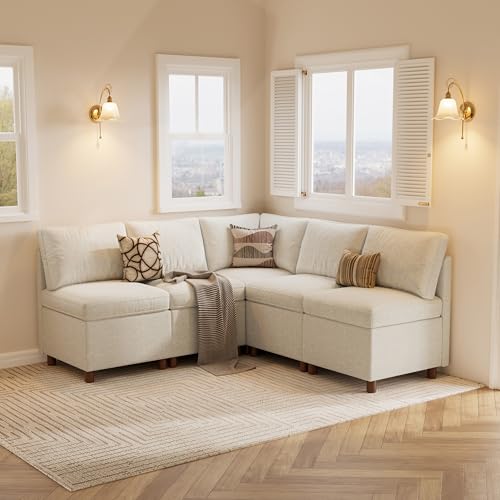
SITJOY Breakfast Nook Bench with Storage, Beige, 5 Seat (1 Corner) | Removable Washable Covers, Modular Corner Kitchen Banquette Seating, Dining Settee Couch, Upholstered Dining Bench with Back
Check price on Amazon
CHITA Breakfast Nook Bench with Storage, Banquette Seating, 4 Seats, Khaki | L Shaped Corner Dining Bench for Kitchen & Dining Room, Modular Upholstered Fabric Seating with Back
Check price on Amazon
SITJOY Breakfast Nook Bench with Storage, Beige, 4 Seat (1 Corner Seat) | Removable Washable Covers, Modular Corner Kitchen Banquette Seating, Dining Settee Couch, Upholstered Dining Bench with Back
Check price on Amazon
CHITA Breakfast Nook Bench with Storage, Banquette Seating, 4 Seats, Linen | L Shaped Corner Dining Bench for Kitchen & Dining Room, Modular Upholstered Fabric Seating with Back
Check price on Amazon
CHITA Breakfast Nook Bench with Storage, Banquette Seating, 5 Seats, Khaki | L Shaped Corner Dining Bench for Kitchen & Dining Room, Modular Upholstered Fabric Seating with Back
Check price on Amazon
Dnnisso Breakfast Nook Bench with Storage ,Modular Banquette,4 Seat, Beige | Banquette Seating ,Hidden Storage ,Metal Spring Seat Lid,Upholstered Dining Bench with Back,Solid Wood Legs Kitchen Nook
Check price on Amazon
NDOHCUO Breakfast Nook Bench, L Shaped Storage Bench with Cushion, Natural | Fluted Kitchen Corner Dining Bench with Hidden Storage for Dining Room, Entryway, Cloakroom
Check price on Amazon
SITJOY Breakfast Nook Bench with Storage, Khaki, 4 Seats (1 Corner) | Removable Washable Covers, High Solid Wood Legs, Modular Corner Kitchen Banquette Seating, Upholstered Dining Bench with Back
Check price on AmazonA Simple Buying Checklist
Before you commit to a banquette, run through this quick checklist:
- Measure the wall or corner, including window sills, outlets, and baseboard depth.
- Confirm seat height matches your table height.
- Decide between built-in and freestanding based on your home situation.
- Choose storage type based on what you need to keep nearby.
- Pick upholstery that can handle kitchen spills.
- Leave enough walkway for traffic behind the bench.
- Plan how the bench will be installed or assembled.
Working through these steps in order prevents most of the common mistakes, from ordering the wrong depth to discovering the bench blocks a cabinet door.
Frequently Asked Questions
What is banquette seating for a kitchen?
Banquette seating for a kitchen is a built-in or freestanding bench-style seat, often placed in a corner or along a wall, that creates a cozy dining nook. It typically pairs with a table and can include storage underneath.
How much clearance do I need for a kitchen banquette?
Allow at least 12 inches of knee clearance under the table and 24 to 30 inches of table depth per person. Also, leave 36 inches of walkway space around the banquette if it sits in a traffic path.
Can banquette seating include storage?
Yes. Many banquette designs feature lift-up seats, pull-out drawers, or open cubbies. Storage banquettes are ideal for small kitchens because they combine seating and organization in one footprint. Explore our storage banquette options for ideas.
What materials work best for kitchen banquette seating?
Wood frames with high-density foam cushions are common. For upholstery, consider performance fabrics, faux leather, or wipeable vinyl in busy kitchens. Solid wood or painted MDF works well for the base.
Is a banquette a good choice for a small kitchen?
Yes. A banquette seats more people per square foot than freestanding chairs because people slide in instead of pulling chairs out. A corner banquette is especially efficient in compact kitchens.
Final Thoughts
Banquette seating for a kitchen is one of the most practical upgrades you can make. It turns dead space into a dining zone, adds storage, and creates the kind of cozy corner where people naturally gather. The key is to plan carefully: measure your space, match seat and table heights, choose cleanable materials, and decide early whether you want built-in storage or a freestanding bench.
Once those decisions are made, shopping becomes much simpler. Use the recommendations above as a starting point, compare features within the tier that fits your needs, and choose the banquette that suits your kitchen and your daily life. A well-chosen bench will serve your household for years.