
Bench Banquette: The Complete Buying Guide for Dining Room Seating
Everything you need to know about choosing, placing, and styling a bench banquette for your dining room, kitchen nook, or breakfast corner — from seating dimensions to storage configurations.
Quick Overview: A bench banquette pairs a bench seat with a supportive backrest, usually anchored against a wall or tucked into a corner. It maximizes seating in compact footprints, adds architectural interest, and can double as storage. This guide walks you through sizing, materials, layout options, and the practical details that matter before you commit to a design for your dining space.
What Exactly Is a Bench Banquette?
A bench banquette is a seating unit that combines a bench with a backrest and is typically positioned along a wall or in a corner. Unlike a freestanding dining bench, a banquette creates a semi-enclosed "nook" feeling that makes a dining area feel intentional and cozy. You will see these units in breakfast corners, kitchen bays, and compact apartments where every square inch counts.
The design principle is simple: one long, continuous seat replaces multiple individual chairs, freeing up floor space and allowing more people to dine in the same footprint. Many homeowners pair a banquette with a pedestal table or a rectangular table pushed flush against the seat edge, creating an efficient, restaurant-style arrangement at home.
If you are still weighing up the difference between a loose bench and a dedicated banquette, our guide to benches for the dining room covers the trade-offs in more detail.
Why Homeowners Choose Banquette Seating
Banquette seating solves several design problems at once. It is particularly effective in open-plan layouts where the dining zone needs a visual anchor, and in small rooms where extra chairs would overcrowd the floor.
Space Efficiency
A continuous bench uses the wall line for seating, so you only need clearance on one side. This is why small dining rooms and kitchen corners benefit so much from a banquette layout.
More Seats Per Foot
Where two chairs might fit, a bench can often seat three. Families with children find this especially practical for everyday meals and homework sessions.
Built-In Storage
Lift-up seats and pull-out drawers turn the base into usable storage for linens, board games, or seasonal dinnerware. Our guide to banquette seating with storage explores the options.
Cozy Atmosphere
Backrests and corner enclosures create a sheltered, intimate feel. This is the same principle restaurants use to make booths feel inviting.
Main Types of Bench Banquette
Before choosing a layout, identify which banquette configuration fits your room. The four most common types are:
1. Straight Wall Banquette
A single bench run along one wall. This is the simplest and most versatile layout, ideal for narrow rooms and open-plan spaces where a corner is not available. Pair it with loose chairs on the opposite side of the table for a balanced look.
2. Corner Banquette
An L-shaped or U-shaped unit that wraps into a corner, often called a corner banquette. This is the classic breakfast nook arrangement and delivers the highest seating density. Explore dedicated corner banquette seating designs for layout inspiration.
3. Kitchen Banquette
Built into or adjacent to the kitchen, often under a window or along a short wall. These units frequently incorporate storage and are designed for daily family use. See our collection of banquette seating for the kitchen for practical configurations.
4. Freestanding Banquette Bench
A movable bench with a backrest that is not built into the wall. Freestanding units offer flexibility for renters and can be repositioned as needs change. A backless dining bench is a related option when you want seating without a full backrest.
Sizing and Dimensions: Getting the Measurements Right
Correct dimensions are the difference between a banquette that feels generous and one that feels cramped. Use these guidelines as a starting point, then adjust for your table height and room proportions.
Banquette Measurement Checklist
- Seat height: 17 to 19 inches from floor to seat top for standard dining tables; 24 to 26 inches for counter-height tables.
- Seat depth: 18 to 20 inches for comfortable upright dining; add depth for lounge-style corners.
- Width per person: at least 24 inches of bench length per diner; 30 inches is more comfortable for adults.
- Backrest height: 12 to 18 inches above the seat for support without blocking sightlines.
- Table clearance: allow 12 to 15 inches between the seat edge and the table edge for legroom.
- Corner footprint: a two-sided corner banquette usually needs a minimum of 5 by 5 feet.
- Walkway clearance: keep at least 36 inches of clear floor space behind loose chairs on the open side.
If you are planning a full set with a table included, a banquette dining set simplifies the process because the table and bench heights are already matched.
Quality Tiers: Comparing Bench Banquette Construction
Banquettes vary widely in construction quality. Rather than comparing listed figures, use these quality tiers to understand what each class of product typically delivers. The classification is consistent across all product categories on this site.
| Tier | Typical Construction | Best For | Durability Outlook |
|---|---|---|---|
| Entry-Level | Particle board or thin MDF frames, stapled joinery, basic foam cushioning, fabric or vinyl upholstery | Light-use breakfast corners, renters, temporary setups | Good for occasional use; expect visible wear in high-traffic family settings |
| Mid-Range | Engineered wood with reinforced corner blocks, screwed joinery, denser foam, removable washable covers | Everyday family dining, kitchen nooks, small apartments | Solid choice for the tier; holds shape well over years of daily use |
| Premium | Solid hardwood frames, mortise-and-tenon or dowel joinery, high-resilience foam, performance upholstery | Primary dining rooms, long-term households, design-led interiors | Heavy-duty construction that resists sagging and frame loosening |
| Luxury | Kiln-dried hardwood, hand-finished frames, tailored upholstery with premium textiles, custom sizing | Custom-built nooks, formal dining spaces, architectural interiors | Long-term investment piece; designed to be reupholstered and serviced |
A mid-range banquette typically offers better foam density and joinery than an entry-level model, which translates into a seat that keeps its shape. Premium and luxury tiers justify their position through frame construction and upholstery quality rather than surface decoration alone.
Materials and Upholstery: What Holds Up Best
The frame and the upholstery are the two areas where quality differences show up first. Consider how the banquette will be used day to day before deciding.
Hardwood Frames
Solid hardwood (maple, oak, birch) resists warping and holds screws and joinery securely. This is the preferred frame material for premium and luxury tiers.
Engineered Wood
Plywood and high-density MDF perform well in mid-range units when joints are reinforced. Avoid thin particle board in high-traffic areas.
Performance Fabrics
Stain-resistant, tightly woven textiles are the practical choice for family dining. Removable, washable covers extend the usable life significantly.
Leather and Faux Leather
Easy to wipe clean and well suited to kitchen banquettes. Faux leather offers a practical alternative with less maintenance than natural hides.
For seating that will be used with a counter-height table, check that the bench height matches. A bar height table and chairs arrangement requires a taller banquette, while standard dining tables pair with 17-to-19-inch seat heights.
Storage Configurations for Banquettes
Storage is one of the strongest reasons to choose a banquette over loose chairs. The most common configurations are lift-up seats, front-facing drawers, and open cubbies beneath the bench. Lift-up seats offer the most volume, while drawers are easier to access in tight corners.
If storage is your priority, compare the dedicated options in our guide to banquette seating with storage. For kitchen applications, a bench with storage for the kitchen can also work as a secondary solution when a full banquette is not feasible.
Plan what you intend to store before choosing a mechanism. Linens and dinnerware need deeper, dust-protected compartments, while shoes and bags are better served by open or ventilated cubbies.
Layout and Placement: Making the Banquette Work
Placement determines how well a banquette functions. Start by identifying the longest uninterrupted wall in your dining zone, then confirm that the table can be positioned with adequate clearance on the open side.
- Under a window: the classic breakfast nook position, providing natural light and a built-in backdrop.
- In a corner: maximizes seating density and creates a sheltered, booth-like feel.
- Along a half-wall: works well in open-plan spaces where you want to define the dining zone without full walls.
- Against a kitchen island: a short banquette can extend the island into a casual eating area.
When space is very tight, a bench with storage underneath can replace a full banquette while retaining some of the same benefits. For patio or balcony settings, a balcony table and chairs set plays an analogous role outdoors.
Coordinating Your Banquette With the Rest of the Room
A banquette is a substantial piece of furniture, so it should relate to the table, lighting, and adjacent storage. A few coordination principles make the difference between a designed look and an assembled one.
- Match table height: standard dining tables pair with 17-to-19-inch seats; counter-height tables need 24-to-26-inch seats.
- Balance the open side: choose loose chairs that match the bench style without being identical. A bench dining setting shows how to combine the two.
- Add a rug: a rug under the table defines the nook and softens the acoustics.
- Layer lighting: a pendant or chandelier centered over the table completes the arrangement.
- Consider adjacent storage: a sideboard or bench nearby can hold serving pieces and reduce trips to the kitchen.
If you prefer the flexibility of loose seating, our guides to dining room chairs for the home and bench banquettes cover both approaches in depth.
Buying Checklist: What to Verify Before You Order
Practical Checks
- Confirm seat height matches your table height category.
- Measure the wall run and verify the bench length leaves clearance for chairs on the open side.
- Check whether the unit is freestanding or requires wall anchoring.
- Verify the cushion cover is removable and washable if the banquette is for daily family use.
- Ask about frame joinery and foam density for mid-range and above.
- Confirm delivery access — long banquettes may arrive in sections.
- Review the assembly requirements and whether the base is pre-built.
- For storage models, confirm the lid or drawer hardware is rated for frequent use.
Recommended Bench Banquette Products
⚠️ AFFILIATE DISCLOSURE: This website contains affiliate links. As an affiliate Associate, we earn from qualifying purchases. If you make a purchase through these links, we may receive a small commission at no additional cost to you. Read our full affiliate policy.

CHITA Breakfast Nook Bench with Storage, Banquette Seating, 4 Seats, Khaki | L Shaped Corner Dining Bench for Kitchen & Dining Room, Modular Upholstered Fabric Seating with Back
Check price on Amazon
SITJOY Breakfast Nook Bench with Storage, Beige, 4 Seat (1 Corner Seat) | Removable Washable Covers, Modular Corner Kitchen Banquette Seating, Dining Settee Couch, Upholstered Dining Bench with Back
Check price on Amazon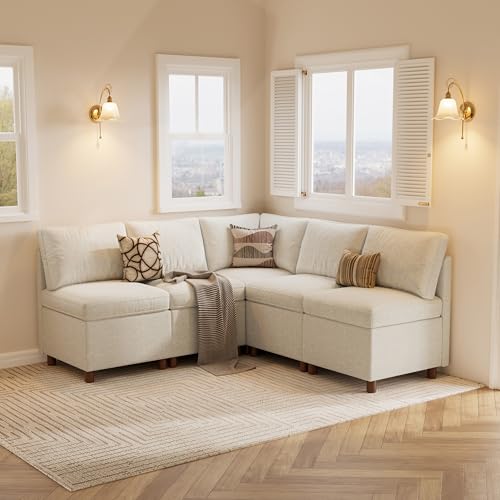
SITJOY Breakfast Nook Bench with Storage, Beige, 5 Seat (1 Corner) | Removable Washable Covers, Modular Corner Kitchen Banquette Seating, Dining Settee Couch, Upholstered Dining Bench with Back
Check price on Amazon
NDOHCUO Breakfast Nook Bench, L Shaped Storage Bench with Cushion, Natural | Fluted Kitchen Corner Dining Bench with Hidden Storage for Dining Room, Entryway, Cloakroom
Check price on Amazon
Dnnisso Breakfast Nook Bench with Storage ,Modular Banquette,4 Seat, Beige | Banquette Seating ,Hidden Storage ,Metal Spring Seat Lid,Upholstered Dining Bench with Back,Solid Wood Legs Kitchen Nook
Check price on Amazon
Modern Banquette Bench with Hidden Storage Breakfast Nook Restaurant
Check price on Amazon
CHITA Breakfast Nook Bench with Storage, Banquette Seating, 4 Seats, Linen | L Shaped Corner Dining Bench for Kitchen & Dining Room, Modular Upholstered Fabric Seating with Back
Check price on Amazon
CHITA Breakfast Nook Bench with Storage, Banquette Seating, 5 Seats, Khaki | L Shaped Corner Dining Bench for Kitchen & Dining Room, Modular Upholstered Fabric Seating with Back
Check price on AmazonFrequently Asked Questions
What is a bench banquette?
A bench banquette is a seating unit that combines a bench with a backrest, usually placed against a wall or in a corner. It creates a cozy, booth-style dining nook and is often used in kitchens, breakfast corners, and compact dining rooms.
How much space does a banquette need?
Allow at least 24 inches of bench length per person and 18 to 20 inches of seat depth. A corner banquette generally needs a minimum footprint of about 5 by 5 feet, plus clear floor space on the open side for chairs and walkways.
Can I add a banquette to a small dining room?
Yes. Banquettes are among the most space-efficient seating options because they use the wall line rather than floor area. Pair a straight banquette with two loose chairs on the opposite side of the table to keep the layout open.
Do banquettes work with standard dining tables?
They do, provided the seat height matches the table. Standard dining tables require a seat height of roughly 17 to 19 inches, while counter-height tables need 24 to 26 inches. Always confirm the dimensions before ordering.
Is a banquette suitable for families with children?
Yes. Continuous bench seating is practical for families because it seats more people in less space and is easy to wipe clean when upholstered in performance fabric or faux leather. Removable, washable covers are worth prioritizing.
Final Thoughts: A bench banquette is one of the most effective ways to make a dining area feel purposeful, space-efficient, and inviting. Focus on the three fundamentals — correct seat height, adequate length per person, and a frame that matches how often the space will be used. Get those right, and the styling details will fall into place. Use the checklist above, compare tiers honestly, and choose a configuration that fits both your room and your daily routine.