
Wooden Bar Stools: The Complete Buying Guide
Everything you need to know before choosing wooden bar stools for your kitchen island, home bar, or breakfast counter. Compare wood types, heights, styles, and construction quality to find the right fit for your space.
START THE GUIDEWhy wooden bar stools remain a top choice: Wood brings warmth, natural texture, and timeless character to any bar or counter area. Unlike metal or plastic, a well-built wooden bar stool can be refinished and repaired, making it a genuine long-term investment. This guide walks you through the decisions that matter most — height, wood species, seat style, joinery, and finish — so you can shop with confidence.
Recommended Wooden Bar Stools & Bar Furniture
⚠️ AFFILIATE DISCLOSURE: This website contains affiliate links. As an affiliate Associate, we earn from qualifying purchases. If you make a purchase through these links, we may receive a small commission at no additional cost to you. Read our full affiliate policy.

Linon Natural Barstool with Round Seat, 24-Inch
Check price on Amazon
Linon 29-Inch Barstool With Round Seat
Check price on Amazon
PJ Wood - 29 in Round Wood Bar Stools - Natural 2-Piece Set | Counter Height Seating, 13 Seat Diameter, 225 lb Capacity, Backless Design, A-Frame Base, 8 Foot Rests, Assembly Required
Check price on Amazon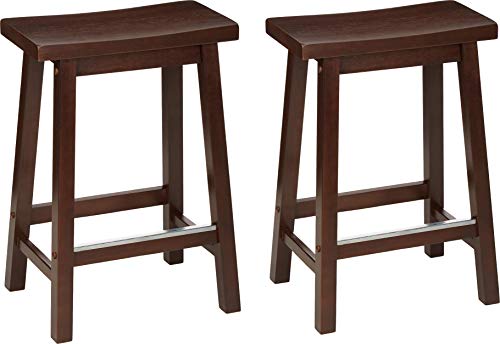
Amazon Basics Solid Wood Saddle-Seat Counter Height Bar Stools for Kitchen Island with Footrest, 24-Inch Height, Walnut, Set of 2
Check price on Amazon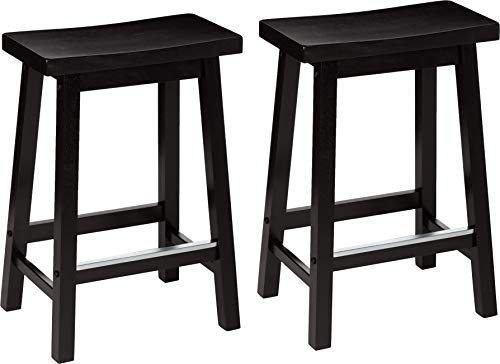
Amazon Basics Solid Wood Saddle-Seat Counter Height Bar Stools for Kitchen Island with Footrest, 24-Inch Height, Black, Set of 2
Check price on Amazon
DM Furniture Windsor Bar Stools Set of 2, 26 Inch Counter Height Barstools Wooden Barstools with Spindle Back/Bigger Seat for Kitchen Island/Breakfast Bar/Home Pub, Walnut
Check price on Amazon
Best Choice Products Set of 2 Farmhouse Bar Stools - Walnut/Cream | Counter height design w/ upholstered cushioned seats & wooden curved backrests for kitchen islands
Check price on AmazonHeight First: Match the Stool to Your Counter
The single most common mistake buyers make is choosing a wooden bar stool by appearance rather than by height. A stool that is too short leaves you reaching awkwardly; one that is too tall leaves no legroom under the counter. The rule of thumb is to leave roughly 9 to 12 inches of clearance between the top of the seat and the underside of the counter or tabletop.
Use the table below as your starting reference before you shop. Measure your actual counter height rather than assuming, since kitchen islands and home bars vary more than most people expect.
| Counter Height | Stool Seat Height | Typical Use | Best For |
|---|---|---|---|
| 36 inches (standard kitchen counter) | 24–26 inches (counter height) | Kitchen islands, breakfast bars | Everyday family seating |
| 40–42 inches (standard bar) | 28–30 inches (bar height) | Home bars, basement bars, pub tables | Entertaining and casual drinks |
| 34–36 inches (low island / peninsula) | 22–24 inches (low counter) | Compact kitchens, pass-through counters | Small spaces and apartments |
| 42+ inches (extra-tall bar) | 30–32 inches (extra-tall) | Commercial-style bars, tall pub tables | Dedicated home bar areas |
If you are still deciding between seat heights, our guides on 30-inch bar stools and counter-height bar stools with backs break down the clearance math and seat depth considerations in more detail. For kitchens with a standard island, bar stools for kitchen islands is a practical starting point.
Wood Species: What Each Type Brings to the Table
The wood species affects durability, weight, grain character, and how well the stool accepts a finish. There is no single "best" wood — the right choice depends on how hard the stool will be used and what look you want.
Oak
Dense, heavy, and highly durable with a pronounced grain. Oak takes stains well and resists everyday wear, making it a solid choice for busy family kitchens and home bars.
Walnut
Rich, dark, and elegant with a fine, straight grain. Walnut is a popular premium option for formal bars and dining spaces where the wood itself is part of the design statement.
Maple
Hard, smooth, and light in color. Maple is extremely durable and works well in modern and farmhouse interiors. Its tight grain makes it easy to clean and maintain.
Rubberwood / Pine
Lighter and softer than hardwoods, but well-suited to starter-tier and casual-use stools. Look for reinforced joinery and solid legs rather than thin, glued-up components.
Teak & Acacia
Naturally weather-resistant and visually striking. Teak is a top-tier choice for covered outdoor bars, while acacia offers bold grain at a mid-range position with good durability.
Mahogany & Cherry
Fine-grained, warm-toned hardwoods associated with traditional and luxury interiors. These species develop a beautiful patina over time and suit formal bar settings.
Construction Quality: How to Spot a Solid Build
A wooden bar stool is subjected to constant lateral stress — people lean, twist, and slide off it. Construction quality is therefore more important than any single design feature. When comparing models, focus on these checkpoints.
- Joinery: Look for mortise-and-tenon, dowel, or corner-block reinforced joints. Screws alone are a warning sign on weight-bearing frames.
- Leg thickness: Sturdy square legs (roughly 1.5 inches or more) resist wobble better than thin round legs.
- Stretchers and footrests: A well-placed footrest or stretcher bar adds rigidity and prevents the legs from splaying over time.
- Seat thickness: A solid wood seat of at least 1 inch is far more durable than a thin veneered panel.
- Weight capacity: Commercial-grade stools are typically rated higher; check the stated capacity if the stool will be used by a range of guests.
- Finish quality: A well-sealed, lacquered, or oiled finish protects against spills and moisture. Re-oiling is straightforward on oiled wood; lacquer is more wipe-clean.
- Floor protection: Felt pads or nylon glides protect hardwood floors and reduce noise.
Popular Wooden Bar Stool Styles
Style affects both the visual fit of the stool in your space and how it feels to sit on. Here are the main categories to consider.
- Backless wooden stools: Slip neatly under the counter when not in use, ideal for tight footprints and open-plan kitchens. Our backless stools guide covers clearance and tuck-under measurements.
- Stools with backrests: More comfortable for lingering over breakfast or drinks. Browse bar stools with backs for styles with low and high back options.
- Swivel and adjustable models: Useful where the same stool must serve different users or counters. See adjustable bar chairs for the mechanics to check.
- Rustic and farmhouse wooden stools: Reclaimed-look timber, distressed finishes, and simple silhouettes suit farmhouse and cabin interiors.
- Industrial wood-and-metal stools: A wood seat paired with a steel frame combines warmth with a hard-wearing structure.
- Rattan and woven wood stools: Light, textured, and breezy — a good fit for coastal and sunroom bars.
If your priority is comfort for longer sitting, compare models in our bar stool with cushion and cushioned bar stools guides. For a broader overview of seat and frame options, the general bar stools hub is a useful reference point.
Matching Wooden Stools to Your Space
The best wooden bar stool is the one that fits both your room and your daily routine. Consider these common scenarios:
- Kitchen island or breakfast bar: Counter-height wooden stools with a low back offer the best balance of comfort and unobstructed sightlines into the kitchen.
- Home bar or basement bar: Bar-height stools with footrests and a slightly taller back suit longer social sitting. Our basement bar guide covers layout and lighting.
- Open-plan living: Backless or low-profile wooden stools keep sightlines clear between the kitchen and living areas.
- Outdoor or covered patio bar: Choose naturally weather-resistant species such as teak or acacia, and confirm the finish is rated for outdoor use.
- Small apartments: Stackable or backless designs save floor space; pair them with a slim bar-height breakfast table for a compact dining setup.
Wooden stools also work well alongside other seating types. If you are furnishing a multi-use dining zone, it helps to see how stools compare with fixed seating in our bar stool chairs overview, or explore bar-height table and chair combinations for a coordinated set.
Comparing Tiers: What Changes as You Move Up
Wooden bar stools fall into fairly consistent quality bands. The table below summarizes what typically improves as you move from entry-level to top-tier construction, without referencing any specific numeric figures.
| Tier | Typical Wood | Joinery & Build | Best For |
|---|---|---|---|
| Entry-Level | Pine, rubberwood, mixed hardwood | Basic dowel and screw assembly; thinner legs | Occasional seating, starter apartments |
| Mid-Range | Oak, maple, acacia | Reinforced joints, solid seats, good finish durability | Everyday family kitchen use |
| Premium | Walnut, teak, select oak | Mortise-and-tenon joinery, thick stock, refined finishing | Design-focused bars and open-plan kitchens |
| Luxury | Mahogany, cherry, custom hardwoods | Hand-finished, heirloom-grade construction | Formal bars, custom interiors, long-term ownership |
As a general principle, mid-range and premium models tend to offer noticeably smoother joinery and more stable frames than entry-level options, which matters most in households where stools are used daily. For a wider selection across materials and styles, see the full bar stools collection or the dedicated wooden bar stool overview.
Care and Maintenance for Wooden Bar Stools
Wood is forgiving but not indestructible. A few simple habits will keep wooden stools looking good for years:
- Wipe spills promptly with a soft, slightly damp cloth — standing moisture is the main enemy of wood finishes.
- Avoid harsh abrasive cleaners; a mild soap solution is sufficient for most sealed finishes.
- Re-oil oiled finishes once or twice a year to prevent drying and minor cracking.
- Keep stools out of direct, prolonged sunlight to reduce fading and uneven color change.
- Check and tighten leg bolts or screws periodically, especially on stools used daily.
- Use felt pads under legs to protect flooring and reduce wear on the stool base.
For deeper guidance, our care and maintenance section covers wood polish selection and scratch repair in detail.
Frequently Asked Questions
What height wooden bar stool do I need for a standard kitchen island?
Most kitchen islands are around 36 inches high, which pairs with a stool seat height of roughly 24 to 26 inches. Always measure your actual counter height and aim for 9 to 12 inches of clearance between the seat and the counter underside.
Are wooden bar stools comfortable for long periods?
Yes, provided the stool has a well-placed footrest and a supportive seat shape. A contoured solid wood seat or a wooden stool with a fitted cushion will be noticeably more comfortable for extended sitting than a flat, hard seat.
Which wood is most durable for bar stools?
Hardwoods such as oak, maple, walnut, and teak are the most durable options. Oak and maple are particularly hard-wearing for busy households, while teak is the better choice for covered outdoor bars thanks to its natural weather resistance.
Should I choose backless or backed wooden stools?
Backless stools tuck neatly under the counter and suit tight spaces or open-plan layouts. Stools with backs are more comfortable for longer sitting and socializing. Many buyers mix both if the bar has room.
How do I stop wooden bar stools from scratching my floor?
Fit felt pads or nylon glides to the base of each leg. Replacing worn pads is simple and prevents most everyday scuffing, particularly on hardwood and laminate flooring.
Can wooden bar stools be used outdoors?
Only if the wood species and finish are rated for outdoor use. Teak, acacia, and certain treated hardwoods perform well under cover. Standard indoor wooden stools should not be exposed to rain or prolonged direct sun.
Ready to Choose Your Wooden Bar Stools?
Use the product picks above to compare wooden bar stools across heights, wood species, and styles. Each listing opens on Amazon, where you can check dimensions, materials, and current availability before you decide.
VIEW WOODEN BAR STOOL OPTIONS