
Brown Dining Room Bench: Complete Buying & Styling Guide
A brown dining room bench is one of the most versatile seating upgrades you can add to a dining space. It softens the look of a full chair setup, adds flexible seating for guests, and brings warmth that pairs naturally with wood tables and neutral palettes. This guide walks you through every decision point — materials, size, comfort, style, and how to combine a bench with the rest of your dining room — so you can choose with confidence.
Why readers trust this guide: We focus on practical, measurable factors — bench length versus table length, seat height, frame construction, upholstery durability, and how each option behaves in real homes. No vague marketing language, just the details that help you compare options and make a solid decision.
Why Choose a Brown Dining Bench?
Brown is the most forgiving and adaptable finish in dining furniture. It bridges warm wood tones, painted farmhouse tables, black metal frames, and modern neutral palettes without looking out of place. A brown bench in particular solves a common dining room problem: seating that feels rigid and hotel-like. Benches invite people to slide in, sit close, and linger — which is exactly what you want around a table shared with family and friends.
Beyond aesthetics, a brown dining bench offers practical advantages that chairs alone cannot match:
- Flexible capacity. A single bench can seat two to three adults, and children fit comfortably in between. That makes it easier to host without storing extra chairs.
- Space efficiency. Backless benches tuck fully under the table, freeing up floor space in compact dining rooms and open-plan kitchens.
- Visual calm. Replacing two or three chairs with one continuous bench reduces visual clutter and gives the room a cleaner line.
- Warmth and texture. Brown wood grain or brown upholstery adds depth that all-white or all-gray dining sets often lack.
- Design flexibility. A bench works as primary seating, secondary seating on one side of the table, or as a standalone accent along a wall.
If you are building a full dining room from scratch, it helps to compare a bench-led layout with a traditional chair-only layout before committing. Our overview of bench seating options covers the broader category, while this page focuses specifically on the brown variants and how to choose among them.
Types of Brown Dining Benches
The term "brown dining bench" covers a wide range of products. Understanding the main categories will help you narrow down quickly, because each type serves a different room and a different style of dining.
Solid Wood Benches
Solid wood is the classic choice. It suits farmhouse, rustic, and traditional dining rooms, and it ages gracefully. Look for benches built from a hardwood or a well-constructed hardwood blend rather than particleboard with a thin veneer. A solid build resists wobbling and handles daily use far better over the long term. The brown dining bench category includes many solid wood designs, from simple plank benches to turned-leg styles that match classic tables.
Upholstered Brown Benches
Upholstered benches trade some easy-clean convenience for significantly better comfort. They are the right pick for dining rooms used for long dinners, holiday meals, or as a secondary seating area near a kitchen island. Brown leather, faux leather, and brown woven fabrics are all common, and they hide everyday wear better than light fabrics. If upholstery is a priority, compare the bench with the seating in our brown upholstered dining room chairs guide so the fabrics and tones work together.
Benches With a Back
A backless bench is the most space-efficient option, but it offers limited support. If your household includes older adults or anyone who prefers back support, a bench with a low back or a full back is worth considering. The trade-off is visual weight: a backed bench reads more like a sofa and can close off a small room. In larger dining spaces, it is often the more comfortable and more substantial choice.
Storage Benches
Some brown benches include a lift-up seat or a drawer, giving you a place for table linens, board games, or seasonal decor. These are especially useful in dining rooms that double as a homework or craft space. Keep in mind that storage hardware adds weight, so check that the frame is reinforced and that the lid mechanism is rated for frequent use.
Convertible and Multi-Use Benches
A bench can also serve as a window seat, an entryway perch, or a foot-of-the-bed accent. If you plan to move it between rooms, choose a lighter frame and avoid models with a permanent back. Many brown benches are designed to be this flexible, and they are a good option for renters or anyone who rearranges furniture seasonally.
How to Size a Brown Bench for Your Dining Table
Sizing is where most bench purchases go wrong. A bench that is too long will not tuck under the table; one that is too short leaves awkward gaps and seats fewer people than expected. Use these guidelines as your starting point.
| Table Length | Recommended Bench Length | Typical Seating |
|---|---|---|
| 48 inches (4-seat table) | 36 to 42 inches | 2 adults |
| 60 inches (6-seat table) | 48 to 54 inches | 2 to 3 adults |
| 72 inches (6 to 8-seat table) | 54 to 66 inches | 3 adults |
| 84 inches and longer | 66 to 78 inches | 3 to 4 adults |
The general rule is that the bench should be 12 to 18 inches shorter than the table so it slides in without colliding with the legs. Also check the apron height under the table: some tables have a deep apron that limits how far a bench seat can slide underneath. If your table has a thick apron or a pedestal base, measure the clearance first.
Seat height matters just as much as length. For standard-height dining tables (roughly 28 to 30 inches), a bench seat around 17 to 19 inches works well. For counter-height tables, look for benches around 24 to 26 inches. If you are also shopping for stools for a kitchen counter, the same height logic applies, which is why our dining room chair height reference is a useful companion to this guide.
Choosing the Right Brown Tone and Finish
Brown is not a single color. The undertone you choose determines whether the bench looks integrated or accidental in your room. Here is how the main families break down:
- Warm honey and oak tones. The most approachable browns. They pair well with cream walls, natural linens, and light wood floors. They suit farmhouse and coastal-influenced dining rooms.
- Medium walnut and chestnut. The most versatile middle ground. These tones sit comfortably between traditional and modern furniture and are a safe choice if your room mixes styles.
- Dark espresso and mahogany. Dramatic and formal. They anchor a dining room and pair beautifully with white or light gray walls, brass hardware, and patterned upholstery. In a small room, a dark bench can feel heavy, so balance it with light walls or a light rug.
- Distressed and reclaimed finishes. These bring texture and a relaxed farmhouse feel. They hide scratches well and work in busy family homes. Pair them with painted tables for contrast.
- Brown upholstery. Leather and faux leather browns add a tailored, hotel-like quality. Fabric browns, including bouclé and tweed, feel softer and more residential.
If your dining room already has a strong brown anchor, such as a sideboard or a brown rectangle dining table, repeat that undertone in the bench. Matching undertones is more important than matching exact finishes. A bench in a slightly different shade of the same family will look intentional; a bench that leans cool gray-brown against a warm honey table often looks mismatched.
Materials and Construction: What to Look For
A dining bench takes more concentrated weight than a chair because people slide along it and often sit close together. Construction quality is therefore worth scrutinizing.
Frame and Joinery
Look for mortise-and-tenon or reinforced corner joints rather than simple butt joints held by screws alone. A solid build will not rack or wobble when someone shifts their weight. If the bench has a shelf or stretcher, check that it is securely attached; a loose stretcher is a common failure point on lower-tier benches.
Seat Material
Solid wood seats are the most durable and easiest to clean. Slatted seats allow crumbs to fall through, which is helpful in family homes but less comfortable for long sitting. Upholstered seats should use high-density foam; low-density foam compresses quickly and leaves a flattened seat within a year of daily use.
Upholstery Durability
For brown upholstered benches, leather and faux leather are the most forgiving against spills and crumbs. Woven fabrics should be tightly woven and, ideally, treated for stain resistance. Removable, washable covers are a practical bonus in households with children.
Finish and Hardware
A quality finish should feel smooth, not tacky, and should be consistent on the underside and back where hands and feet touch. If the bench includes metal hardware or legs, look for a rust-proof finish. This matters even indoors in humid climates.
Styling a Brown Bench in the Dining Room
A bench is an opportunity to make the dining room feel less formal without losing polish. A few styling approaches work consistently well:
- Mix bench and chairs. Pair a brown bench on one long side with upholstered or wood chairs on the other. This is the most common and most comfortable arrangement, and it lets you vary seating support across the table.
- Use a bench as a focal point. Place a backless brown bench against a wall with a framed print or a mirror above it. It reads as a console-style accent when not in use at the table.
- Add a cushion or runner. A long seat cushion in a neutral fabric softens a wood bench and adds comfort. A simple linen runner draped over the back of a backed bench adds texture.
- Keep the palette grounded. Brown benches pair best with cream, sage, terracotta, and muted blue. Avoid introducing too many competing wood tones in one sightline.
- Coordinate with lighting. A bench under a pendant or chandelier draws the eye to the center of the room. If your dining room has a focal light fixture, center the bench on it.
If you are still deciding on the table that the bench will sit against, our guide to dining tables with a bench and four chairs shows how the combination works as a complete set. For rooms that lean rustic, the farmhouse table and bench pairing is a natural reference point.
Pairing a Brown Bench With Chairs and Tables
The bench does not exist in isolation. How it relates to the rest of the seating and the table determines whether the room feels cohesive.
If your table is a rich brown wood, a brown bench in a lighter or darker shade creates depth without looking flat. If your table is painted or has a stone top, a brown bench introduces the warmth the room may be missing. Avoid pairing a brown bench with a table that has a strongly cool gray finish unless you deliberately introduce a third brown element, such as a rug or a sideboard, to tie them together.
For chair pairing, brown benches work well with:
- Upholstered chairs in cream, tan, or sage
- Black or dark metal chairs for an industrial contrast
- Matching wood chairs from the same collection, if an exact match matters to you
- Woven or rattan chairs for a relaxed, coastal-influenced look
If your dining room leans dark and dramatic, a brown bench can soften the scheme. Our black dining room guide covers how to balance dark walls and furniture with warmer seating elements. For round tables, a curved or shorter bench works better than a long straight bench, and the brown round dining table guide is helpful for planning that layout.
Comfort and Everyday Use
A bench is comfortable for a casual weeknight meal but can become tiring during a long dinner if the seat is hard or the depth is wrong. A few details make a real difference:
- Seat depth. Around 14 to 16 inches is comfortable for most adults. A deeper seat invites lounging but may not tuck under the table.
- Edge profile. Rounded or beveled front edges are gentler on the back of the legs than a sharp square edge, especially on wood benches.
- Cushioning. A thin cushion (1 to 2 inches) is enough to soften a wood seat without raising the seat height too much.
- Footrest or stretcher. A stretcher bar gives shorter diners a place to rest their feet and adds stability to the frame.
For households with children, a bench is often easier to manage than a row of chairs because there is less to tip or drag. If safety around the table is a priority, our dining chairs ergonomics guide explains the support factors that matter for both chairs and benches.
Recommended Brown Dining Room Benches & Matching Seating
⚠️ AFFILIATE DISCLOSURE: This website contains affiliate links. As an affiliate Associate, we earn from qualifying purchases. If you make a purchase through these links, we may receive a small commission at no additional cost to you. Read our full affiliate policy.
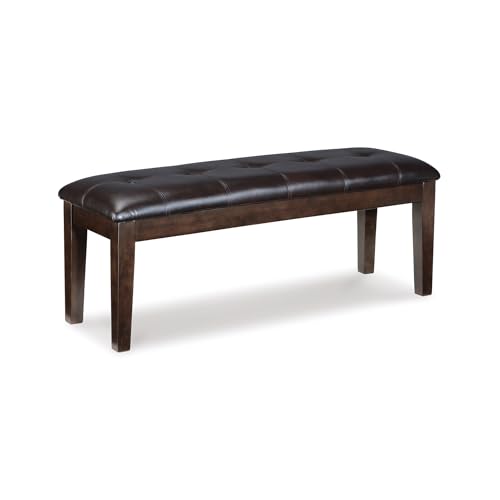
Signature Design by Ashley Haddigan 1-Piece Dining Bench, Faux Leather | Classic button tufted seat, Wood and engineered wood frame, 18.75 in seat height, 2-person capacity, Dark brown finish
Check price on Amazon
Signature Design by Ashley 1-Piece Wood Dining Bench, 48" 2-Tone Farmhouse | Sturdy solid wood frame with mango veneer and MDF substrate seat, Space-saving 48-inch profile, Wildenauer Series
Check price on Amazon
Signature Design by Ashley Moriville Wood Upholstered Dining Bench, Beige | Cushioned 48-inch dining seat in textured beige polyester, Rustic distressed nutmeg wood frame with bronze nailhead trim
Check price on Amazon
Signature Design by Ashley Ralene Tufted Upholstered Dining Room Bench, Medium Brown
Check price on Amazon
HOOBRO 39.3'' Bamboo Dining Bench, Farmhouse Kitchen Table Bench, Kitchen & Living Room Furniture, Easy to Assemble, Sturdy and Stable, Mocha MA03CD01G2
Check price on Amazon
VASAGLE Bench for Entryway, PU Leather, Steel Legs, Loads 660 lb | Ottoman Bench, Transitional, with Stitching, Bedroom, Living Room, Caramel Brown, EKHO Collection ULOM076K01
Check price on Amazon
LITTLE TREE 70.8“ Long Wooden Bench, Modern Farmhouse Dining Bench, Minimalist Benches for Dining Room, Living Room, Hallway, Entryway, Rustic Brown, Easy Assembly
Check price on Amazon
Captain Winters Dining Bench with Hidden Storage End of Bed Bench 52” Faux Leather Bench for Kitchen Entryway Bench Breakfast Nook Bench for 2-3 Person,Brown,1PC
Check price on AmazonBrown Bench Types at a Glance
Use this comparison to narrow down which type of brown bench best fits your room and your household. The tiers describe relative market positioning and construction depth, not any specific figure.
| Bench Type | Best For | Comfort Level | Market Tier |
|---|---|---|---|
| Backless solid wood | Small dining rooms, family meals, farmhouse style | Moderate | Entry-level to mid-range |
| Upholstered brown bench | Long dinners, holiday hosting, formal dining rooms | High | Mid-range to premium |
| Bench with back | Older diners, everyday seating, larger rooms | High | Mid-range to high-end tier |
| Storage bench | Multi-use dining rooms, small apartments | Moderate | Mid-range to premium |
| Reclaimed / distressed wood | Rustic and industrial interiors, busy households | Moderate | Entry-level to premium |
| Custom or handcrafted bench | Non-standard table sizes, design-led homes | High | Luxury to flagship tier |
A Practical Buying Checklist
Before you finalize a choice, run through these checks. They catch the most common mistakes buyers make with dining benches.
- Measure the table length and confirm the bench is 12 to 18 inches shorter.
- Check the clearance under the table apron and around the table legs.
- Confirm the seat height matches your table height (standard or counter).
- Decide whether you need back support, and whether a backed bench fits the room visually.
- Choose a brown undertone that repeats another brown element in the room.
- Verify the frame uses reinforced joinery, not just screws into end grain.
- For upholstered benches, confirm the foam density and whether covers are removable.
- Check the weight capacity and whether the bench is rated for daily dining use.
- Confirm the return policy and assembly requirements before ordering.
If you are also furnishing the rest of the room, our dining room table set with chairs overview and the 7-piece dining room set guide show how a bench fits into a complete room plan. For smaller spaces, the dining room table for a small dining room guide explains which table shapes leave room for a bench without crowding.
Frequently Asked Questions
What size brown dining bench do I need for my table?
A bench should be roughly 12 to 18 inches shorter than the table length so it tucks in comfortably. For a standard six-person table, a bench between 48 and 60 inches long works well and seats two to three adults.
Is a wooden or upholstered brown bench better for everyday dining?
Solid wood benches are easier to wipe clean and suit busy family meals, while upholstered benches offer more comfort for longer gatherings. Many homes combine a wood bench on one side with upholstered chairs on the other for balance.
How do I match a brown bench to an existing dining table?
You do not need an exact finish match. Aim for a complementary undertone — warm or cool — and repeat one other brown element in the room, such as a sideboard or chair frame, to tie the palette together.
Can a brown dining bench be used outdoors?
Only if the bench is explicitly built for outdoor use with a weather-resistant coating and rust-proof hardware. Indoor benches finished with standard lacquer or fabric upholstery should stay inside to avoid moisture damage.
Does a dining bench with a back work in a small room?
Yes, a backless bench actually saves visual space in tight rooms, but if comfort matters more, a low-back bench keeps sightlines open while adding support. Measure the clearance behind the bench before choosing.
Ready to Choose Your Brown Dining Bench?
Use the product recommendations above to compare current options, or revisit the buying checklist before you decide. A well-sized brown bench can transform a dining room into a warmer, more social space that works for both weeknight dinners and long holiday meals.
Explore Bench Options