
Dining Chair Ergonomics: Sit Comfortably Through Every Meal
Discover how seat height, depth, back support, and posture interact to keep you comfortable at the table. This research-stage guide explains exactly what to look for before you choose your next dining chairs.
START THE GUIDEWhy ergonomics matters at the dining table: Most people spend several hours a week seated at a dining table, yet chair comfort is often an afterthought. Poorly matched seat height, shallow cushions, or a backrest with no lumbar curve can turn a relaxed family dinner into an uncomfortable experience. This guide explains the measurable dimensions and design details that make a dining chair genuinely supportive.
What Dining Chair Ergonomics Really Means
Ergonomics is the science of matching a product to the human body. In the context of dining chairs, it means designing a seat that supports the natural alignment of your spine, hips, and knees while you eat and socialize. Unlike an office chair, a dining chair does not need aggressive lumbar support or a tilting mechanism, but it does need to keep your thighs level, your feet planted, and your lower back gently supported.
The four core dimensions that determine dining chair comfort are seat height, seat depth, seat width, and backrest angle. Get these right and almost any style of chair — from a slim mid-century modern dining chair to a sturdy solid wood dining set — will feel comfortable for a full meal. Get them wrong and even a designer chair can cause discomfort within twenty minutes.
This guide walks through each dimension, explains how it interacts with the table and the person sitting in the chair, and gives you a practical checklist you can use while shopping. Whether you are outfitting a small apartment dining nook or a large family dining room, the same ergonomic principles apply.
Seat Height: The Foundation of Comfort
Seat height is measured from the floor to the top of the seat cushion. It is the single most important ergonomic dimension because it determines whether your knees sit at a natural angle. When a chair is too tall, your thighs press into the front edge and your feet dangle. When it is too short, your knees rise above your hips, which rounds the lower back and leads to fatigue.
The ideal seat height varies by table type. A standard dining table is around 30 inches tall, which pairs with a chair seat height of about 17 to 19 inches. Counter-height tables sit around 34 to 36 inches and pair with counter-height chairs of 24 to 26 inches. Bar-height tables are 40 to 42 inches tall and pair with bar stools of 28 to 30 inches. Matching chair height to table height is the first rule of dining chair ergonomics.
| Table Type | Typical Table Height | Recommended Seat Height | Best For |
|---|---|---|---|
| Standard Dining | ~30 inches | 17–19 inches | Everyday family meals and formal dining |
| Counter Height | 34–36 inches | 24–26 inches | Kitchen islands and casual breakfast areas |
| Bar Height | 40–42 inches | 28–30 inches | Home bars, pub-style tables, open-plan entertaining |
| Adjustable / Multi-Height | Variable | Depends on setting | Flexible spaces and mixed seating arrangements |
If you are shopping for a coordinated set, confirm the seat height of the chairs against the table you plan to buy. A dining table with 6 chairs sold as a package has usually been matched at the factory, but it is always worth verifying. Similarly, a counter-height dining table set should include chairs with a seat height that leaves roughly 10 to 12 inches of clearance under the tabletop.
Seat Depth and Width: Room to Sit Naturally
Seat depth is measured from the front edge of the seat to the backrest. A good ergonomic seat depth lets your back rest against the backrest while leaving two to three inches of space behind your knees. For most adults, a seat depth of 16 to 18 inches works well. If the seat is too deep, the front edge presses into the back of your legs and restricts circulation. If it is too shallow, your thighs feel unsupported and you slide forward.
Seat width matters for shoulder and hip comfort. A minimum seat width of 18 inches accommodates most adults comfortably, while 20 inches or more gives broader users room to shift position. For shared household seating, choose the widest seat you can accommodate in your room layout. If you are working with a tight footprint, look at chairs for small spaces that use a narrower frame without sacrificing seat depth.
The front edge of the seat also plays an ergonomic role. A rounded or "waterfall" front edge reduces pressure on the underside of the thighs, which is especially helpful for taller users and anyone who sits at the table for longer periods. Chairs with a sharp, squared-off front edge are best reserved for short, casual meals.
Backrest Design and Lumbar Support
The backrest is what keeps your spine in a neutral posture during a meal. A dining chair backrest should be high enough to support the lower and mid back, ideally reaching at least the bottom of the shoulder blades. Low-backed or backless seating is fine for occasional use, but for everyday dining, a backrest of 14 to 18 inches above the seat is a practical baseline.
The shape of the backrest matters as much as its height. A subtle S-curve or a slight inward curve at the lumbar region supports the natural arch of the lower spine. Flat backrests with no contour tend to encourage slouching because the body has nothing to rest against. A light recline of about 5 to 10 degrees also helps shift weight off the lower back and encourages a relaxed, upright posture.
For households with a mix of heights and body types, upholstered dining chairs with a gently curved back offer the most forgiving fit. A dining room chair with a padded backrest and a slightly contoured lumbar area tends to work for a broader range of users than a rigid, flat-backed wooden chair.
Armrests, Foot Support, and Movement
Armrests are optional in dining chairs, and many ergonomic designs omit them to allow the chair to tuck closer to the table. If you choose a chair with arms, make sure the arms are low enough to slide under the tabletop — otherwise you will not be able to pull the chair in close, and you will lean forward to reach your plate. For users who value support while lingering over coffee, low-profile arms can be a thoughtful addition.
Foot support is often overlooked. If your feet cannot rest flat on the floor, add a footrest or choose a chair with a footrail. Bar-height and counter-height seating especially benefit from a built-in footrest, which takes pressure off the thighs and keeps the lower back in a better position. If you are shopping for taller seating, look at bar-height stools with backs and arms that include a footrest as part of the frame design.
Finally, allow room to move. A rigid, locked posture is not the goal; the goal is a supported posture you can shift in comfortably. Plan for 24 to 30 inches of clearance behind each chair so you can pull it out and stand up without twisting. In an open-plan space, a kitchen bar seating arrangement can work well as long as the stools are matched to the counter height and include a footrest.
Materials and Cushioning That Affect Comfort
The frame and upholstery of a dining chair influence how the chair feels over time. A solid wood frame with reinforced joinery offers stable support and resists the flexing that can make a chair feel wobbly. Upholstered seats add pressure relief, especially for users who sit for longer meals or who have less natural padding. A medium-firm foam cushion with a supportive base is generally more comfortable than either a very soft cushion that bottoms out or a rigid wooden seat.
For a coordinated look, pair ergonomic chairs with a table from the same material family. A farmhouse dining table set typically pairs well with wooden chairs that have a slightly contoured seat, while a modern dining set often uses upholstered chairs with a more pronounced back curve. Either way, the ergonomic checklist stays the same: height, depth, back support, and foot support.
Dining Chair Ergonomics Checklist
- Seat height leaves 10 to 12 inches of clearance under the tabletop.
- Seat depth is 16 to 18 inches with two to three inches behind the knees.
- Seat width is at least 18 inches for comfortable hip and shoulder room.
- Backrest reaches at least the lower shoulder blades and has a gentle lumbar curve.
- Front seat edge is rounded or waterfall-shaped to reduce thigh pressure.
- Feet rest flat on the floor, or a footrest is available for taller seating.
- 24 to 30 inches of clearance behind each chair for easy movement.
- Frame is stable and does not flex or wobble when you shift your weight.
How to Measure Before You Buy
Before ordering dining chairs, measure three things: the height of your table from the floor to the underside of the apron, the height of the tabletop, and the clearance behind your table. Then compare those measurements to the seat height and depth of the chairs you are considering. If you already own a table, the underside clearance is the critical number because it determines how much legroom the chair allows.
If you are starting from scratch, choose the table first and then match the chairs. A dining room chair height guide can help you confirm that the seat height and table height are compatible. For a compact footprint, a dining table set for a small space often pairs with chairs that have a slightly shorter seat depth to save room. If you are planning a flexible arrangement, an extendable kitchen table can grow with your household while keeping the same ergonomic chair dimensions.
Put Ergonomics Into Practice
Use the checklist above to compare chairs on the dimensions that matter most. Once you have a shortlist, read our detailed guidance on dining chairs sets of 2 and dining room chairs to match style with support.
Explore Dining ChairsFrequently Asked Questions
What is the ideal seat height for dining chairs?
Standard dining chairs typically have a seat height of about 18 inches from the floor, which pairs well with a standard 30-inch tabletop. Counter-height chairs sit around 24 to 26 inches, and bar-height chairs around 28 to 30 inches.
How deep should an ergonomic dining chair seat be?
A comfortable seat depth is usually 16 to 18 inches. The front edge should leave two to three inches of space behind your knees so circulation is not restricted and your back can rest against the backrest.
Do dining chairs need lumbar support?
Yes. Even for shorter meals, gentle lumbar support helps maintain the natural curve of the lower spine. Look for a backrest with a slight curve or built-in cushioning at the lower back area.
How much space should I leave between the table and the chair?
Allow roughly 10 to 12 inches between the seat and the underside of the tabletop so your legs can move freely. Also plan about 24 to 30 inches of clearance behind each chair for pulling out and standing up comfortably.
Recommended Ergonomic Dining Chairs
⚠️ AFFILIATE DISCLOSURE: This website contains affiliate links. As an affiliate Associate, we earn from qualifying purchases. If you make a purchase through these links, we may receive a small commission at no additional cost to you. Read our full affiliate policy.

Homixis Mid-Century Modern Upholstered Dining Chairs Set of 4, Camel | Features contoured ergonomic backrest & sturdy solid wood legs. Ideal upholstered chairs for kitchen, dining room & vanity.
Check price on Amazon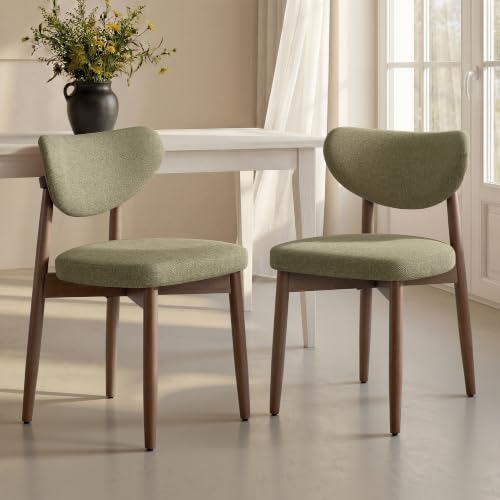
VASAGLE Wood Dining Chairs Set of 2, Linen-Look Upholstered Kitchen Chairs | Solid Wood Legs, Ergonomic Curved Backrest, Built-in Handle, Mid Century Modern, for Kitchen Dining Vanity, Sage Green
Check price on Amazon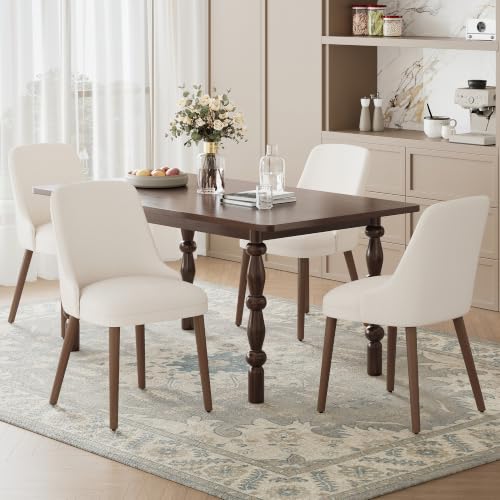
MALOL Upholstered Dining Chairs Set of 4 with High-Back, Beige | Dining Room Chair with Wood Legs, Padded Kitchen Chairs for Dining Room/Restaurant/Cafe
Check price on Amazon
Feonase Dining Chairs Set of 6, Modern Kitchen Chairs with Ergonomic Backrest, MDF Board and Metal Legs, Dinner Chairs for Dining Room, Kitchen and Living Room, Walnut
Check price on Amazon
smartue Wooden Dining Chairs Set of 4, Upholstered Kitchen Chairs with Solid Wood Legs, Mid Century Dining Room Chair with Ergonomic Curved Backrest for Kitchen Dining Vanity, Green
Check price on Amazon
CHUN YI Dining Chairs Set of 4, Upholstered Solid Wood Dining Room Chairs, Mid Century Modern Farmhouse Kitchen Chair with Ergonomic Curved Backrest, Warm Beige(Only Chairs)
Check price on Amazon
VASAGLE Wood Dining Chairs Set of 2, Linen-Look Upholstered Kitchen Chairs | Solid Wood Legs, Ergonomic Curved Backrest, Built-in Handle, Mid Century Modern, for Kitchen Dining Vanity, Cappuccino Beige
Check price on Amazon