
Buffet Kitchen Cabinet: Complete Buying Guide & Design Tips
A buffet kitchen cabinet is the hardest-working piece in your dining space. Learn how to choose the right size, configuration, materials, and placement so it serves your family for years.
Why this guide matters: Most shoppers know they want a buffet cabinet but get stuck on the details — how wide should it be? Should it match the dining table? Does it need a hutch? This guide answers those questions with practical, measurement-based advice so you can buy with confidence.
What Is a Buffet Kitchen Cabinet?
A buffet kitchen cabinet is a multi-purpose storage and serving unit designed for dining rooms, kitchens, and open-concept spaces. It combines closed cabinetry — drawers, doors, and adjustable shelves — with a broad, flat countertop that works as a serving station during meals and gatherings. Unlike a plain storage cabinet, a buffet is built to be seen and used: its top surface holds serving dishes, its interior hides the clutter of dinnerware and linens, and its proportions are scaled for a dining environment rather than a utility room.
Terminology can be confusing. Furniture retailers use "buffet," "sideboard," "credenza," and "server" somewhat interchangeably. In practice, a buffet typically refers to a dining-room piece with a serving top, while a sideboard leans slightly taller and narrower, and a credenza often refers to a lower, longer unit. A buffet sideboard hybrid is common in modern collections. If you are shopping for a kitchen-adjacent piece, you may also see the term buffet kitchen cabinet used for units that bridge cooking and dining zones.
What separates a great buffet from an average one is not decoration but engineering: drawer glides that carry the weight of stacked plates, doors that close flush after years of use, and a top surface that resists heat, moisture, and scratches from hot serving dishes.
Why a Buffet Cabinet Earns Its Space
Dining rooms often have more wall space than floor space. A buffet exploits that vertical real estate, converting an empty wall into functional storage without crowding the table. In homes without a separate dining room, a buffet cabinet can serve as the anchor for an open-plan dining zone, visually separating it from the living area while keeping serving pieces within arm's reach.
The practical benefits are straightforward:
- Declutters the table. Plates, bowls, and serving platters live in the cabinet instead of on the dining table between meals.
- Creates a self-serve station. During holidays and dinner parties, the buffet top becomes the serving line, keeping the dining table clear for seating.
- Stores oversized items. Adjustable shelves accommodate platters, punch bowls, and tall pitchers that do not fit in kitchen cabinets.
- Adds a focal point. A well-chosen buffet with art above it gives an otherwise blank wall presence and purpose.
- Supports a bar or coffee station. With a tray and a few accessories, the top becomes a drinks station or morning coffee nook.
For households that entertain regularly, the buffet is less a luxury than a workflow tool. It shortens the distance between kitchen and table, reduces trips back and forth, and keeps the dining surface visually calm. If your dining area is small, read our guidance on small dining room layout before committing to a footprint.
Types & Configurations
Buffet cabinets fall into a few recognizable families. Knowing which family fits your room narrows the shopping list quickly.
| Type | Best For | Key Characteristics |
|---|---|---|
| Standard buffet | Dining rooms with a dedicated wall | 48–72 in. wide, 30–36 in. tall, drawers plus cabinet doors |
| Buffet with hutch | Displaying china and glassware | Upper open shelving or glass doors above the base cabinet |
| Sideboard | Narrow or transitional spaces | Taller and shallower, often 15–18 in. deep |
| Kitchen island buffet | Open-plan kitchens | Freestanding, accessible from two sides, often with seating |
| Corner buffet | Awkward corners and tight rooms | Angled front, triangular or L-shaped footprint |
| Bar cabinet / server | Wine and cocktail service | Interior racks, glass storage, sometimes a drop-down top |
If display is a priority, a buffet cabinet with hutch gives you glass-front storage and open shelving for showcasing pieces. If you need maximum storage density, a buffet cabinet with drawers configures the base with stacked drawer banks instead of doors, which is excellent for flatware, linens, and placemats. For a darker, more dramatic look, walnut and espresso finishes pair well with both modern and traditional rooms — see our notes on a walnut buffet cabinet for finish considerations.
Freestanding units remain the most flexible choice because they can move with you. Built-in cabinetry offers a seamless look but locks you into a layout. For most buyers, a freestanding buffet cabinet with storage delivers the best balance of flexibility and capacity.
How to Measure & Size It Right
Sizing is where most buying mistakes happen. A buffet that is too wide overwhelms the room; one that is too narrow looks lost. Three numbers decide the outcome: the length of the available wall, the depth of the piece, and the clearance around it.
Width
Measure the wall you intend to use. A common rule of thumb is that the buffet should occupy roughly half to two-thirds of the wall length, leaving breathing room on both sides. A 48–60 inch unit suits a smaller dining room; 60–72 inches suits a larger one. If you plan to hang art or a mirror above it, keep the buffet at or slightly narrower than the artwork for visual balance.
Depth
Standard buffet depth is 16–20 inches. Deeper units (20–24 inches) hold larger platters but eat into walkway space. Always leave at least 36 inches of clearance between the buffet face and the nearest chair back or wall; 42–48 inches is more comfortable in high-traffic rooms.
Height
Most buffets stand 30–36 inches tall — roughly counter height, which is ergonomic for serving. Hutches add 30–48 inches above that, so check ceiling height and the position of any wall art or windows before choosing a tall configuration.
Measure twice: Use painter's tape to outline the buffet's footprint on the floor and mark its top edge on the wall. Live with the outline for a day. It is the fastest way to catch a size error before the delivery truck arrives.
If you are fitting the buffet into an open-plan space, also confirm sightlines from the living area — a piece that looks proportionate in isolation can feel bulky when viewed from a sofa. Our measurement guide covers doorway widths and delivery-path clearances in more detail.
Materials & Construction Quality
The material determines how the buffet ages, how much weight it carries, and how it responds to spills and humidity. There are three broad tiers worth understanding.
| Tier | Typical Construction | Best For |
|---|---|---|
| Entry-level tier | Engineered wood with printed or thin veneer finishes; basic metal glides | Guest rooms, starter apartments, occasional-use dining areas |
| Mid-range tier | Engineered core with quality wood veneers; solid wood doors and drawer fronts; soft-close hardware | Primary dining rooms with daily use |
| Premium tier | Solid hardwood frames; dovetail drawer boxes; full-extension glides; hand-finished surfaces | Long-term households, heirloom pieces, heavy entertaining |
Solid wood — oak, maple, cherry, walnut, and acacia — offers the most durable surface and can be refinished decades later. It expands and contracts with humidity, so look for frames that allow wood movement rather than rigidly boxing panels in. Engineered wood with quality veneers is stable and consistent, and mid-range versions can be genuinely durable when the hardware is good. The weak point in most entry-level cabinets is not the panel but the drawer glide and hinge; those are the first components to fail.
Finish matters as much as substrate. A catalyzed lacquer or conversion varnish resists water rings and heat far better than an oil finish. If the buffet will host hot serving dishes, plan on a protective pad or trivets regardless of finish.
Inspect these joints before buying:
- Dovetail or doweled drawer boxes. Stapled boxes are a sign of entry-level construction.
- Full-extension glides. They let you reach the back of deep drawers and reduce strain on the mechanism.
- Soft-close hinges. They protect the cabinet and the peace of your dining room.
- Adjustable shelves. Fixed shelves cannot accommodate tall pitchers or stacked platters.
- Leveling feet. Floors are rarely perfectly flat; levelers prevent doors from drifting open.
Storage Features That Matter
The inside of the buffet determines daily usefulness more than the outside. A practical configuration usually includes a mix of drawer types and at least one adjustable-shelf cabinet bay.
Drawer banks are best for flatware, napkins, placemats, and small serving tools. A shallow top drawer (3–4 inches deep) is ideal for cutlery; deeper drawers (6–8 inches) hold folded linens. Cabinet doors house plates, bowls, and platters on shelves. If you stack dinner plates, allow 8–10 inches of vertical space per shelf. Interior dividers for platters and trays prevent the clatter-and-scratch problem that plagues open shelves.
Specialized inserts — wine racks, felt-lined silver drawers, glass stemware holders — are worth having only if you will actually use them. A felt-lined drawer for flatware is genuinely useful; a wine rack in a dining-room buffet is useful only if the wine is stored away from heat and light.
Also consider ventilation and smell. Cabinets that hold linens benefit from a small cedar block or ventilation gap; closed, humid interiors can leave napkins smelling musty. If you plan to store serving pieces that occasionally get wet, a wipe-down interior finish is easier to maintain than raw wood.
Matching Style to Your Dining Room
A buffet should relate to the dining table without matching it exactly. Matching wood tones can look catalog-perfect or flat, depending on the room; a deliberate contrast often reads as more considered. Three approaches work reliably:
Harmonize the wood tone. Keep the buffet within one or two shades of the dining table. This is the safest approach in traditional rooms and small spaces where visual continuity matters.
Contrast deliberately. Pair a dark espresso buffet with a light oak table, or a painted cabinet with a natural wood table. The contrast should feel intentional — repeat the accent color elsewhere in the room, such as in chair legs or a light fixture.
Match the architecture, not the furniture. In a farmhouse-style room, a painted or distressed cabinet fits the walls and trim. In a modern room, clean lines and a minimal hardware profile fit the architecture. For inspiration across styles, browse our dining room style guides.
Hardware is the cheapest way to change a buffet's personality. Brushed brass reads warm and traditional; matte black reads modern; cup pulls read farmhouse. If the cabinet's hardware is standard, plan to swap it after purchase — it is a small change with outsized effect.
Placement & Flow Tips
The best buffet placement keeps serving traffic out of the seating zone. In a dedicated dining room, the buffet usually sits against the wall opposite or adjacent to the kitchen entry, so guests pass it on the way to the table. Avoid placing it directly behind seated diners, where it becomes an obstacle when chairs push back.
In open-plan spaces, use the buffet to define the dining zone. A unit placed perpendicular to the living area creates a soft boundary without a wall. Keep the top surface visually light — a lamp, a tray, and one or two objects — so the piece reads as furniture rather than storage overflow.
Lighting deserves a plan. A buffet with a hutch benefits from a small picture light or a pair of lamps on top; a low buffet benefits from wall art or a mirror above it. If the buffet will serve as a bar, add a tray with bottles and glassware and keep a small waste bin nearby. For holiday serving setups, see our holiday dining guide for buffet-line layouts that keep traffic moving.
Finally, anchor the piece. Tall buffets and hutches should be secured to the wall with an anti-tip strap, especially in homes with children or pets. It is a five-minute installation that prevents the worst outcome.
Pre-Purchase Checklist
Before you commit, run through this list. It covers the details that separate a purchase you love from one you tolerate.
- Wall length measured, with at least 12 inches of breathing room on each side planned.
- Walkway clearance of 36–48 inches confirmed between buffet face and nearest obstacle.
- Delivery path measured: doorways, stair turns, and elevator dimensions.
- Drawer boxes inspected for dovetail or doweled joinery.
- Glides are full-extension and rated for the weight you plan to store.
- Hinges are soft-close and adjustable.
- At least one cabinet bay has adjustable shelves.
- Top surface finish is appropriate for heat and moisture exposure.
- Anti-tip hardware is included or available.
- Finish and hardware coordinate with the dining table and room architecture.
Recommended Buffet Kitchen Cabinets & Storage Pieces
⚠️ AFFILIATE DISCLOSURE: This website contains affiliate links. As an affiliate Associate, we earn from qualifying purchases. If you make a purchase through these links, we may receive a small commission at no additional cost to you. Read our full affiliate policy.

usikey 55" Buffet Cabinet with Storage and Drawers, Large Sideboard Buffet Cabinet with Adjustable Shelves and Doors, Modern Coffee Bar for Kitchen, Living Room, White
Check price on Amazon
HOSTACK Kitchen Buffet Cabinet with Storage, Sideboard Coffee Bar, White | Farmhouse Kitchen Storage Cabinet with 3 Drawers & Adjustable Shelf & Doors, 42.5"W Buffet Table for Dining Living Room
Check price on Amazon
Homhedy Coffee Bar Storage Cabinet with Drawers, Kitchen Buffet Cabinet | Sideboard Cabinet with Doors, Farmhouse Buffet Cabinet, Adjustable Shelves, for Kitchen / Dining / Living Room, White
Check price on Amazon
HOSTACK 60" W Sideboard Buffet Cabinet with Storage, Kitchen Cabinet, White | 36 Tall Kitchen Buffet Storage Cabinet with 4 Drawer, Large Coffee Bar Cabinet, Modern Buffet Table for Dining Living Room
Check price on Amazon
HOSTACK 71"W Farmhouse Kitchen Sideboard Buffet Cabinet with Storage, White | Large Coffee Bar Cabinet with 3 Wide Drawers, Long Buffet Table with Shelves, Kitchen Storage Cabinet for Dining Room
Check price on Amazon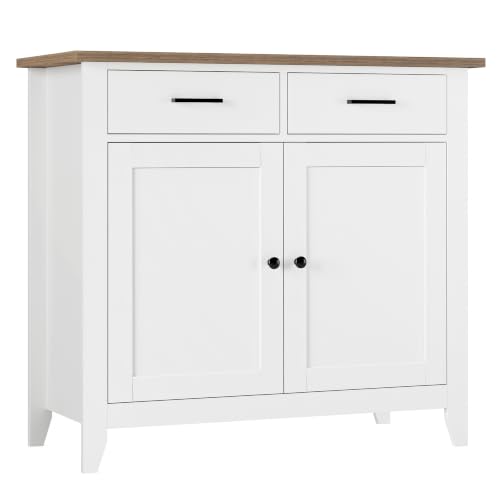
HORSTORS Farmhouse Kitchen Storage Cabinet, Small Buffet, Coffee Bar, White | Buffet Sideboard with 2 Drawers & 2 Doors, 35.8"W Coffee Table, Sapce-saving Kitchen Cabinet for Dining Living Room, Entryway
Check price on Amazon
HOSTACK Kitchen Buffet Sideboard Storage Cabinet, Coffee Bar Cabinet, White | 55"W Farmhouse Kitchen Cabinet with Doors and Adjustable Shelves, Buffet Cabinet with 3 Drawers for Entryway Living Room
Check price on Amazon
VASAGLE Farmhouse Buffet Cabinet, Coffee Bar with 2 Drawers | Gray Sideboard, 55.1 x 15.7 x 31.5 in, Adjustable Shelves, Misty Gray, LIRY Collection, UBBK381GW01SV1
Check price on AmazonRelated Guides
Ready to Choose Your Buffet Cabinet?
Use the checklist above, confirm your measurements, and explore the recommended pieces at the top of this page.
Explore OptionsFrequently Asked Questions
What is a buffet kitchen cabinet?
A buffet kitchen cabinet is a versatile storage and serving piece that combines cabinetry with a flat top surface. It typically features drawers, doors, and shelves for storing dinnerware, linens, and serving pieces while providing a convenient surface for buffet-style meals.
How do I choose the right size buffet kitchen cabinet?
Measure your available wall space and leave at least 36 inches of clearance for walkways. Standard buffet cabinets range from 48 to 72 inches wide. Consider the scale of your room and dining table; the buffet should complement, not overpower, the space.
What materials are best for a buffet kitchen cabinet?
Solid wood offers durability and timeless appeal. Engineered wood with quality veneers provides stability and a consistent finish. For a premium look, consider hardwood construction with dovetail joinery and soft-close hardware.
Can a buffet cabinet be used in a kitchen instead of a dining room?
Yes. A buffet kitchen cabinet works well in kitchens with unused wall space, functioning as extra pantry storage or a coffee and small-appliance station. Just confirm the depth leaves enough clearance for the main cooking walkway.
Should the buffet match the dining table?
Not necessarily. Harmonizing within one or two wood shades is the safest approach, but deliberate contrast — dark cabinet with a light table, or painted cabinet with natural wood — can look more considered. Repeat the accent tone elsewhere in the room so the contrast reads as intentional.
Do I need to anchor a buffet cabinet to the wall?
Tall buffets and hutches should be secured with an anti-tip strap, especially in homes with children or pets. The installation takes minutes and prevents tip-over accidents.