
Counter Height Chairs with Backs: The Complete Buying Guide
Everything you need to choose supportive, well-proportioned counter seating for your kitchen island, breakfast bar, or casual dining zone — from seat height and back style to frame materials and comfort features.
Who this guide is for: If you already know you want counter height seating with back support and are now weighing frame materials, back designs, and fit, this resource walks you through each decision in plain language so you can compare options with confidence.
Why Counter Height Chairs with Backs Deserve a Closer Look
Counter height chairs with backs occupy a sweet spot between formal dining chairs and backless bar stools. They sit higher than a standard dining chair, matching the typical 35 to 37 inch counter surface, yet they include a supportive back that makes them comfortable for full meals, homework sessions, and casual conversation. For households that use the kitchen island as a second dining table, that back support is not a luxury — it is what turns a quick perch into a place people actually want to linger.
Backless stools remain a solid choice for tight footprints and quick seating, but they offer no lumbar support and encourage slouching over longer periods. A chair with a back helps distribute weight more evenly, keeps posture upright, and signals that the counter is a genuine seating destination rather than a pass-through. If your kitchen island doubles as a breakfast station or a workspace, the upgrade is worthwhile.
This category also pairs naturally with broader dining setups. If you are comparing seating across your whole room, our overview of counter height chairs covers the full spectrum of styles, while this page focuses specifically on models with back support and the details that matter most when comparing them.
First Step: Match Seat Height to Your Counter
Before comparing back styles or upholstery, confirm the numbers. Counter height seating is designed for counters roughly 35 to 37 inches high. The goal is a gap of about 9 to 13 inches between the seat surface and the underside of the countertop, which leaves room for your legs and keeps your forearms at a relaxed angle while eating.
Here is a simple reference for the most common scenarios:
| Surface Type | Typical Surface Height | Recommended Seat Height | Best For |
|---|---|---|---|
| Standard dining table | 28–30 inches | 17–19 inches | Formal meals, standard chairs |
| Counter height island or bar | 35–37 inches | 24–26 inches | Casual meals, kitchen islands |
| Bar height counter | 40–42 inches | 28–30 inches | Tall pub-style bars |
Back Styles: Finding the Right Support Profile
The back is the defining feature of this category, and it is where most of the comfort and visual character comes from. There is no single best style — the right pick depends on how long people sit, how much visual weight the room can carry, and how easy the chair needs to be to clean.
Low-Profile Backs
Short backs that rise a few inches above the seat. They tuck neatly under shallow island overhangs and keep sightlines open across an open-plan kitchen. The trade-off is modest lumbar support, so they suit shorter sittings.
Mid-Back Designs
The balanced middle ground. A mid-back reaches the lower or mid-shoulder area and provides meaningful support without dominating the room. This is the most versatile choice for households that use the counter daily.
High Backs & Full Upholstery
Tall, often upholstered backs that feel closer to a lounge chair. They deliver the most support and the most presence, but they need generous clearance and can visually crowd a compact kitchen.
Open Slat & Ladder Backs
Wooden or metal slats that let light and air pass through. They read lighter in a room, are straightforward to wipe down, and pair well with farmhouse and transitional interiors.
If you want to compare these profiles against swivel and armrest variants, our page on counter height bar stools with backs and arms goes deeper into how armrests and swivel mechanisms change the experience. For the dining-adjacent version of the same idea, the counter height dining room chairs guide covers formal applications.
Frame Materials Compared
Frames determine durability, weight, and how the chair feels when you slide it in and out. Each material sits in a different tier of the market, and understanding those tiers helps you set realistic expectations.
- Solid wood (entry-level to premium): Hardwood frames such as oak, maple, or beech offer a long-term investment with a warm, classic look. Entry-level wood frames are often lighter and may use joinery that loosens with heavy use; premium solid wood models feel denser and more rigid over decades.
- Metal (mid-range to commercial-grade): Steel and aluminum frames are heavy-duty, resistant to warping, and common in industrial and modern designs. Powder-coated finishes are rust-proof when maintained, and reinforced welds signal a sturdier build.
- Upholstered frames (mid-range to luxury): These wrap the structural frame in foam and fabric or leather, delivering the most comfort. Quality varies widely — premium models use high-density foam and reinforced hardwood cores, while starter-tier versions may compress sooner.
- Mixed materials (mid-tier to high-end tier): Wood backs with metal legs or cane panels framed in solid wood combine visual interest with practical durability. They are feature-rich for their class but require more careful cleaning around joints.
Whichever material you choose, check the weight capacity and the joinery details. A chair that wobbles after a year of daily use was likely underbuilt for the job, regardless of how it looked on arrival.
Comfort Features That Matter
A back alone does not guarantee comfort. These are the details that separate a chair people fight over from one they avoid:
- Seat padding density: High-density foam holds its shape far longer than soft, plush fill. If you can press a thumb deep into the seat and feel the frame, it will likely flatten within a year of daily use.
- Contoured seats: A gentle scoop or waterfall front edge reduces pressure on the thighs and improves circulation during longer sittings.
- Footrest height: A footrail or integrated footrest should let your feet rest flat with knees at roughly a right angle. It is one of the most overlooked comfort features on counter seating.
- Swivel options: A swivel base makes it easier to get in and out and to turn toward conversation. Models in the counter height chairs with swivel category combine this with back support for very flexible seating.
- Upholstery choices: Performance fabrics and wipeable leathers are easier to maintain in busy kitchens. Our guide to counter height upholstered chairs explores fabric and fill options in detail.
Sizing and Spacing Your Counter Seating
Even the best chair will feel wrong if the spacing is off. As a rule of thumb, allow 22 to 24 inches of counter width per chair, measured along the counter edge, so elbows and chair backs do not collide. You also need clearance behind the chairs for pulling them out — around 30 inches is comfortable for a walkway, while 24 inches is the practical minimum in tight layouts.
Overhang matters just as much. A counter overhang of 12 to 15 inches gives knees room to tuck under, and it lets low-profile backs slide in neatly. If your overhang is shallower, favor chairs with compact backs and narrower footprints rather than tall upholstered designs.
For a broader look at how seating integrates with the whole island, see our guides on counter height stools for kitchen islands and counter stools for kitchen islands. If your seating doubles as dining, the counter height dining set overview shows how tables and chairs are commonly paired.
Style Pairings by Room Type
Back style and frame material drive the look as much as the function. A few pairings that tend to work well:
Farmhouse Kitchen
Solid wood frames with slat backs and a distressed or natural finish. They echo the rustic warmth of open shelving and shaker cabinetry without feeling heavy.
Modern Minimalist
Slim metal frames with a low, upholstered back in a neutral tone. Clean lines keep the island visually light. Pair with contemporary dining room sets for small spaces for continuity.
Industrial Loft
Raw steel legs with a wood or leather back. The material mix adds character and suits exposed brick and concrete surfaces.
Transitional Dining
Upholstered mid-backs in a performance fabric, often with nailhead or piping details. They bridge formal and casual rooms elegantly.
If your counter seating is part of a larger refresh, the counter height dining room table and counter height table guides help you coordinate proportions and finishes across the room.
Care and Long-Term Durability
Counter chairs take more abuse than dining chairs because they are used for quick, frequent sittings. A few habits extend their life considerably:
- Wipe spills promptly, especially on upholstered backs where liquid can wick into foam.
- Re-tighten frame hardware periodically; vibration from daily use loosens screws over time.
- Use felt pads under wooden legs to protect hard floors and prevent joint stress.
- Keep chairs away from direct sunlight to slow fading of upholstery and finishes.
- For leather models, condition according to the maker's guidance rather than treating them like fabric.
Well-built chairs in the mid-range to premium tiers should hold up for a decade or more with basic care. Entry-level models can still serve well in low-traffic households, but expect more frequent tightening and earlier upholstery wear.
Recommended Counter Height Chairs with Backs
⚠️ AFFILIATE DISCLOSURE: This website contains affiliate links. As an affiliate Associate, we earn from qualifying purchases. If you make a purchase through these links, we may receive a small commission at no additional cost to you. Read our full affiliate policy.

Nalupatio Modern Bar Stools Set of 2, Adjustable Faux Leather Upholstered Swivel Bar Stools, Counter Height Bar Chairs with Back for Kitchen Island, Black
Check price on Amazon
VASAGLE Bar Stools Set of 2, Counter Height Chairs with Backs, 26.4-Inch | Transitional Barstools, Synthetic Leather with Stitching, Caramel Brown and Ink Black, EKHO Collection ULBC116KN01S
Check price on Amazon
Signature Design by Ashley Caitbrook X-Back Bar Stools Set of 2, Gray | Solid acacia wood frame, Antiqued gray wash finish, Textured polyester upholstery, X-back styling, Nailhead trim
Check price on Amazon
VASAGLE Bar Stools Set of 4, Counter Height Chairs with Backs, 26.4-Inch | Transitional Barstools, Synthetic Leather with Stitching, Caramel Brown and Ink Black, EKHO Collection ULBC116KN01S-2J
Check price on Amazon
VATROS 26" H Counter Height Bar Stools Set of 3, Modern Barrel Counter Stools with Backrest and Arms, Faux Leather Upholstered Accent Barstools for Kitchen Island,Support 450 LBS (Walnut Brown
Check price on Amazon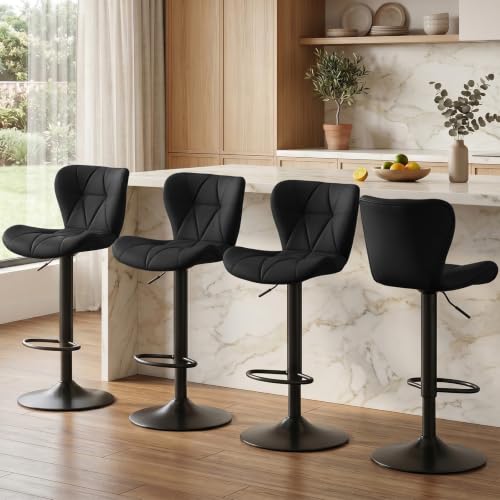
HAPPYMONT Bar Stools Set of 4, PU Leather Adjustable Height Swivel Barstool | Modern, Counter Height Chairs, Back, Footrest, Padded Seat, Kitchen Island, Living Room, Dining Room, Cafe, Black
Check price on Amazon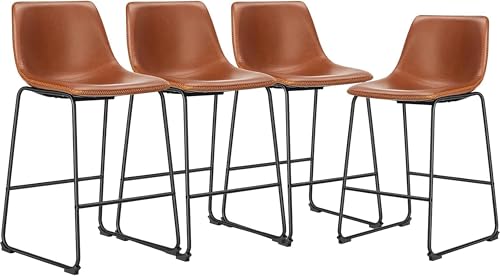
DUMOS Counter Height Bar Stools Set of 4, Faux Leather Metal Bar Chairs | Barstools with Back, Leg, Armless, Upholstered, Kitchen Island, Modern Design, 26 Inch, Brown
Check price on Amazon
Signature Design by Ashley Valebeck Counter Height Bar Stool, Brown | Rustic-industrial wood and metal stool, Cushioned comfort, Tailored nailhead trim, Smooth 360-degree swivel
Check price on AmazonFrequently Asked Questions
What seat height should counter height chairs with backs have?
For a standard counter surface between 35 and 37 inches high, a seat height of roughly 24 to 26 inches leaves a comfortable 9 to 13 inch gap between the seat and the countertop. Always measure your actual counter before choosing, since overhangs and custom builds shift the ideal number.
Are counter height chairs with backs more comfortable than backless stools?
For longer sittings, yes. A supportive back encourages proper posture and reduces fatigue during meals or work sessions. Backless stools suit quick, casual seating and tight footprints, but they offer no lumbar support and tend to encourage slouching.
How much space do I need per counter chair?
Allow roughly 22 to 24 inches of width per chair along the counter edge so elbows and backs do not collide, plus enough clearance behind for pulling the chair out. Around 30 inches of walkway behind the chairs is comfortable; 24 inches is the practical minimum.
Do counter height chairs with backs fit under a kitchen island overhang?
They can, provided the island has a sufficient overhang, typically 12 to 15 inches, and the chair back plus seat height does not exceed the space beneath the counter edge. Low-profile backs work best for tight overhangs, while taller upholstered backs need more clearance.
Which back style is easiest to maintain?
Open-slat wooden backs and low upholstered pads are generally the simplest to wipe down. Fully upholstered backs with deep tufting require more careful cleaning to keep fabric looking fresh, and leather needs periodic conditioning.
Final Buying Checklist
- Measure your counter height and overhang, then confirm the seat height leaves a 9 to 13 inch gap.
- Choose a back profile — low, mid, high, or open slat — based on how long people will sit and how open the room should feel.
- Compare frame materials and joinery quality rather than just finishes; heavier, reinforced frames last longer.
- Check seat foam density, footrest position, and whether a swivel would improve access.
- Plan 22 to 24 inches of width per chair plus clearance behind for pulling out.
- Confirm the upholstery or finish is easy to clean for your household's daily use.
- Review the weight capacity and warranty before ordering.
With those boxes ticked, you can compare individual models on the merits that actually affect daily life rather than on surface styling alone.