


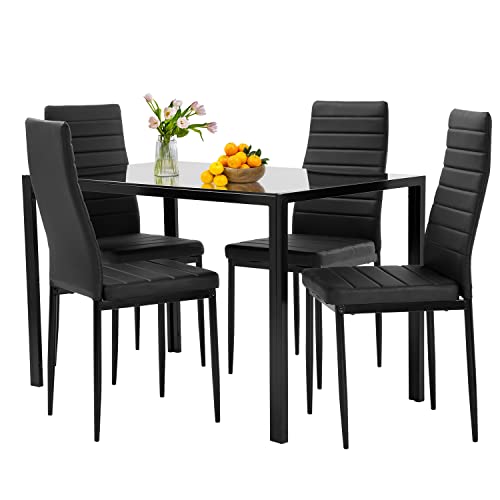
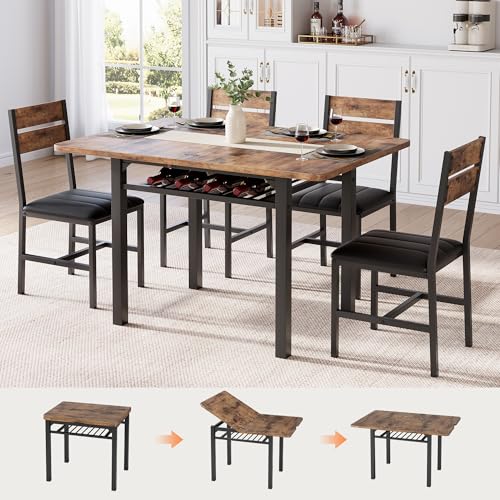


What Makes a Great Four-Seater Dining Set?
A dining room set for 4 is more than a table with four chairs. The best four-seater sets are engineered so that each diner has elbow room, leg clearance, and a comfortable sightline across the table. The table itself is usually the anchor: rectangular versions around 48 to 60 inches long and 36 inches wide seat four without anyone feeling boxed in, while round tables between 42 and 48 inches in diameter create a more intimate, conversational feel.
Chair selection matters just as much. Standard dining tables sit at roughly 30 inches high, which pairs best with chairs that have a seat height near 18 inches. Getting this relationship right is the difference between a set that feels natural and one that leaves guests shifting in their seats. If you want to dig deeper into proportions, our dining chair height guide explains the measurements in detail.
Choosing the Right Table Shape for Four
Table shape affects how the set fits your room and how conversation flows. There is no universal best choice — only the best choice for your space and habits.
Rectangular Tables
Rectangular tables are the most space-efficient for narrow rooms and open-plan layouts. A 48-inch-long rectangular table seats four with two diners per long side, while a 60-inch version gives everyone noticeably more elbow room. Rectangular designs integrate easily with bench seating along one side, which is a popular strategy for maximizing seating in compact areas. If you like the bench idea, our guide to dining room chairs set of 4 with bench covers how to pair the two.
Round Tables
Round tables are ideal for square rooms and tight corners because they have no sharp edges to navigate around. A 42-to-48-inch round table seats four comfortably, and the circular shape makes it easy for everyone to see and hear each other. Round sets also work well in breakfast nooks and bay windows. If your dining area is on the smaller side, the ideas in our dining nook guide can help you make the most of it.
Square Tables
Square tables occupy a footprint similar to round tables but offer more usable surface area. A 40-to-44-inch square table seats four, one per side, with a natural sense of symmetry. They suit compact dining rooms and work especially well when pushed against a wall for everyday use and pulled out for guests.
Key Dimensions and Clearance
Measurements prevent costly mistakes. Use the table below as a practical reference when evaluating any four-seater set.
| Element | Recommended Measurement | Why It Matters |
|---|---|---|
| Table height | About 30 inches | Standard height matches most dining chairs and keeps knees clear. |
| Table length (rectangular) | 48 to 60 inches | Seats two per side without crowding. |
| Table width (rectangular) | 36 inches | Leaves room for plates, serveware, and centerpieces. |
| Table diameter (round) | 42 to 48 inches | Comfortable seating for four with shared reach. |
| Chair seat height | About 18 inches | Correct proportion relative to a 30-inch table. |
| Clearance around the set | 36 inches (30 inches minimum) | Allows chairs to pull out and people to pass behind. |
| Distance from table to wall | At least 36 inches on seating sides | Prevents chairs from hitting walls when pushed back. |
Chair Types and Comfort
The chairs in a four-seater set determine how often the table actually gets used. Comfortable chairs turn a dining set into a place where people linger. The most common options include:
- Wooden dining chairs — durable, classic, and available in styles from farmhouse to mid-century. Many wooden chairs benefit from a cushion for longer sittings.
- Upholstered chairs — padded seats and backs offer the highest comfort for meals that stretch into conversation. Fabric choices range from durable performance weaves to smooth faux leather.
- Ladder-back chairs — a traditional silhouette with vertical slats that suits formal and transitional dining rooms alike.
- Wishbone and spindle styles — lighter visual weight that keeps small dining rooms from feeling heavy.
- Benches — a space-saving alternative that seats two on one side and tucks neatly under the table when not in use.
If comfort is your priority, explore the differences between dining room chairs with upholstered seat and back. For a timeless look, wooden dining room chairs remain a dependable choice. Mixing a bench on one side is another practical route — see our overview of dining benches for options.
Materials: Durability and Maintenance
Material choice affects longevity, maintenance, and the visual character of the set. Consider how your household actually lives before deciding.
Solid Wood
Durable construction with a natural grain that ages gracefully. Requires occasional polishing and protection from heat and moisture. A long-term investment for households that value craftsmanship.
Engineered Wood
Stable and consistent, often finished with wood veneer. Lighter in weight and resistant to seasonal movement. Good value for its tier when joints and hardware are well specified.
Glass Tops
Visually opens up small spaces and is easy to wipe clean. Look for tempered glass and a sturdy base. Fingerprints are more visible, so plan for regular polishing.
Metal Frames
Industrial and modern styles often use steel or aluminum frames. Rust-proof finishes and reinforced joints matter most for longevity. Often pairs well with wood or stone tops.
Stone and Marble Tops
Premium look with excellent heat resistance. Heavier sets require careful placement and occasional sealing to resist staining. A flagship-tier choice for formal dining rooms.
Faux Leather Upholstery
Easy to clean and resistant to spills — practical for families with children. Quality varies widely, so check stitching and foam density before committing.
Space Planning for Small and Open Rooms
A four-seater set is naturally compact, but placement still matters. In small dining rooms, position the table so the most-used seating side has full clearance. Round and square tables reduce the number of sharp corners you need to walk around, which makes narrow rooms feel less constrained.
In open-plan layouts, a four-seater set can define the dining zone without overwhelming the living area. A rug beneath the set helps anchor it visually — our dining room rugs guide covers sizing and material selection. Lighting plays a supporting role too: a pendant or compact chandelier centered over the table improves both ambiance and task visibility. See our dining room lighting guide for placement rules.
If your room is particularly tight, consider a drop-leaf or extendable table. These designs keep the everyday footprint small while allowing the set to expand for guests. For a broader look at compact layouts, our article on dining room set ideas explores several configurations.
Matching the Set to Your Dining Room Style
Style consistency makes a dining room feel intentional. Four-seater sets are available across the full design spectrum, from minimalist to ornate.
- Modern minimalist — slim profiles, neutral tones, and clean lines. Often paired with upholstered chairs in muted fabrics.
- Farmhouse and rustic — reclaimed wood finishes, turned legs, and bench seating. Warm and inviting for family-oriented homes.
- Mid-century modern — tapered legs, rounded edges, and warm wood tones. Popular in apartments and smaller dining areas.
- Industrial — metal frames, distressed wood tops, and exposed hardware. Suits loft-style and open-plan spaces.
- Traditional and formal — carved details, rich wood stains, and upholstered chairs. Works well in dedicated dining rooms.
If you are still deciding on an overall direction, our dining room styles guide breaks down each aesthetic with furniture recommendations.
Complementary Storage and Accessories
A four-seater dining set often pairs with modest storage pieces that keep the room functional without crowding it. A compact sideboard or buffet holds linens, serveware, and tabletop accessories within easy reach. Our dining room sideboard guide covers sizing for small rooms, while the buffet cabinet guide explains when a taller cabinet makes sense.
Tabletop decor should scale to the table size. On a four-seater, a low centerpiece or a small cluster of candles keeps sightlines open. Our dining room centerpieces guide has options that suit compact tables. If you plan to host occasional dinners, a china cabinet can display dinnerware without taking up much floor space.
Buying Checklist Before You Commit
Measure and verify before ordering
- Measure your dining area and mark the table footprint on the floor with tape.
- Confirm at least 36 inches of clearance on the main seating sides.
- Check doorway and stairwell widths for delivery access.
- Verify table height and chair seat height match.
- Decide whether an extendable table is needed for occasional guests.
- Confirm the chair weight capacity and warranty terms.
- Review assembly requirements and whether tools are included.
- Check the material finish against your cleaning routine and household use.
Frequently Asked Questions
What size dining table fits four people comfortably?
A rectangular table measuring roughly 36 inches wide by 48 to 60 inches long seats four comfortably. Round tables between 42 and 48 inches in diameter also work well for four diners.
How much clearance do I need around a four-seater dining set?
Allow at least 36 inches of clearance on all sides so chairs can be pulled out and people can walk behind them. For tighter spaces, 30 inches is the practical minimum.
Which chair height matches a standard dining table?
Standard dining tables are about 30 inches high, so chairs with a seat height near 18 inches provide the correct proportion and comfortable ergonomics.
Is a round or rectangular table better for four people?
Round tables encourage conversation and suit square or small rooms, while rectangular tables offer more usable surface and fit narrow or open-plan spaces better. Both seat four comfortably at the right dimensions.
Final Thoughts
A dining room set for 4 is one of the most versatile furniture purchases you can make. It supports everyday meals, remote-work lunches, and small gatherings without demanding the floor space of a larger arrangement. Focus on the fundamentals: correct table dimensions, comfortable chair height, durable materials, and adequate clearance. Get those right, and the set will serve your household well for years. When you are ready to compare specific options, the recommended sets above offer a practical starting point across several styles and tiers.