
Drop Leaf Table and Chairs for Small Spaces
Maximize every square foot of your home with a dining solution that adapts to your lifestyle. Learn how drop leaf tables transform compact areas into functional, beautiful dining spaces.
Living in a compact apartment, studio, or a home with an open-plan layout often means every piece of furniture must earn its place. A drop leaf table and chairs for small spaces offers a clever solution: a dining surface that expands when you need it and folds away when you do not. Unlike fixed tables that permanently occupy floor space, drop leaf designs give you the flexibility to reclaim your room for other activities.
This guide covers everything you need to know before choosing a drop leaf dining set. We will walk through how these tables work, what to look for in construction quality, how to pair the right chairs, and how to style your compact dining area so it feels intentional rather than cramped. Whether you are furnishing a first apartment or optimizing a breakfast nook, the information below will help you make a confident, well-informed decision.
Quick Tip: Measure your available floor space twice before shopping. A drop leaf table that is too large when fully extended defeats the purpose. Also consider the swing path of doors and drawers in the room, as these can limit where the table can be placed.
How Drop Leaf Tables Work
A drop leaf table features one or two hinged panels, called leaves, attached to the main tabletop. These leaves can be folded down vertically against the table's sides or dropped flat against the frame, depending on the design. When folded, the table functions as a narrow console, a side table, or even a desk. When raised, it becomes a full dining surface.
Common Configurations
- Single drop leaf: One hinged side expands the table from a narrow console to a small dining surface. Best for extremely tight spaces where only one or two people dine at a time.
- Double drop leaf: Leaves on both sides allow the table to expand symmetrically. This is the most versatile configuration for small dining rooms, as it can accommodate four to six people when fully open.
- Butterfly leaf: A variation where the leaf folds in half and stores underneath the tabletop. This design is common in drop leaf kitchen tables and offers a seamless look when closed.
- Gateleg table: A traditional style where the leaves are supported by swinging legs that fold out like a gate. Gateleg designs are among the sturdiest options and are often found in drop leaf dining room tables.
Understanding these configurations helps you match the table to your daily routine. If you rarely host, a single leaf may be sufficient. If you regularly seat four or more, a double drop leaf or gateleg model is the better choice.
Why Drop Leaf Tables Excel in Small Spaces
The primary advantage of a drop leaf table is spatial efficiency. In a studio apartment, the same surface that serves as a dining table during meals can fold down to become a workspace or a display console the rest of the day. This multifunctionality is why drop leaf designs remain popular in urban homes and compact living situations.
Advantages
- Reclaims floor space when not in use
- Adapts to different activities (dining, working, crafting)
- Ideal for studios, apartments, and breakfast nooks
- Can be placed against a wall or behind a sofa
- Often available in compact round or rectangular shapes
- Encourages intentional, clutter-free living
Considerations
- Hinges and support mechanisms require periodic checking
- Fewer seating positions than a full-size fixed table
- Some designs have a visible seam where the leaf meets the top
- Very lightweight models may feel less stable
- Storage of chairs can still occupy floor space
When shopping, prioritize models with reinforced hinges and locking support arms. Entry-level drop leaf tables often use basic butt hinges that can loosen over time, while mid-range and premium models typically feature heavier-duty hardware and solid wood construction. This is one category where choosing a slightly higher tier pays off in long-term durability.
Choosing the Right Size for Your Space
Size is the most critical factor when selecting a drop leaf small dining table. The goal is to find a table that provides comfortable dining when open without overwhelming the room when closed. Here is a practical framework:
Measure Your Space
- Wall length: Identify the wall or corner where the table will sit when folded. Measure the available length and height clearance, especially if there are windows or radiators.
- Extended footprint: Determine how much space you can allocate when the leaves are open. Account for chair pull-out space: at least 30 inches per side is comfortable.
- Traffic flow: Ensure there is a clear path around the table for walking. In tight rooms, a round drop leaf table often works better than a rectangular one because it has no sharp corners to navigate.
- Chair storage: Decide where chairs will go when the table is folded. Some folding chairs can nest or hang, while standard chairs need wall or corner placement.
Rule of Thumb: For a two-person setting, a table that extends to roughly 30 by 30 inches is workable. For four people, aim for at least 36 by 48 inches when open. Round drop leaf tables in the 36 to 42 inch diameter range are excellent for square rooms.
If your space is particularly tight, consider an extendable dining table for small spaces as an alternative. Extendable tables use a different mechanism but serve a similar purpose: growing when needed and shrinking when not.
Quality Tiers: What to Expect at Each Level
Drop leaf tables span a wide range of construction quality. To help you compare without relying on fluctuating market figures, we use universal tier descriptors. The table below outlines what each tier typically delivers.
| Tier | Construction | Hardware | Best For |
|---|---|---|---|
| Entry-level | Engineered wood with veneer, basic joinery | Standard hinges, limited locking mechanisms | Occasional use, light-duty settings, temporary furnishing |
| Mid-range | Solid wood frame with engineered wood panels, reinforced joints | Heavy-duty hinges, support arms, dual-locking mechanisms | Daily use, family meals, multi-purpose rooms |
| Premium | Solid hardwood throughout, traditional joinery, hand-finished surfaces | Commercial-grade hinges, precision-machined supports, soft-close options | Frequent hosting, long-term investment, design-focused spaces |
| Luxury | Exotic hardwoods, custom finishes, artisan craftsmanship | Bespoke hardware, integrated locking systems, heirloom-quality build | Statement pieces, formal dining in compact rooms, collector-grade furniture |
For most households, the mid-range tier represents the sweet spot: it offers durable construction and reliable hardware without the premium associated with luxury brands. Entry-level models can work well for guest rooms or seasonal use, but they may not withstand daily folding and unfolding over many years.
Pairing Chairs with Your Drop Leaf Table
The chairs you choose are just as important as the table itself. In small spaces, chair design directly affects how much usable floor area remains and how easily the room can be rearranged.
Chair Styles for Compact Dining
- Folding chairs: The most space-efficient option. They collapse flat and can be stored in a closet or behind a door. Look for models with padded seats and sturdy locking mechanisms.
- Stackable chairs: A practical choice if you occasionally need extra seating. Two or three stackable chairs can be tucked into a corner when the table is folded.
- Armless dining chairs: These slide fully under the table, reducing the footprint. Armless designs are especially useful for drop leaf kitchen dining tables placed against a wall.
- Bench seating: A narrow bench can fit along one side of a drop leaf table, providing seating for two without the bulk of individual chairs. Benches work particularly well with rectangular tables.
- Nesting stools: Some compact dining sets include stools that nest underneath the table or stack in a corner. These are ideal for very tight apartments.
Comfort and Durability
For daily use, prioritize chairs with durable dining chair construction. Look for solid wood legs, reinforced joinery, and seat cushions with high-density foam. Lightweight plastic or thin metal chairs may save space but often sacrifice comfort during longer meals. If you plan to use the table for work or study, consider an ergonomic dining chair that supports proper posture.
Seat Height Matters: Standard dining tables are about 30 inches high, requiring chairs with an 18-inch seat height. Counter-height drop leaf tables need chairs with a 24-inch seat height. Always confirm the table height before purchasing chairs separately.
Placement and Layout Strategies
How you position your drop leaf table can make or break the functionality of a small room. Here are several proven layouts:
Against a Wall
The most common arrangement: fold both leaves down and push the table flush against a wall. It functions as a console or sideboard. When mealtime arrives, pull it away from the wall, raise the leaves, and add chairs. This layout works well in narrow galley kitchens and studio apartments.
Behind a Sofa
In open-plan living areas, a drop leaf table placed behind a sofa can serve as a sofa table when closed and a dining table when open. This dual-purpose positioning maximizes the use of transitional zones and keeps the dining area integrated with the living space.
In a Corner
Corner placement is ideal for round drop leaf tables. With one leaf open, the table fits snugly into a corner and seats two. With both leaves open, it becomes a semicircular dining surface that projects into the room. This arrangement is popular for breakfast nooks.
Under a Window
If your compact dining area has a window, a drop leaf table can be positioned beneath it to create a bright, inviting breakfast spot. Ensure the table height does not obstruct the window opening and that curtains or blinds can operate freely.
For more layout inspiration, explore our guide to small dining room design, which covers additional space-planning techniques for compact homes.
Materials, Care, and Maintenance
Drop leaf tables are available in a range of materials, each with distinct care requirements. Choosing the right material depends on your climate, usage frequency, and aesthetic preferences.
Solid Wood
Solid wood tables are the most durable and can be refinished if the surface becomes worn. Oak, maple, and pine are common choices. Wood expands and contracts with humidity, so keep the table away from direct heat sources and use coasters under hot dishes.
Engineered Wood with Veneer
These tables offer a consistent appearance and are generally more resistant to warping than solid wood. However, the veneer can chip or peel if exposed to moisture. Wipe spills immediately and avoid abrasive cleaners.
Laminate and Melamine
Common in entry-level and mid-range drop leaf tables, laminate surfaces are easy to clean and resistant to scratches. They are a practical choice for households with children. However, damaged laminate cannot be repaired easily.
Metal Frames with Composite Tops
Some modern drop leaf tables combine metal legs with composite or glass tops. These designs are often lightweight and suitable for balconies or sunrooms. Check that the hinges are rust-resistant if the table will be near moisture.
Maintenance Routine: Lubricate hinges every six months with a silicone-based spray. Tighten screws and bolts quarterly. For wood surfaces, apply a furniture polish every few months to maintain the finish. Inspect the locking mechanisms regularly to ensure the leaves stay securely in place.
Styling Your Compact Dining Area
A small dining space does not have to feel utilitarian. With a few thoughtful styling choices, your drop leaf table can become a focal point rather than a compromise.
- Keep tabletop decor minimal: A single vase, a small bowl, or a pair of candlesticks is enough. Clutter makes small surfaces feel smaller.
- Use a table runner instead of a full tablecloth: Runners add color and texture without hiding the table's surface or interfering with the leaf mechanism.
- Choose chairs that complement the table's lines: If the table has a farmhouse aesthetic, consider farmhouse dining table style chairs with turned legs or cross-backs. For modern tables, opt for sleek, minimalist chairs.
- Add a wall mirror: A mirror placed opposite a window reflects natural light and visually doubles the room's depth, making the dining area feel larger.
- Use vertical storage: Wall-mounted shelves or a narrow farmhouse sideboard can hold dinnerware and linens without consuming floor space.
- Incorporate a pendant light: A hanging light fixture above the table defines the dining zone and adds warmth. Choose a fixture that is proportional to the table size.
For table setting ideas that suit compact surfaces, see our guide to dinnerware sets and table settings.
Recommended Drop Leaf Tables and Chairs for Small Spaces
⚠️ AFFILIATE DISCLOSURE: This website contains affiliate links. As an affiliate Associate, we earn from qualifying purchases. If you make a purchase through these links, we may receive a small commission at no additional cost to you. Read our full affiliate policy.

Farmhouse Wood Drop Leaf Dining Table Set with 2 X-Back Chairs, Walnut
Check price on Amazon
Merax Wooden 29"- 45" Extendable Rectangular Dining Table with Drop Leaf, Fits up to 4, Easy Assemble Espresso
Check price on Amazon
Winsome Wood Suzanne Kitchen, Square, Teak | Convenient Sturdy Mobile Kitchen & Dining Room Table & Chairs with Storage for Small Spaces, Dorms, Apartments
Check price on Amazon
Coaster Bucknell 3-Piece Round Drop Leaf Dining Table Set Natural 130006 | Round drop-leaf table and two ladder-back chairs in Natural, with beige padded seats; expands from 21 to 35 inches
Check price on Amazon
Mondeer folding dining table with 4 chairs for Small Spaces, Rustic Brown | Drop Leaf Table and Chairs for Small Spaces, Folding Dining with Storage Shelf and Wheels for Kitchen Dining Room
Check price on Amazon
Harper & Bright Designs 3-Piece Wood Drop Leaf Dining Table Set with 2 X-Back Chairs, Space-Saving Breakfast Nook Dining Set, Brown
Check price on Amazon
Best Choice Products 42in Round Drop Leaf Dining Table W/ Shelf - Chestnut | Solid wood expandable table for 4, a space saving choice for kitchen, dining room & small spaces
Check price on Amazon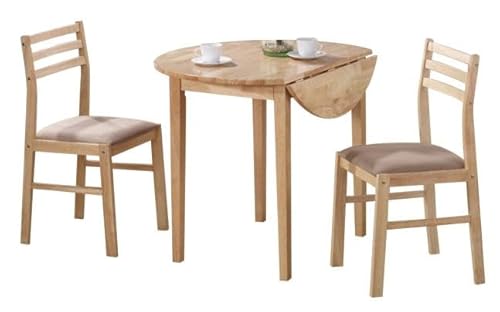
CARTESIAN 3-Piece Drop Leaf Dining Set, Natural Wood Table and 2 Chairs with Beige Cushions, Small Space Kitchen Furniture
Check price on AmazonFrequently Asked Questions
A drop leaf table features hinged sections on one or both sides that can be folded down when not in use. This design allows the table to transform from a compact console or side table into a full dining surface, making it ideal for small spaces. The leaves are supported by hinges and, in some designs, by swing-out legs or support arms.
A fully extended drop leaf table typically requires about 30 to 36 inches of clearance around the perimeter for comfortable chair placement and movement. When leaves are folded, the table can often fit into spaces as narrow as 12 to 18 inches, making it highly adaptable to compact rooms.
Yes, quality drop leaf tables use reinforced hinges, solid wood or high-grade engineered wood construction, and sturdy leg designs. Mid-range and premium models often include locking mechanisms and support arms that provide stability comparable to fixed tables. Entry-level models may be better suited for occasional use rather than daily folding and unfolding.
Some drop leaf tables are designed for outdoor use with weather-resistant coatings and rust-proof hardware. However, indoor models should not be exposed to moisture or direct sunlight for extended periods. Always check the manufacturer's specifications for outdoor suitability, and consider a dedicated outdoor drop leaf table if your space is a balcony or patio.
Lubricate the hinges every six months with a silicone-based spray or a small amount of paraffin wax. Tighten screws and bolts quarterly to prevent loosening. Inspect the locking mechanisms regularly to ensure the leaves stay securely in place when raised. If you notice any wobbling or difficulty folding the leaves, address the issue promptly to avoid damage to the tabletop or frame.
Ready to Transform Your Small Space?
Browse our curated selection of drop leaf tables and chairs designed for compact living. Compare features, read specifications, and find the right fit for your home.
Explore Recommended ProductsFinal Thoughts
A drop leaf table and chairs for small spaces is more than a furniture choice; it is a lifestyle solution. It allows you to enjoy the ritual of dining at a proper table without committing valuable floor space to a permanent fixture. By understanding the different configurations, prioritizing durable construction, and planning your layout carefully, you can create a dining area that feels intentional and inviting, no matter how compact your home may be.
If you are still weighing alternatives, explore our guides to drop leaf dining room tables, expandable dining tables, and dining room sets to compare options. For additional space-saving inspiration, see our collection of dining room furniture ideas tailored to small footprints.