
Expandable Kitchen Tables: The Complete Buying Guide
Learn how to choose a compact kitchen table that grows with your needs — extension mechanisms, materials, seating capacity, and space-planning tips explained.
START READINGWhy expandable kitchen tables matter: A kitchen table is one of the hardest-working pieces in the home. It serves breakfast, homework, holiday overflow seating, and everything in between. An expandable kitchen table gives you the footprint of a compact table day to day and the seating capacity of a full dining set when guests arrive — without the permanent floor-space commitment of a large fixed table.
What Makes a Kitchen Table "Expandable"?
An expandable kitchen table is any table whose usable surface area can increase temporarily through a built-in mechanism. The expansion is what separates these tables from fixed-top kitchen tables, and the mechanism itself is the single most important quality indicator you should evaluate before buying.
The four common expansion systems are:
- Drop-leaf design: Hinged panels fold down on one or both sides. Ideal for the tightest kitchens — the table sits against a wall with one leaf down and opens into a small dining surface when needed. Explore our drop-leaf kitchen table guide for a deeper look at this mechanism.
- Butterfly leaf (self-storing): A folded leaf is tucked inside the tabletop and flips open on a hinge. No separate storage is required, and setup takes seconds. See how this compares to other systems in our expandable dining table overview.
- Interior leaf storage: Extra leaves slide into a compartment beneath the tabletop, then lift out and lock into place on a center track. This is the most common design on mid-range and premium expandable models. Our guide to interior leaf storage explains the pros and cons.
- Self-storing extension leaves: The table extends along a sliding track while the spare leaf stays attached underneath. It is the most convenient system for frequent entertainers. Read our breakdown of self-storing extension leaves for details.
Why Choose an Expandable Kitchen Table?
The case for expandable kitchen tables rests on three practical advantages that fixed tables simply cannot match:
- Space efficiency: You keep your everyday kitchen footprint small while retaining the option to seat six or eight on demand. This is especially valuable in apartments and open-plan homes where the kitchen doubles as a dining area.
- Flexibility for hosting: Holiday dinners, birthday gatherings, and impromptu visits no longer require a second table in the garage. One piece adapts to the occasion.
- Long-term adaptability: As a household grows or shrinks, the table adjusts instead of being replaced. That makes a quality expandable model a genuine long-term investment rather than a temporary solution.
If your kitchen is genuinely tight, pair an expandable model with complementary space-saving strategies. Our guide to extendable dining tables for small spaces covers layout planning in detail, and if you prefer a round silhouette, see the expandable round dining table option.
Recommended Expandable Kitchen Tables & Space-Saving Dining Tables
⚠️ AFFILIATE DISCLOSURE: This website contains affiliate links. As an affiliate Associate, we earn from qualifying purchases. If you make a purchase through these links, we may receive a small commission at no additional cost to you. Read our full affiliate policy.

41 in-78 in Extendable Dining Room Table for 4-8, Round Expandable Kitchen Table with Fluted Base, Modern Farmhouse Oval Dinner Tables for Dining Room Kitchen Living Room (Walnut)
Check price on Amazon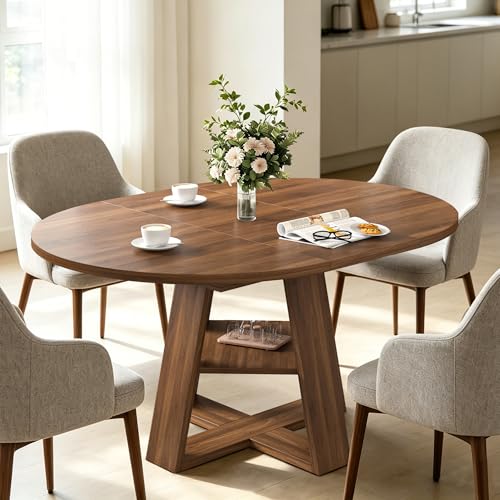
43.3"-59" Extendable Round Oval Dining Table for 4-8 with Storage Shelf | Modern Kitchen Oval Dining Table with Removable Leaves,Space Saving Extendable Table Wood Base for Kitchen Living Room Walnut
Check price on Amazon
DONGMUWUJEE Solid Wood Small Dining Table for 2-6, 23.6"L-47.2"L Expandable Kitchen Table, Designed for Small Spaces, Easy Assembly, Suitable for Kitchen, Dining Room, Living Room, Apartment (Walnut)
Check price on Amazon
71-87 Inch Extendable Dining Room Table, Rustic Wooden Kitchen Table 6-10 | STHOUYN Expandable Dining Table, Farmhouse Rustic Style, Rectangular Wooden Top, Seats 6-10, Brown Kitchen or Dining Room
Check price on Amazon
Extendable Dining Table with Charging Station, Convertible Folding Console Table for 6-8 People, Space-Saving Dining Table with LED Lights, Wood Rectangle Kitchen Table for Homes, Walnut (No Chairs)
Check price on Amazon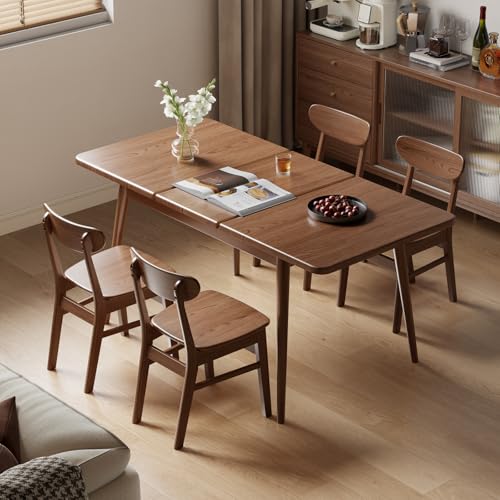
Muwuele 47"-63" Solid Wood Extendable Dining Tables for 4-8, Walnut | Compact Expandable Kitchen Table, Easy Assembly, Mid Century Modern, Dinner Table for Small Space, Dining Room, Apartment
Check price on Amazon
GarveeHome 63-83" Extendable Dining Table, Industrial Rectangular Dining Room Table for 6-8 People, Expandable Kitchen Table with Heavy Duty Metal Frame for Dining Room, Kitchen & Parties, Brown
Check price on Amazon
41 in-78 in Extendable Dining Room Table for 4-8, Round Expandable Kitchen Table with Fluted Base, Modern Oval Dinner Tables for Dining Room Kitchen Living Room (Black)
Check price on AmazonHow to Choose the Right Expandable Kitchen Table
Before comparing models, work through the five decision factors below. They determine which table will actually fit your room, your household, and your routine — not just which one looks best in a showroom.
1. Measure Your Space (And Your Expansion Zone)
Measure the length and width of the table in its closed position, then measure the fully expanded length. Confirm that the expanded footprint still leaves at least 36 inches of clearance on all active sides for chair pull-out and walkways. Pay attention to appliance doors, cabinet swings, and doorways — an expansion that blocks the refrigerator is not a usable expansion.
2. Match Seating to Your Household
As a rule of thumb, allow 24 inches of table edge per seated diner. A closed table at 36 inches wide comfortably seats two; a 48-inch table seats four; a table expanded to 60–72 inches seats six; and a table expanded to 84 inches or more can seat eight. If you regularly host larger groups, an extendable dining table that seats 12 may be the better fit. Bench seating along one side is a common space-efficient pairing — see our bench and chairs configuration guide.
3. Evaluate the Extension Mechanism
This is where quality differences are most visible. Entry-level expandable models often use simple hinges and lightweight slides. Mid-range models typically add metal glides, reinforced aprons, and locking mechanisms that keep the top rigid when expanded. Premium and luxury tier tables use heavy-duty steel tracks, precision-aligned leaf locks, and solid wood or thick engineered cores that resist sagging. When comparing tiers, the mechanism is the clearest indicator of how smooth and durable the table will feel after years of use.
4. Choose the Right Material for Frequent Use
Solid hardwood (oak, maple, ash, rubberwood) offers the best combination of durability and refinishability. High-grade engineered wood with a quality veneer is a practical option for the essential tier and mid-tier, provided the core is dense and the edges are sealed. Compact laminate and glass tops are easy to wipe down in kitchens but require careful handling around the moving parts. Avoid thin particleboard cores on tables that will be expanded often — repeated stress at the mechanism is where low-grade construction fails first.
5. Consider Style and Finish
Expandable kitchen tables are available across every major aesthetic. Farmhouse and rustic designs pair warm wood tones with turned or tapered legs; modern minimalist designs favor clean lines and flat fronts; industrial loft looks lean on metal frames and reclaimed-look surfaces. Browse our modern farmhouse dining tables collection and the broader expandable kitchen table category to compare silhouettes before committing. Also check the finish against your kitchen cabinetry and flooring under your actual lighting.
Expansion Systems Compared
The table below compares the four main expansion systems by category, seating flexibility, and best use case. Use the "Tier" column as a general indicator of where each system typically appears in the market — not as a statement about any single model.
| Expansion System | Tier | Best For | Seating Flexibility | Setup Effort |
|---|---|---|---|---|
| Drop-leaf | Entry-level to mid-range | Very small kitchens, wall placement | Adds 1–2 seats per side | Low — fold panels |
| Butterfly leaf (self-storing) | Mid-range to premium | Frequent small expansions | Adds 2–4 seats | Very low — flip and lock |
| Interior leaf storage | Mid-range to premium | Occasional entertaining | Adds 2–6 seats | Moderate — slide and lock |
| Self-storing extension | Premium to luxury | Frequent hosting, larger groups | Adds 2–8 seats | Low — glide mechanism |
Practical Buying Tips Before You Commit
- Test the mechanism in person if possible. Extend and retract the table several times. Listen for rattling, feel for wobble at full extension, and check that the leaves align flush with the main top.
- Inspect the apron and legs. Reinforced aprons and sturdy leg joinery (mortise-and-tenon or bolted metal brackets) are what keep an expanded table stable. Lightweight construction flexes under load.
- Confirm the leaf storage plan. If the table uses separate leaves, decide where they will live when not in use. Self-storing designs eliminate this problem entirely.
- Check floor protection. Expandable tables often need to be moved or repositioned. Felt pads on the feet protect hardwood and tile floors during adjustment.
- Review assembly and delivery terms. Large tables ship in heavy cartons. Confirm whether delivery includes room-of-choice placement and whether assembly is required.
Space-Planning Scenarios
The right expandable table depends heavily on how your kitchen is laid out. Here are three common scenarios and the configurations that work best:
- Galley or narrow kitchen: Choose a drop-leaf or narrow butterfly-leaf table placed against one wall. Keep the expansion direction along the long axis of the room so the extended table does not narrow the walkway.
- Open-plan kitchen and living area: A self-storing extension table offers the cleanest look when closed and the most generous seating when opened. Anchor the table with a consistent rug to define the dining zone. For farmhouse-influenced open plans, see our farmhouse kitchen table guide.
- Breakfast nook: A compact expandable table paired with a corner bench maximizes seating in a small bay. Our DIY breakfast nook guide walks through bench-and-table measurements. A related option is the farmhouse dining table with bench configuration.
Frequently Asked Questions
What is the difference between an expandable kitchen table and an extendable dining table?
The terms are often used interchangeably. Expandable kitchen tables typically refer to compact tables designed for kitchens and breakfast nooks that can grow in size, while extendable dining tables usually describe larger formal dining pieces. Both rely on leaves, butterfly mechanisms, or sliding tracks to add seating capacity.
How much space do I need around an expandable kitchen table?
Allow at least 36 inches of clearance around the table for chair pull-out and walkway space. When the table is fully expanded, confirm that the extension does not block appliance doors or high-traffic pathways in the kitchen.
Are self-storing leaves better than separate leaves?
Self-storing leaves remain attached or slide under the tabletop, which means no storage headaches and faster setup. Separate leaves are often found on mid-range and premium models and can be stored in a closet, but they require careful handling and dedicated storage space.
What materials work best for a kitchen table that expands frequently?
Solid hardwood, high-grade engineered wood with durable veneers, and compact laminate tops handle frequent expansion well. Look for reinforced aprons, metal glides, and quality hinges rated for repeated use. Avoid thin particleboard cores, which can sag or strip at the mechanism over time.
Can an expandable kitchen table work in a very small apartment?
Yes — drop-leaf and butterfly-leaf models are specifically designed for tight spaces. Measure the expanded footprint before buying and confirm the table can be positioned so that the expansion runs along the room's longest dimension. Our guide to extendable dining table sets for small spaces covers matching chairs and layout.
Final Thoughts
An expandable kitchen table is one of the most practical investments you can make for a busy home. Focus your decision on three things: the expansion mechanism, the construction quality at the joints and aprons, and the seating capacity in both closed and open positions. Get those right and the table will serve your household through years of everyday meals and special occasions alike.
When you are ready to compare specific models, our recommended selection above covers entry-level through premium options across the most popular expansion systems. Pair your choice with comfortable seating — our durable dining chairs guide is a useful next read — and you will have a complete, flexible dining setup for any occasion.