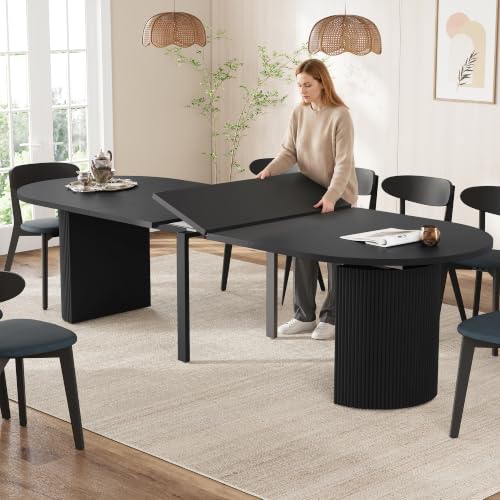
Discover how an expandable table adapts to your space and seating needs. Compare leaf mechanisms, materials, and practical features so you can choose with confidence.
Why an Expandable Table Works for Real Life
An expandable table solves a familiar problem: you need a compact surface for everyday meals but extra room when guests arrive. Instead of committing to a single fixed size, an expandable table grows with your needs. This flexibility makes it one of the most practical investments for dining rooms, kitchens, and open-plan spaces.
Homeowners often start their research with a fixed-size table in mind, then discover that an expandable design offers far more long-term versatility. A table that seats four comfortably during the week can transform into a gathering place for eight during holidays or family visits. The key is understanding how the expansion mechanism works and how much floor space you can dedicate when the table is fully extended.
Key insight: The best expandable table is not the one with the largest extension—it is the one whose closed size fits your everyday routine and whose extended size matches your realistic entertaining needs.
Leaf Types and Expansion Mechanisms
The way a table expands matters as much as the final size. Different mechanisms suit different households, storage situations, and comfort levels. Here is a breakdown of the most common options.
Butterfly Leaf
A butterfly leaf folds in half and tucks underneath the tabletop when not in use. It is a popular choice because the leaf stays with the table, eliminating storage concerns. When you need extra seating, you unfold the leaf and lock it into place. The mechanism is generally straightforward, though entry-level butterfly systems may require a bit more effort to align than premium versions. You can see this design in action with a dining table with butterfly leaf.
Self-Storing Leaf
A self-storing leaf slides into a compartment built into the table frame. This design keeps the leaf protected and always accessible. It is particularly useful in apartments or homes with limited closet space. Mid-range and high-end self-storing tables often feature smoother glide tracks and locking mechanisms that reduce wobble. For a closer look at this category, explore expandable dining tables with self-storing leaves.
Separate Leaf
With a separate leaf, the extension panel is stored elsewhere—usually in a closet or under a bed. This is common among traditional and formal dining tables. The advantage is that the table itself remains simpler and often lighter. The trade-off is that you must plan where to keep the leaf and ensure it stays clean and undamaged. A dining table with leaf and six chairs often falls into this category.
Drop-Leaf and Folding Mechanisms
Drop-leaf tables use hinged panels that fold down on one or both sides. They are excellent for very tight spaces because the table can sit nearly flush against a wall when closed. Folding tables take this concept further, sometimes collapsing entirely for storage. If portability is a priority, a folding table or a folding square table may suit your needs better than a traditional expandable design.
Sliding and Telescoping Mechanisms
Some modern tables extend by sliding the tabletop sections apart along hidden tracks. These mechanisms can feel very smooth when well-engineered, but they require precise construction. Premium and luxury tier models typically offer the most refined sliding systems, with reinforced hardware and tight tolerances that minimize flex.
Size and Seating Capacity
Choosing the right size is a balance between daily comfort and occasional entertaining. Start by measuring your room and marking the table's footprint on the floor with painter's tape. Then consider the extended size and whether you can still move comfortably around the table when it is fully opened.
Closed Size
The closed size determines how the table functions day to day. A compact rectangular table might measure around 36 to 48 inches in width when closed, seating two to four people. Round tables can be similarly efficient. If your everyday household is small, prioritize a closed size that leaves generous walkways and does not crowd the room.
Extended Size
The extended size determines your entertaining capacity. A table that adds one 12- to 18-inch leaf typically gains seating for two more people. Tables that accept multiple leaves can grow substantially. Before committing, think honestly about how often you host large groups. A table that extends to seat eight is only useful if your room can accommodate eight chairs and the people sitting in them.
Seating Guidelines
Allow roughly 24 inches of table edge per person for comfortable dining. This gives each guest room for a place setting and elbow space. For a six-person table, you generally want at least 72 inches of usable length. For eight people, aim for around 96 inches. These are guidelines, not strict rules—chair style and place setting size also matter. The dining chairs ergonomics guide can help you match chair dimensions to your table height and depth.
The material of an expandable table affects its durability, weight, maintenance needs, and visual warmth. Because expandable tables have moving parts, construction quality deserves extra attention.
Solid Wood
Solid wood tables are a long-term investment. They can be sanded and refinished if the surface shows wear, and they develop character over time. Hardwoods such as oak, maple, and walnut offer excellent durability. Softer woods may dent more easily but are often more forgiving in humid climates. A solid wood farmhouse dining table is a classic example of this material category.
Engineered Wood and Veneer
Engineered wood cores with wood veneer tops provide stability and a consistent appearance. They are less prone to seasonal movement than solid wood and can be very durable when well made. The quality of the veneer and the edge banding matters—premium tier tables tend to use thicker veneers and more precise joinery.
Glass and Metal
Glass-topped expandable tables create a light, open feel that works well in smaller rooms. Tempered glass is the standard for safety. Metal frames add industrial character and can be very sturdy. However, glass requires regular cleaning and may show fingerprints. If you prefer a modern aesthetic, a modern expandable dining table often combines glass or stone with metal supports.
Marble and Stone
Stone tops bring a sense of luxury and permanence. They are heavy, so the expansion mechanism must be engineered to handle the load. Stone also requires sealing and careful maintenance to prevent staining. These tables sit firmly in the premium and luxury tiers and are best suited to formal dining spaces.
Space Planning and Clearance
An expandable table is only practical if your room can handle both its closed and extended footprints. Clearance is the space between the table edge and walls, furniture, or doorways. As a rule of thumb, allow at least 36 inches of clearance for chairs to pull out and people to walk behind them. If you have a buffet or sideboard, add extra room for opening drawers and serving.
Consider the path of the extension mechanism as well. Some tables require you to pull the halves apart before inserting a leaf, which means you need temporary space at both ends. Self-storing and butterfly mechanisms reduce this requirement because the leaf is already integrated.
For narrow rooms, a narrow dining table can be a smart starting point. Pair it with an expansion feature, and you gain flexibility without sacrificing walkway width. Similarly, a corner dining table can make efficient use of an awkward layout, though expansion options in this category are more limited.
Planning tip: Measure the diagonal distance from the table's center to the nearest wall or obstacle. This helps you visualize how far chairs will extend when the table is fully opened.
Styles and Room Compatibility
An expandable table should feel at home in your room even when it is not extended. The style you choose will shape the overall character of your dining space.
Farmhouse and Rustic
Farmhouse tables often feature thick tops, turned legs, and a warm wood finish. Many farmhouse designs incorporate butterfly or self-storing leaves while maintaining a traditional silhouette. A solid wood farmhouse table pairs well with benches and upholstered chairs.
Modern and Minimalist
Clean lines, slim profiles, and neutral finishes define modern expandable tables. These designs often use engineered wood or glass and may feature concealed leaf storage. A modern dining set for six can be a good reference point for how these tables look in a complete arrangement.
Mid-Century Modern
Tapered legs, organic curves, and warm wood tones characterize mid-century designs. Expandable versions often use butterfly leaves to preserve the streamlined look. The mid-century modern dining guide explores how these tables fit into broader room compositions.
Traditional and Formal
Formal dining tables may feature separate leaves, ornate detailing, and rich finishes. These tables are often designed for larger rooms and special occasions. If your dining room leans traditional, consider how the table looks both closed and extended, since the extension joints will be visible.
Care and Maintenance for Expandable Tables
Moving parts require a little extra attention. Keeping the expansion mechanism clean and properly adjusted will help your table operate smoothly for years.
Keep tracks clean: Dust and crumbs can accumulate in sliding tracks. Vacuum or wipe them periodically according to the manufacturer's instructions.
Lubricate sparingly: If the mechanism feels stiff, use a lubricant recommended by the manufacturer. Avoid over-lubricating, which can attract dust.
Protect the finish: Use coasters, placemats, and trivets to prevent heat and moisture damage. A dining room table pad can add an extra layer of protection during heavy use.
Store leaves properly: If your table uses separate leaves, store them flat in a dry location. Avoid leaning them against walls where they might warp.
Check hardware: Periodically tighten screws and bolts on the expansion mechanism. Loose hardware can cause wobble and uneven surfaces.
For more detailed guidance, the table pads guide and general furniture care resources can help you extend the life of your table.
Expandable Table Types Compared
The table below summarizes the main expansion mechanisms by tier, best use case, and key considerations. Use it as a quick reference when comparing options.
Type
Tier
Best For
Key Consideration
Butterfly Leaf
Mid-range to premium
Everyday flexibility with integrated storage
Check alignment and locking mechanism quality
Self-Storing Leaf
Mid-tier to high-end tier
Apartments and homes with limited storage
Verify glide smoothness and leaf security
Separate Leaf
Entry-level to luxury
Formal dining and occasional entertaining
Plan a clean, dry storage location
Drop-Leaf
Entry-level to mid-range
Very small spaces and multi-use rooms
Confirm hinge strength and support legs
Sliding / Telescoping
Premium to luxury
Smooth operation and modern aesthetics
Inspect track quality and load capacity
Frequently Asked Questions
What is the difference between an expandable table and an extendable table?
The terms are often used interchangeably. An expandable table typically grows by inserting one or more leaves into the center, while an extendable table may use a sliding mechanism or pull-out sections. Both increase seating capacity, but expandable tables with center leaves tend to offer the most stable surface once assembled.
How do I know how many people an expandable table can seat?
As a general rule, allow about 24 inches of table width per person along each side. A compact table might seat four when closed and six to eight when fully expanded. Always check the manufacturer's seating recommendation and measure your room's clearance before choosing.
Are self-storing leaf tables worth considering?
Yes. Self-storing leaf tables keep the leaf attached or tucked inside the table frame, so you never have to find storage space for it. They are a practical choice for apartments and small dining rooms where closet space is limited.
What materials are best for an expandable table?
Solid wood offers durability and can be refinished over time. Engineered wood with veneer provides stability and a consistent finish. Glass tops create an airy look but require careful maintenance. Choose based on your household's daily use, climate, and style preferences.
Ready to Choose Your Expandable Table?
Explore top-rated expandable tables and compare features, mechanisms, and materials to find the right fit for your dining space.
⚠️ AFFILIATE DISCLOSURE: This website contains affiliate links. As an affiliate Associate, we earn from qualifying purchases. If you make a purchase through these links, we may receive a small commission at no additional cost to you.
Read our full affiliate policy.
BAYYELL Expandable Dining Room Table, Extendable Table for 10-12 People, Folding Console Table, Space Saving Kitchen Table for Apartment, Wood Grain Gray
⚠️ Note: The purchase links above are affiliate links. As an Amazon Associate, we earn from qualifying purchases at no additional cost to you.
41 in-78 in Extendable Dining Room Table for 4-8, Round Expandable Kitchen Table with Fluted Base, Modern Farmhouse Oval Dinner Tables for Dining Room Kitchen Living Room (Walnut)
⚠️ Note: The purchase links above are affiliate links. As an Amazon Associate, we earn from qualifying purchases at no additional cost to you.
weselon 42"-120" Extendable Dining Table for 4-14, Expandable Oval Dining Room Table with Fluted Pedestal Base & Reinforced Metal Support Leg, Extra Large Modern Kitchen Table (Black)
⚠️ Note: The purchase links above are affiliate links. As an Amazon Associate, we earn from qualifying purchases at no additional cost to you.
Extendable Dining Table with Charging Station, Convertible Folding Console Table for 6-8 People, Space-Saving Dining Table with LED Lights, Wood Rectangle Kitchen Table for Homes, Walnut (No Chairs)
⚠️ Note: The purchase links above are affiliate links. As an Amazon Associate, we earn from qualifying purchases at no additional cost to you.
Continue Exploring Dining Solutions
Whether you are comparing table sizes, exploring seating options, or planning a full dining room layout, these guides can help you make informed decisions.
The information provided on DiningFit is for educational and informational purposes only. We are not professional interior designers or contractors, and our content should not replace professional advice. Always consult with a qualified expert regarding structural, safety, or design-related concerns. Some content may use AI assistance. Always check product warranties and safety standards before purchasing. If you do not agree, please do not use this website.
Read the full disclaimer.
We use cookies to provide you with a better browsing experience. By continuing to use our site, you consent to our cookie settings.
Learn more