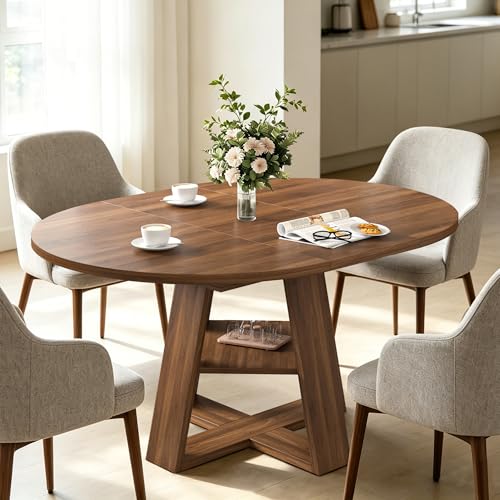
Expandable Dining Table for Small Spaces: The Complete Buying Guide
Learn how to choose a space-saving expandable dining table that seats your household comfortably every day and extends effortlessly for guests — without overwhelming a compact room.
Why an Expandable Dining Table Is the Smart Choice for Small Spaces
Small dining areas force a trade-off: a table large enough for holiday dinners often dominates the room on ordinary weeknights. An expandable dining table resolves that conflict by offering two footprints in one piece of furniture. In its closed position, the table serves daily meals without blocking walkways or crowding adjacent living space. When guests arrive, a leaf or extension panel increases the seating surface in minutes.
This flexibility matters most in apartments, breakfast nooks, and open-concept homes where the dining zone shares square footage with the kitchen or living room. Rather than dedicating permanent floor area to a large table, homeowners can keep circulation paths clear and expand only when the occasion calls for it.
Expandable designs also support long-term changes in household size. A couple may start with a compact two-to-four-seat configuration and later extend the same table for a growing family. That adaptability makes an expandable table a genuinely efficient long-term investment compared with replacing a fixed table when needs change.
Key benefit: You get the seating capacity of a large table without permanently sacrificing floor space. The closed footprint handles daily life; the expanded footprint handles entertaining.
Types of Expansion Mechanisms Explained
Not all expandable tables work the same way. The mechanism determines how easy the table is to extend, where the leaf is stored, and how stable the table feels when fully open. Understanding these differences is the single most important step before buying.
Butterfly Leaf
A butterfly leaf folds in half and stows inside the table body, typically beneath the tabletop. To expand, you pull the table halves apart, unfold the leaf, and lock it into place. Because the leaf lives inside the table, there is no separate storage requirement — a major advantage in small homes. Butterfly mechanisms are common on rectangular and square tables and are generally straightforward to operate solo.
Self-Storing Leaf
A self-storing leaf is a single panel that also stows within the table structure, often sliding or folding into a compartment. This design appears frequently on round tables, including round expandable dining tables. Like the butterfly leaf, it eliminates the risk of misplacing a loose panel. Self-storing mechanisms on premium models tend to operate more smoothly than entry-level versions, which may require more force or alignment.
Drop-Leaf and Folding Designs
Drop-leaf tables use hinged panels that fold down along the sides. They are excellent for very tight spaces because the table can be pushed against a wall and opened only when needed. A folding table or folding square table serves a similar purpose for temporary or multi-use rooms, though these designs trade some sturdiness for portability.
Extension Leaf with Separate Storage
Some tables use a removable leaf that must be stored separately in a closet or behind a sofa. While often structurally robust, this design requires dedicated storage space — a real drawback in compact homes. If storage is limited, prioritize butterfly or self-storing mechanisms instead.
Extendable Kitchen Tables
An extendable kitchen table typically uses a sliding rail system beneath the top. These tables are designed for casual dining and often pair with benches or compact chairs. They work well in eat-in kitchens where the table doubles as a prep surface.
Choosing the Right Shape and Size for a Small Room
Shape affects traffic flow as much as size does. A table that fits the room's proportions will feel more spacious than a larger table crammed into the same footprint.
Round Tables
Round tables soften corners and allow easier circulation in compact rooms because there are no sharp edges to navigate. A 60-inch round dining table seats four to six comfortably, and round pedestal designs leave more legroom underneath. Round tables are especially effective in square rooms and open-concept layouts where the dining area blends into the living space.
Rectangular Tables
Rectangular tables maximize seating along their long sides and suit narrow rooms where a circular table would waste corner space. A narrow dining table can fit along a wall and expand outward when guests arrive. Rectangular butterfly-leaf models are a strong choice for galley kitchens and long, thin dining zones.
Square Tables
Square tables offer a compact footprint and work well in breakfast nooks and small kitchens. Many square models convert to rectangles when expanded, giving you the best of both configurations.
Seating Capacity in Closed and Open Positions
Always check both the closed and expanded seating capacity. A table that seats four closed and six expanded is ideal for a couple who hosts occasionally. A dining table with leaf and 6 chairs configuration covers most small-home entertaining needs. If you regularly host larger groups, consider a model that extends to seat eight, such as a dining table with leaf and 8 chairs.
Very tight spaces, multi-use rooms, wall-adjacent dining
2–4 closed, 4–6 expanded
Panels fold down; ensure hinge clearance
How to Measure Your Space Before You Buy
Measurement errors are the leading cause of returns on dining tables. Follow this sequence to avoid a table that looks right online but crowds your room in person.
Measure the room's usable dining zone. Identify walls, door swings, radiators, and furniture that cannot move. Record the longest and widest clear dimensions.
Add clearance for chairs. Plan at least 30 inches from the table edge to any wall for pull-out seating. For a walkway behind occupied chairs, allow 36 inches or more.
Measure the closed table footprint. Confirm the closed dimensions fit your daily layout with the required clearance on all sides.
Measure the expanded footprint. Check that the fully extended table still leaves a workable path to doors, the kitchen, and adjacent rooms. If expansion would block a doorway, choose a drop-leaf or a table that expands in the opposite direction.
Account for chair depth. Chairs tucked under the table reduce the effective footprint. Verify that the apron height and leg placement allow chairs to tuck fully.
Consider ceiling fixtures. A chandelier or pendant should hang about 30 to 36 inches above the tabletop. If your table expands, confirm the fixture remains centered over the expanded surface or adjust its position.
Pro tip: Use painter's tape to outline both the closed and expanded footprints on your floor. Walk around the outline for a few days to sense how the table will affect traffic flow before you commit.
Quality Tiers Compared: Entry-Level, Mid-Range, and Premium
Expandable tables vary widely in construction quality and mechanism refinement. The tier classification below describes relative market position and build characteristics — not numbers — so it remains useful regardless of market conditions.
Tier
Mechanism Quality
Materials
Best For
Entry-Level
Basic slide or hinge; may require two people; some play when locked
Engineered wood with veneer; lighter frames
Occasional use, first apartments, temporary setups
Mid-Range
Smooth glides, reinforced aprons, solo operation feasible
Solid wood components, quality veneers, metal hardware
Daily use, regular hosting, family homes
Premium
Precision self-storing mechanisms, secure locking, minimal play
Flagship mechanisms, engineered for effortless one-hand operation
Exotic hardwoods, stone or glass tops, bespoke finishes
Formal dining, statement pieces, collectors
Mid-range models usually represent the sweet spot for small-space buyers: the mechanism is smooth enough for frequent expansion, and the materials hold up to daily family use. Entry-level tables can work well for occasional hosting, but inspect the locking system carefully. Premium and luxury tiers justify their position when the table is used constantly or serves as a visual centerpiece.
The expansion mechanism is only as good as the material surrounding it. A reinforced apron and solid leg joinery prevent the table from wobbling when fully extended.
Solid hardwood (oak, maple, walnut) offers the best long-term durability and can be refinished. A solid wood dining table with 6 chairs is a reliable configuration for family use.
Engineered wood with veneer is stable and consistent but less forgiving of moisture and impact. It suits entry-level and mid-range tables.
Metal mechanisms should be powder-coated or stainless to resist corrosion. Look for reinforced brackets where the leaf locks into place.
Tabletop finishes should be sealed and easy to wipe clean, especially if the table doubles as a work surface.
Recommended Expandable Dining Tables for Small Spaces
⚠️ AFFILIATE DISCLOSURE: This website contains affiliate links. As an affiliate Associate, we earn from qualifying purchases. If you make a purchase through these links, we may receive a small commission at no additional cost to you.
Read our full affiliate policy.
DONGMUWUJEE Solid Wood Small Dining Table for 2-6, 23.6"L-47.2"L Expandable Kitchen Table, Designed for Small Spaces, Easy Assembly, Suitable for Kitchen, Dining Room, Living Room, Apartment (Walnut)
⚠️ Note: The purchase links above are affiliate links. As an Amazon Associate, we earn from qualifying purchases at no additional cost to you.
Extendable Dining Table with Charging Station, Convertible Folding Console Table for 6-8 People, Space-Saving Dining Table with LED Lights, Wood Rectangle Kitchen Table for Homes, Walnut (No Chairs)
⚠️ Note: The purchase links above are affiliate links. As an Amazon Associate, we earn from qualifying purchases at no additional cost to you.
Kaelothaven Solid Wood Small Dining Table for 2-6, Folding Kitchen Table | 35.4"L-51.1"L Expandable Dining Table, Space Saving Desk with Rotating Drop Leaf Design, for Apartment, Home Office, Walnut
⚠️ Note: The purchase links above are affiliate links. As an Amazon Associate, we earn from qualifying purchases at no additional cost to you.
43.3"-59" Extendable Round Oval Dining Table for 4-8 with Storage Shelf | Modern Kitchen Oval Dining Table with Removable Leaves,Space Saving Extendable Table Wood Base for Kitchen Living Room Walnut
⚠️ Note: The purchase links above are affiliate links. As an Amazon Associate, we earn from qualifying purchases at no additional cost to you.
Small-Space Layout Tips for Expandable Tables
Placement determines whether an expandable table feels like a blessing or a burden. These layout strategies help you get the most from a compact dining zone.
Anchor the Table to a Wall or Corner
Pushing the closed table against a wall frees up floor space and creates a natural walkway. A corner dining table or a drop-leaf design works especially well in this configuration. When guests arrive, pull the table away from the wall and extend it.
Pair with Benches for Flexible Seating
A dining bench slides fully under the table when not in use, reducing the visual footprint. A brown dining bench or farmhouse table and bench combination suits rustic and farmhouse interiors. Benches also seat more people per linear foot than individual chairs.
Choose Chairs That Tuck In
Look for chairs with low or no arms so they slide under the tabletop. Chairs for small spaces are designed with compact depth and slim profiles. If you need extra seating for guests, folding chairs store flat and deploy quickly.
Use Vertical and Wall Storage
Keep the floor clear by moving linens, serveware, and leaves to wall-mounted storage. A sideboard or buffet placed along a wall can hold entertaining essentials without intruding on the dining zone.
Coordinate with Lighting
A pendant or chandelier centered over the closed table may sit off-center when the table expands. Choose a fixture with a wide spread or install a swivel-arm pendant so you can reposition it. Our guide to dining room lighting covers sizing and placement in detail.
Respect Door Swings and Appliance Clearances
Never place an expanded table where it blocks a refrigerator door, oven, or primary entry. Map door swings with tape before finalizing placement. In kitchens, an island table can serve as both prep space and dining surface without adding a separate table.
Common Buying Mistakes to Avoid
Buying for the expanded size only. The closed footprint is what you live with daily. If the closed table crowds the room, the expansion feature will rarely be used.
Ignoring the expansion direction. Some tables extend lengthwise, others widthwise. Confirm the expansion direction fits your room's longest clear axis.
Overlooking leaf storage. A removable leaf with no storage plan ends up leaning in a closet or lost. Choose butterfly or self-storing designs in small homes.
Skipping the mechanism test. If possible, operate the table in person. A stiff or misaligned mechanism becomes a daily frustration.
Underestimating chair clearance. A table that fits the room but leaves no room to pull out chairs is unusable. Measure with chairs in place.
Mismatching table height and chair height. Standard dining height is about 30 inches; counter-height tables are about 36 inches. Match chairs accordingly — see our dining room chair height guide.
Frequently Asked Questions
What is the best expandable dining table for small spaces?
The best choice depends on your room shape and hosting habits. Round pedestal tables with self-storing leaves work well in square rooms and open-concept areas, while rectangular butterfly-leaf tables suit narrow layouts and offer more seating along the long sides. Prioritize a table that seats your everyday household comfortably when closed, with expansion reserved for guests.
How much floor space do I need around an expandable dining table?
Allow at least 30 inches of clearance from the table edge to the nearest wall or obstruction for comfortable pull-out seating. For a walkway behind occupied chairs, plan 36 inches or more. When the table is fully expanded, verify the clearance again, since leaf sections can reduce circulation space in compact rooms.
What is the difference between a butterfly leaf and a self-storing leaf?
A butterfly leaf folds in half and stores inside the table body, making it convenient for frequent expansion. A self-storing leaf is a single panel that also stows within the table, often used on round tables. Both eliminate the need for separate leaf storage, which is a major advantage in small homes.
Are extendable kitchen tables sturdy enough for daily use?
Mid-range and premium extendable tables with reinforced aprons and metal glide mechanisms are generally sturdy enough for daily use. Entry-level models may have more play in the mechanism, so inspect the locking system and weight capacity before committing to a design that expands frequently.
Can an expandable table work in an open-concept living area?
Yes. Expandable tables are especially useful in open-concept layouts because they can remain compact during daily life and extend for entertaining without requiring a dedicated dining room. Choose a finish and silhouette that coordinates with adjacent living furniture to maintain visual flow.
Ready to Choose Your Expandable Table?
Browse our recommended expandable dining tables for small spaces, selected for their space-saving designs, sturdy mechanisms, and suitability for compact rooms.
The information provided on DiningFit is for educational and informational purposes only. We are not professional interior designers or contractors, and our content should not replace professional advice. Always consult with a qualified expert regarding structural, safety, or design-related concerns. Some content may use AI assistance. Always check product warranties and safety standards before purchasing. If you do not agree, please do not use this website.
Read the full disclaimer.
We use cookies to provide you with a better browsing experience. By continuing to use our site, you consent to our cookie settings.
Learn more