
Extra Tall Bar Stools with 40-Inch Seat Height
Discover how to choose the right extra tall bar stools for high counters, kitchen islands, and elevated dining spaces. A complete guide to sizing, stability, materials, and comfort.
EXPLORE THE GUIDEWhy 40-inch seat height matters: Standard bar stools sit at 29–32 inches, which works for a 42-inch counter. Extra tall bar stools with a 40-inch seat height are designed for counter surfaces around 48–52 inches — common in commercial-style kitchens, multi-level islands, and unique custom builds. Choosing the wrong height leads to discomfort, poor posture, and even safety risks. This guide breaks down exactly what to look for.
Understanding 40-Inch Seat Height Bar Stools
An extra tall bar stool with a 40-inch seat height is a specialized piece of seating. It sits significantly higher than a standard bar stool, making it ideal for specific counter and island configurations. Before exploring styles and materials, it's critical to understand the underlying proportion rules that determine comfort and usability.
The general rule for seating is to allow a 10 to 13-inch gap between the seat and the underside of the counter or table. For a 40-inch seat height, the ideal counter surface should sit between 50 and 53 inches from the floor. If your counter is lower, you may want to consider extra tall bar stools with a 36-inch seat height, which are a more common choice for tall residential islands.
These stools are typically found in open-concept spaces where a raised bar or a two-tier island creates a natural gathering spot. They also work well in commercial-grade or professional-grade kitchen setups where prep surfaces are intentionally elevated. For standard residential dining areas, you will likely find more appropriate options among our bar stools and counter seating collection.
Key Features to Evaluate Before You Choose
1. Stability and Base Design
When a seat is 40 inches off the ground, stability becomes the single most important factor. A wobbly stool at that height is not just uncomfortable — it can be dangerous. Look for these structural indicators:
- Wide base spread: The legs or pedestal should extend outward sufficiently to lower the center of gravity. A splayed leg design is generally more stable than a narrow pedestal.
- Four-legged construction: Stools with four legs typically distribute weight more evenly than three-legged or single-pedestal designs, especially at extreme heights.
- Footrest placement: A footrest at a comfortable height (usually 8–12 inches below the seat) is essential for getting on and off the stool safely, and for maintaining posture during long periods of sitting.
- Non-slip feet: Rubber or felt glides prevent sliding on hard floors and protect surfaces from scratches.
- Weight capacity: Extra tall stools should be rated for at least 300 pounds. Heavy-duty and commercial-grade models often support higher capacities.
2. Frame Materials and Build Quality
The frame material determines durability, style, and the stool's overall longevity. At this height, material choice directly affects safety and stability.
- High-grade steel: The most common choice for extra tall stools. Steel frames are strong, rigid, and can be finished with a rust-proof coating. Look for welded joints rather than riveted connections.
- Solid wood: Wooden stools offer a warm, traditional look. Hardwoods like oak, maple, and beech are preferable for tall designs because they resist warping. Soft woods are less suitable at extreme heights.
- Aluminum: Lighter than steel and resistant to rust, but may flex more under heavy loads. Best suited for lightweight or occasional-use settings.
- Combination frames: A metal frame with wood accents combines structural rigidity with aesthetic warmth — a common approach in mid-range and premium tiers.
Whichever material you choose, verify that the joints are reinforced and that the finish is appropriate for your indoor or outdoor environment. If your stool will be exposed to moisture, a rust-proof finish is essential.
3. Seat Comfort and Ergonomics
A 40-inch seat is not a place for casual perching — you will likely spend meaningful time there. Seat design has a direct impact on comfort and posture.
- Contoured seats: A slight dip or saddle shape supports the natural curve of the body and reduces pressure points.
- Upholstery: Faux leather and leather are easy to clean and durable; fabric offers breathability but requires more care. Look for high-density foam that will not flatten quickly.
- Seat depth and width: A seat that is too shallow feels precarious; one that is too deep reduces leg circulation. For most users, a seat width of 16–18 inches and depth of 15–17 inches works well.
- Backrest: A low backrest (or none) is common for bar stools, but for extended seating a mid-height backrest offers better support. If you prioritize posture, explore our ergonomic bar stool guide for detailed recommendations.
- Swivel vs. stationary: Swivel seats make it easier to get on and off and to turn toward conversation. Stationary seats are more stable and simpler to maintain.
4. Footrest and Accessibility
At 40 inches, the footrest is not a decorative extra — it is a functional necessity. Without a properly placed footrest, users will dangle their legs, which reduces circulation and makes the stool feel unstable. A footrest that sits 8–12 inches below the seat allows most adults to rest their feet comfortably. Check that the footrest is wide enough and has a textured or non-slip surface.
Also consider how you will get on and off the stool. A stool with a built-in handle or a slightly lower step can make a significant difference for less mobile users.
Comparing Tiers: What to Expect at Each Level
Extra tall bar stools are available across a wide range of build qualities. The following table summarizes the typical characteristics you can expect at each tier. This classification is based on relative market positioning and construction quality, not on any specific numeric benchmark.
| Tier | Best For | Typical Characteristics |
|---|---|---|
| Entry-Level | Occasional seating, secondary spaces | Simple frame construction, basic upholstery, limited adjustability. Adequate for light use but may require more maintenance over time. |
| Mid-Range | Everyday residential use | Welded steel or solid wood frames, improved upholstery, smoother swivel mechanisms, better footrest design. A solid choice for most households. |
| Premium | High-use kitchens, design-focused spaces | High-grade steel or hardwood construction, reinforced joints, premium upholstery, thoughtful ergonomics. Durable construction designed for daily use. |
| Luxury / Commercial-Grade | Professional kitchens, hospitality settings | Commercial-grade materials, exceptional stability, heavy-duty weight capacity, refined finishes. Built to withstand continuous use in demanding environments. |
When comparing tiers, keep in mind that the higher tiers generally offer smoother mechanisms, more durable finishes, and better long-term reliability. A mid-range model often represents a balanced choice for residential use, while commercial-grade options are worthwhile for high-traffic or professional environments.
Materials and Finishes: A Closer Look
The material of your extra tall bar stool affects not only its appearance but also its stability, maintenance requirements, and lifespan. Here is a closer look at the most common options.
Metal Frames
Metal is the dominant choice for extra tall stools because it offers the highest strength-to-weight ratio. High-grade steel is the most robust option, especially when powder-coated or finished with a rust-proof coating. Aluminum is lighter and rust-resistant but may flex under heavy loads. When evaluating metal frames, check for welded joints, reinforced gussets at stress points, and a consistent finish with no sharp edges.
Wood Frames
Wooden stools bring warmth and a traditional aesthetic. For 40-inch heights, hardwoods such as oak, maple, and beech are strongly preferred because they resist warping and can support the required weight. Softwoods are generally not recommended at this height. Look for mortise-and-tenon or dowel joints, which are more durable than simple screw connections. A quality wood finish should be sealed to resist moisture and stains.
Upholstery Options
Faux leather is the most popular upholstery for bar stools because it is easy to clean, resistant to spills, and available in many colors. Genuine leather offers a more refined look and develops character over time but requires more care. Fabric upholstery is breathable and comfortable but is more susceptible to staining. For kitchens and dining areas where food and drink are present, faux leather or treated performance fabric is often the most practical choice.
Placement and Space Planning
Extra tall bar stools are most commonly paired with raised counter surfaces, but they can also be used in other creative ways. Here are some placement considerations:
- Kitchen islands with raised bars: Many islands feature a two-tier design where the raised section is 48–52 inches high. A 40-inch stool is the correct pairing for this height.
- Commercial-style prep counters: In professional-grade kitchens or bakeries, prep surfaces are often elevated. Extra tall stools allow staff and guests to sit comfortably at these surfaces.
- Tall pub or bistro tables: Some pub tables are designed at 48–50 inches. A 40-inch stool completes the setup.
- Overhangs and clearance: Allow at least 12 inches of knee space under the counter and 6–10 inches between adjacent stools for comfortable seating.
If your space is smaller or your counter is lower, you may find that a standard bar stool or a 36-inch seat height option is a better fit. Always measure your counter height and test the seat-to-counter gap before committing.
Safety Considerations for Extra Tall Seating
At 40 inches, a bar stool is roughly as tall as a standard kitchen counter. Safety should be a primary concern, especially in households with children or older adults.
- Stable base: Choose a stool with a wide, splayed base or four legs. Avoid narrow pedestals unless they are specifically rated for tall heights.
- Weight capacity: Verify that the stool's rated capacity exceeds the weight of your intended users. Heavy-duty models are advisable for commercial or high-traffic settings.
- Non-slip feet: Rubber glides prevent the stool from sliding on hard floors.
- Footrest: A proper footrest reduces the risk of falls when getting on and off.
- Anti-tip features: Some premium and commercial-grade stools include anti-tip hardware or counter-weighting. These are worth considering for households with children.
- Assembly: Follow assembly instructions carefully and periodically check that all fasteners are tight.
Care and Maintenance Tips
Extra tall bar stools endure more stress than standard seating, so regular maintenance is important. Here are some practical tips:
- Metal frames: Wipe with a damp cloth and mild soap. Avoid abrasive cleaners that can scratch the finish. Touch up any chips in the coating to prevent rust.
- Wood frames: Dust regularly and apply a wood conditioner every few months to prevent drying and cracking. Keep away from direct heat sources.
- Upholstery: Clean spills promptly. For faux leather, a damp cloth with mild soap is usually sufficient. For fabric, use a fabric cleaner appropriate for the material.
- Hardware: Check bolts and screws every few months and tighten as needed. Replace worn glides to protect your floors.
For more detailed guidance on maintaining dining furniture, see our dining room furniture care resources.
Recommended Extra Tall Bar Stools (40-Inch Seat Height)
⚠️ AFFILIATE DISCLOSURE: This website contains affiliate links. As an affiliate Associate, we earn from qualifying purchases. If you make a purchase through these links, we may receive a small commission at no additional cost to you. Read our full affiliate policy.

PrimeZone Swivel Bar Stools Set of 2, 34 Inch Extra Tall Bar Height | Black Faux Leather, High Backrest, Solid Rubberwood Frame, Wrap-around Footrest, Barstools for Kitchen Island, Pub
Check price on Amazon
Nalupatio Modern Bar Stools Set of 2, Adjustable Faux Leather Upholstered Swivel Bar Stools, Counter Height Bar Chairs with Back for Kitchen Island, Black
Check price on Amazon
GRUSIGN Bar Stools Set of 2, Modern Swivel Adjustable Bar Chairs, Faux Leather Upholstered Counter Height Bar Stools with Backrest, Comfort Barstools for Kitchen Island, Home Bar, Black
Check price on Amazon
Raynesys 29-Inch Leather Bar Stools Set of 2 with High Backrest, Dark Brown | Faux Leather, Bar Height Bar Chairs, Heavy Duty Metal Legs, With Footrest, For Kitchen Island
Check price on Amazon
HNY 30'' Extra Tall Farmhouse Bar Stools Set of 2, Linen Upholstered Bar Height Stools with Curved Back, Solid Hardwood Frame, Modern Counter Stools for Kitchen Island, Home Bar & Dining Area, Beige
Check price on Amazon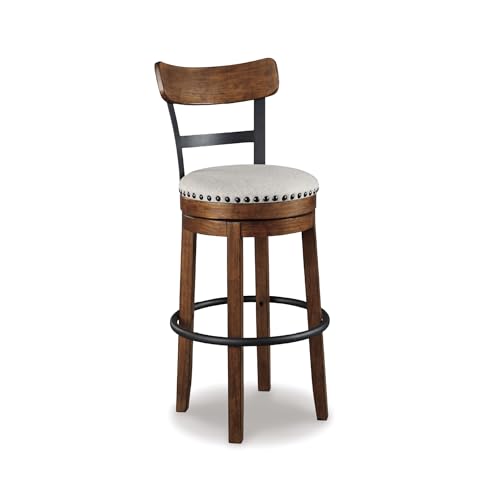
Signature Design by Ashley Valebeck Swivel Bar Stool with Back, 30 in | Wood & engineered wood, 360-degree swivel, Linen colored polyester, Rustic farmhouse style, 250 lb capacity
Check price on Amazon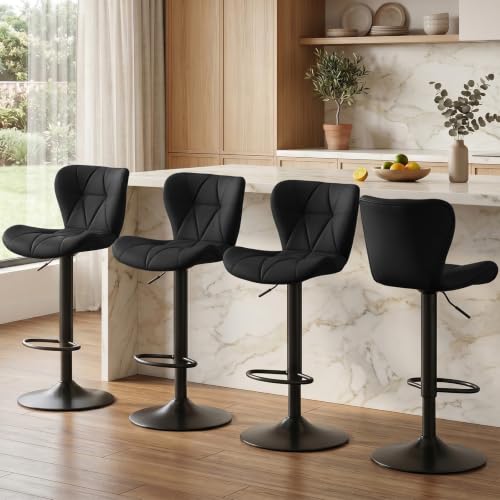
HAPPYMONT Bar Stools Set of 4, PU Leather Adjustable Height Swivel Barstool | Modern, Counter Height Chairs, Back, Footrest, Padded Seat, Kitchen Island, Living Room, Dining Room, Cafe, Black
Check price on Amazon
VASAGLE Bar Stools Set of 2, Swivel Bar Height with Back, 30-Inch | PU Leather with Stitching, Transitional, for Kitchen, Caramel Brown, EKHO Collection ULBC889K01
Check price on AmazonFrequently Asked Questions
A 40-inch seat height is best paired with a counter or bar surface that is 50 to 53 inches high. This provides the recommended 10 to 13-inch gap between the seat and the underside of the counter, which is essential for comfortable legroom and safe seating.
Yes, provided you choose a model with a stable base, a suitable weight capacity, a footrest, and non-slip feet. Extra tall stools are commonly used in residential and commercial settings. Safety depends primarily on the build quality and correct assembly, so choose mid-range or higher tiers for daily use.
A 36-inch seat height is intended for counters around 46–48 inches, while a 40-inch seat height is intended for counters around 50–53 inches. The difference of 4 inches may seem small, but it has a significant impact on comfort. Always match the stool height to your specific counter height. See our 36-inch seat height guide for comparison.
Some models are suitable for outdoor use, but you should verify that the frame has a rust-proof finish and that the upholstery is weather-resistant. For covered patios or screened porches, most premium metal stools will perform well. Avoid leaving wood stools exposed to rain and direct sun.
A common guideline is to allow 24 to 26 inches of width per stool. For a typical island, that means two stools for a 48–52-inch span, and three stools for a 72–78-inch span. Always leave at least 6 inches of space between adjacent stools for comfortable seating and movement.