
Kitchen Counter Stools: The Complete Buying Guide
Learn how to choose comfortable, durable, and stylish counter stools that fit your kitchen island perfectly. From height and seating capacity to materials and frame construction, this guide covers everything you need before you buy.
Explore the GuideWhy counter stools matter: The right kitchen counter stools turn a bare island into a welcoming gathering spot. The wrong ones lead to banged knees, awkward posture, and a kitchen that feels cramped. This guide helps you make a confident, informed choice — covering height, spacing, materials, styles, and long-term care so your stools serve your household for years.
Why Kitchen Counter Stools Deserve Careful Consideration
Kitchen counter stools are among the most-used pieces of furniture in the home. They sit at the intersection of cooking, eating, homework, and conversation. Unlike dining chairs, which are tucked under a table, counter stools are exposed, frequently moved, and often used for long stretches. That means ergonomics, stability, and material quality matter even more than they do for a formal dining chair.
Choosing well means matching seat height to your counter, sizing the seating count to your island, and picking materials that suit your household's daily rhythm. Whether you are outfitting a small apartment breakfast bar or a large family island, the principles in this guide apply. For related seating options, our overview of kitchen island chairs complements this guide nicely.
Step 1: Measure Your Counter Height First
The single most common mistake buyers make is choosing the wrong seat height. Counter stools are engineered for specific counter heights, and a mismatch of even two inches can make seating uncomfortable. Before browsing styles, measure from the floor to the top of your counter surface.
Standard Counter Heights and Matching Seat Heights
| Counter Surface Height | Recommended Seat Height | Typical Use |
|---|---|---|
| 30 inches (standard table height) | 18–20 inches | Dining tables and low work surfaces |
| 36 inches (standard kitchen counter) | 24–26 inches | Most kitchen islands and peninsulas |
| 42 inches (bar height) | 28–30 inches | Bar counters and raised serving ledges |
Clearance rule of thumb: Leave 10 to 12 inches of space between the top of the stool seat and the underside of the counter. This allows comfortable legroom and prevents knees from knocking against the counter edge. If you are unsure where to begin, our guide on standard kitchen table height helps you map out the full seating zone.
Step 2: Decide How Many Stools Your Island Can Hold
Seating capacity is a function of width, not guesswork. A practical rule is to allow roughly 24 inches of counter width per stool for comfortable seating. Narrower spacing works for backless designs used briefly, but for everyday family seating, generous spacing keeps elbows and beverages from colliding.
- Backless stools: About 20 inches of width per stool is workable in tight spaces.
- Stools with backs and arms: Allow 24 to 26 inches per stool for ease of movement.
- Corner or angled islands: Measure the usable straight run and avoid placing stools where they block walkways.
If you are also comparing seating types, our guide to kitchen counter chairs explains when a chair with a back makes more sense than a compact stool.
Step 3: Choose the Right Stool Type for Your Kitchen
Backless Counter Stools
Backless stools are the most space-efficient option. They slide fully under the counter, keeping sightlines open and making small kitchens feel larger. They are ideal for casual breakfast bars and transitional zones between kitchen and living space. The trade-off is reduced lower-back support for long sitting sessions.
Stools with Low or High Backs
A low back offers gentle lumbar support while maintaining a relatively open profile. A high back delivers full support similar to a dining chair and works well for households that use the island as a primary eating area. If support is a priority, browse our selection of kitchen bar stools with back for designs that blend comfort and structure.
Swivel and Adjustable Stools
Swivel seats make it easy to turn from the counter toward the room, which is useful in open-concept spaces. Adjustable-height stools add flexibility if your household has members of very different heights or if you are unsure about final counter height. The mechanism quality varies considerably by tier — mid-range and premium models typically offer smoother, longer-lasting swivel hardware than entry-level versions.
Upholstered vs. Hard Seats
Upholstered seats are more comfortable for extended sitting and add warmth to the kitchen. Hard seats — wood, metal, or molded plastic — are simpler to wipe clean and resist spills better. For households with young children or frequent messy meals, easy-clean surfaces often win. For related height considerations when mixing seating styles, see our notes on chair height.
Step 4: Evaluate Materials and Build Quality
Counter stools take a beating: they are dragged, bumped, and leaned on daily. Build quality determines whether they remain stable and attractive after years of use. Use the tier descriptors below to compare products in relative terms.
| Tier | Typical Build Characteristics | Best For |
|---|---|---|
| Entry-level | Basic frames, simple joints, lighter materials | Occasional use, starter kitchens, short-term setups |
| Mid-range | Reinforced joints, better hardware, durable finishes | Everyday family use and busy kitchens |
| Premium | Solid hardwood, high-grade steel, quality upholstery, tight tolerances | Long-term daily seating and design-focused spaces |
| Luxury / commercial-grade | Heavy-duty construction, professional-grade materials, refined detailing | High-traffic homes, entertaining-heavy households |
Material Notes
- Solid wood: Warm and durable; look for reinforced corner blocks and a quality finish that resists moisture.
- Metal frames: High-grade steel with a rust-proof finish offers industrial strength and easy cleaning.
- Upholstery: Tight-weave fabrics and performance textiles resist staining; leather develops character over time.
- Footrests: A built-in footrest is essential for posture and comfort, especially on taller stools.
Step 5: Match the Style to Your Kitchen
Counter stools are visible from the living room in most open-concept homes, so style consistency matters. Consider the dominant materials and lines of your kitchen cabinetry, flooring, and lighting before settling on a design.
Popular Style Directions
- Modern minimalist: Slim metal frames, molded seats, and monochrome finishes.
- Farmhouse and rustic: Wood seats with cross-back or slat-back detailing and warm finishes.
- Industrial: Exposed metal frames paired with wood or distressed finishes.
- Transitional: Upholstered seats with gently curved backs that bridge traditional and modern interiors.
If your kitchen leans industrial, our industrial dining chairs guide offers complementary style cues for adjacent seating.
Step 6: Prioritize Comfort and Safety Details
Comfort in counter seating comes from several small details working together. Check for these before you commit:
- Seat depth and shape: A slightly contoured seat distributes weight better than a flat plank.
- Footrest placement: The footrest should sit at a height that lets feet rest flat without dangling.
- Stability: A wide base or splayed legs reduce tipping risk; non-slip feet protect flooring.
- Weight capacity: Confirm the stool's rated capacity meets your household's needs.
- Edge safety: Rounded corners are friendlier in homes with children.
For households that need extra support, our guide to heavy-duty dining chairs covers reinforced construction standards that also apply to stool frames.
Step 7: Plan Placement and Flow
Stool placement affects kitchen workflow as much as appearance. Keep at least 36 inches of clear walkway behind the seating side so people can pass while others are seated. Avoid placing stools where they block appliance doors, drawers, or the primary path from stove to sink. If your island doubles as a prep zone, choose backless designs that tuck away when not in use.
For small kitchens where every inch counts, our guide to kitchen islands for small kitchens with seating shows how stools integrate into compact layouts.
Step 8: Care and Long-Term Maintenance
Simple habits keep counter stools looking new. Wipe upholstery weekly with a mild fabric cleaner, tighten frame bolts every few months, and apply a wood conditioner to solid wood seats seasonally. Metal frames benefit from a quick wipe-down with a damp cloth, and felt pads under the legs protect hardwood floors from scratches. Stools used in kitchens are exposed to moisture and grease, so choose finishes described as moisture-resistant or easy-clean whenever possible.
Step 9: Common Buying Mistakes to Avoid
- Buying before measuring: Always confirm counter height and available width first.
- Ignoring clearance: Stools that are too tall or too short cause knee strain.
- Overcrowding the island: Too many stools make the space feel chaotic and hard to navigate.
- Overlooking the footrest: Without proper foot support, even comfortable seats feel tiring.
- Skipping the weight rating: Stability and safety depend on matching the stool to its users.
Frequently Asked Questions
What height should kitchen counter stools be?
For a standard 36-inch kitchen counter, choose stools with a seat height between 24 and 26 inches. Always leave 10 to 12 inches of clearance between the seat and the underside of the counter for comfortable legroom.
How many counter stools do I need for my kitchen island?
Allow about 24 inches of width per stool for comfortable seating. For a typical island, that usually means two to three stools. Measure your usable counter length and divide accordingly, leaving a few inches between stools.
Are backless or backed counter stools better?
Backless stools tuck neatly under the counter and suit compact spaces, while backed stools offer more support for longer sitting. Choose backless for casual, space-saving setups and backed designs for family kitchens where people linger.
What materials work best for kitchen counter stools?
Solid wood offers warmth and durability, metal frames deliver industrial strength, and upholstered seats add comfort. For busy kitchens, look for reinforced joints, rust-proof finishes, and easy-to-clean upholstery.
Can counter stools be used outdoors?
Only if they are explicitly rated for outdoor use. Indoor stools may have finishes or upholstery that degrade with moisture and UV exposure. For outdoor seating around a high-top table, our guide to high-top outdoor table sets covers weather-resistant options.
Recommended Kitchen Counter Stools
Below is a curated selection of counter stools that represent solid choices across different tiers and styles. Use the product cards to compare features and availability before making your final decision.
Recommended Kitchen Counter Stools
⚠️ AFFILIATE DISCLOSURE: This website contains affiliate links. As an affiliate Associate, we earn from qualifying purchases. If you make a purchase through these links, we may receive a small commission at no additional cost to you. Read our full affiliate policy.

Nalupatio Modern Bar Stools Set of 2, Adjustable Faux Leather Upholstered Swivel Bar Stools, Counter Height Bar Chairs with Back for Kitchen Island, Black
Check price on Amazon
HOOBRO Bar Stools, Set of 2 Bar Chairs, 23.6 Inch Saddle Stools, Kitchen Counter Seat with Footrests, Industrial Barstools for Dining Room, Kitchen, Counter, Rustic Brown and Black BF02MD01
Check price on Amazon
VASAGLE Wooden Bar Stools Set of 2, Linen-Look Fabric, Cappuccino Beige | Mid Century Modern, Linen-Look Fabric, Solid Wood Legs, Ergonomic Backrest, Beige, MAZIO Collection ULBC125L101
Check price on Amazon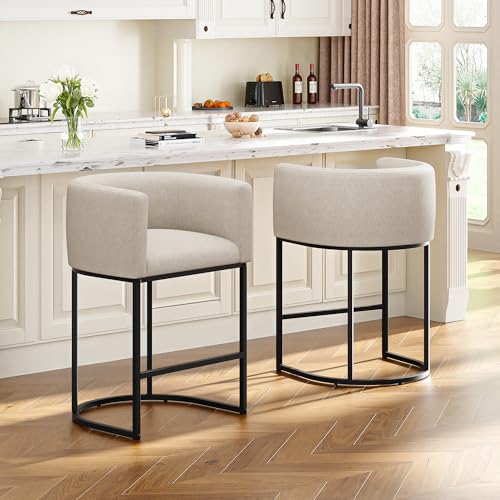
VATROS 26" H Counter Height Bar Stools Set of 2, Modern Barrel Counter Stools with Backrest and Arms, Linen Fabric Upholstered Accent Barstools for Kitchen Island,Support 450 LBS (Beige)
Check price on Amazon
GRUSIGN Bar Stools Set of 2, Modern Swivel Adjustable Bar Chairs, Faux Leather Upholstered Counter Height Bar Stools with Backrest, Comfort Barstools for Kitchen Island, Home Bar, Black
Check price on Amazon
HOOBRO Bar Stools, Set of 2 Bar Chairs, Counter Height Stools, Saddle Barstools with Curved Surface, 24.8 Inches, 2.4" Thick Upholstery, for Kitchen, Dining Room, Cafe Black BB10BY01
Check price on Amazon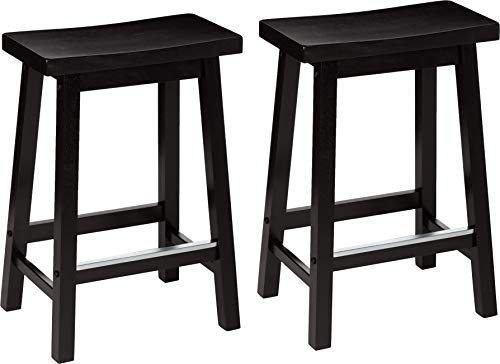
Amazon Basics Solid Wood Saddle-Seat Counter Height Bar Stools for Kitchen Island with Footrest, 24-Inch Height, Black, Set of 2
Check price on Amazon
Signature Design by Ashley Valebeck Counter Height Bar Stool, Brown | Rustic-industrial wood and metal stool, Cushioned comfort, Tailored nailhead trim, Smooth 360-degree swivel
Check price on AmazonFinal Thoughts: Buy Once, Sit Comfortably for Years
Kitchen counter stools are a long-term investment in daily comfort. Start with accurate measurements, match seat height to your counter, size the seating count to your island's width, and choose materials that suit how your household actually lives. Prioritize a proper footrest, stable construction, and a style that harmonizes with the rest of your kitchen.
With those fundamentals in place, you can compare products with confidence — knowing exactly what will work in your space and what to avoid. Explore the recommended options above, and use the linked guides throughout this page to refine your choices on related seating and layout details.