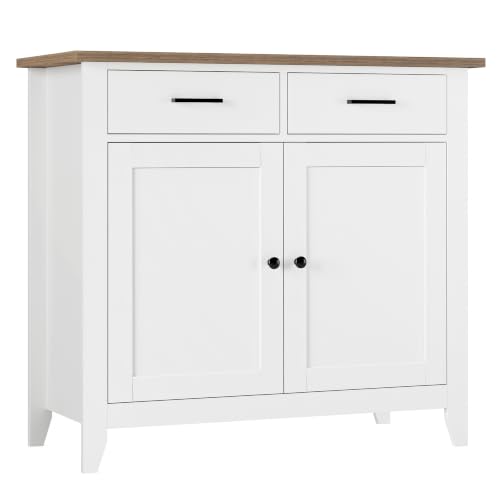
What Is a Kitchen Sideboard Cabinet?
A kitchen sideboard cabinet is a freestanding storage unit typically placed against a wall in the kitchen, dining room, or open-plan living area. Unlike built-in cabinetry, a sideboard offers flexible placement and can be moved as your layout evolves. Most models combine closed cabinet doors, drawers, and an open display surface on top — making them ideal for housing everything from serving platters and glassware to small appliances and pantry staples.
Sideboards differ from kitchen islands in that they are not designed as prep surfaces and do not require floor space in the center of the room. They are a natural complement to a kitchen island with seating, providing overflow storage for items that would otherwise clutter your countertops. If your kitchen layout centers on a kitchen table and chairs, a sideboard placed nearby keeps serving pieces within arm's reach during meals.
Key Features to Evaluate Before You Buy
Not all sideboards are built to the same standard. The following features separate a cabinet that lasts for years from one that disappoints within months. Use this checklist as your evaluation framework:
Storage Configuration
Look for a mix of adjustable shelves, deep drawers, and closed cabinets. Adjustable shelving lets you reconfigure the interior as your needs change. Drawers should glide smoothly on metal runners — ball-bearing slides are a hallmark of mid-range and premium construction.
Material & Build Quality
Solid wood frames and reinforced joinery (dovetail or mortise-and-tenon) signal long-term durability. Engineered wood with quality veneers offers a stable, well-priced alternative. Check that the back panel is attached securely and that the unit has a finished rear if it will be visible.
Top Surface
The top is a working surface, so it must resist scratches, heat, and moisture. Butcher block, stone, and sealed hardwood are excellent choices. Laminate tops are serviceable in entry-level models but are less forgiving over time.
Doors & Hardware
Soft-close hinges prevent slamming and reduce wear. Solid metal pulls and knobs outlast plastic hardware. If the sideboard includes glass doors, confirm the glass is tempered for safety.
Height & Depth
Standard sideboards stand 30–36 inches tall, matching counter height for a cohesive look. Depth typically ranges from 15–20 inches — deeper units store more but can crowd narrow walkways. Measure your space carefully before committing.
Ventilation & Cable Management
If you plan to store small appliances or electronics inside, look for ventilation gaps and pre-drilled cable cutouts. This is especially useful when the sideboard doubles as a coffee station or charging hub.
Understanding Quality Tiers
To help you compare options without relying on arbitrary figures, we classify kitchen sideboard cabinets into three broad tiers based on construction, materials, and hardware. Use this table to match your expectations with the right category:
| Tier | Typical Construction | Best For |
|---|---|---|
| Entry-Level | Engineered wood with laminate or paper veneer, basic metal hinges, plastic or lightweight metal pulls | First apartments, rentals, and occasional-use spaces where flexibility matters more than long-term durability |
| Mid-Range | Engineered wood with real wood veneer or solid wood frame, soft-close hinges, ball-bearing drawer slides, metal hardware | Family kitchens and daily-use dining areas — the sweet spot for balanced performance and longevity |
| Premium / High-End | Solid hardwood construction, dovetail joinery, premium soft-close hardware, stone or butcher-block tops, hand-finished details | Design-focused kitchens, open-plan living spaces, and buyers seeking a long-term investment piece |
As a general rule, mid-range models typically offer smoother drawer mechanisms and more consistent alignment than entry-level units, while premium sideboards add refinements such as adjustable levelers, felt-lined drawers, and hand-selected wood grain. Choose the tier that matches how intensively the cabinet will be used and how visible it will be in your home.
How to Choose the Right Size and Placement
Measure twice, buy once. Start by identifying the wall where the sideboard will live. Leave at least 36 inches of clearance in front of the cabinet so doors and drawers can open fully, and avoid blocking traffic paths between the kitchen table for small spaces and the cooking zone. In compact kitchens, a narrower sideboard (36–48 inches wide) paired with a kitchen sideboard with hutch can deliver vertical storage without consuming floor area.
For open-plan layouts, consider how the sideboard relates to your dining seating. A long, low sideboard (60–72 inches wide) works well behind a kitchen table with bench and chairs, acting as a visual anchor and a serving station during gatherings. If your dining zone is built around a kitchen nook table set, a compact sideboard placed perpendicular to the table keeps the walkway clear while providing easy access to napkins, cutlery, and centerpiece items.
Height coordination matters too. A sideboard that stands slightly lower than your kitchen island with storage and seating creates a pleasing stepped profile. If the sideboard will sit beside a kitchen island with seating and storage, align the top surfaces or keep a deliberate height difference of at least six inches for visual clarity.
Style Ideas That Work in Real Kitchens
Your sideboard should feel intentional within the room, not like an afterthought. Here are three proven approaches:
Modern farmhouse: Pair a painted sideboard with butcher-block top and matte black hardware with a modern kitchen table or a kitchen table with bench seat. Add woven baskets on open shelves and a row of ceramic crocks on top.
Warm minimalist: Choose a sideboard with flat-front doors in a warm neutral finish, then keep the top surface sparse — one vase, one lamp, and a shallow tray. This look pairs beautifully with a kitchen table for two in a compact apartment.
Classic entertaining: A sideboard with glass-front upper doors and a hutch displays stemware and serveware while keeping linens dust-free below. Place it adjacent to your kitchen table and chairs for 6 to create a buffet-style serving zone for dinner parties.
Care and Maintenance Basics
Protect your investment with simple habits. Dust the surface weekly with a soft, damp cloth and dry immediately. Use coasters under drinks and trivets under hot dishes to prevent ring marks and heat damage. For wood surfaces, apply a furniture conditioner every three to six months to maintain moisture balance. Avoid placing the sideboard in direct sunlight, which can fade finishes and warp solid wood over time. Check hinges and drawer slides annually and tighten screws as needed — a few minutes of maintenance each year adds years to the cabinet's service life.