
Kitchen Sideboard Buying Guide: Storage & Style for Your Home
Everything you need to know before choosing a kitchen sideboard — cabinet types, storage features, materials, sizing, and placement tips for a functional and beautiful dining space.
Explore Top PicksWhat Is a Kitchen Sideboard?
A kitchen sideboard is a low, freestanding storage cabinet typically placed against a wall in the kitchen, dining area, or open-plan living space. It combines cabinet doors, drawers, and sometimes open shelving to hold dinnerware, linens, serving pieces, and small appliances. Unlike a full-height pantry, a sideboard keeps items at arm's reach while doubling as a serving surface during meals and gatherings.
Many homeowners use a sideboard as a bridge between the kitchen and dining zone — a place to stage plates before serving, store table linens, or set up a coffee and tea station. If your layout leans toward a central prep and gathering area, you may also want to compare it with a kitchen island with storage and seating, which serves a similar organizational role but occupies the center of the room rather than the perimeter.
Sideboard vs. Buffet vs. Console: What's the Difference?
The terms are often used interchangeably, but subtle differences help when shopping:
- Sideboard: Lower profile (typically 30–36 inches tall), with a mix of drawers and doors. Common in kitchens and casual dining areas.
- Buffet: Often taller and deeper, designed for formal dining rooms and serving. Frequently paired with a hutch or mirror above.
- Console: Narrower and taller, usually placed in entryways or hallways. Less suited to storing heavy dinnerware.
In practice, the lines blur. A well-designed kitchen sideboard can serve as a buffet in a formal setting, and many modern pieces are marketed under both names. Focus on dimensions, storage configuration, and finish rather than the label on the box.
Types of Kitchen Sideboards
The right type depends on how much storage you need, how much floor space you have, and whether you want the sideboard to make a design statement. Here are the main categories to consider.
Standard Sideboard Cabinet
A closed cabinet with doors and drawers. The most versatile option for everyday dishware and linens. Look for adjustable shelving and soft-close hardware.
Sideboard with Hutch
Adds upper shelving or a glass-front display section above the base cabinet. Ideal for showcasing china, glassware, or decorative pieces while keeping the lower section functional. Explore kitchen sideboard with hutch options for a taller storage footprint.
Open-Shelf Sideboard
Combines closed cabinets with open shelving or cubbies. Works well for displaying cookbooks, baskets, and frequently used items, but requires more styling discipline.
Compact & Apartment Sideboard
Shallower depth and narrower width for small kitchens and apartments. Often features sliding doors or a mix of open and closed storage to maximize utility in tight spaces.
If your kitchen layout includes a dedicated cabinet run, a kitchen sideboard cabinet can be specified to match existing cabinetry for a built-in look. For open-plan homes, a freestanding piece often provides more flexibility and can be relocated as needs change.
Storage Features That Matter
A sideboard's usefulness comes down to how well its interior fits what you actually own. Before choosing, measure your largest plates, platters, and small appliances, then compare those dimensions against shelf height and cabinet depth.
Key Interior Features
- Adjustable shelving: Lets you reconfigure the interior as your storage needs change. Essential if you store both tall pitchers and stacks of plates.
- Drawer glides: Full-extension, soft-close glides make it easier to reach the back of drawers — especially useful for cutlery and linens.
- Felt-lined drawers: Protect silverware and glassware from scratches. Often found on mid-range and premium models.
- Cable management: If you plan to use the sideboard as a coffee station or charging spot, look for a back panel with a cutout or grommet.
- Ventilation: Important if you store small appliances or electronics inside. Some models include slatted backs or side vents.
For kitchens that double as entertaining spaces, consider how the sideboard works alongside other storage. A kitchen island with storage and seating ideas guide can help you coordinate the two pieces so they complement rather than compete.
Materials & Finishes
The material affects durability, maintenance, and the overall look of the piece. Here's how the main options compare:
| Material | Best For | Considerations |
|---|---|---|
| Solid wood (oak, maple, walnut) | Long-term investment; repairable and refinishable | Responds to humidity changes; use coasters and avoid direct heat |
| Engineered wood with veneer | Stable, consistent finish at a mid-tier position | Less repairable than solid wood; check edge banding quality |
| Painted MDF | Farmhouse, coastal, and transitional styles | Susceptible to chipping at edges; touch-up kits are available |
| Metal accents (steel, iron) | Industrial and modern interiors | Look for powder-coated or rust-proof finishes |
| Glass-front doors | Displaying china and glassware | Requires regular cleaning; keep contents styled |
Finish choice matters as much as material. Matte painted finishes hide fingerprints well in busy kitchens, while natural wood grain adds warmth to neutral palettes. High-gloss finishes suit contemporary spaces but show smudges more readily. For a cohesive look, coordinate the sideboard finish with your kitchen table and chairs or other nearby furniture.
Sizing & Placement
Getting the size right is the difference between a sideboard that feels integrated and one that crowds the room. Use these guidelines as a starting point:
Typical Dimensions
- Height: 30–36 inches (counter height) for serving; 36–42 inches for taller buffet-style pieces.
- Depth: 15–20 inches. Deeper models store platters more easily; shallower models suit narrow spaces.
- Width: 36–72 inches. A common rule is to leave at least 36 inches of clearance in front of the sideboard for comfortable movement.
Placement Tips
- Position the sideboard against a wall that is visible from the dining table — it becomes a visual anchor and a convenient serving station.
- Avoid blocking natural light or traffic flow between the kitchen and dining area.
- If the room is narrow, choose a shallow depth and consider a wall-mounted or floating design.
- Leave space above the sideboard for artwork, a mirror, or a hutch if you plan to add one later.
For compact kitchens, a sideboard can replace a dedicated pantry or extend the functionality of a kitchen nook table set. In open-plan layouts, it often defines the boundary between cooking and dining zones.
Ready to Compare Sideboard Options?
Browse our curated selection of kitchen sideboards and find the right fit for your space and storage needs.
View Recommended SideboardsStyle & Design Considerations
A sideboard is a functional piece, but it also contributes to the room's visual character. Consider how it will interact with the rest of your dining and kitchen design.
Matching Your Interior
- Modern minimalist: Clean lines, handleless doors, matte finishes, and a low profile.
- Farmhouse & rustic: Painted or distressed finishes, beadboard panels, and cup pulls.
- Industrial: Metal frames, exposed hardware, and wood-and-metal combinations.
- Transitional: Shaker doors, neutral finishes, and classic hardware that bridges traditional and modern.
Hardware & Details
Hardware is an easy way to personalize a sideboard. Knobs suit traditional and farmhouse styles, while bar pulls and edge pulls lean contemporary. Soft-close hinges and full-extension drawer glides are worth prioritizing — they improve daily use and reduce wear over time.
If your dining area already has strong design elements, such as a kitchen table chandelier, keep the sideboard relatively simple so the room feels balanced. Conversely, a plain sideboard can support a more expressive light fixture or artwork above it.
Understanding Quality Tiers
Kitchen sideboards fall into broad quality tiers based on materials, joinery, hardware, and finish. Use these descriptors to compare options without relying on numeric figures:
| Tier | Typical Characteristics | Best For |
|---|---|---|
| Entry-level | Engineered wood, basic hardware, limited adjustability | Starter homes, rentals, temporary setups |
| Mid-range | Veneer or painted MDF, soft-close hinges, adjustable shelves | Everyday family use and balanced durability |
| Premium | Solid wood construction, full-extension glides, felt-lined drawers | Long-term use and frequent entertaining |
| Luxury | Hardwood, dovetail joinery, custom finishes, designer hardware | High-end interiors and investment pieces |
Within each tier, look for details that signal solid build: dovetail or doweled drawer joints, reinforced corner blocks, and hardware that feels substantial. A mid-range piece with good joinery often outperforms an entry-level model with decorative features but weaker construction.
Before You Buy: A Practical Checklist
- Measure the space: Width, depth, and height of the intended wall, plus clearance for doors and drawers to open fully.
- Check delivery paths: Confirm the sideboard fits through doorways, hallways, and stairwells.
- List what you'll store: Plates, platters, linens, small appliances, or a mix. Match shelf heights and drawer depths accordingly.
- Decide on open vs. closed storage: Open shelving displays beautifully but demands tidiness; closed cabinets hide clutter.
- Consider assembly: Some models arrive flat-packed. Check whether assembly is required and what tools are needed.
- Review the finish: Matte and textured finishes hide fingerprints better in busy kitchens than high-gloss surfaces.
- Plan for the long term: A solid build with replaceable hardware is a worthwhile investment that can adapt as your needs change.
Recommended Kitchen Sideboards & Storage Cabinets
⚠️ AFFILIATE DISCLOSURE: This website contains affiliate links. As an affiliate Associate, we earn from qualifying purchases. If you make a purchase through these links, we may receive a small commission at no additional cost to you. Read our full affiliate policy.

usikey 55" Buffet Cabinet with Storage and Drawers, Large Sideboard Buffet Cabinet with Adjustable Shelves and Doors, Modern Coffee Bar for Kitchen, Living Room, White
Check price on Amazon
HOSTACK 60" W Sideboard Buffet Cabinet with Storage, Kitchen Cabinet, White | 36 Tall Kitchen Buffet Storage Cabinet with 4 Drawer, Large Coffee Bar Cabinet, Modern Buffet Table for Dining Living Room
Check price on Amazon
HOSTACK Kitchen Buffet Cabinet with Storage, Sideboard Coffee Bar, White | Farmhouse Kitchen Storage Cabinet with 3 Drawers & Adjustable Shelf & Doors, 42.5"W Buffet Table for Dining Living Room
Check price on Amazon
Homhedy Coffee Bar Storage Cabinet with Drawers, Kitchen Buffet Cabinet | Sideboard Cabinet with Doors, Farmhouse Buffet Cabinet, Adjustable Shelves, for Kitchen / Dining / Living Room, White
Check price on Amazon
HOSTACK Kitchen Buffet Sideboard Storage Cabinet, Coffee Bar Cabinet, White | 55"W Farmhouse Kitchen Cabinet with Doors and Adjustable Shelves, Buffet Cabinet with 3 Drawers for Entryway Living Room
Check price on Amazon
knoworld Sideboard Buffet Cabinet with Storage & Shelves, Farmhouse Kitchen Storage Cabinet Wood Coffee Bar Sideboard Cabinet with 4 Doors for Kitchen, Living Room, Entryway, 47" W White
Check price on Amazon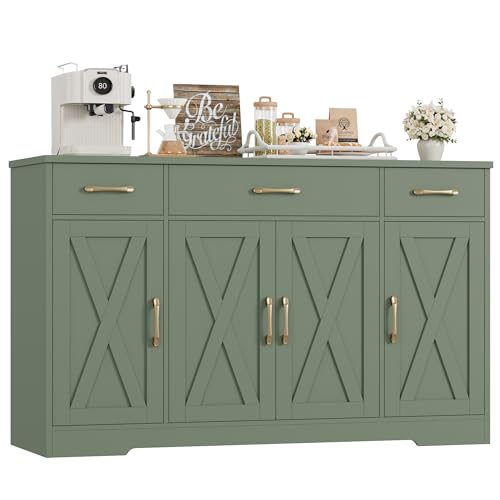
HOSTACK Kitchen Buffet Sideboard Storage Cabinet, Coffee Bar Cabinet, Green | 55"W Farmhouse Kitchen Cabinet with Doors and Adjustable Shelves, Buffet Cabinet with 3 Drawers for Entryway Living Room
Check price on Amazon
SWTYMIKI Coffee Bar Cabinet for Home - Farmhouse Coffee Stand Station Multi-Purpose Buffet Sideboard Cabinet with Drawers - Kitchen Bar Table for Living Room, Corner, Small Space, Espresso
Check price on AmazonFrequently Asked Questions
What is the difference between a kitchen sideboard and a buffet?
A kitchen sideboard typically features a lower profile with a mix of drawers and cabinet doors, designed for everyday storage near the kitchen or dining area. A buffet is generally taller and deeper, often positioned in a formal dining room for serving and displaying dishware. In practice, the terms overlap considerably, and many modern pieces serve both roles.
How deep should a kitchen sideboard be?
Most kitchen sideboards range from 15 to 20 inches in depth. Deeper cabinets (around 20 inches) accommodate dinner plates and serving platters with ease, while shallower models (15 to 17 inches) suit narrow corridors and compact dining areas where floor space is limited.
Can a kitchen sideboard be used in a small apartment?
Yes. A compact sideboard with adjustable shelving and a shallow footprint works well in apartments. Look for models with closed storage to keep clutter out of sight, and consider a wall-mounted or floating design if floor space is especially tight. A narrow sideboard can also double as a coffee station or entryway console.
What materials are best for a kitchen sideboard?
Solid wood offers durability and repairability, making it a long-term investment. Engineered wood with veneer provides a stable, consistent finish at a mid-tier position. Metal and glass accents add contemporary style, while painted finishes suit farmhouse and coastal interiors. Consider humidity levels in your kitchen before choosing solid wood.
Continue Exploring
Once your sideboard is in place, the next step is tying the room together. Pair it with a kitchen table centrepiece to add a focal point, or browse kitchen stools if your layout includes a counter or island. For open-plan homes, a kitchen island with seating and storage can extend the storage and gathering capacity of your sideboard.