
Kitchenette Table and Chairs: The Complete Buyer's Guide
Small kitchens deserve more than leftover corners. A well-chosen kitchenette table and chairs turns a tight footprint into the most-used seat in the house — a spot for quick breakfasts, homework sessions, and late-night conversations. This guide walks you through sizing, materials, seating layouts, and the practical details that separate a cramped compromise from a genuinely comfortable everyday setup.
Explore Recommended SetsWhy this guide matters: Buyers researching a kitchenette set usually already know they need something compact — what they lack is a clear framework for judging fit, durability, and long-term comfort. Below you will find the measurements, material comparisons, and configuration strategies that professional space planners use, so you can choose with confidence rather than guesswork.
What Qualifies as a Kitchenette Table and Chairs Set?
A kitchenette is a compact cooking and eating zone — often carved out of a studio apartment, a guest suite, a basement, or a secondary kitchen in a larger home. The furniture designed for it is intentionally scaled down, but "small" does not mean flimsy. A proper kitchenette set balances three priorities: a footprint that respects tight clearances, a seat height that supports real meals rather than occasional perching, and a surface that stands up to daily food preparation and cleanup.
Most kitchenette sets fall into one of three structural families. Bistro-style sets pair a round or square table with two to four slat-back or bentwood chairs. Drop-leaf and butterfly-leaf designs fold down to a narrow profile when not in use, then open to seat extra guests. Nook configurations integrate a bench or banquette against a wall to maximize usable seating along the perimeter. Each family has a distinct set of trade-offs, and the right answer depends on how often you eat at the table and how much floor area you can realistically give up.
If your space sits between a true kitchenette and a full breakfast area, it is worth cross-referencing a broader set of kitchen table and chairs options before committing to a compact footprint. Similarly, if the eating zone doubles as a prep area, a kitchen island table can merge the two functions into a single piece.
- Two-seat bistro sets — the tightest footprint, ideal for one or two residents and short mealtimes.
- Drop-leaf and butterfly-leaf tables — compact when closed, expandable when guests arrive.
- Corner nook configurations — bench seating against a wall frees up center-floor space.
- Round pedestal tables — no sharp corners, chairs tuck in at any angle, easy circulation.
- Rectangular compact sets — predictable wall alignment and efficient use of a narrow galley layout.
Sizing Your Kitchenette Set: The Numbers That Matter
Measurement mistakes are the single most common reason a kitchenette set feels wrong after delivery. Before browsing styles, map the room. Standard dining clearance guidance calls for at least 36 inches between the table edge and the nearest wall or obstacle, which allows a chair to pull out and a person to pass behind it. In very tight rooms, 30 inches can work for a fixed bench side, but never compromise the pull-out side — that is the seat people will avoid using if it feels cramped.
For the table itself, a round top of roughly 30 inches in diameter seats two comfortably, while 36 inches seats two generously or three tightly. A 42-inch round table seats four, and a 48-inch round table seats four with room for serving dishes. Rectangular tables follow a different logic: allow about 24 inches of width per seated person along the long edge. A 24-by-36-inch rectangle is a true two-person table, while 30-by-48 inches seats four without elbow collisions.
Seat height deserves equal attention. Standard dining tables sit at 28 to 30 inches with chairs at 17 to 19 inches. Counter-height sets run 34 to 36 inches with seats at 24 to 26 inches, and bar-height sets reach 40 to 42 inches with seats at 28 to 30 inches. Mixing heights is a common error — a counter-height stool pushed up to a standard table leaves knees jammed against the apron. If you plan to add stools later, review kitchen island with stools configurations to understand how counter-height seating is typically proportioned.
Materials: Matching Surface to Daily Reality
Kitchenette tables live harder lives than formal dining tables. They host spilled cereal, hot pans set down in a hurry, craft projects, and laptops. The right material is the one that tolerates that reality without demanding constant maintenance.
Solid wood — oak, maple, rubberwood, and pine — offers warmth, repairability, and a surface that ages gracefully. It is the top-tier choice for households that want a long-term investment and are willing to re-oil or re-seal occasionally. Rubberwood is the workhorse of the category: dense, stable, and well-specified for everyday kitchen use.
Laminate and engineered wood deliver a stable, wipe-clean surface at an entry-level to mid-range position in the market. Modern laminate resists staining and scratching far better than older generations, and it handles moisture without swelling the way unsealed solid wood can. This is the practical pick for rental units and busy family kitchens.
Metal and glass round out the options. Powder-coated steel bases with glass or composite tops suit industrial and modern interiors, and a glass top visually lightens a small room by letting light pass through. Metal frames are typically heavy-duty and rust-resistant when finished properly, though glass requires more frequent polishing to stay streak-free.
Chair construction matters just as much as the table. Look for mortise-and-tenon or reinforced screw joinery rather than staples alone, and check that leg glides are replaceable. Upholstered seats add comfort but collect crumbs — a removable or wipeable cover is a meaningful upgrade in a kitchen environment.
Comparing Kitchenette Set Tiers
Rather than sorting options by any single number, it helps to think in quality tiers. The table below maps each tier to its typical construction characteristics and the buyer it suits best.
| Tier | Typical Construction | Best For |
|---|---|---|
| Entry-level | Engineered wood with laminate surface; screw-and-bracket joinery; basic powder-coated steel legs | Rentals, starter apartments, occasional-use guest kitchenettes |
| Mid-range | Rubberwood or mixed hardwood solids; reinforced joinery; replaceable glides; stain-resistant finish | Everyday family kitchens, breakfast nooks used multiple times daily |
| Premium | Solid oak, maple, or walnut; mortise-and-tenon joints; hand-finished surfaces; heavy-duty hardware | Long-term primary residences, design-forward compact dining zones |
| Luxury | Select hardwood or stone tops; custom joinery; premium upholstery on seating; commercial-grade finishes | Statement kitchenettes where furniture is a visible design feature |
As a rule, moving up a tier buys smoother mechanisms, tighter joinery, and better surface finishes rather than dramatically different dimensions. A mid-range set is usually the sweet spot for households that eat at the table every day but do not need heirloom construction.
Seating Layouts That Actually Work in Small Rooms
The shape of your seating arrangement often matters more than the table itself. In a narrow galley kitchen, a rectangular table pushed against one wall with chairs on the open side and a bench on the wall side maximizes both seating and circulation. In a square corner, a round table with three chairs placed at 120-degree intervals feels more generous than a rectangle of identical area.
Bench seating is the quiet hero of kitchenette design. A built-in or freestanding bench eliminates the pull-out requirement on one side, letting you push the table much closer to the wall. If you are exploring this route, the kitchen nook bench overview covers depth, backrest height, and storage-under-seat options in detail. For homes that want a fully integrated seating wall, an L-shaped bench wraps two sides of the table and can seat four to six people in the same floor area that would hold two conventional chairs.
Drop-leaf tables deserve a specific mention. A kitchen table with leaf stays narrow against a wall for daily use, then opens into a full dining surface when guests arrive. Butterfly-leaf mechanisms fold from the center and store the leaf inside the table, which is the cleanest solution for rooms with no closet space. If you host regularly in a compact footprint, a kitchen table with butterfly leaf and chairs set packages the mechanism with matching seating so proportions are already resolved.
Layout Checklist Before You Order
- Measure the wall length where the table will sit
- Confirm 36 inches of clearance on all pull-out sides
- Check doorway swing and appliance clearance paths
- Verify seat height matches table apron height
- Decide whether one side can be fixed bench seating
- Confirm the table fits through entry doors and stairwells
- Plan for at least two extra inches of table overhang for knee room
Style Directions for Compact Kitchens
Style choices in a kitchenette carry outsized visual weight because the room is small — every finish is seen up close. Three directions dominate contemporary compact kitchens, and each pairs naturally with specific materials.
Modern minimalist favors slim-profile tables with tapered legs, matte finishes, and chairs with clean silhouettes. Light oak, white laminate, and brushed metal keep the room feeling open. A modern kitchen table in this vein typically uses a pedestal or trestle base to keep legroom unobstructed.
Farmhouse and rustic leans on warm wood tones, turned legs, and bench seating. This direction suits kitchenettes with exposed beams or painted cabinetry, and it tolerates wear gracefully because visible grain and texture hide minor scratches.
Industrial and bistro pairs metal frames with wood or composite tops. Bistro-style two-seat sets are the classic expression of this look, and they remain one of the most space-efficient configurations available for a genuine kitchenette.
If you are furnishing a compact apartment rather than a dedicated kitchenette, the kitchen table and chairs for small apartment guide expands on multifunction layouts where the table doubles as a workspace.
Recommended Kitchenette Table and Chairs Sets
⚠️ AFFILIATE DISCLOSURE: This website contains affiliate links. As an affiliate Associate, we earn from qualifying purchases. If you make a purchase through these links, we may receive a small commission at no additional cost to you. Read our full affiliate policy.

Azomabox Dining Table Set for 4, 3-Piece Kitchen Table with 2 Benches, Grey | Modern Dining Table Set for Space-Saving, Apartment, Breakfast Nook, Samll Space, Kitchen, Easy Assembly
Check price on Amazon
Best Choice Products 3-Piece Dining Set W/ Storage Rack - Med Brown/Black | Modern space saving steel frame dinette built for kitchens, dining rooms & small spaces
Check price on Amazon
JUMMICO 3-Piece Wooden Round Table & Chair Set (Walnut/Black) | Kitchen Breakfast Nook Wood Grain Tabletop with Metal Frame and Built-in Wine Rack for Kitchen, Dining Room
Check price on Amazon
Dining Table Set for 4,Kitchen Table and Chairs for 4, Round Dining Room Table with Upholstered Chairs, 5 Piece Space Saving Circle Wood Kitchen & Dining Room Dinner Dinette Table Set (Vintage, 42In)
Check price on Amazon
LUXOAK 3-Piece Wood Corner Dining Table Set for 4, Black & Walnut | Breakfast Nook, L-Shaped Corner Bench, Hidden Storage, Space-Saving Design for Small Spaces, Farmhouse Kitchen & Dining
Check price on Amazon
IRONCK Dining Table Set for 4, Grey | Wood Kitchen Table with Upholstered Chairs for Kitchen Room and Small Spaces
Check price on Amazon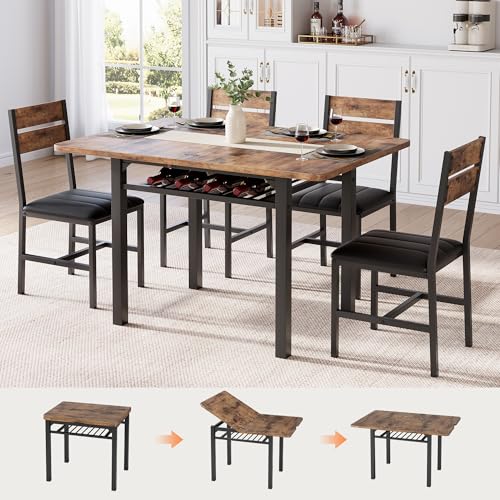
MapleGrace Extendable Dining Table Set for 4 with Built-in Shelf Rack Brown | Kitchen Table Set with 4 PU Leather Upholstered, Wood Dining Room Chairs for Dining & Small Spaces
Check price on Amazon
IRONCK Dining Table Set for 4, Kitchen Table and Chairs Set, Rustic Brown | Kitchen Table with Upholstered Bench and 2 Chairs for Small Space, Apartment
Check price on AmazonCommon Buying Mistakes to Avoid
Even well-informed buyers trip over a handful of recurring issues. The most frequent is underestimating chair pull-out space — a table that fits the wall perfectly but leaves no room to slide a chair back becomes a table nobody wants to sit at. The second is choosing a table height that conflicts with existing seating or planned stools. The third is overlooking tabletop overhang: a table with a deep apron and minimal overhang forces knees against the frame.
A fourth mistake is buying a set without confirming the chairs can be reupholstered or replaced individually. Kitchenette chairs take heavy use, and the ability to swap a worn seat cushion or replace one broken chair extends the life of the entire set considerably. Finally, verify that the table can physically enter the room. Narrow stairwells and tight doorways have ended more furniture purchases than any style disagreement.
Frequently Asked Questions
What size kitchenette table fits a small space?
A two-seat kitchenette table typically measures around 30 inches in diameter or 24 by 36 inches for a rectangular model. For four seats, look for a table between 36 and 48 inches wide. Always leave at least 36 inches of clearance around the table for chair pull-out and walkway space.
What is the best material for a kitchenette table and chairs?
Solid wood offers warmth and long-term durability, while laminate and engineered wood deliver a stable, easy-clean surface for everyday use. Metal bases suit industrial and modern interiors, and glass tops create a visual sense of openness in compact rooms.
How many chairs fit around a round kitchenette table?
A round table measuring 36 inches in diameter comfortably seats two to three people, while a 42 to 48 inch round table seats four. Round shapes are especially efficient in corners because they eliminate sharp edges and allow chairs to tuck in at an angle.
Should I choose a folding or extendable kitchenette table?
A drop-leaf or butterfly-leaf design is ideal if you need a compact footprint most of the time but occasionally host extra guests. Fixed tables offer greater stability and are simpler to maintain, making them a solid choice for households that rarely need extra seating.
How do I match kitchenette chairs to an existing table?
Coordinate by material family and finish tone rather than requiring an exact match. Pair a wood table with chairs in a complementary wood tone, or introduce upholstered or metal chairs to create contrast. Keep seat height aligned with table height so knees clear the apron comfortably.
Final Thoughts
The best kitchenette table and chairs set is not the smallest one you can find — it is the one that fits your actual daily routine with enough breathing room to feel comfortable. Start with measurements, choose a tier that matches how hard the furniture will work, and let style follow function. A compact set that clears properly, seats the right number of people, and survives everyday use will earn its place as the most practical corner of the home.
If your layout is still undecided between a standalone set and an integrated island configuration, comparing kitchen tables and chairs options alongside kitchen island with seating layouts is the fastest way to see which approach suits your floor plan. And for households that want the full package — table, bench, and coordinated seating — a kitchen nook table set removes the guesswork entirely.