
L Shaped Bench: The Complete Buying Guide for Dining Room & Kitchen Seating
Discover how an L shaped bench can transform an awkward corner into the most inviting seat in your home. From dining room banquettes to compact breakfast nooks, learn what to look for before you buy.
EXPLORE RECOMMENDED OPTIONSWhy an L shaped bench deserves your attention: Corners are the most underused real estate in any dining room or kitchen. An L shaped bench turns that dead space into comfortable, continuous seating while freeing up the rest of the room for a table, traffic flow, and storage. Whether you are planning a cozy breakfast nook or a full dining room banquette, this guide walks you through every decision point.
What Exactly Is an L Shaped Bench?
An L shaped bench is a corner seating unit built in two connected sections that meet at a right angle. Instead of individual chairs pushed against two walls, a single continuous bench wraps around the corner, creating a built-in look and a naturally social seating arrangement. You will most often see this configuration in dining nooks, kitchen banquettes, and breakfast areas where space is limited but comfort still matters.
The concept is simple, but the variations are extensive. You can choose a freestanding L shaped bench that sits against the wall without installation, or a built-in banquette that is anchored to the walls or floor. Some designs include a high back for privacy and support, while others are backless to keep sightlines open in small spaces. Many models incorporate storage underneath, either as lift-up seat lids, pull-out drawers, or open cubbies.
If you are exploring the broader category of corner seating, it helps to understand how an L shaped bench relates to similar products. A related option is the l shaped banquette, which typically refers to upholstered corner seating built for dining rooms. For kitchens specifically, a dedicated l shaped breakfast nook bench is designed to pair with a compact table in a tight corner. And if you want to combine seating with storage, the l shaped storage bench is worth a closer look. For dining rooms where the bench is part of a larger furniture arrangement, see the l shaped dining bench guide.
Key Benefits of Choosing an L Shaped Bench
Before you start comparing materials and dimensions, it helps to be clear about what an L shaped bench actually does for a room. The benefits fall into three main categories: space efficiency, seating comfort, and design cohesion.
Space Efficiency
By using the corner, an L shaped bench seats more people per square foot than individual chairs. You eliminate the wasted gap between chairs and walls, and you gain usable floor space for the table and walkways.
Continuous Comfort
A single upholstered bench distributes weight evenly and provides cushioned support along the entire length. For long meals and gatherings, this is noticeably more comfortable than a row of mismatched chairs.
Built-In Aesthetic
An L shaped bench creates a deliberate, integrated look. The corner feels intentional rather than empty, and the bench can be styled as a focal point with cushions, throws, and a coordinating table.
Hidden Storage
Many L shaped benches include storage under the seat, which is especially valuable in small kitchens and apartments. You can tuck away table linens, board games, or serving pieces without losing floor space.
Social Seating
Bench seating encourages people to sit closer together and face one another. It naturally supports conversation and makes family meals and casual entertaining feel more intimate.
Design Flexibility
L shaped benches are available in modern, farmhouse, industrial, and coastal styles. With the right upholstery and finish, they can blend into almost any interior.
Types and Configurations of L Shaped Benches
Not all corner benches are built the same way. The configuration you choose should match your room's layout, your intended use, and whether you plan to keep the bench permanently or move it between homes.
Freestanding vs. Built-In
A freestanding L shaped bench is a self-contained piece of furniture with its own frame and back. It can be placed against a corner and moved later, which makes it ideal for renters and for rooms where the layout might change. A built-in banquette is anchored to the walls and often constructed by a carpenter; it offers a seamless look and can be tailored exactly to the space, but it is permanent.
With or Without Storage
Storage is one of the most practical decisions. Lift-up seat lids are common and provide generous capacity. Drawers are easier to access in tight corners but reduce the storage volume. Open cubbies are the simplest option and work well for baskets and shoes. If storage is a priority, start with the l shaped storage bench category and compare the access method before committing.
Backed vs. Backless
A backed bench provides support for long sitting sessions and can define the nook visually. A backless bench keeps the room feeling open and is easier to slide in and out of. In very small kitchens, backless is often the more practical choice because it does not add visual bulk.
Upholstered vs. Wooden
Upholstered benches are more comfortable and can be customized with performance fabrics. Wooden benches are easier to clean, more durable in high-traffic households, and suit farmhouse and industrial interiors. Many designs combine a wooden frame with an upholstered seat for a balance of both.
If your project is part of a larger kitchen remodeling plan, it is worth reviewing the kitchen nook bench and kitchen nook benches guides alongside this page. Those articles cover how the bench integrates with the table, lighting, and surrounding storage.
Materials That Matter: Frame, Upholstery, and Finish
The material choices on an L shaped bench determine how long it lasts, how comfortable it stays, and how easy it is to maintain. Pay attention to three layers: the frame, the cushion, and the surface finish.
Frame Construction
Solid hardwood frames are the most durable and resist warping over time. Engineered wood and plywood are common in mid-range benches and are perfectly serviceable when properly reinforced. Look for corner blocks, glued and screwed joints, and a frame that does not flex when you press on the seat. For high-traffic family kitchens, a heavy-duty frame is a worthwhile investment.
Upholstery and Cushioning
Performance fabrics are a smart choice for dining areas because they resist stains and clean easily. Leather and leather-alternative upholstery are durable and develop a patina over time. Foam density matters for comfort: high-density foam holds its shape longer than low-density foam, which tends to compress in the seat area within a few years.
Finish and Edge Details
On wooden benches, look for a sealed, water-resistant finish that can handle occasional spills. Rounded edges are safer in households with children. If the bench sits near a window, choose a finish with UV resistance to slow fading.
How to Measure and Choose the Right Size
Size is the single most common source of disappointment with corner benches. A bench that is too deep crowds the table, and one that is too tall pushes your knees into the tabletop. Use these guidelines as a starting point, then verify against your actual table and room.
Measurement Checklist
- Measure both corner walls from the corner to the nearest obstruction, such as a doorway, window trim, or appliance. Subtract 2-3 inches for clearance.
- Account for baseboards and trim. If your walls have thick trim, the bench back may not sit flush. Choose a design with a cut-out or measure the usable wall length above the trim.
- Seat height: aim for 17-19 inches from the floor to the top of the seat for standard dining tables. For counter-height setups, look for 24-26 inches.
- Seat depth: 18-20 inches is comfortable for most adults. Deeper seats are lounge-style and work better with lower tables.
- Table clearance: leave 12-18 inches between the bench front edge and the table edge for legroom and getting in and out.
- Check window and outlet locations so the bench back does not block access or sit in front of a radiator.
- Plan the walkway: maintain at least 30-36 inches of clearance on the open side of the table for chairs and traffic.
If the space is genuinely tight, a compact table is just as important as the bench. The kitchen table for small spaces and kitchen tables for small spaces guides pair well with an L shaped bench. For a dedicated nook, the kitchen nook table and kitchen nook table set pages show how the table and bench work together dimensionally.
Comparing L Shaped Bench Tiers
L shaped benches fall into a few broad market tiers. The table below uses a consistent tier classification so you can compare construction quality and intended use without getting lost in product listings.
| Tier | Best For | Typical Construction | What to Expect |
|---|---|---|---|
| Entry-Level | First apartments, occasional use, renters | Engineered wood frame, basic foam, simple fabric | Lightweight and easy to assemble; adequate for casual meals and short-term use |
| Mid-Range | Family kitchens, daily dining, breakfast nooks | Hardwood or reinforced engineered frame, higher-density foam, performance fabric | Better joint construction, more comfortable cushioning, and a wider choice of finishes and storage options |
| Premium | Main dining rooms, frequent entertaining | Solid hardwood frame, high-resilience foam, premium upholstery | Refined detailing, durable materials, and a bench that holds its shape and finish over years of use |
| Luxury | Custom dining rooms, design-led interiors | Custom joinery, tailored upholstery, designer finishes | Made-to-measure fit, exceptional comfort, and a statement piece that anchors the room |
A general rule: mid-range benches usually offer the best balance of durability and comfort for daily family use, while entry-level models make sense for short-term rentals or low-traffic corners. Premium and luxury tiers are long-term investments for rooms where the bench is a permanent fixture.
Style, Upholstery, and Design Ideas
An L shaped bench is large enough to define the visual character of the room, so it is worth choosing a style deliberately. Farmhouse benches often pair a painted wooden frame with a neutral cushion and beadboard back. Industrial designs use metal frames and distressed wood. Modern and minimalist versions favor clean lines, low backs, and neutral performance fabrics. Coastal interiors lean toward light woods and linen-textured upholstery.
Colour choice matters as much as shape. A bench upholstered in a mid-tone neutral creates a calm foundation and lets the table and lighting stand out. A deeper tone, such as charcoal, navy, or forest green, adds definition in a bright room and hides wear better in high-traffic areas. Patterned fabrics can work in smaller nooks, but keep the pattern scale proportionate to the seat area.
When the bench is part of a bigger kitchen project, coordinating it with the island or side storage helps the room feel intentional. The kitchen island with seating and kitchen sideboard guides show how seating and storage can be layered in the same space.
Placement, Installation, and Common Mistakes
Even a well-chosen L shaped bench can feel wrong if it is placed poorly. The most common mistakes are placing the bench under a window that opens outward, blocking a heating vent, or pushing the bench so far into the corner that the cushions cannot be removed. Before installation, dry-fit the bench with painter's tape on the floor and check how the table and chairs will sit relative to it.
Installation Considerations
- Freestanding: assemble according to the manufacturer's instructions, then anchor the bench to the wall if the hardware is provided. Anchoring prevents tipping and keeps the bench from shifting during meals.
- Built-in: work with a carpenter to scribe the bench to uneven walls. Built-ins should be fixed securely and finished to match the surrounding trim.
- Storage access: confirm that lift-up lids can open fully without hitting a window sill or pendant light.
- Ventilation: avoid blocking HVAC vents. If a vent is unavoidable, choose a bench with a raised base so air can circulate.
What About the Chairs?
An L shaped bench usually works best with a pair of chairs or a second bench on the open side. Ladder-back chairs are a classic pairing because they are lightweight and visually unobtrusive. If you want a coordinated set, the ladder back chairs guide covers proportion and finish matching.
Care and Maintenance for Long-Term Use
An L shaped bench takes daily wear, especially at the seat edge where people slide in and out. Basic care will keep it looking good and extend its life.
- Vacuum upholstery weekly with a soft brush attachment to lift crumbs and dust from seams.
- Blot spills immediately rather than rubbing, which pushes liquid deeper into the foam.
- Rotate cushions if possible to distribute wear evenly across the seat.
- Treat wooden frames with a wood conditioner every few months, especially in dry climates.
- Tighten hardware annually, as joints can loosen with repeated use.
- Protect from direct sun to slow fabric fading and wood discoloration.
If the bench sits in a kitchen, wipe down the surrounding surface regularly and keep the bench a reasonable distance from the cooking zone to reduce grease and steam exposure.
Recommended L Shaped Benches & Corner Seating
⚠️ AFFILIATE DISCLOSURE: This website contains affiliate links. As an affiliate Associate, we earn from qualifying purchases. If you make a purchase through these links, we may receive a small commission at no additional cost to you. Read our full affiliate policy.

NDOHCUO Breakfast Nook Bench, L Shaped Storage Bench with Cushion, Natural | Fluted Kitchen Corner Dining Bench with Hidden Storage for Dining Room, Entryway, Cloakroom
Check price on Amazon
NDOHCUO Breakfast Nook Bench, L Shaped Storage Bench with Cushion, White | Farmhouse Kitchen Corner Dining Bench with Hidden Storage for Dining Room, Entryway, Cloakroom
Check price on Amazon
YUUIJOAA L Shaped Bench with Storage, 63" Breakfast Nook Benches, Wood Kitchen Corner Dining Bench Seating for Entryway Dining Room, Kitchen, Oak and White
Check price on Amazon
Tribesigns L-Shaped Storage Bench with Cushion, 48" Farmhouse Corner Bench for Kitchen Nook, Breakfast Nook, Dining Room, Entryway, Indoor Bench with Seat Cushion
Check price on Amazon
TAMUNE L Shaped Breakfast Nook Bench with Hidden Storage, 63 Inch Corner Dining Bench for Small Kitchen, Breakfast Nook for Dining Room, Entryway, Oak 63”L x 63”W x 17.7”H
Check price on Amazon
Hzuaneri 63 in Breakfast Nook Bench with Storage, L Shaped Storage Bench | Wooden Corner Dining Bench, 145Gal, Free Combination for Entryway, Dining Room, Cloakroom, SB15314X
Check price on Amazon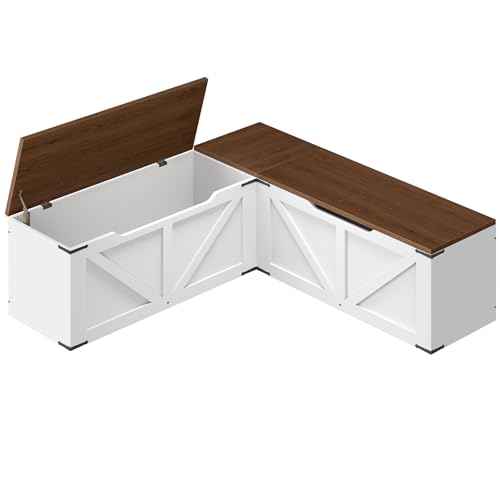
YATINEY L-Shaped Storage Bench, Storage Toy Chest with Hidden Compartments, Breakfast Nook Bench for Corner Spaces, Kitchen, Dining Room, Cloakroom, Walnut and White CW01WH
Check price on AmazonFinal Buying Checklist
Before You Add to Cart
- Confirm the bench dimensions against your measured corner, including trim and baseboard clearance.
- Check the seat height against your table height (standard dining table is about 30 inches high).
- Decide whether storage is essential or optional for your space.
- Choose an upholstery material that matches your household: performance fabric for kids and pets, leather for easy cleaning.
- Verify the assembly requirements and whether wall anchoring hardware is included.
- Read reviews specifically about frame sturdiness and cushion durability.
- Plan how the bench will coordinate with the table, chairs, and lighting in the room.
Once the bench is in place, the finishing touches make the biggest difference. Cushions along the back, a coordinating table runner, and a pendant light centered over the nook complete the look. If you are still deciding on the table, the kitchen tables with bench and kitchen table with bench seat pages offer layout examples that pair naturally with an L shaped bench.
Frequently Asked Questions
What is an L shaped bench used for?
What are the benefits of an L shaped bench over individual chairs?
How do I measure for an L shaped bench?
Can an L shaped bench fit in a small kitchen?
What materials are best for an L shaped bench?
Should I choose a freestanding or built-in bench?
Ready to choose? Browse the recommended L shaped benches above, compare the tier descriptions with your room's needs, and use the checklist before you commit. A well-chosen corner bench can turn an unused corner into the most-used seat in the house.