
Kitchen Tables with Bench: The Complete Buying & Design Guide
Bench seating is one of the smartest ways to fit more people around a kitchen table without crowding the room. Here is everything you need to know about choosing, styling, and living with a kitchen table with bench.
Explore Bench TablesWhy bench seating works: A kitchen table with a bench is a space-efficient, family-friendly choice that turns an ordinary breakfast spot into a welcoming gathering place. Benches tuck neatly under the table, sit flush against a wall or window, and let you seat more people in the same footprint than chairs alone. This guide walks you through the practical decisions so you can buy with confidence.
Recommended Kitchen Tables with Bench
⚠️ AFFILIATE DISCLOSURE: This website contains affiliate links. As an affiliate Associate, we earn from qualifying purchases. If you make a purchase through these links, we may receive a small commission at no additional cost to you. Read our full affiliate policy.

HUAHUU 63" Farmhouse Dining Table Set for 4-6, Kitchen Table with 2 Benches, Space Saving 3-Piece Rectangle Wooden Dinette Table Set for Dining Room, Breakfast Nook, Small Space, Brown & White
Check price on Amazon
LUXOAK 3-Piece Wood Corner Dining Table Set for 4, Black & Walnut | Breakfast Nook, L-Shaped Corner Bench, Hidden Storage, Space-Saving Design for Small Spaces, Farmhouse Kitchen & Dining
Check price on Amazon
Feonase 5-Piece Dining Table Set for 4-8 People, 63" Large Extendable Kitchen Table Set with 2 Benches and 2 Square Stools, Dining Room Table with MDF Wood Board, Easy Assembly, Black
Check price on Amazon
VECELO 43.3" Kitchen Dining Table Set for 4, Heavy-Duty Steel Frame & Wood-Grain Tabletop, Space-Saving Dinette Sets with 2 Benches for Breakfast Nook and Small Space, Walnut Brown
Check price on Amazon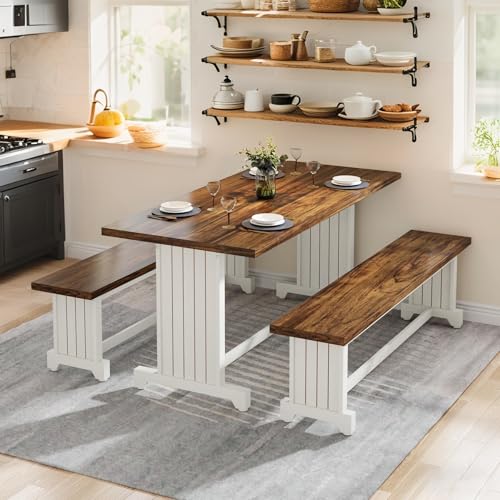
Tribesigns 47-Inch Small Dining Table Set for 2, 3-Piece Kitchen Table with 2 Benches, Farmhouse Wood Dinner Furniture for Narrow Space, Apartment, White & Rustic Brown
Check price on Amazon
XIAO WEI 72" Corner Dining Table Set for Small Spaces, Modern Grey | Modern Marble Style, L-Shaped Design, Stable Structure, Storage Banquette, Thick Tabletop & Cushion, Seats 4-6, 3 Packages
Check price on Amazon
AMERLIFE 6 Piece Farmhouse Dining Table Set with 60" Solid Wood Table | 60" Solid Wood Table, 4 Upholstered Chairs, Bench Included, Seating for 6 to 7, Rustic White Finish
Check price on Amazon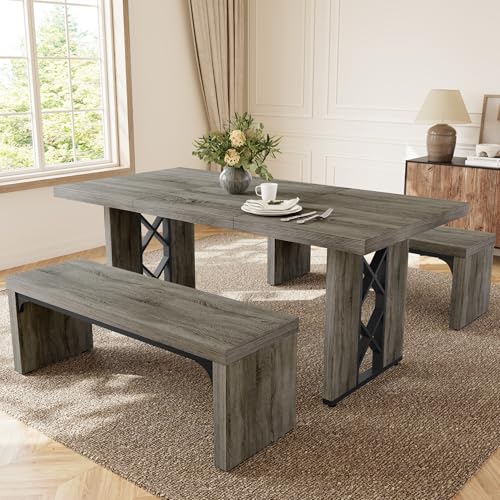
HIPIHOM 3-Piece Dining Table Set for 6 People, Grey Table with 2 Benches | Thick MDF Tabletop, Rectangle Kitchen Table Set with Metal Legs for Breakfast Nook, Dining Room, Kitchen, Apartment
Check price on AmazonWhat Makes a Kitchen Table with Bench Different?
A kitchen table with bench seating pairs a standard tabletop with at least one long bench instead of a row of chairs. The result is a hybrid setup that feels relaxed and communal. Most designs place the bench on one side and chairs on the other, but you can also find full bench configurations, corner nooks, and L-shaped arrangements for tight corners.
The appeal is practical. Benches maximize seating capacity per square foot, which matters in open-plan kitchens, apartments, and breakfast nooks. They also create a built-in look that anchors the table against a wall and keeps the walkway clear. Families with young children tend to favor benches because kids can slide in and out easily and there are no wobbly chair legs to tip.
If you are exploring broader kitchen table configurations before settling on bench seating, our guide to kitchen tables covers size, shape, and material fundamentals that apply to every style.
Types of Bench Seating for Kitchen Tables
1. Standard Backless Bench
The most common pairing is a backless wooden bench that tucks completely under the table. It is simple, durable, and easy to move. Backless benches suit casual kitchens and are ideal for households with children because there is no backrest to climb over. The trade-off is less lumbar support, so cushioning matters for longer meals.
2. Bench with Backrest
A bench with a low back offers noticeably more comfort for adults. These often resemble a small settle or settee and work well when the bench sits against a wall. They take up slightly more visual space but feel more like a proper seat than a plank. For everyday family dining, this is usually the best balance of comfort and footprint.
3. Upholstered Bench
Upholstered benches use foam padding wrapped in performance fabric or faux leather. They are the most comfortable option and add softness to a hard-surfaced kitchen. Look for removable, washable covers if children or pets are part of the household. Our guide to kitchen table bench seating goes deeper into cushion density and fabric choices.
4. Storage Bench
A storage bench hides a lift-up lid or drawers beneath the seat. This is a smart choice for small kitchens where every inch counts, because it keeps table linens, board games, or seasonal items out of sight. Sturdy hinges and a reinforced lid are essential so the bench doubles safely as seating. See our collection of kitchen tables with storage for coordinated options.
5. Corner and L-Shaped Bench
Corner benches wrap around two walls and turn an awkward nook into a cozy dining spot. They seat more people in a compact area and make excellent use of unused corners. An L-shaped bench is the classic solution for breakfast corners and bay windows. If you want a ready-made nook, explore kitchen nook bench layouts that combine the bench and table in one cohesive set.
How to Choose the Right Size and Fit
Getting the dimensions right is the single most important step. A bench that is too tall forces knees into the table apron; one that is too deep leaves backs unsupported. Use these benchmarks as your starting point.
- Seat height: 17 to 19 inches from floor to seat top for a standard 30-inch table.
- Seat depth: 15 to 18 inches for comfortable back support.
- Table length: allow about 24 inches of width per person. A 48 to 60 inch table fits a two-person bench; 60 to 72 inches fits three.
- Clearance: 36 inches on the chair side for chair pull-out, at least 30 inches on the walkway side.
- Knee room: keep at least 12 inches between the bench seat and the table apron.
Measure your room and tape the footprint on the floor before buying. For compact spaces, read our guide to kitchen tables for small spaces and the dedicated piece on kitchen table and chair sets for small spaces to compare layouts side by side.
Materials and Construction to Look For
Kitchen environments are humid, busy, and prone to spills. The materials you choose determine how well the bench table ages.
- Solid hardwood: The most durable choice for frames and tops. Oak, maple, and birch handle daily use well and can be refinished. This is the top-tier option for longevity.
- Engineered wood with quality veneer: A mid-range option that resists warping and offers consistent finishes. Look for moisture-resistant cores and sealed edges.
- Laminate tops: An entry-level, low-maintenance surface that wipes clean easily and resists scratches. Explore laminate dining table options for busy family kitchens.
- Metal frames: Steel or iron legs with reinforced joints add stability to long benches. Check that hardware is rust-proof, especially near sinks and dishwashers.
- Performance fabric: For upholstered benches, choose tightly woven, stain-resistant textiles that can be spot-cleaned.
Joint construction matters as much as the surface material. Look for mortise-and-tenon or reinforced screw-and-glue joints on wooden benches. A bench carries two or three people, so it needs a sturdier frame than a single chair.
Styles That Work in a Kitchen
Bench tables adapt to most design languages, but a few pairings stand out.
- Farmhouse and rustic: A distressed wood bench with a trestle table feels relaxed and warm. Pair with woven baskets stored under the bench.
- Modern minimalist: A clean-lined kitchen table modern style with a slim backless bench keeps sightlines open. Choose matte finishes and simple silhouettes.
- Coastal and light: Whitewashed wood or painted benches brighten small kitchens and reflect natural light.
- Industrial: A wood top on a black metal frame with a matching metal bench suits open-plan loft kitchens.
If you want the full picture of mixing seating types, our article on kitchen table with bench and chairs explains how to balance visual weight between the two sides.
Comfort and Accessibility Considerations
Benches are not automatically comfortable. A few details make a real difference:
- Cushioning: A 2-inch foam pad with a firm density supports longer sitting without bottoming out.
- Back support: If the bench sits away from a wall, add a low backrest or a row of pillows against the wall.
- Footrest: A bench with a built-in footrail or a stretcher bar improves posture and comfort.
- Accessibility: Older adults and guests with mobility concerns may prefer chairs. Many homes use a bench on one side and chairs on the other to balance comfort and capacity.
For households with children, a bench with a slightly higher seat and a footrest helps smaller diners sit safely. Our kitchen table with 4 chairs guide is useful if you are weighing a chair-only setup against a bench configuration.
Bench vs. Chairs: Side-by-Side Comparison
| Feature | Bench Seating | Chair Seating | Best For |
|---|---|---|---|
| Space efficiency | High — tucks under table, no pull-out clearance | Moderate — needs 36 inches of clearance | Small kitchens, breakfast nooks |
| Seating capacity | Higher per linear foot | One person per chair | Growing families, hosting |
| Comfort | Good with cushioning and back support | Excellent — individual back and seat | Long meals, older guests |
| Flexibility | Fixed position, harder to rearrange | Fully movable, easy to add or remove | Multi-use spaces |
| Storage potential | High — storage benches add hidden space | Low | Compact apartments |
| Style range | Casual, built-in look | Formal to casual | Farmhouse, modern, nook designs |
Layout Ideas for Bench Tables
Where you place the bench determines how well the room flows.
- Wall-anchored bench: Place the bench against a solid wall and chairs on the open side. This is the most space-efficient layout and works in nearly any kitchen.
- Window bench: A bench under a window captures natural light and creates a reading-and-dining corner. Add a slim table for a café feel.
- Corner nook: An L-shaped breakfast nook bench fits two walls and seats four to six in a small area. Pair with a round or square table.
- Island extension: If you already have an island, a bench on the outer edge can extend seating. Compare options in our kitchen island with seating guide.
- Peninsula bench: In an open plan, a bench on the kitchen side and chairs on the living side zones the space naturally.
For coordinated nook layouts, browse kitchen nook table options and the full kitchen nooks collection.
Care and Maintenance
Bench tables take more wear than a typical dining set because they are used every day. A simple routine keeps them looking good:
- Wipe the bench and tabletop after every meal with a soft, damp cloth.
- Use coasters and trivets to protect wood finishes from heat and moisture rings.
- Re-tighten frame hardware every few months, especially on storage benches with hinged lids.
- Condition solid wood twice a year to prevent drying and cracking.
- Spot-clean upholstery promptly and vacuum crumbs from seams weekly.
For deeper guidance, our care and maintenance section covers wood polish, scratch repair, and upholstery cleaning in detail.
Buying Checklist: Before You Order
- Measure the room and tape the footprint on the floor.
- Confirm seat height matches table height (17–19 inches for a 30-inch table).
- Check the bench length against the number of people you need to seat.
- Verify clearance on the chair side and the walkway side.
- Choose a material that suits your humidity and cleaning habits.
- Decide whether you need storage or an upholstered top.
- Review warranty, return policy, and assembly requirements.
If you are still comparing configurations, the kitchen table with bench seat overview and the kitchen tables with bench collection give you a full range of styles to weigh.
Ready to Find Your Bench Table?
Browse recommended kitchen tables with bench seating and compare features, sizes, and configurations in one place.
View Recommended OptionsFrequently Asked Questions
What is the ideal length for a kitchen table with bench seating?
For a bench that seats two adults comfortably, aim for a table length of at least 48 to 60 inches. For a bench seating three, look for 60 to 72 inches. Allow roughly 24 inches of linear width per seated person so elbows and plates have room.
How much clearance should I leave around a bench table?
Leave 36 inches of clearance on the chair side so chairs can slide out, and at least 30 inches on the bench side for walkway access. If the bench is against a wall, you can reduce that side's clearance since the bench does not pull out.
Are benches comfortable for everyday family meals?
Yes, when the seat height, depth, and cushioning are right. A bench seat should be 17 to 19 inches high with a seat depth of 15 to 18 inches. An upholstered or cushioned bench makes longer meals far more comfortable, especially for children and older adults.
Can a bench table work in a small kitchen?
It is one of the best solutions for compact kitchens. Because the bench tucks fully under the table and sits flush against a wall, you recover floor space that chairs would otherwise occupy. Corner and L-shaped benches make the most of awkward nooks.
What materials are best for a kitchen bench table?
Solid hardwood and high-grade engineered wood with a durable finish hold up best in busy kitchens. For benches, look for reinforced frames and moisture-resistant finishes. Upholstered bench tops should use performance fabrics that wipe clean easily.