
Live Edge Furniture: The Complete Buying & Design Guide
Everything you need to know about live edge tables, wood slab furniture, and epoxy river designs — from understanding wood species and finishes to choosing the right piece for your dining space.
Start the GuideWhy live edge furniture deserves your attention: Each live edge piece preserves the natural contour of the tree — the raw, undulating edge that gives it a one-of-a-kind character no factory finish can replicate. If you are researching before buying, this guide walks you through wood types, construction methods, finish options, sizing, and care so you can choose with confidence.
What Is Live Edge Furniture?
Live edge furniture is built from wood slabs that retain at least one natural edge — the organic boundary between the heartwood and the bark. Instead of milling a slab into a perfectly straight rectangle, the maker preserves the tree's natural silhouette: the gentle curves, the occasional bark inclusion, and the irregular width that makes every board unique. The result is a piece that feels rooted in nature rather than manufactured.
The concept spans a wide range of furniture types, but the most popular expression is the live edge table — a dining or coffee table where the slab's natural edge faces outward. Related pieces include live edge wood furniture such as benches, shelving, and headboards, as well as the striking live edge epoxy table, where colored resin fills cracks and voids to create a river-like effect.
What separates genuine live edge work from a rustic-look imitation is the slab itself: a single continuous piece of solid wood, typically 1.5 to 3 inches thick, rather than veneer over particleboard. That solid construction is what gives these pieces their heft, stability, and long-term character.
Types of Live Edge Pieces
Live edge furniture is not a single product category. Different formats serve different rooms and functions, and each carries its own construction considerations. Here is how the main types compare:
Live Edge Dining Table
The flagship piece. A single slab or book-matched pair forms the top, supported by metal or wood legs. Best for households that want a statement centerpiece and have room for a 72–96 inch surface.
Live Edge Coffee & Console Tables
Smaller slabs suited to living rooms and entryways. These often use narrower boards and are a practical introduction to the style without committing to a full dining set.
Live Edge Benches & Seating
A slab bench paired with a dining table adds a relaxed, communal feel. Look for reinforced joinery where the legs meet the slab, since benches take concentrated weight.
Epoxy River Tables
Two slab halves joined by a colored epoxy channel. The resin fills natural voids and creates a dramatic centerline. Craftsmanship quality varies widely, so inspect the pour and finish closely.
Book-Matched Slab Sets
A single log sliced and opened like a book to create a mirrored top. These require careful drying and are typically produced by specialist makers — a long-term investment piece.
Live Edge Shelving & Accents
Floating shelves and small accent pieces made from offcuts. An accessible way to bring natural texture into a room and test how the style fits your interior.
If your priority is a dining centerpiece, start by reading the dedicated guide to the live edge wood table to understand slab thickness and base options. For a more sculptural look, the live edge wooden table style often pairs a thicker slab with a minimalist steel base. And if you are drawn to the river aesthetic, the epoxy river table format deserves a careful look at resin quality before you commit.
Wood Species & Characteristics
The species determines color, grain pattern, hardness, and how the piece will age. No single species is universally best — the right choice depends on the look you want and how much movement you can tolerate in the wood.
| Species | Character | Best For | Position in Market |
|---|---|---|---|
| Walnut | Rich chocolate-brown heartwood with dramatic grain; medium-hard | Formal dining tables, statement pieces | Premium tier |
| White Oak | Pale golden tone, tight grain, very hard and stable | Family dining tables, high-traffic rooms | Mid-tier to premium |
| Maple | Light, creamy color with subtle grain; hard and durable | Bright, modern interiors | Mid-range |
| Ash | Light blond with strong, straight grain; resilient | Scandinavian and minimalist settings | Mid-range |
| Cherry | Warm reddish-brown that deepens with light exposure | Traditional and transitional rooms | Mid-tier |
| Acacia | High-contrast grain, very hard, often used in slab imports | Casual dining and outdoor-adjacent spaces | Entry-level to mid-tier |
| Pine / Beetle Kill | Soft, knotty, with distinctive blue-grey streaks in dead-standing timber | Rustic and cabin aesthetics | Starter tier |
A practical rule: harder species resist dents and scratches better, which matters for a dining surface used daily. Softer species like pine develop a patina quickly and are better suited to accent pieces or low-traffic rooms. Whichever species you choose, confirm that the slab was kiln-dried to a stable moisture content — air-dried slabs that have not fully stabilized are prone to cracking and warping after delivery.
Construction & Slab Quality
Two pieces can look similar in a photo but differ enormously in construction. These are the details that separate a durable heirloom from a short-lived import:
- Slab thickness: Dining tops generally range from 1.5 to 2 inches for standard builds, up to 3 inches for heavy, sculptural tables. Thicker slabs need proportionally heavier bases to stay stable.
- Drying method: Kiln-dried slabs (typically below 10% moisture content) are far less likely to crack than air-dried boards that still hold residual moisture.
- Base joinery: Look for steel or hardwood bases that allow for seasonal wood movement. Rigidly bolted bases can split a slab as it expands and contracts with humidity.
- Crack and void treatment: Natural checks are part of the charm, but they should be stabilized with clear or colored epoxy — not left open where they can widen or catch food debris.
- Edge integrity: The live edge should be sanded smooth and sealed. Loose bark should be removed and the exposed edge finished to prevent moisture intrusion.
- Flatness: A quality maker flattens the top with a router jig or CNC rather than relying on the sawmill cut. An uneven top causes wobbling glasses and uneven place settings.
Metal-base live edge tables are among the most common formats because the steel frame adds rigidity without competing visually with the wood. If you are coordinating your dining room, the companion article on live edge wood furniture covers how to mix slab pieces with complementary storage and seating.
Finishes & Epoxy Options
The finish controls both the look and the durability of a live edge piece. There is no single best finish — each trade-off matters depending on how the table will be used.
| Finish Type | Look | Durability | Best For |
|---|---|---|---|
| Hardwax Oil (Rubio-style) | Natural, matte, close to raw wood | Good; repairable spot treatments | Dining tables where natural feel matters |
| Polyurethane | Satin to gloss film | High; scratch and water resistant | Family tables, high-traffic surfaces |
| Conversion Varnish | Clear, slightly warm | Very high; professional-grade | Commercial-grade settings and busy households |
| Epoxy (River / Fill) | Glossy, colored or clear resin | High once fully cured | Statement river tables and void filling |
| Natural Oil / Wax | Warm, low sheen, develops patina | Moderate; needs periodic renewal | Rustic and organic interiors |
Epoxy deserves a dedicated note. A well-executed river table uses a slow-curing, UV-stable casting resin poured in controlled conditions — bubbles, cloudiness, and ambering over time are signs of a rushed or low-grade pour. Ask the maker whether the resin is UV-stabilized and whether the slab was sealed before the pour to prevent resin bleeding into the grain.
Sizing for Your Dining Room
Live edge tables are rarely perfectly rectangular, so sizing requires more care than a standard table. Measure the widest point of the slab, not just the average width, and leave clearance for chairs on both long sides.
| Seating Capacity | Recommended Table Length | Typical Slab Width | Room Clearance (each side) |
|---|---|---|---|
| 4 people | 60–72 inches | 30–36 inches | 36 inches |
| 6 people | 72–84 inches | 36–40 inches | 36 inches |
| 8 people | 84–96 inches | 38–44 inches | 36–42 inches |
| 10+ people | 96+ inches (or extension strategy) | 40+ inches | 42 inches |
For a long, narrow dining room, a long dining table format suits live edge slabs well because the natural edge creates visual interest along the length. In a smaller space, consider whether a round dining table might serve better than forcing a large slab into a tight footprint. And if your room is open-plan, read the layout guidance in the mid-century modern dining room article — the principles of traffic flow apply equally to slab furniture.
Styling Live Edge Furniture
The natural character of a slab is best complemented, not competed with. A few practical styling principles:
- Keep chair profiles simple: Slim metal or blackened wood frames let the slab remain the focal point. Upholstered chairs in neutral tones work well without adding visual weight.
- Layer lighting deliberately: A linear pendant above a long slab emphasizes its length; a pair of smaller pendants works for narrower tables. If you need inspiration, see the guide to light fixtures above a dining table.
- Use a runner, not a full cloth: A linen runner protects the center while letting the live edge stay visible on both sides.
- Limit tabletop decor: One sculptural bowl or a pair of candlesticks is usually enough. The grain is the decoration.
- Warm the floor: An understated rug in a natural fiber grounds the piece without distracting from the wood.
For seating, the accompanying article on leather dining room chairs explains how leather tones interact with warm wood species like walnut and cherry. If your slab has cooler grey tones, the linen dining chairs guide covers lighter upholstery pairings.
Care & Maintenance
Live edge furniture is not high-maintenance, but it does need consistent care to stay stable. The single biggest threat is rapid humidity change — wood expands in humid air and contracts in dry air, and a slab that moves too quickly can crack.
- Control humidity: Keep indoor relative humidity roughly between 35% and 55%. Avoid placing the table directly in front of heating vents or in rooms that swing between very dry and very damp.
- Wipe spills promptly: Even a cured finish can be compromised by standing liquid, especially near the live edge where the finish may be thinner.
- Use coasters and trivets: Heat and condensation are the most common causes of finish damage on dining tables.
- Re-oil annually: Oil-finished pieces benefit from a light application of hardwax oil once a year to maintain water resistance.
- Avoid direct sunlight: Prolonged UV exposure will shift the color of lighter species and can dry the slab unevenly.
- Dust with a soft cloth: A microfiber cloth is sufficient for routine cleaning; avoid abrasive pads that can dull the finish.
Buying Checklist
Before you commit, run through these questions. They separate a sound purchase from a future regret:
- Is the slab kiln-dried and stabilized? Ask for the moisture content.
- Does the base allow for seasonal wood movement?
- Are cracks and voids filled with epoxy or left open?
- Is the live edge sanded and sealed, with loose bark removed?
- Is the top flat enough that a glass will not wobble?
- What finish is applied, and can it be spot-repaired?
- Does the maker offer a warranty that covers cracking and warping?
- Have you measured the widest point of the slab against your room's clearance?
Ready to Explore Live Edge Options?
Browse a curated selection of live edge tables and wood slab furniture, then compare construction details before you decide.
View Recommended PiecesRecommended Live Edge Furniture
⚠️ AFFILIATE DISCLOSURE: This website contains affiliate links. As an affiliate Associate, we earn from qualifying purchases. If you make a purchase through these links, we may receive a small commission at no additional cost to you. Read our full affiliate policy.

WELLAND Live Edge Cedar End Table with Hairpin Legs, 20.5" H | Live edge cedar tabletop and black hairpin legs create a handcrafted accent table with natural character and modern style
Check price on Amazon
WELLAND Solid Wood Pedestal End Table, 19" H Rustic Accent Table | Handcrafted from solid wood, showcasing unique grain patterns and natural organic beauty
Check price on Amazon
WELLAND Live Edge Cedar Entryway Bench with Metal Legs, 28"
Check price on Amazon
Rustic Coffee Table, Solid Camphor Wood Top, Live Edge, No Two Alike | Live edge coffee table, Natural camphor wood slab, Clear lacquer, Four legs, Pre-drilled holes, Shape and grain vary
Check price on Amazon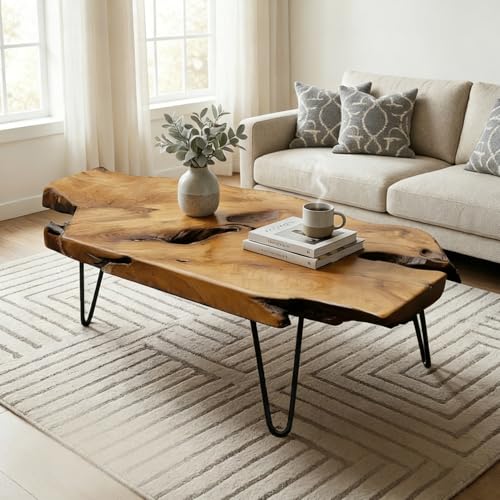
Nalvyue Live Edge Coffee Table Natural Wood for Living Room | Unique Real Wood Coffee Table Handcrafted, Rustic Modern Western Design with Unique Grain Pattern
Check price on Amazon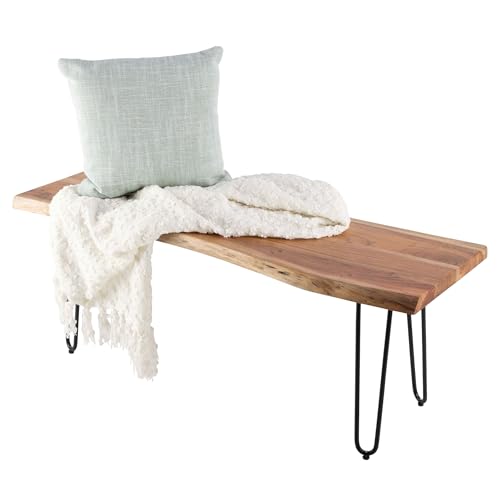
Alaterre Live Edge Solid Wood Entryway Bench with Hairpin Metal Legs, 48” | Narrow Long Shoe Bench, End of Bed Bench, Modern Farmhouse Table Bench, for Entryway, Dining Room, Kitchen, or Bedroom
Check price on Amazon
Alaterre Alpine Live Edge Solid Wood Rustic Entryway Bench, Natural, 48” | Modern Farmhouse Shoe Bench with Metal Legs, Long End of Bed Bench or Table Bench, for Living Room, Hallway, or Dining
Check price on AmazonFrequently Asked Questions
Is live edge furniture durable enough for daily dining?
Yes, provided the slab is properly dried and finished. Hardwood species like oak, walnut, and maple with a polyurethane or conversion varnish finish handle daily use well. The key is stable humidity and prompt cleanup of spills.
Will my live edge table crack over time?
Some small surface checks are normal as solid wood adjusts to its environment. Structural cracks are usually the result of improper drying or extreme humidity swings. Choosing a kiln-dried slab and controlling indoor humidity greatly reduces the risk.
What is the difference between a live edge table and a river table?
A standard live edge table preserves the natural boundary of the slab on one or both sides. A river table is a specific style where two slab halves are separated by a channel of colored epoxy, creating a river-like centerline. Both are forms of live edge work, but river tables require additional resin craftsmanship.
Can live edge furniture work in a modern interior?
Absolutely. A slab with clean lines and a simple steel base fits minimalist and contemporary rooms well. The contrast between organic wood and precise metal geometry is a defining feature of modern live edge design. If you are blending styles, the mid-century dining guide offers useful principles for mixing eras.
How thick should a live edge dining table be?
Most dining slabs are between 1.5 and 2 inches thick, which balances durability and visual weight. Thicker slabs (2.5–3 inches) make a bolder statement but require heavier bases and more floor clearance. Thinner slabs can work for smaller tables but may need additional support to stay flat.