
Live Edge Wooden Table: The Complete Buying & Design Guide
Everything you need to know before choosing a live edge wooden table — wood species, slab construction, base styles, finishing, sizing, care, and styling for your dining space.
Explore Live Edge TablesWhy a live edge wooden table? A live edge table preserves the natural contour of the tree's outer edge, bringing organic character into your dining room. No two slabs are identical — each table carries unique grain patterns, knots, and flowing edges that turn a functional surface into a statement piece. This guide walks you through every decision point so you can buy with confidence.
What Exactly Is a Live Edge Wooden Table?
A live edge wooden table (also called a natural edge or waney edge table) is built from a slab that retains at least one original outer edge of the tree. Instead of a straight, machined border, the tabletop follows the organic silhouette of the trunk — complete with the undulating curve, the lighter sapwood band, and sometimes natural knots or bark inclusions.
This construction differs fundamentally from conventional tables. A standard dining table is milled from dimensional lumber into uniform boards with square edges. A live edge slab is typically cut from a single large log, air-dried or kiln-dried slowly, then stabilized and finished as one continuous piece. That is why a live edge table feels like a piece of nature rather than a manufactured product.
The result is furniture that reads as sculpture when the room is empty and as a warm gathering place when it is full. If you are exploring the broader category, our guide to live edge furniture explains how the style applies across seating, shelving, and storage as well.
Types of Live Edge Wooden Tables
Not all live edge tables are built the same way. The construction method affects stability, appearance, and how the table ages in your home. Here are the main categories you will encounter during your research.
Single-Slab Tables
A single-slab table uses one continuous piece of wood across the entire tabletop. These are the most dramatic option because the grain runs uninterrupted from edge to edge. Single slabs require very large, mature logs, so they tend to sit in the premium to luxury tiers of the category. They are also the heaviest and most sensitive to humidity swings, which is why proper kiln drying and a stable base matter enormously.
Book-Matched Slabs
Book-matching takes one thick slab, slices it like the pages of a book, and opens it flat. The two halves mirror each other, creating a symmetrical grain pattern with a visible seam at the center. This technique allows makers to build wider tables from narrower logs and produces a striking butterfly effect in the grain. A book-matched table often lands in the mid-range to premium tier and offers excellent visual impact for its footprint.
Two-Slab or Multi-Slab Tops
Some tables combine two or more live edge boards side by side, joined with a visible seam or a contrasting inlay. These are common in mid-range and entry-level offerings because they use more accessible material. The trade-off is that the grain is less continuous, but a skilled maker can align boards so the pattern still flows naturally.
Epoxy-Enhanced Live Edge Tables
Epoxy resin fills voids, cracks, and sometimes the space between two slabs, creating a smooth, water-resistant surface with dramatic color contrast. A live edge epoxy table is especially practical for households with children or frequent entertaining because the resin seals areas that would otherwise trap crumbs and moisture. Resin work adds labor and skill, so these tables generally sit in the premium tier and above.
Choosing the Right Wood Species
The species determines color, grain character, hardness, movement, and how the table responds to your home's humidity. This is one of the most consequential decisions in the buying process.
| Species | Character | Hardness & Stability | Best For |
|---|---|---|---|
| Walnut | Rich chocolate-brown heartwood, subtle grain, elegant | Medium-hard, stable when well dried | Formal and transitional dining rooms, statement centerpieces |
| Oak | Prominent ray fleck, warm honey to golden tones | Hard and durable, excellent wear resistance | High-traffic family tables, farmhouse and rustic interiors |
| Maple | Pale, creamy color, fine uniform grain | Hard, dense, resists dents well | Bright modern spaces, minimalist and Scandinavian looks |
| Cherry | Warm reddish-brown that deepens with age | Medium-hard, moderate movement | Traditional rooms, pieces meant to patina over decades |
| Ash | Light blonde with bold, sweeping grain lines | Hard and resilient, good shock resistance | Contemporary interiors, contrast against darker floors |
| Pine & Fir | Knotty, rustic, soft golden tones | Softer wood, more prone to denting | Entry-level rustic tables, casual breakfast nooks |
| Acacia & Mango | Highly figured, contrasting light and dark streaks | Hard but variable, requires careful drying | Budget-conscious rustic designs, textured visual interest |
For a lighter aesthetic that still carries natural character, a light wood dining table in maple, ash, or white oak keeps the room feeling open. If you prefer deeper, more grounded tones, walnut and cherry anchor a space with warmth. Whichever species you choose, ask the maker how the slab was dried — slow kiln drying to a stable moisture content is the single best predictor of long-term performance.
Slab Construction: What Separates Entry-Level from Heirloom Quality
The same species can produce very different tables depending on how the slab is prepared. During your research, look for these construction details — they are the clearest signal of where a piece sits in the market.
Drying and Moisture Content
Properly kiln-dried slabs are brought down to a moisture content in equilibrium with typical indoor environments. Under-dried slabs cup, crack, and twist after delivery. Entry-level tables sometimes skip rigorous drying, while premium and luxury pieces document the drying schedule and stabilize the slab before finishing.
Stabilization: Butterfly Keys and C-Channels
Wood moves. A responsible maker anticipates this with butterfly keys (bowtie inlays) across checks at the ends, and steel C-channels or a breadboard system underneath to keep the top flat. The presence and execution of these reinforcements is one of the most reliable quality indicators. A live edge wood furniture piece built with proper stabilization will stay flat for decades; one without it may not survive its first seasonal change.
Base and Leg Design
The base must carry significant weight while allowing the top to move. Common approaches include:
- Steel U-shaped or trapezoid legs — modern, industrial, very stable, and easy to level.
- Spider or hairpin legs — visually light, best for smaller slabs and mid-range tables.
- Trestle bases — traditional and generous, ideal for long slabs and formal rooms.
- Solid wood sled bases — warm and cohesive with the top, though heavier.
Check that the base attaches with slotted holes or figure-eight fasteners that allow wood movement. Bolted rigid connections are a warning sign on solid slabs.
Edge Treatment and Bark
Some makers retain the bark edge for maximum rusticity; others remove bark and sand the natural contour smooth. Bark can loosen over time, so many premium tables use a stabilized or sculpted natural edge instead. Ask specifically which approach was used.
Finishing Options and Their Trade-Offs
The finish protects the wood and shapes the final look. Each option balances durability against ease of repair.
- Oil and wax (hardwax oil): Penetrates the wood for a natural, matte touch. Easy to spot-repair. Requires periodic re-oiling. Popular on premium dining tables.
- Polyurethane: Forms a protective film that resists spills and wear. Durable but can scratch and is harder to repair locally. Common on mid-range and entry-level pieces.
- Conversion varnish / catalyzed lacquer: Professional-grade film finish with strong chemical and moisture resistance. Frequently used on commercial-grade tables.
- Epoxy flood coat: Creates a glass-smooth, highly water-resistant surface. Best for heavy entertaining; adds a glossy character some owners love and others find too reflective.
For a dining table specifically, a hardwax oil or a quality catalyzed finish offers the best balance of natural feel and everyday durability. Always confirm the finish is food-safe once fully cured.
Sizing a Live Edge Table for Your Room
Because live edge tops vary in width along their length, sizing works a little differently than for rectangular tables. Use the narrowest width as your effective width for seating calculations.
- Seating clearance: Allow 24 inches of table width per person seated along a side, and 12–15 inches of depth for each place setting.
- Room clearance: Leave at least 36 inches between the table edge and walls or other furniture to pull chairs out comfortably; 42–48 inches is better for high-traffic paths.
- Length: A long dining table works beautifully as a single-slab centerpiece in open-concept rooms, but confirm your walkway clearances first.
- Shape: Natural edges mean the corners are not square. Measure the usable rectangle inside the contour, not just the maximum dimensions.
For compact rooms, a live edge wooden table in a smaller slab with hairpin or steel legs can fit where a bulky traditional set cannot. If the room is genuinely tight, review our guidance on small dining rooms before committing to a full-size slab.
Pros and Cons to Weigh Before You Buy
✅ Advantages
- One-of-a-kind character — no two slabs match
- Brings warmth and organic texture to modern rooms
- Solid wood construction can last generations
- Works across rustic, industrial, and contemporary styles
- Repairable surface (especially with oil finishes)
⚠️ Considerations
- Heavy — moving and delivery require planning
- Natural edges reduce usable surface at the corners
- Solid wood responds to humidity swings
- Seams and knots may trap crumbs without epoxy fill
- Quality varies widely; construction details matter
Caring for a Live Edge Wooden Table
With the right routine, a live edge table improves with age. The key is managing moisture and avoiding abrupt environmental changes.
- Keep humidity stable: Aim for 35–55% relative humidity. Use a humidifier in dry winters and dehumidification in damp summers.
- Avoid direct sun: UV exposure shifts wood color unevenly. Rotate the table or use window treatments during peak sun.
- Clean gently: A damp cloth with mild soap, then dry immediately. Avoid soaking the surface and never leave standing water on the edges.
- Use coasters and trivets: Heat and condensation are the most common causes of ring marks and finish damage.
- Re-oil annually: Oil-finished tables benefit from a light annual reapplication to maintain water resistance.
- Address checks early: Small cracks are normal in solid wood; consult the maker if a check widens significantly.
For a deeper maintenance routine across wood furniture, see our dining care and maintenance guides.
Styling and Pairing Your Live Edge Table
A live edge top is visually dominant, so the surrounding choices should support rather than compete with it.
- Chairs: Mid-century dining chairs add clean lines that contrast nicely with the organic top. Leather dining chairs bring warmth and texture that complements wood grain.
- Lighting: A linear or clustered pendant above a light fixture above the dining table frames the slab without obscuring its edge. Keep the fixture 30–36 inches above the tabletop.
- Storage: A buffet or sideboard in a complementary wood or matte finish balances the visual weight of a heavy slab.
- Table linens: Simple runners and placemats let the wood remain the focus; avoid heavy, fully covering tablecloths that hide the natural edge.
If your room leans modern, pair a live edge slab with a mid-century modern dining room palette. If it leans rustic, a light oak dining table finish on the base keeps things cohesive.
Tier Guide: Where Each Option Sits in the Market
Use this framework to align your expectations with construction quality. Each tier reflects relative market positioning, not a specific figure.
| Tier | Typical Construction | Best For |
|---|---|---|
| Entry-level | Multi-board tops, pine or acacia, simple poly finish, basic hairpin legs | Casual breakfast nooks, first apartments, rustic decor |
| Mid-range | Two-slab or book-matched tops, oak or maple, oil finish, steel or trestle base | Family dining rooms with regular daily use |
| Premium | Single-slab or epoxy-enhanced tops, walnut or white oak, hardwax oil, proper C-channel stabilization | Statement dining rooms, long-term use, entertaining |
| Luxury | Large single slabs with exceptional grain, documented drying, bespoke bases, custom finishes | Formal dining rooms, design-led interiors, heirloom pieces |
Frequently Asked Questions
Is a live edge wooden table durable for everyday family use?
Yes, provided the slab is properly dried and stabilized and the finish is appropriate. A hardwax oil or catalyzed finish on oak, maple, or walnut handles daily meals well. Epoxy-filled tables are especially practical where spills are frequent. Avoid under-dried slabs regardless of species.
Will a live edge top crack over time?
Small surface checks are normal in solid wood and often part of the character. Structural cracking usually results from improper drying, unstable humidity, or missing reinforcement. Ask about moisture content and stabilization before you buy, and keep indoor humidity stable afterward.
How do I measure for chairs around a natural edge?
Measure the usable width at the narrowest point of the seating side, not the widest. Allow 24 inches per person along the side and verify 36 inches of clearance from the table edge to walls so chairs pull out freely.
Can a live edge table be refinished later?
Oil-finished tables are straightforward to refresh with a light sanding and re-oil. Film finishes like polyurethane require more careful stripping and reapplication. Both are possible for a skilled refinisher, but oil finishes are more forgiving for owner maintenance.
Is a single slab always better than a multi-slab top?
Not necessarily. A single slab offers uninterrupted grain and the most dramatic effect, but a well-built book-matched or two-slab table can deliver excellent visual quality and stability. Construction quality matters more than slab count.
How heavy is a live edge dining table?
Solid slabs are substantially heavier than hollow-core or veneered tables. Plan delivery routes, confirm doorway widths, and arrange help for placement. Heavy tables often benefit from felt pads and a leveling check after positioning.
Ready to Choose Your Live Edge Table?
Compare construction details, wood species, and finishes using the tier guide above, then explore hand-picked options in the product section below.
View Recommended Live Edge TablesRecommended Live Edge Wooden Tables
⚠️ AFFILIATE DISCLOSURE: This website contains affiliate links. As an affiliate Associate, we earn from qualifying purchases. If you make a purchase through these links, we may receive a small commission at no additional cost to you. Read our full affiliate policy.

WELLAND Live Edge Cedar End Table with Hairpin Legs, 20.5" H | Live edge cedar tabletop and black hairpin legs create a handcrafted accent table with natural character and modern style
Check price on Amazon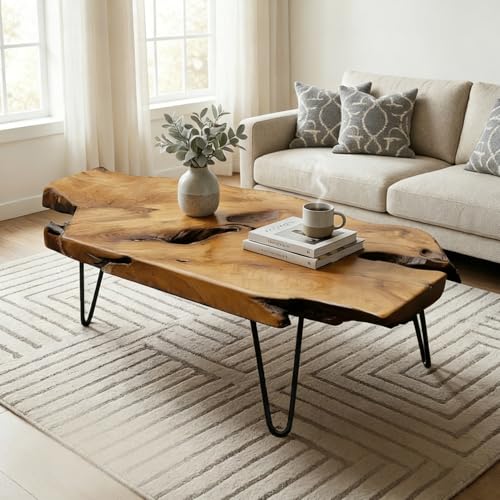
Nalvyue Unique Live Edge Coffee Table Natural Wood, Handcrafted Solid Wood | Coffee Table for Living Room, Real Wood Western Rustic Design, One of a Kind Organic Shape with Unique Grain Pattern
Check price on Amazon
Rustic Coffee Table, Solid Camphor Wood Top, Live Edge, No Two Alike | Live edge coffee table, Natural camphor wood slab, Clear lacquer, Four legs, Pre-drilled holes, Shape and grain vary
Check price on Amazon