
Live Edge Wood Table: The Complete Buying Guide
Discover how to choose a live edge wood table that fits your space, style, and lifestyle. From slab selection to base design, sizing, and long-term care — everything you need for a confident decision.
Why live edge tables matter: A live edge wood table is more than furniture — it is a functional piece of natural art. The organic contours of the slab preserve the tree's original silhouette, making every table one of a kind. This guide walks you through the practical and aesthetic decisions that separate a well-chosen slab from a compromised one.
What Is a Live Edge Wood Table?
A live edge wood table is a table whose top incorporates the natural edge of the tree slab — the undulating contour just beneath the bark. Instead of being cut into a perfect rectangle, the slab keeps its organic shape, showing the growth rings, knots, and grain patterns that formed over decades.
This construction style celebrates the natural beauty of wood. Each live edge slab is unique, so no two tables are identical. The result is a piece that feels grounded in nature while still functioning as a practical dining or work surface.
Live edge tables sit at the intersection of rustic warmth and modern design. They work beautifully in farmhouse, industrial, mid-century, and contemporary interiors — a versatility that explains their enduring popularity.
Slab Styles: Natural Edge, Live Edge & Epoxy
Not all live edge tables are created the same way. Understanding the three main slab styles will help you narrow your search:
1. Natural Edge (Single Slab)
The most traditional form. A single piece of wood is milled from a tree and the natural edge is preserved on one or both long sides. The slab typically ranges from 1.5 to 3 inches thick. This style showcases the full character of the wood — knots, cracks, and all.
2. Live Edge with Epoxy Fill
Some slabs have natural voids, cracks, or bark inclusions. Rather than discarding these, makers fill them with tinted or clear epoxy resin. The result is a smooth, food-safe surface that preserves the slab's organic character while adding a modern, artistic accent. Explore live edge epoxy table options for this hybrid style.
3. Bookmatched Slabs
Two slabs cut from the same log are opened like a book and joined. The grain mirrors across the seam, creating a symmetrical pattern. Bookmatched tables tend to be wider and more formal, while still retaining the live edge on the outer sides.
Wood Species: Which One Is Right for You?
The species of wood affects durability, grain pattern, color, and weight. Here are the most common options for live edge tables:
| Species | Characteristics | Best For |
|---|---|---|
| Walnut | Rich dark brown, tight grain, naturally resistant to decay | Formal dining, mid-century, high-end tier |
| Oak | Strong, open grain, light to medium brown, very durable | Family dining, farmhouse, everyday use |
| Maple | Light cream to pale brown, fine grain, hard surface | Bright spaces, modern interiors, premium tier |
| Ash | Light color, pronounced grain, excellent strength-to-weight ratio | Contemporary, Scandinavian, balanced tier |
| Elm | Distinctive interlocking grain, warm tone, good stability | Rustic, organic interiors, mid-range |
| Pine | Soft wood, knotty, light color, entry-level pricing tier | Casual, cabin, starter furniture |
For a wider perspective on natural wood furniture styles, see our guides on live edge wood furniture and live edge furniture collections.
Base Designs: Choosing the Right Support
The base is just as important as the slab. It determines stability, style, and how much legroom you have. Common options include:
Metal Bases (Steel or Iron)
Industrial, minimal, and extremely strong. Common configurations include U-shaped legs, hairpin legs, and X-frame designs. Metal bases are popular in modern and industrial interiors. They pair well with thick slabs that might overwhelm wooden legs.
Wooden Bases
Trestle bases, A-frame legs, and pedestal designs in matching or contrasting wood. These feel warmer and more traditional. A wooden trestle base on a live edge slab creates a cohesive, farmhouse look.
Pedestal Bases
A single central column or sculptural pedestal. These maximize legroom and work well in smaller dining rooms. They are often found in premium and luxury tiers where the base is designed as a statement piece.
Hairpin Legs
Thin, angled metal legs that create a light, airy feel. Best suited to thinner slabs (1.5–2 inches) and smaller tables. They are a hallmark of mid-century modern design.
Sizing Your Live Edge Table
Live edge tables are irregular by nature, so sizing requires a bit more thought than a standard rectangular table:
- Measure the widest point — not just the average width. The natural edge may bulge out by several inches.
- Allow for chair pull-out — plan for at least 30–36 inches of clearance around the table for comfortable seating.
- Consider the room shape — a live edge table with an organic silhouette works best when it has breathing room. Avoid pushing it tight against a wall.
- Seating capacity — a 72-inch slab typically seats 6 comfortably; a 96-inch slab seats 8. Irregular edges may reduce usable seating on the ends.
If you have a smaller dining area, consider a live edge wooden table in a compact size or a live edge table with a pedestal base to save floor space.
Quality Tiers: What to Expect at Each Level
Live edge tables span a wide range of craftsmanship and material quality. Instead of focusing on numbers, use these universal tier descriptors to understand what you are getting:
| Tier | Slab Quality | Construction | Best For |
|---|---|---|---|
| Entry-Level | Thinner slabs (1–1.5 in), common species like pine, some knots and cracks | Simpler joinery, basic metal legs, machine-finished edges | Casual spaces, first live edge purchase, accent tables |
| Mid-Range | 2-in slabs, oak or ash, moderate character, kiln-dried | Sturdy bases, sanded and oiled finish, some epoxy fill | Everyday dining, family homes, balanced investment |
| Premium | Thick slabs (2.5–3 in), walnut or maple, exceptional grain, minimal defects | Hand-finished, bookmatched options, custom metal or trestle bases | Formal dining, design-focused interiors, long-term use |
| Luxury | Rare species, oversized slabs, museum-grade character, stabilized with epoxy | Custom-built, hand-selected, artisan joinery, premium finishes | Statement pieces, luxury homes, collector furniture |
When comparing tiers, remember that a mid-range model usually offers better slab stability and finish quality than an entry-level one, while a premium table often features hand-selected wood that cannot be replicated at lower tiers.
Care & Maintenance for Live Edge Tables
A live edge wood table is a long-term investment. With proper care, it can last for generations. Here is what you need to know:
Finishing Options
- Oil-based finishes — penetrate the wood, enhance grain, and are easy to spot-repair. Best for natural, matte looks.
- Polyurethane or lacquer — form a protective film on the surface. More water-resistant, but harder to repair if scratched.
- Rubio Monocoat or hard wax oil — a popular premium choice that offers good protection with a natural feel.
Everyday Care
- Dust with a soft, dry cloth. Avoid wet cloths that can raise the grain.
- Use coasters and trivets under hot items. Wood can be damaged by heat.
- Wipe spills immediately — especially on oiled finishes.
- Reapply oil annually (or as needed) to maintain protection.
- Keep the table away from direct sunlight and heating vents to prevent cracking and warping.
For more detailed wood care advice, explore our wood polish and conditioner guide.
Live Edge Tables in Different Interior Styles
One of the strengths of a live edge table is its adaptability. Here is how it fits into common design aesthetics:
Rustic & Farmhouse
Pair a thick oak or elm slab with a wooden trestle base. Add linen dining chairs and a simple centerpiece. The result is warm, grounded, and welcoming.
Industrial Loft
Choose a slab with visible knots and epoxy fills, paired with a steel U-frame base. Exposed brick and metal accents complete the look. Our guide to live edge furniture covers more industrial pairings.
Mid-Century Modern
A thinner walnut slab on hairpin or angled metal legs fits perfectly. Pair with mid-century modern dining chairs and a mid-century modern dining room palette.
Contemporary
A bookmatched maple or ash slab with a sculptural pedestal base. Keep seating minimal and let the table be the focal point. Consider a light wood dining table aesthetic for a brighter feel.
Common Mistakes to Avoid
- Ignoring slab moisture content. Always confirm the slab is kiln-dried to 6–8% moisture. Unseasoned wood will crack and warp.
- Underestimating weight. A thick live edge slab can be extremely heavy. Check floor load capacity and plan for delivery logistics.
- Choosing the wrong base height. Standard dining height is 28–30 inches. Counter height is 34–36 inches. Make sure the base matches your seating.
- Skipping the finish sample. Oil and polyurethane look very different on different species. Ask for a sample if possible.
- Overlooking the natural edge orientation. Decide whether the live edge should face the room, the wall, or both sides. This affects the visual flow.
Recommended Live Edge Wood Table Products
⚠️ AFFILIATE DISCLOSURE: This website contains affiliate links. As an affiliate Associate, we earn from qualifying purchases. If you make a purchase through these links, we may receive a small commission at no additional cost to you. Read our full affiliate policy.

TRIBEWOOD 63" Solid Wood Dining Table for 4–6 with Live-Edge Top, Walnut | Rectangular Shape, Metal Legs, Stable Structure, Industrial Style, Spacious Legroom
Check price on Amazon
WELLAND Live Edge Cedar End Table with Hairpin Legs, 20.5" H | Live edge cedar tabletop and black hairpin legs create a handcrafted accent table with natural character and modern style
Check price on Amazon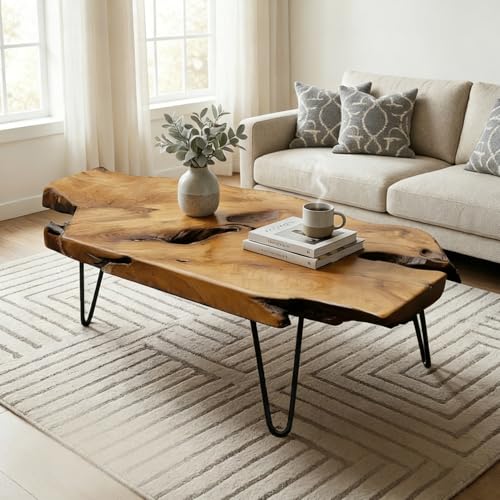
Nalvyue Live Edge Coffee Table Natural Wood for Living Room | Unique Real Wood Coffee Table Handcrafted, Rustic Modern Western Design with Unique Grain Pattern
Check price on Amazon
TRIBEWOOD Solid Wood Bar Table, 63” Natural Live Edge Counter Height Table with Metal Legs, Rustic Industrial Long Pub Table for Kitchen, Coffee Bar, Dining Room, Restaurant, Brown & Black
Check price on Amazon
TRIBEWOOD 63" Live Edge Solid Wood Dining Table, Modern Rustic Kitchen Table with Sculptural Legs, 6-Person Rectangular Dinner Table for Dining Room, Kitchen,Natural Dark Brown Finish
Check price on Amazon
Nalvyue Unique Live Edge Coffee Table Natural Wood, Handcrafted Solid Wood | Coffee Table for Living Room, Real Wood Western Rustic Design, One of a Kind Organic Shape with Unique Grain Pattern
Check price on Amazon
WELLAND Solid Wood Pedestal End Table, 19" H Rustic Accent Table | Handcrafted from solid wood, showcasing unique grain patterns and natural organic beauty
Check price on AmazonFrequently Asked Questions
Is a live edge wood table practical for everyday dining?
Yes, with the right finish. A table finished with polyurethane or a hard wax oil is water-resistant and durable enough for daily meals. Oil-finished tables require a bit more maintenance but are easy to spot-repair.
Will my live edge table crack over time?
All wood moves with humidity changes. Small cracks (called checks) are normal and part of the character. Large structural cracks are usually prevented by proper kiln drying and stabilization. Epoxy-filled slabs are especially stable.
Can I use a live edge table outdoors?
Only if it is specifically built for outdoor use with marine-grade finishes and weather-resistant bases. Most indoor live edge tables are not designed for prolonged sun and rain exposure.
How many people can sit at a live edge table?
A 72-inch slab typically seats 6; a 96-inch slab seats 8. The irregular edges may reduce end seating, so plan for slightly fewer than a rectangular table of the same length.
What is the difference between a live edge table and a natural edge table?
The terms are often used interchangeably. Technically, "live edge" refers to the preserved natural edge of the slab, while "natural edge" is a broader term that can include any table with an organic silhouette. In practice, both describe the same style.
Explore Related Guides
Ready to Choose Your Live Edge Table?
Browse our curated selection of live edge wood tables and compare features, styles, and construction quality. Find the piece that fits your space and your vision.
View Recommended Tables