
Mid Century Expandable Dining Table 60-80 Walnut
A complete research guide to walnut-finish expandable dining tables that flex from 60 to 80 inches for everyday meals and larger gatherings.
Explore Buying FactorsWhy this table format matters: A mid century expandable dining table in a 60-to-80-inch walnut configuration sits at a sweet spot. At 60 inches it comfortably serves four to six diners in a compact footprint; extended to 80 inches it accommodates six to eight people for holiday dinners and entertaining. Walnut brings warmth, visible grain, and a timeless mid century character that pairs well with tapered legs, rounded edges, and clean silhouettes. This guide walks you through the design language, extension mechanisms, seating math, material expectations, and the practical checks that help you buy with confidence.
What Defines a Mid Century Expandable Walnut Table
The phrase combines three product attributes that buyers often evaluate separately. Understanding each one helps you judge whether a specific listing truly matches your needs.
Mid Century Design Language
Mid century modern dining furniture is recognized by clean lines, tapered or splayed legs, organic curves, and a deliberate absence of heavy ornamentation. On a dining table, this typically means a slim tabletop edge, angled leg profiles, and joinery that looks intentional from every side. The style reads well in open-plan homes and small dining rooms because visual weight is kept low.
Expandable Mechanism
Expansion is the functional core of this table type. Most designs use one of three approaches: a self-storing butterfly leaf that folds inside the table, a drop-in leaf stored separately, or a pull-out extension system. The 60-to-80-inch span usually represents the closed and fully extended lengths, giving roughly 20 inches of added surface — enough for one or two additional place settings depending on chair width and seating arrangement.
Walnut Finish
Walnut is prized for its rich, chocolate-to-honey brown tone and flowing grain patterns. On a mid century expandable dining table, walnut finishes range from solid walnut hardwood to walnut veneer over engineered cores. The finish affects both appearance and long-term durability, so it is worth reading the product specification carefully rather than relying on the word "walnut" alone.
Specification Overview: What to Expect
The table below summarizes the typical characteristics of a mid century expandable dining table in the 60-to-80-inch walnut category. Use it as a checklist when comparing listings.
| Attribute | Typical Range | What It Means for You |
|---|---|---|
| Closed length | Around 60 inches | Fits four to six diners; suitable for apartments and smaller dining rooms |
| Extended length | Around 80 inches | Seats six to eight; supports holiday meals and dinner parties |
| Typical width | 32 to 38 inches | Wider tops improve serving space and comfort for two-sided seating |
| Standard height | 29 to 30 inches | Matches standard dining chairs; verify seat height pairing |
| Top material | Solid walnut or walnut veneer | Solid offers refinishing potential; veneer offers stability and consistent grain |
| Base style | Tapered legs or pedestal | Legs allow chair placement on all sides; pedestal frees legroom at corners |
| Extension type | Butterfly, drop-in, or pull-out leaf | Self-storing leaves are more convenient; separate leaves need storage space |
| Finish protection | Lacquer, polyurethane, or oil | Affects resistance to spills, heat, and daily wear |
Key Buying Factors to Evaluate
Before committing to a specific model, work through the following factors. Each one influences how well the table performs in daily life, not just how it looks in product photos.
1. Extension Mechanism Quality
The extension system is the most important mechanical component. A well-engineered mechanism glides smoothly, locks firmly, and keeps the tabletop flush when closed. Entry-level models often use simpler sliding rails, while mid-range and premium tiers typically offer smoother glides, reinforced hardware, and tighter tolerances. If the table will be extended frequently, prioritize mechanism quality over decorative details.
2. Seating Capacity and Chair Clearance
At 60 inches, plan for four to six diners depending on chair width. At 80 inches, six to eight is realistic. Consider chair placement: with a leg-based table, chairs can sit on all four sides; with a pedestal base, corner seating is easier but the pedestal may interfere with knee room. Allow at least 24 inches of table width per person for comfortable elbow room, and leave 36 inches of clearance around the table for chair pull-out.
3. Walnut Construction and Finish
Check whether the top is solid walnut, walnut veneer, or a walnut-toned finish over another wood. Solid walnut offers refinishing potential and a substantial feel, while veneer delivers consistent grain and greater resistance to seasonal movement. Whichever construction is used, look for a protective topcoat rated for everyday use, and confirm whether the finish is water- and heat-resistant.
4. Footprint and Room Fit
Measure your dining area before ordering. A 60-inch table needs roughly a 10-by-10-foot room for comfortable circulation; an 80-inch extension needs additional length clearance. Account for the extension path as well — the table grows along its long axis, so leave room at both ends when fully extended.
5. Assembly and Stability
Mid century tables often ship with legs detached. Check whether assembly hardware is included, whether tools are required, and whether the design includes corner braces or aprons for rigidity. A well-built table should feel solid with no side-to-side wobble once assembled.
Market Tiers: How to Position Different Models
Product listings vary widely in construction and mechanism quality. Instead of comparing raw figures, use these universal tier descriptors to position models relative to one another. The tiers below are relative classifications, not absolute judgments.
Entry-Level Tier
Typically uses veneer over engineered wood, simpler sliding extension rails, and a basic protective finish. Suitable for light use, starter apartments, and buyers who want the mid century look with a straightforward mechanism. Expect standard assembly and fewer reinforcement details.
Mid-Range Tier
Often combines a thicker veneer or solid wood edge with smoother extension glides and a more durable topcoat. A solid choice for daily family use, with better hardware tolerances and more consistent finish quality than entry-level models.
Premium Tier
Usually features solid walnut construction, precision-machined extension mechanisms, reinforced aprons, and a high-grade protective finish. Well-specified for frequent entertaining and long-term daily use, with detailing that holds up to close inspection.
When comparing two models, compare within the same tier first. A mid-range table with a well-designed butterfly leaf may serve you better than a premium table with a mechanism that does not match your usage pattern.
Seating Math: From 60 to 80 Inches
Seating capacity depends on chair width, table width, and whether you seat people at the ends. The following general guidance applies to most mid century expandable dining tables in this size range.
- Closed at 60 inches: four chairs with generous spacing, or six chairs with narrower seats. End seating is possible on wider tops.
- Extended to 80 inches: six chairs comfortably, or eight with slim profiles and end seating. This is the configuration most buyers use for holiday dinners.
- Chair width matters: chairs around 18 to 20 inches wide allow tighter spacing; upholstered armchairs need more room per setting.
- Table width matters: tops at 36 inches or wider make two-sided seating and center serving pieces more comfortable.
For related configurations, you may want to compare this format against a mid century modern round pedestal dining table if corner seating flexibility is a priority, or against a modern extendable dining table if you prefer a more contemporary silhouette.
Walnut Materials and Finish Care
Walnut is a hardwood with a distinctive open grain and warm tone. On dining tables, it appears in several forms, each with trade-offs.
Solid Walnut
Solid walnut tops offer a substantial feel, visible end grain, and the ability to be sanded and refinished if the surface becomes worn. They may show seasonal movement, so reputable makers use proper joinery and finishing to manage it. Solid walnut is typically found in premium and luxury tiers.
Walnut Veneer
Veneer over a stable engineered core delivers consistent grain patterns and good resistance to movement. Modern veneers are durable when paired with a protective topcoat. This construction is common in entry-level and mid-range models and can look nearly identical to solid walnut from the top.
Finish and Everyday Care
- Use coasters and trivets to protect the topcoat from heat and moisture.
- Wipe spills promptly with a soft, damp cloth; avoid abrasive cleaners.
- Keep the table away from direct sunlight to slow finish fading.
- Use felt pads under decorative items to prevent scratches.
- Re-oil or re-wax only if the manufacturer specifies an oil finish.
If you plan to pair the table with upholstered seating, review guidance on linen dining room chairs and leather wood dining chairs to balance texture and durability.
Styling the Mid Century Walnut Table
A walnut expandable table is a strong anchor piece. Keep the surrounding palette restrained so the wood grain remains the focal point.
- Seating: tapered-leg chairs in matching walnut, or contrast with black metal frames for a modern edge.
- Lighting: a linear pendant or a low-hanging drum fixture complements the horizontal table profile.
- Table decor: a low ceramic bowl or a simple linen runner; avoid tall centerpieces that block sightlines.
- Rug: a rug slightly larger than the extended footprint keeps chairs on a stable surface.
For dining room styling inspiration, explore mid century dining room sets and mid century modern dining room chairs to complete a cohesive look.
How This Table Compares to Other Formats
| Format | Best For | Trade-Off |
|---|---|---|
| Mid century expandable 60-80 walnut | Flexible daily use with occasional entertaining | Extension mechanism adds a mechanical component to maintain |
| Live edge walnut dining table | Statement natural-grain focal pieces | Fixed size; less adaptable for varying guest counts |
| Oval extendable dining table | Soft-edged rooms and conversational layouts | Oval geometry can complicate chair placement at corners |
| Drop leaf folding dining table | Very tight spaces and multi-purpose rooms | Smaller expanded footprint than a full extension table |
Frequently Asked Questions
Does the 60-to-80-inch range mean the table is always sold with a leaf?
Usually yes. The range describes the closed and extended lengths. Confirm whether the leaf is self-storing inside the table or stored separately, as this affects storage requirements.
Is solid walnut better than walnut veneer?
Neither is universally better. Solid walnut offers refinishing potential and a substantial feel; veneer offers stability and consistent grain. The finish and construction quality matter as much as the material category.
How many people can sit at the extended length?
Most 80-inch configurations seat six comfortably and up to eight with slim chairs and end seating. Chair width and table width are the deciding factors.
Can a mid century expandable table work in a small dining room?
Yes, which is why the format is popular. The closed 60-inch length reduces the footprint during daily use, and the extension is only deployed when guests arrive. Measure chair clearance carefully before ordering.
What should I check first when comparing listings?
Check the extension mechanism, the construction of the top, the finish protection, and the assembly requirements. These four factors have the largest impact on long-term satisfaction.
Recommended Mid Century Expandable Walnut Dining Tables
⚠️ AFFILIATE DISCLOSURE: This website contains affiliate links. As an affiliate Associate, we earn from qualifying purchases. If you make a purchase through these links, we may receive a small commission at no additional cost to you. Read our full affiliate policy.

PAPROOS 62"-78" Extendable Dining Room Table for 4-8, Walnut | Modern Expandable Dining Table with Fluted Base, Farmhouse Wood Dinner Table for Dining Room Kitchen Living Room, Rectangular
Check price on Amazon
ModernMate 63"-78" Extendable Dining Table for 6-8 with Drawer, Walnut | Rectangular Kitchen Table, Double Pedestal Hidden Storage Legs, 3-Tier Pull-Out Drawers, Dining Room, Office, (Table Only)
Check price on Amazon
63-81" Extendable Dining Table Expandable Kitchen Table, Walnut | Mid Century Modern Kitchen Table with Smooth Glide for Dining Room, Kitchen, Living Room
Check price on Amazon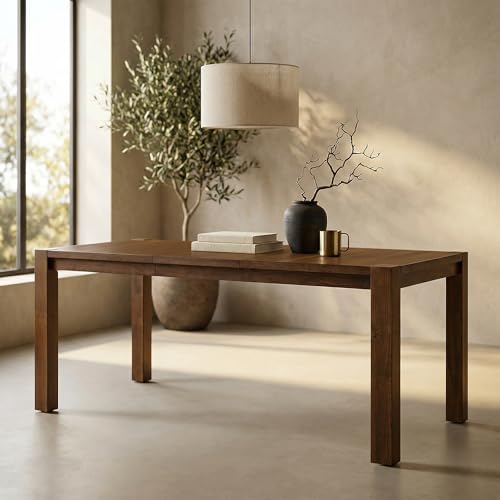
Farati 60"-80" Extendable Dining Table, Modern Rectangular Wood Kitchen Table, Farmhouse Expandable Dinner Table, Traditional Large Extension Meeting Desk for Dining Room, Living Room, Walnut
Check price on Amazon
DONGMUWUJEE 47"‑63" Solid Wood Extendable Dining Table for 4‑6 People | Splayed Thickened Legs, Expandable Kitchen Table, Mid Century Modern, Dinner Table for Small Space, Dining Room, Walnut
Check price on Amazon
ONBRILL 42"-106" Extendable Dining Table for 2-10 with Storage Legs, Walnut | Mid-Century Modern Oval Extendable Dining Table with 4 Removable Leaves, Round Dinner Table for Dining Room, Kitchen
Check price on Amazon
63-79 Inch Extendable Dining Room Table for 6-8 with Storage, Walnut | Expandable Dining Table, Built-In Open Storage Shelf, Farmhouse Style, Rectangular Wooden Top, Ideal for Kitchen, Dining Room
Check price on Amazon
ROCITY 70 Inch Large Dining Table for 4-6 People, Solid Wood Kitchen Table with Curved Wooden Legs, Mid Century Modern Rectangular Long Dinner Table for Dining Room, Walnut
Check price on AmazonReady to Compare Your Options?
Review the product selection above, then match each model against the tier system and buying factors in this guide to find the configuration that fits your dining space.
Explore Recommended Models