
Oak Sideboards: The Complete Buying Guide
Everything you need to know about choosing a solid oak sideboard for your dining room — from wood grades and storage layouts to finish options and style pairings.
Explore Recommended ModelsWhy an oak sideboard? Oak sideboards combine natural durability with warm, adaptable grain patterns that suit nearly every dining room style. This guide walks you through the practical details — construction, storage configurations, wood grades, and finishing — so you can choose confidently and avoid common buying mistakes.
Why Choose Oak for a Sideboard?
Oak has been a staple of furniture-making for centuries, and for good reason. Its dense grain resists everyday wear, making it a sensible choice for a dining room piece that sees regular use. Solid oak sideboards develop a subtle patina over time, and the open grain accepts stains and oils beautifully.
Two main oak varieties appear in furniture: white oak and red oak. White oak has tighter grain and better moisture resistance — a strong pick for humid climates. Red oak has a more pronounced, open grain with warmer undertones and is often the more common option in mid-range solid wood pieces. Both are durable; the difference is mostly aesthetic and in how they age.
Durability
Oak's dense structure resists dents and scratches better than softer woods like pine. A solid oak sideboard is a long-term investment that holds up to daily use.
Grain Character
The prominent grain of oak is a design feature. Rift-sawn and quarter-sawn cuts offer straighter, more uniform grain, while plain-sawn displays dramatic cathedral arches.
Finish Versatility
From natural oiled finishes to painted or whitewashed looks, oak accepts a wide range of treatments — making it adaptable to both modern farmhouse and contemporary spaces.
Recommended Oak Sideboards & Dining Storage
⚠️ AFFILIATE DISCLOSURE: This website contains affiliate links. As an affiliate Associate, we earn from qualifying purchases. If you make a purchase through these links, we may receive a small commission at no additional cost to you. Read our full affiliate policy.

Smuxee Oak Sideboard Cabinet, Freestanding Buffet Cabinet with Line Groove Design, Wood Storage Cabinet with Adjustable Shelf for Living Room, Entryway, Hallway
Check price on Amazon
IFGET 61.75" W Modern Arched Sideboard Buffet Cabinet with Storage, Natural | Fluted Arch Sideboard Cabinet w/Adjustable Shelves, Wooden Modular Kitchen Cabinet for Dining& Living Room, Entryway
Check price on Amazon
WAMAPT Buffet Cabinet with 4 Doors&2 Drawers, Large Wood Sideboard Table | Oak Coffee Bar Table 68 inch Kitchen Storage Cabinets, Modern Farmhouse Sideboard Credenza for Dining Room
Check price on Amazon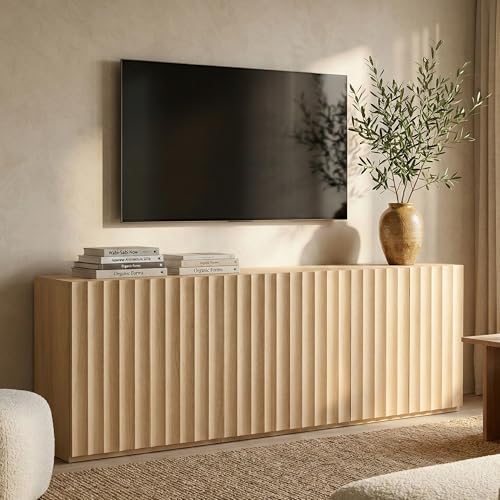
VividVibe Buffet Cabinet, 94.11"W Sideboard Buffet Cabinet with Storage | Coffee Bar Cabinet with 6 Adjustable Shelves, Fluted Console Cabinet Credenzas for Living Room Entryway Light Oak
Check price on Amazon
OneBlis 94.5" Sideboard Buffet Cabinets Set of 3 with Storage, Fluted Coffee Bar Cabinets with Adjustable Shelves, Credenza, Mid Century Modern Media Console for Living Room Dining Room, Oak
Check price on Amazon
ACCOHOHO Arched Door Sideboard Buffet Cabinet Set of 3, Natural Oak | Modular, Multi-Compartment Storage, Adjustable Shelf, Soft Close Hinges, Freestanding, for Dining Room, Living Room
Check price on AmazonTypes of Oak Sideboards
Sideboards come in several configurations, and the right one depends on how much you need to store and how much display space you want. Here's a practical breakdown of the main categories you'll encounter.
| Type | Best For | Key Features |
|---|---|---|
| Standard Sideboard | Everyday dining storage | Two to three doors with adjustable shelves, often with a central drawer bank |
| Oak Buffet | Hosting and serving | Wider surface area, deeper cabinets, sometimes with a raised back or hutch |
| Narrow Sideboard | Hallways and compact dining rooms | Slim depth (often under 16 inches), tall and space-efficient |
| Media-Converted Sideboard | Open-plan living-dining spaces | Cable management cutouts, open shelving, mixed storage |
| Mid-Century Oak Sideboard | Retro and modern interiors | Tapered legs, sliding doors, clean horizontal lines |
If your dining room is tight on floor space, a narrow sideboard can provide meaningful storage without blocking circulation. For larger rooms or open-plan layouts, a full-width oak buffet gives you a generous serving surface and deeper storage for linens and dinnerware.
Storage Layout: Doors, Drawers, and Shelves
The interior layout matters as much as the exterior. Consider what you actually need to store before choosing a configuration.
Door Cabinets
Best for bulky items — stacked dinnerware, serveware, and large platters. Adjustable shelves let you reconfigure as your collection changes.
Drawer Banks
Ideal for flatware, napkins, placemats, and smaller accessories. Look for dovetail joinery on premium pieces; stapled or nailed drawer boxes are a sign of entry-level construction.
Open Shelving
Works well for display — cookbooks, decorative bowls, or a wine rack insert. Keep in mind that open storage collects dust and requires more frequent tidying.
Combination Layouts
A mix of doors, drawers, and open sections offers the most flexibility. Mid-range and premium oak sideboards often use this balanced approach.
Wood Grades and Construction Quality
Not every "oak sideboard" is solid oak throughout. Understanding construction methods helps you evaluate what you're actually getting.
Solid oak: The frame and panels are made from oak boards. This is the most durable option and the one that ages most gracefully. Expect visible grain continuity and a heavier piece overall.
Oak veneer over engineered wood: A thin layer of real oak over plywood or MDF. This can be perfectly respectable — high-quality veneers are stable and resist warping — but it should be reflected in the product tier. Veneered pieces are common in the mid-range category.
Oak solids with non-oak secondary woods: Many traditional pieces use oak for visible surfaces and a secondary wood (like pine or poplar) for interior framing and drawer sides. This is a normal and acceptable practice.
When evaluating construction, check the following:
- Joinery: Dovetail drawers and mortise-and-tenon frames indicate higher-tier construction. Staples and cam-locks are typical of entry-level flat-pack pieces.
- Drawer runners: Metal ball-bearing slides are smoother and more durable than wood-on-wood runners.
- Back panels: A solid or thick veneered back panel adds rigidity. Thin hardboard backs are a cost-saving measure.
- Leg attachment: Bolted or corner-blocked legs are sturdier than simple screw attachment.
Finish Options: Oil, Lacquer, and Paint
The finish affects both appearance and maintenance. Here's how the main options compare.
| Finish | Look | Maintenance |
|---|---|---|
| Natural Oil | Warm, matte, close to raw wood | Re-oil every 12–24 months; spot-repairable |
| Hardwax Oil | Satin sheen with good grain depth | Occasional refresh; resistant to water rings |
| Lacquer / Polyurethane | Smooth, uniform film finish | Low maintenance; harder to repair scratches |
| Painted Oak | Opaque color with grain texture showing through | Touch-up paint for chips; hides grain variation |
| Whitewashed / Limed | Light, coastal, or Scandinavian feel | Similar to lacquer; avoid harsh cleaners |
If you prefer a low-maintenance piece, a lacquered or polyurethane finish is the practical choice. If you value repairability and the tactile feel of wood, an oiled finish is worth the extra upkeep. For more on protecting wood surfaces, see our wood polish and conditioner guide.
Matching an Oak Sideboard to Your Dining Room Style
Oak is versatile, but the style of the sideboard should harmonize with the rest of the room. A few reliable pairings:
Modern farmhouse: Choose a plain-sawn oak sideboard with a natural or whitewashed finish, simple hardware, and a substantial top. Pair with a modern farmhouse dining table for a cohesive look.
Mid-century modern: Look for tapered legs, sliding doors, and a warmer, honey-toned finish. A mid-century sideboard typically pairs well with mid-century upholstered dining chairs.
Contemporary minimalist: Opt for rift-sawn oak with straight grain, handleless doors, and a matte finish. Keep the silhouette low and horizontal to maintain clean lines.
Traditional and transitional: A full-width oak buffet with framed doors, a shaped top, and classic hardware suits formal dining rooms. Mixing in mixed materials — such as a stone top or metal accents — can bridge traditional and modern elements.
Sizing and Placement Tips
Getting the proportions right is essential. A sideboard that's too large overwhelms the room; one that's too small looks lost.
- Height: Standard sideboards sit around 30–36 inches high — comfortable for serving. Taller buffet-and-hutch combinations work as focal points but need more visual space.
- Width: As a rule of thumb, a sideboard should be roughly 50–75% the width of the dining table it accompanies, or about two-thirds the width of the wall it sits against.
- Depth: Most sideboards are 15–20 inches deep. If your dining room is a thoroughfare, a shallower depth (under 16 inches) keeps walkways clear.
- Clearance: Leave at least 36 inches of clearance in front of the sideboard for comfortable access to doors and drawers.
Ready to compare models? Browse our curated selection of oak sideboards and dining storage pieces above, or explore our full buffets and sideboards guide for more options.
View Recommended SideboardsFrequently Asked Questions
Is solid oak better than oak veneer?
Solid oak is more durable and repairable over the long term, making it the better choice for a long-term investment. High-quality oak veneer over engineered wood is stable and can look excellent, but it falls in a different tier — typically mid-range rather than premium. Neither is "wrong"; the choice depends on your priorities and the piece's construction quality.
How do I care for an oak sideboard?
Dust regularly with a soft cloth, avoid harsh chemical cleaners, and keep the piece out of direct sunlight to prevent uneven fading. Oiled finishes benefit from re-oiling every 12–24 months. Use coasters under drinks and felt pads under decorative objects to prevent scratches. See our wood care guide for details.
Can an oak sideboard work in a small dining room?
Yes — a narrow oak sideboard under 16 inches deep is a good fit for compact spaces. Prioritize vertical storage and choose a lighter finish to keep the room feeling open. Avoid full-width buffets unless the room has generous circulation space.
What's the difference between a sideboard and a buffet?
The terms are often used interchangeably, but a buffet typically refers to a wider, deeper piece designed for serving food during meals, while a sideboard is more general-purpose storage. In practice, many modern pieces blur the line, and either can work in a dining room.
Should I match the oak sideboard to my dining table?
Not necessarily. Matching wood tones creates a formal, unified look, while complementary tones — for example, a lighter oak sideboard with a darker walnut or painted table — can add depth and character. What matters most is that the proportions and overall style feel harmonious.
Choosing an oak sideboard comes down to four decisions: the type of storage you need, the construction quality you're willing to invest in, the finish that suits your maintenance habits, and the style that fits your room. Get those right, and you'll have a piece that serves your dining room beautifully for years.