
Rectangular Dining Table with Bench and Chairs
A complete research guide to choosing, arranging, and living with one of the most versatile dining configurations. Understand seating math, bench styles, clearance rules, and material choices before you commit.
Why This Configuration Deserves Your Attention
If you are researching dining furniture, you have likely narrowed your focus to a rectangular table. The rectangular silhouette is the workhorse of dining rooms: it fits against walls, aligns with kitchen islands, and offers predictable, even spacing for place settings. Adding a bench to one side and chairs to the other is not a stylistic whim. It is a deliberate layout decision that changes how many people you can seat, how much floor space you reclaim, and how the room feels on a daily basis.
This guide is written for the buyer who already knows a rectangular table is the right shape and now needs to decide whether a bench-and-chair mix is the correct configuration. We will walk through seating math, bench construction, clearance requirements, material trade-offs, and the practical routines of families who live with this setup every day. By the end, you should be able to evaluate any product listing with confidence and know exactly which questions to ask before adding it to your cart.
Seats More, Uses Less Floor
A bench places three or more diners along one side without the gaps that individual chairs create, and it tucks fully underneath when not in use.
Clean Visual Line
The bench side reads as a single horizontal element, which makes open-plan and small rooms feel calmer and less cluttered.
Family-Friendly
Children slide along a bench easily, and there are no chair backs to tip or legs to trip over on the bench side.
Flexible for Hosting
Benches absorb extra guests at holidays, while chairs on the opposite side keep individual comfort for everyday meals.
The Practical Case for a Bench-and-Chair Mix
A rectangular table paired with a bench on one long side and chairs on the other is one of the most efficient seating arrangements available. The reason is simple geometry: a bench eliminates the wasted space between chair legs and seat backs, allowing you to place diners shoulder to shoulder along the full length of the table. That density is why a 72-inch rectangular table with a bench can comfortably seat seven or eight people, while the same table with chairs on both sides often feels tight at six.
There is also a social dimension. Benches encourage a different kind of interaction. Children can be seated together without the formality of individual chairs, and adults on the bench side tend to lean in and share plates more naturally. If your household includes young kids, grandparents, or frequent casual gatherings, the bench side becomes the default family zone. The chair side, meanwhile, serves guests who prefer armrests, back support, or the ability to push back and stand without disturbing a neighbor.
Storage is another underrated benefit. Many benches are designed with a lift-up seat or a hollow base, which gives you a place for table linens, seasonal serveware, or board games. Even a backless bench without storage frees the floor because it slides completely under the table. If you are working with a compact dining area, this single feature can be the difference between a room that feels open and one that feels permanently crowded. For a deeper look at how bench seating compares with all-chair layouts in tight spaces, see our guide to a small dining table with bench and chairs.
How Many People Will It Seat?
Seating capacity is the first question most buyers ask, and it is also where product listings tend to be optimistic. The honest answer depends on table length, bench length, and the width of your place settings. As a working rule, allow 24 inches of linear table edge per person for comfortable dining, and 20 inches if you are willing to sit closer for casual meals.
A 60-inch rectangular table can seat two chairs per long side plus one at each end, for six total. If you replace one long side with a bench, that bench can often hold three people, pushing the total to seven. A 72-inch table with a bench on one side and three chairs opposite, plus end chairs, comfortably seats eight. Tables in the 84-inch and longer range, typically found in the premium and luxury tiers, can seat four along each long side with end seating for ten or more, though this is best reserved for rooms with generous clearance.
| Table Length | Typical Configuration | Comfortable Seating | Best Room Type |
|---|---|---|---|
| 48–54 inches | Bench on one side, 2 chairs opposite, no end chairs | 4–5 people | Apartments, breakfast nooks |
| 60 inches | Bench on one side, 3 chairs opposite, 1–2 end chairs | 6–7 people | Small to mid-size dining rooms |
| 72 inches | Bench on one side, 3 chairs opposite, 2 end chairs | 7–8 people | Standard family dining rooms |
| 84–96 inches | Bench on one side, 4 chairs opposite, 2 end chairs | 8–10 people | Open-plan and formal dining rooms |
Keep in mind that bench length does not need to match table length exactly. A bench that is 12 to 18 inches shorter than the table looks intentional and leaves room for end chairs. A bench that extends beyond the table, on the other hand, can block walkways and look unbalanced. If you are comparing this setup with a traditional all-chair arrangement, our breakdown of a dining table with 6 chairs is a useful reference point for capacity expectations.
Bench Styles: Backless, Backed, Upholstered, and Storage
The bench is the variable that most affects comfort, function, and visual weight. There is no single best bench; the right choice depends on who sits there most often and what the room needs to do. Here is how the main categories compare.
Backless Benches
Backless benches are the most space-efficient option. They slide fully under the table, leaving a clean sightline and freeing floor space when the table is not in use. They suit casual meals, kids' seating, and rooms where the dining area doubles as a walkway. The trade-off is comfort: without a backrest, adults will not want to linger for long dinners. If you choose a backless bench, prioritize seat depth of at least 15 inches and a slightly contoured or cushioned top. A wood table with bench in a backless configuration is a classic pairing that reads warm and unfussy.
Benches with Backrests
A bench with a backrest delivers comfort much closer to a dining chair while still allowing three people to sit close together. These benches are heavier and do not tuck under the table as completely, so they demand more clearance behind them. They are the right pick for households where the bench side is used by adults every night. Look for a backrest angle between 100 and 110 degrees, which supports the lower back without forcing an upright posture. If you need the bench to double as seating elsewhere, our notes on a storage bench explain how to combine back support with hidden compartment space.
Upholstered Benches
Upholstery adds cushioning and a softer visual texture, which helps balance the hard lines of a rectangular table. Performance fabrics and easy-clean covers are essential in family homes. An upholstered bench works especially well in mid-range and premium setups where the table has a stone or glass top and you want to soften the overall composition. Pair it with matching or complementary seat pads; our guide to rattan chair cushions covers the measurement and attachment details that apply to bench cushions as well.
Storage Benches
A storage bench with a lift-up seat or a front drawer is a quiet organizational win. It is the natural home for table runners, napkins, and seasonal centerpieces, which keeps the tabletop clear and reduces trips to the pantry. Storage benches tend to sit in the mid-range to premium tiers because of the hardware and joinery involved. Check that the lid has a soft-close hinge or a safety stay, especially in homes with young children.
Sizing, Clearance, and Room Layout Rules
A rectangular table with a bench and chairs can transform a room, but only if the numbers work. These are the measurements that matter most, and they apply whether you are buying an entry-level set or a premium solid wood configuration.
- Measure the room's usable dining zone. Ignore the full room dimension and measure the area you can dedicate to dining without blocking doorways, traffic paths, or the kitchen work triangle.
- Allow 36 inches of clearance on all pull-out sides. Chairs need roughly 36 inches behind them to slide back comfortably. The bench side needs the same clearance if it has a backrest; a backless bench needs less, but you still want 24 inches for people to step in and out.
- Account for the bench's stored footprint. A backless bench that tucks under the table effectively adds zero clearance when not in use. A backed bench adds its full depth plus clearance, so treat it like a chair row.
- Check table apron and leg placement. A bench cannot slide under a table with a deep apron or corner legs that intrude. Look for tables with trestle bases or legs set inward from the corners.
- Leave 12 to 18 inches between the table end and the nearest wall. This prevents end chairs from pinning against the wall and keeps the bench side accessible.
- Test the walkway. If the bench side faces a main traffic route, a backless bench is the safer choice because it keeps the visual and physical profile low.
For rooms where every inch counts, a small rectangular dining table in the 48-to-54-inch range paired with a backless bench is the most efficient combination. If you have a longer wall and want a statement piece, a wood rectangle dining table in the 72-inch range with a bench on one side gives you family capacity without overwhelming the room. And if you are weighing a rectangular footprint against a round one, our comparison of a marble top round dining table explains where round tables win and where rectangular tables are more practical.
Materials and Quality Tiers: What Your Choice Signals
Dining furniture is sold across a wide quality spectrum, and the descriptors below are a neutral way to compare products without reference to any specific number. Use them to set expectations about joinery, finish durability, and longevity. The same tier language applies to the table, the bench, and the chairs, and mixing tiers is normal: many buyers pair a premium table with mid-range chairs and a balanced-tier bench.
| Tier | Typical Construction | Durability Signals | Best For |
|---|---|---|---|
| Entry-Level | Engineered wood with veneer, basic metal or composite legs | Light everyday use, occasional hosting | First apartments, starter dining areas, rental units |
| Mid-Range | Solid wood frame with veneer panels, reinforced joinery | Daily family use, solid hardware, consistent finish | Family homes, everyday dining with children |
| Premium | Solid hardwood, mortise-and-tenon or dowel joinery | Heavy-duty use, repairable surfaces, tight grain control | Long-term family dining, frequent entertaining |
| Luxury | Select hardwoods, stone or glass tops, artisan finishing | Commercial-grade stability, heirloom construction | Formal dining rooms, design-led interiors, statement spaces |
Material choice interacts with maintenance. Solid wood is repairable and ages gracefully but benefits from coasters and humidity control. Stone and glass tops resist stains and scratches but are unforgiving of heavy impacts. Metal legs add rigidity and a modern line, and our guide to metal dining table legs covers the stability and floor-protection details that matter in a bench-and-chair layout. If sustainability is part of your decision, the principles in our sustainable wood overview apply directly to hardwood dining tables and benches.
For a farmhouse-leaning room, a solid wood farmhouse dining table and chairs set shows how the bench-and-chair mix fits a rustic palette. If you prefer a more tailored look, a white and wood dining table pairs naturally with a painted bench and neutral upholstered chairs. And if your table is a stone-top statement piece, the marble top dining table guide explains the sealing and care routines that keep the surface looking its best.
How to Set Up the Room: A Step-by-Step Plan
Once the furniture arrives, the arrangement itself determines whether the bench-and-chair layout feels effortless or awkward. Follow these steps in order, and resist the urge to skip the measuring stage.
- Place the table first, centered on the light fixture or the longest uninterrupted wall. Do not center it on the room if the room has an off-center traffic path; center it on the usable dining zone instead.
- Decide which side gets the bench. The bench usually goes against the wall, under a window, or on the side with the least traffic. Chairs go on the open side so guests can pull out without stepping into a walkway.
- Position the bench first, then the chairs. Slide the bench into place and check that it clears the table apron and legs. Then space the chairs evenly, leaving 6 to 8 inches between chair arms where possible.
- Add end chairs only if clearance allows. End chairs are the first thing to remove in a tight room. If the table has a trestle base, end chairs are often more comfortable than at a four-leg table with corner posts.
- Check the pull-out zone. Sit in each position, slide back, and stand up. If you cannot stand without pushing the bench or hitting a wall, adjust the layout before you commit to it.
- Layer the lighting and centerpiece. A linear centerpiece echoes the table's shape; a pendant or chandelier centered over the table anchors the arrangement. Keep the bench side visually quiet so the bench reads as a clean line.
If you are still deciding between this layout and a round-table arrangement, our guide to a round dining room table and chairs explains how circulation differs. For households that host large gatherings, a dining room table set of 8 shows the capacity ceiling for a conventional all-chair set, which is a useful benchmark against the bench-and-chair configuration.
Recommended Rectangular Dining Tables with Bench and Chairs
⚠️ AFFILIATE DISCLOSURE: This website contains affiliate links. As an affiliate Associate, we earn from qualifying purchases. If you make a purchase through these links, we may receive a small commission at no additional cost to you. Read our full affiliate policy.

NicBex 6 Piece Farmhouse Dining Table Set, Wooden Dinner Table Set for 6, 58.5" Rectangular Table, 4 Upholstered Linen Dining Chairs & Bench, Dark Walnut
Check price on Amazon
Zevemomo 6-Piece Solid Wood Dining Table Set, Wooden Legs Table Set, Brown | Including 1 Dining Table, 4 Upholstered Chairs and 1 Bench, Dining Table Sets for 6, Table Set for Dining Room, Kitchen
Check price on Amazon
Karl home 6-Piece Dining Table Set for 6, Solid Wood, Chairs&Bench, Walnut | Mid-century dining table with bench&chairs,padded seats&backrests,compact design,for kitchen/small apartment/dining room
Check price on Amazon
Morden Fort Dining Table Set for 6, Farmhouse Wooden Table & Upholstered Bench & 4 Dining Chairs, Kitchen Dining Set with Nailhead Accents, Rectangular Table Sets for 6 for Kitchen/Dining Room
Check price on Amazon
Fkhouse 43.3" Dining Room Table Set for 4, Drawer, 2 Chairs & Bench, Walnut | Kitchen Table and Chairs, Space-Saving Tuck-Under Chairs and Bench, Pull-Out Storage Drawer, Upholstered Seats, Bench Shelf
Check price on Amazon
Roundhill Furniture Prato 6-Piece Dining Set, Dining Table with 4 Cross Back Chairs and Bench, Antique White and Distressed Oak Finish
Check price on Amazon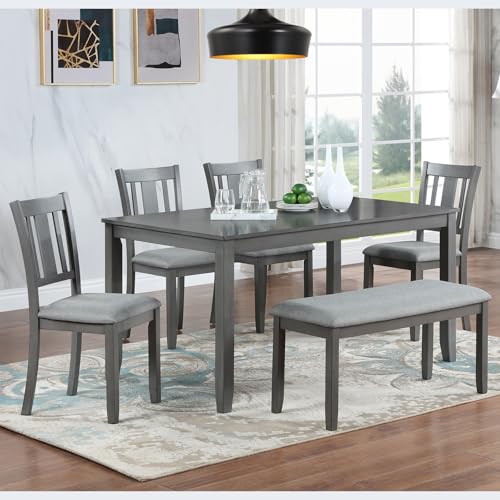
KEIKI 6-Piece Standard Height Dining Table Set with Rectangular Table, 4 Upholstered Slatted Backrset Chair, Bench, for 6 Person, Modern Style Table Set, Easy Assembly, for Kitchen, Dining Room, Gray
Check price on Amazon
Karl home Dining Table Set for 6 w/Bench and 4 Chairs, Solidwood, Nature | Farmhouse dining table with bench & 4 chairs, padded seats&backrests,compact design,for kitchen/small apartment/dining room
Check price on AmazonWho Thrives with This Setup (and Who Might Not)
The bench-and-chair mix is not universally superior. It is a strong fit for specific households and a weaker fit for others. Being honest about which group you belong to will save you from a purchase you regret.
Strong Fits
- Families with young children who need easy, safe access to the table and a forgiving seating surface.
- Open-plan homes where the dining area sits on a traffic path and needs a low visual profile.
- Households that host casual gatherings more often than formal dinners.
- Smaller rooms where tucking the bench under the table reclaims meaningful floor space.
- Buyers who want maximum seating capacity from a single rectangular footprint.
Weaker Fits
- Formal dining rooms where symmetry and individual chair placement are part of the design language.
- Households where every diner needs armrests and independent back support at every meal.
- Rooms with no wall or window to anchor the bench side, which can make the bench feel adrift.
- Buyers who frequently rearrange seating for different group sizes and prefer the flexibility of all chairs.
If you recognize yourself in the strong-fit list, the next step is to compare specific products. Our overview of a wood table covers grain and finish differences that matter for a bench-and-chair set, while the dining table with benches that fit underneath guide focuses on the tuck-under geometry that makes this layout so space-efficient. For a scaled-down alternative in a second home or apartment, a small wood dining table with a backless bench is a practical pairing.
Ready to Compare Real Configurations?
The product section above highlights rectangular dining tables with bench and chair options across entry-level, mid-range, and premium tiers. Use the tier language in this guide to match each product to your household's daily use, then check availability through the links provided.
View Recommended SetsFrequently Asked Questions
What is the main advantage of a rectangular dining table with bench and chairs?
The main advantage is seating density combined with space efficiency. A bench places three or more diners along one side without the gaps created by individual chair legs, and it tucks fully under the table when not in use. That means you seat more people in the same footprint, and the room reads as less cluttered. Chairs on the opposite side preserve individual comfort and back support for everyday meals.
How many people can a rectangular dining table with bench and chairs seat?
Most configurations seat six to eight people. A 60-inch table with a bench on one side, three chairs opposite, and one or two end chairs seats six to seven. A 72-inch table with the same arrangement seats seven to eight comfortably. Tables 84 inches and longer, typically in the premium and luxury tiers, can seat eight to ten with a bench on one side and chairs on the other.
Is a dining bench comfortable for everyday use?
Yes, if the bench has adequate seat depth, a supportive backrest, and quality cushioning. Backless benches are fine for casual or occasional seating but are not ideal for long dinners. Benches with a backrest angled between 100 and 110 degrees and an upholstered seat deliver comfort close to a standard dining chair. Prioritize seat depth of at least 15 inches and a firm, resilient cushion.
What size rectangular table works best with a bench and chairs?
Aim for a table at least 60 to 72 inches long and 36 to 40 inches wide for a bench-and-chair arrangement with end seating. This allows three place settings per long side plus end seats. Allow 36 inches of clearance on the chair pull-out side and at least 24 inches behind a backless bench. For tighter rooms, a 48-to-54-inch table with a backless bench and two chairs opposite is the most efficient option.
Can a rectangular dining table with bench and chairs fit in a small room?
Yes. Because a backless bench pushes fully under the table, it reduces the effective footprint compared with an all-chair setup. Choose a 48-to-60-inch table, opt for a backless or low-profile bench, and position the bench side against a wall or under a window. Leave at least 24 inches of clearance behind the bench for access and 36 inches on the chair side. Measure the table apron and leg placement first, since a deep apron can prevent the bench from tucking in.
Should the bench match the table material?
It does not have to. A matching bench creates a unified, intentional look, especially in solid wood setups. A contrasting bench, such as an upholstered bench with a wood table or a painted bench with a natural wood top, can soften the arrangement and add visual interest. What matters more is that the seat height, depth, and finish durability suit the room and the people who use it daily.