


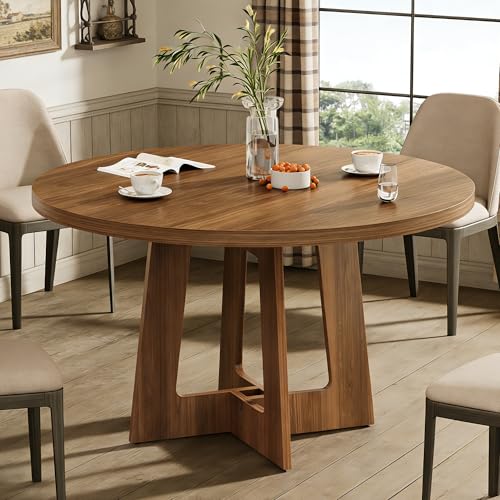


What Makes Walnut a Premium Choice for Round Dining Tables
Walnut has long been the wood of choice for fine furniture. Its tight, interlocking grain resists wear, and its natural color deepens beautifully with age. A round walnut dining table pairs that material heritage with a sociable silhouette — no head of the table, no sharp corners, and a footprint that works in both compact breakfast nooks and generous dining rooms.
Unlike veneered tables, solid walnut pieces develop a patina over time that many homeowners consider an asset rather than a flaw. If you value furniture that improves with use, walnut deserves a close look.
Dense, Durable Grain
Walnut's closed grain resists dents and scratches better than many open-grain woods, making it a practical choice for daily family meals.
Rich, Warm Color
From honey-brown to deep chocolate, walnut's natural tones bring warmth to neutral palettes and contrast beautifully with lighter floors.
Sociable Round Shape
Round tables remove the hierarchy of rectangular seating, encouraging conversation and making small rooms feel more open.
Heirloom Potential
A well-cared-for solid walnut table is a long-term investment that can be refinished and passed down through generations.
Walnut Grades and What They Mean for Your Table
Not all walnut is equal. The grade affects appearance, stability, and how the table ages. Here is a practical breakdown of the tiers you will encounter:
| Tier | Characteristics | Best For |
|---|---|---|
| Entry-level | Walnut veneer over engineered core; uniform grain pattern; lighter tone | Apartments, first dining setups, accent pieces |
| Mid-range | Solid walnut top with veneer or solid secondary components; some color variation | Family dining rooms, everyday use |
| Premium | Solid walnut throughout; kiln-dried for stability; rich heartwood color | Long-term homes, design-focused interiors |
| Luxury | Hand-selected figured walnut, book-matched grain, artisanal joinery | Statement dining rooms, collector pieces |
For most households, a mid-range solid-top table offers the best balance of durability and natural character. If you want the piece to last decades and be refinishable, prioritize a premium solid walnut top. For a stylish but lighter-use table, an entry-level veneer can work well — just manage expectations about refinishing.
Choosing the Right Size for Your Space
Round tables are forgiving in tight rooms, but size still matters. A table that is too large crowds circulation; too small and it cannot seat your household comfortably. Use this guide:
| Table Diameter | Seats | Room Fit |
|---|---|---|
| 36–40 inches | 2–3 | Breakfast nooks, small apartments |
| 42–48 inches | 4 | Standard dining rooms, family kitchens |
| 54–60 inches | 6 | Larger dining rooms, open-plan spaces |
| 60–72 inches | 8 (with extension) | Entertaining-focused homes |
As a rule of thumb, allow at least 36 inches of clearance between the table edge and walls or other furniture for comfortable chair pull-out. In a small room, a 42-inch round table with a pedestal base can seat four without feeling cramped. If you need occasional extra seating, look at a round dining table extendable option.
For a two-person household, a round dining table for 2 keeps the footprint light. For larger families, a round dining table for 6 to 8 seats is the practical sweet spot. If you entertain often, a round dining table for 8 with lazy susan adds convenience at the center.
Base Styles: Pedestal vs. Legs
The base determines both the look and the seating comfort of a round walnut table.
- Pedestal base: Best for small rooms and maximum legroom. No corner legs to bump into, and chairs can tuck in all around. Look for a wide, weighted pedestal for stability.
- Four-leg base: Traditional and sturdy, but the legs can limit where chairs sit. Works well in larger rooms where circulation is not an issue.
- Trestle or X-base: A modern statement that pairs beautifully with walnut's grain. Ensure the trestle does not obstruct seating.
- Metal legs: If you love walnut but want a contemporary edge, a metal dining table legs pairing creates an industrial-warm mix.
For a design-led interior, a mid-century modern table silhouette — often with tapered legs and a rounded top — showcases walnut particularly well.
Finishes and Their Trade-offs
The finish protects the wood and shapes the final look. Here are the common options for a walnut table:
- Oil finish: Natural feel, easy to spot-repair, but requires periodic re-oiling. Ideal for those who love the tactile grain.
- Lacquer: Durable and low-maintenance, with a smooth film. Can show wear over years but is refinishable.
- Polyurethane: Highly protective against spills and heat; slightly plastic feel. Good for busy households.
- Wax: Soft, matte look with a subtle sheen; needs regular upkeep. Best for lower-traffic dining rooms.
If the table will host daily family meals, a lacquer or polyurethane finish is the pragmatic choice. For a formal dining room, an oil finish lets the walnut's character shine.
Styling a Round Walnut Dining Table
A walnut table is a strong visual anchor. Keep the surrounding palette calm so the wood remains the star.
- Chairs: Upholstered seats in cream, olive, or rust complement walnut. For a cohesive look, walnut dining chairs create a matched set; for contrast, upholstered dining chairs in linen soften the look.
- Centerpiece: A low bowl or vases with seasonal stems keeps sightlines open. A round table with lazy susan in the middle is a practical choice for family-style serving.
- Lighting: A pendant or chandelier centered above the table adds intimacy. Choose a fixture proportional to the table diameter.
- Sideboard: A walnut sideboard or walnut buffet extends the wood story and provides serving storage.
- Rug: A round rug slightly larger than the table grounds the arrangement and protects floors.
For a warmer, relaxed feel, layer in walnut bar stools at an adjacent kitchen island to tie the spaces together.
Care and Maintenance for Longevity
Walnut is forgiving, but a few habits keep it looking its best for decades:
- Wipe spills promptly; walnut is not waterproof and standing moisture can leave rings.
- Use coasters and trivets for hot dishes and drinks.
- Dust with a soft, slightly damp cloth weekly; avoid abrasive cleaners.
- Keep the table away from direct sunlight and heat sources to prevent uneven fading.
- Re-oil oil-finished tables every 6–12 months, or when the surface looks dry.
- For deeper restoration, light sanding and refinishing can renew a solid walnut top.
Proper care is a worthwhile investment — a well-maintained walnut table often outlasts several sets of chairs.
Round Walnut Table vs. Other Options
Comparing walnut with alternatives helps confirm the choice:
| Material / Shape | Strengths | Considerations |
|---|---|---|
| Round walnut | Warm tone, durable grain, sociable shape, heirloom potential | Needs care; solid versions are a higher-tier investment |
| Round white dining table | Bright, airy, versatile in light palettes | Can show scuffs more readily; less warm than walnut |
| Marble top dining table | Luxury look, cool elegance, easy wipe-clean | Heavy, can chip, needs sealing; cold feel |
| Vintage round tables | Character, often solid wood, unique patina | Condition varies; may need restoration |
| Large round tables | Generous seating for entertaining | Need substantial room clearance |
If you are furnishing a compact rental or need a temporary option, rental options can bridge the gap until you commit to a solid walnut piece.
Common Questions About Round Walnut Dining Tables
Is solid walnut better than walnut veneer?
For longevity and refinishability, solid walnut is superior. Veneer can look beautiful and is lighter, but it cannot be sanded or refinished if damaged. Choose solid if the table will see daily use and you want an heirloom.
How many people can a 48-inch round table seat?
A 48-inch round table comfortably seats four, with a squeeze for five. It is the most popular size for family dining rooms.
Does walnut scratch easily?
Walnut's dense grain resists scratches better than many open-grain woods, but no wood is scratch-proof. Use placemats and felt pads on chair legs to minimize wear.
Can a round walnut table work in an open-plan space?
Yes — the round shape improves flow and avoids sharp corners in traffic paths. Pair it with a walnut sideboard to define the dining zone without blocking sightlines.
What chairs pair best with a round walnut table?
Both matched walnut dining chairs and contrast upholstered dining chairs work well. For a modern look, consider mid-century modern upholstered dining chairs.
How do I protect a walnut table from water rings?
Wipe spills immediately, use coasters, and maintain the finish. Oil-finished tables are more vulnerable than lacquered or polyurethane-finished ones, so re-oil regularly.
Ready to Choose Your Round Walnut Dining Table?
Use the recommendations above to match the right size, base style, and grade to your space. Then explore our curated selection of round walnut tables to find the one that fits your home.
View Top RecommendationsFinal Thoughts
A round walnut dining table is more than furniture — it is a gathering point that combines natural beauty, durability, and a shape that brings people together. By understanding grades, sizing, finishes, and care, you can choose a table that serves your household for years. Whether you lean toward a pedestal base for a compact nook or a trestle design for a statement dining room, walnut rewards thoughtful selection.
For related reading, explore our guides on walnut tables, round dining tables for 4 with chairs, and round tables with six chairs to round out your dining room plan.