
Walnut Sideboard Buying Guide: Styles, Storage & Care
Thinking about a walnut sideboard for your dining room? This guide walks you through wood grades, door and drawer configurations, finish options, and practical care routines so you can choose a piece that fits your space and your daily life.
Explore Walnut SideboardsWhy walnut? Walnut is one of the most sought-after hardwoods for dining room storage. Its deep, chocolate-brown heartwood with subtle purple and golden undertones gives a sideboard a warm, grounded presence that anchors a dining space. Beyond looks, walnut is dense, dimensionally stable, and takes a fine finish beautifully — qualities that make a well-built walnut sideboard a genuine long-term investment.
What Exactly Is a Walnut Sideboard?
A sideboard — sometimes called a buffet or credenza — is a low, wide storage cabinet designed for the dining room. It typically sits against a wall, holds dinnerware, glassware, linens, and serveware, and doubles as a serving surface during meals and gatherings. When that cabinet is built from walnut, the wood itself becomes part of the room's design language.
Walnut sideboards come in several functional formats: closed-door cabinets, drawer-heavy units, open-shelf credenzas, and hybrid designs that combine doors, drawers, and display niches. If you prefer a drawer-forward layout, a sideboard with drawers keeps flatware and smaller items organized, while a sideboard cabinet with adjustable shelves suits larger platters and serving pieces.
Why Choose Walnut for a Dining Room Sideboard?
- Distinctive grain and color: Walnut's flowing grain and rich brown tones bring depth that lighter woods can't match. It pairs naturally with both warm neutrals and moody, dark palettes.
- Hardwood durability: Walnut is a dense hardwood that resists dents and warping better than many softer woods, making it well suited to a piece that sees daily use.
- Timeless style range: From mid-century silhouettes to traditional buffets, walnut adapts to nearly every design language. A vintage mid-century credenza or sideboard in walnut remains one of the most collected furniture categories.
- Ages gracefully: Walnut often deepens and warms over time, developing a patina that many homeowners consider a feature rather than a flaw.
- Strong resale and heirloom potential: Solid walnut pieces hold their appeal across generations, especially when construction quality is high.
Popular Walnut Sideboard Styles
Style affects both how a sideboard functions and how it fits the rest of your dining room. Here are the main directions you'll encounter:
Mid-Century Modern
Tapered legs, clean lines, and often a mix of doors and drawers. Pairs beautifully with a round walnut dining table and sculptural chairs.
Traditional Buffet
Ornate hardware, framed doors, and a more substantial profile. A classic walnut buffet format that suits formal dining rooms.
Curved & Sculptural
Soft edges, rounded corners, and fluted or reeded fronts. A curved sideboard softens hard lines in contemporary spaces.
Modern Minimalist
Handleless fronts, floating plinths, and restrained detailing. Lets the walnut grain do the talking with no visual clutter.
Storage + Display Hybrid
Combines closed storage with open shelving. A sideboard with hutch adds vertical display space for glassware and decor.
Vintage & Antique
Older pieces often use solid walnut and joinery that modern production rarely matches. A vintage sideboard cabinet can be a character-rich centerpiece.
Construction Quality: Reading the Tiers
Not all walnut sideboards are built the same way, and understanding the quality tiers helps you match expectations to construction. Rather than focusing on figures, use these relative tiers to compare what you're actually getting:
| Tier | Typical Construction | Best For |
|---|---|---|
| Entry-level | Walnut veneer over engineered wood; basic hardware; assembled joinery. | Occasional use, rental-friendly setups, accent storage. |
| Mid-range | Walnut veneer with solid wood edges; soft-close hinges; reinforced shelf supports. | Everyday family dining with a balance of durability and finish quality. |
| Premium | Solid walnut carcass and fronts; dovetail or doweled drawers; high-grade hardware. | Long-term use, heirloom intent, rooms where the sideboard is a focal piece. |
| Luxury / flagship | Hand-selected solid walnut, mortise-and-tenon joinery, custom finishes, curated hardware. | Design-led dining rooms, collector-grade furniture, custom-fit spaces. |
When assessing a piece, check the drawer interiors and the back panel. A solid build usually extends quality materials to parts you don't see. If you're comparing options, our broader walnut buffet cabinet guide covers similar evaluation criteria across cabinet formats.
Storage Configuration: Doors, Drawers, and Open Shelves
The right configuration depends on what you actually store. Think through your dinnerware and serving pieces before choosing:
- Doors with adjustable shelves: Best for platters, bowls, and tall pitchers. Look for at least two shelf positions and a weight-rated shelf.
- Drawers: Ideal for flatware, napkins, placemats, and candles. Soft-close runners reduce noise and wear.
- Felt-lined top drawers: A nice detail for silverware and delicate items; often a marker of mid-range and above.
- Open shelving: Great for display but demands tidiness. Consider baskets or lidded boxes for visual calm.
- Wine storage inserts: Some walnut sideboards include a dedicated rack or cubby; useful if the unit doubles as a bar station.
If your dining room also serves as a beverage area, a wet bar setup can complement a walnut sideboard by keeping glassware and mixing tools close at hand. And if you're still deciding on the table that will sit opposite the sideboard, our guide to walnut tables covers proportion and finish matching.
Sizing and Placement in Your Dining Room
A walnut sideboard should feel intentional, not crowded. Use these guidelines to find the right fit:
- Height: Standard sideboard height sits around counter height, which keeps serving comfortable and maintains sightlines.
- Length: A common rule is roughly two-thirds the length of the dining table for visual balance in a rectangular room.
- Clearance: Leave at least 36 inches of walkway between the sideboard and the table or adjacent walls where people move.
- Depth: Standard depths range from compact to deep; deeper units hold more but consume floor space. Measure door swing and drawer pull-out before committing.
- Wall anchoring: Tall or heavily loaded units should be anchored to the wall, especially in homes with children or pets.
In smaller dining rooms, a slim walnut sideboard can replace a full buffet without overwhelming the space. If the room is tight, explore small dining room layout ideas to coordinate storage with seating.
Finish Options and Care for Walnut
Walnut responds differently to different finishes. The finish you choose affects color depth, protection level, and maintenance rhythm:
- Oil finish: Penetrates the wood, feels natural, and can be spot-repaired. Requires periodic re-oiling.
- Lacquer or polyurethane: Forms a protective film that resists spills and daily wear. Less repairable if damaged but low maintenance.
- Wax finish: Soft sheen, traditional feel; needs regular waxing and careful spill management.
Regardless of finish, keep these care habits in place:
- Dust weekly with a soft, lint-free cloth.
- Wipe spills promptly with a slightly damp cloth, then dry immediately.
- Avoid harsh chemical cleaners, abrasive pads, and silicone-based polishes that can build up.
- Keep the sideboard out of direct sunlight and away from heat sources to prevent fading and drying.
- Use coasters and trivets under hot or wet items.
- Apply a wood conditioner or appropriate polish periodically according to the finish type.
For a deeper routine, our dining furniture care and maintenance section covers wood polishing, humidity control, and scratch repair in more detail.
Pairing a Walnut Sideboard With the Rest of the Room
Walnut is a strong anchor material, so balance matters. A few pairing strategies that work well:
- With a walnut dining table: Match undertones rather than exact tones to avoid a showroom-set look. A round walnut dining table with a rectangular sideboard creates a pleasing shape contrast.
- With upholstered chairs: Soft textiles temper walnut's visual weight. Upholstered dining chairs in light or mid-tone fabrics keep the room from feeling heavy.
- With metal accents: Brass, bronze, and matte black hardware all sit comfortably against walnut. Metal dining table legs can echo hardware tones for cohesion.
- With table decor: Keep the sideboard top curated — a lamp, a tray, and a few vases are usually enough. Too many small objects compete with the grain.
- With wall decor: A dining room wall hanging above the sideboard can visually connect the piece to the room's architecture.
Sustainability and Responsible Sourcing
Walnut grows slowly, which makes sourcing an important consideration. Look for brands that disclose their wood origin, use certified or reclaimed lumber, and finish with low-emission coatings. Buying vintage or second-hand walnut is one of the most sustainable routes — it keeps existing hardwood in circulation and often delivers construction quality that rivals new premium pieces. If sustainability matters to you, our sustainable wood guide explains what to look for in certifications and reclaimed materials.
Recommended Walnut Sideboards & Buffet Cabinets
⚠️ AFFILIATE DISCLOSURE: This website contains affiliate links. As an affiliate Associate, we earn from qualifying purchases. If you make a purchase through these links, we may receive a small commission at no additional cost to you. Read our full affiliate policy.
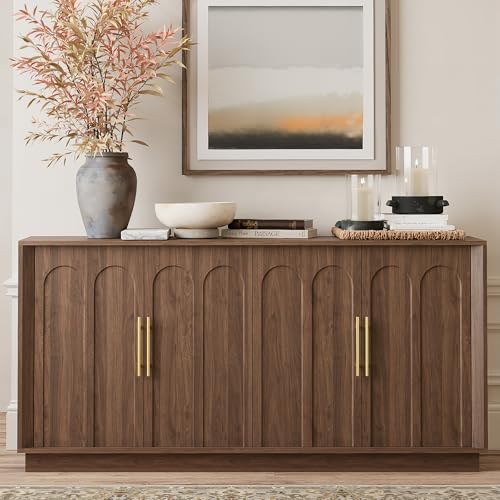
FORTUNETEC 67" Sideboard Buffet Cabinet with Storage, Arched Doors, Walnut | Mid Century Modern Accent Cabinet with Wood Gain, Modular Media Console, Credenza for Living Dining Room Kitchen Entryway
Check price on Amazon
Bifins 31.5” Dark Walnut Sideboard Buffet Cabinet with Storage Set of 3 | Long,Deep Brown,Arched Door,Accent Cabinet,Adjustable Shelf,TV Stand,Modular Cabinet,Mid Century Modern,94.5inch Length
Check price on Amazon
WLIVE 67" Large Buffet Sideboard Cabinet with Storage, Walnut Fluted Doors | Mid-Century Wood Credenza with Adjustable Shelves for Living Room, Dining Room, Kitchen & Coffee Bar, TV Stand for 75'' TVs
Check price on Amazon
ONBRILL 48 Inch Buffet Cabinet with Storage, Walnut | Farmhouse Sideboard Buffet w/2 Drawers and 3 Doors, Wood Coffee Bar Cabinet with Adjustable Shelves for Kitchen, Living Room
Check price on Amazon
Bifins 31.5” Walnut Sideboard Buffet Cabinet with Storage Set of 3 | Long,Brown,Arched Door,Accent Cabinet,Adjustable Shelf,TV Stand,Modular Cabinet,Mid Century Modern,94.5inch Length
Check price on Amazon
VASAGLE Storage Cabinet, Sideboard with Adjustable Shelves | Mid-Century Modern Buffet Cabinet, 55.1 x 15.7 x 29.5 Inch, for Living Room, Walnut, MIRIANA Collection ULSC631KX01
Check price on Amazon
OneBlis 55" Fluted Sideboard Buffet Cabinet with Sliding Door, Mid-Century Modern Wood Sideboard, Adjustable Shelf, Coffee Bar Cabinet with Storage for Kitchen, Walnut
Check price on Amazon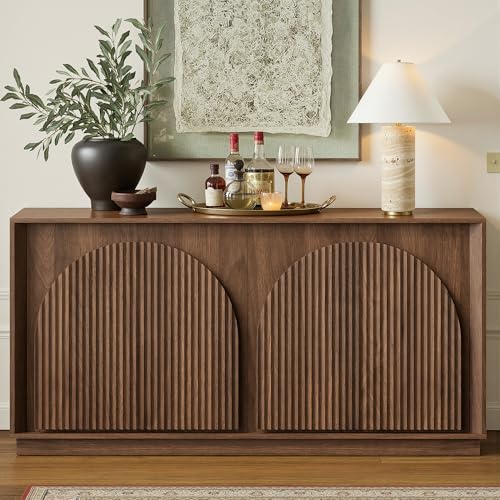
win2win 65" Sideboard Buffet Cabinet with Storage, Modular Credenza, Walnut | Modern Accent Cabinet for Living Dining Room Entryway, Media Console TV Stand, Fluted Double-Layered Arched Doors, Wood Grain
Check price on AmazonA Practical Buying Checklist
Before you commit to a walnut sideboard, run through this list:
- Measure the wall, walkway clearance, and door/drawer swing space.
- Confirm whether the carcass and fronts are solid walnut or walnut veneer over a stable core.
- Check hardware quality — soft-close hinges, full-extension drawer runners, and solid pulls.
- Verify shelf adjustability and weight ratings for heavy dinnerware.
- Inspect the finish type and ask about touch-up or repair options.
- Confirm anchoring hardware is included for wall stability.
- Check delivery and assembly terms, especially for larger units.
If you're weighing a walnut sideboard against other storage formats, our guides to the sideboard cabinet and walnut buffet formats break down how each type handles everyday storage and serving needs.
Frequently Asked Questions
What is a walnut sideboard?
A walnut sideboard is a dining room storage cabinet crafted from walnut wood, featuring drawers, doors, or open shelves for storing dinnerware, linens, and serveware while serving as a decorative focal point.
Is walnut a durable wood for a sideboard?
Yes. Walnut is a hardwood known for its density and dimensional stability. With proper care, a solid walnut sideboard can last for decades and often ages beautifully over time.
How do I care for a walnut sideboard?
Dust regularly with a soft cloth, avoid harsh chemical cleaners, keep the piece away from direct sunlight and heat sources, and apply a wood conditioner or furniture polish periodically to maintain the finish.
What size walnut sideboard fits my dining room?
A general rule is to leave at least 36 inches of walkway clearance around the sideboard. Measure your wall space and consider a unit that is roughly two-thirds the length of your dining table for visual balance.
Solid walnut or walnut veneer — which should I choose?
Both can be excellent. Solid walnut offers repairability and heirloom potential. High-quality walnut veneer over a stable core can be more dimensionally reliable and show more consistent grain. The core material and hardware grade matter as much as the surface wood.