
Rustic Kitchen Tables: Complete Buying Guide & Design Ideas
Bring warmth, character, and lasting durability to the heart of your home. Learn how to choose the perfect rustic kitchen table by understanding wood types, finishes, sizing, and styling — so you can buy with total confidence.
Explore Recommended TablesWhy rustic kitchen tables endure: A rustic kitchen table is more than furniture — it is the gathering place where family meals, homework, and holiday traditions unfold. Its lived-in texture and solid construction make it forgiving of everyday life while anchoring your kitchen with natural warmth. This guide walks you through every decision, from timber selection to seating proportions, so the table you choose serves your household for years to come.
What Makes a Kitchen Table Truly Rustic?
Rustic design is defined by honesty of material and a relaxed, unpretentious spirit. A rustic kitchen table celebrates the natural character of wood — its grain, knots, and subtle imperfections — rather than hiding them beneath a flawless factory finish. The aesthetic draws from farmhouse, country, and reclaimed-industrial traditions, but the common thread is authenticity.
Key hallmarks of a rustic kitchen table include:
- Visible wood grain and natural knots that give each piece a one-of-a-kind fingerprint.
- Substantial, chunky legs or trestle bases that convey solidity and old-world craftsmanship.
- Textured or distressed finishes — from whitewashed and weathered to deep oiled walnut tones.
- Simple joinery such as mortise-and-tenon or dovetail construction that adds structural integrity and visual character.
- Honest proportions — thick tops and generous aprons that feel built to last generations.
If you are still exploring the broader category, our rustic dining tables overview covers how these pieces fit into formal and open-plan dining rooms. For kitchen-specific layouts, a round wood kitchen table can be an excellent space-conscious alternative when your footprint is tight or your room has an awkward traffic flow.
Choosing the Right Wood for Your Rustic Table
The timber you select determines the table's grain pattern, hardness, weight, and long-term behavior. There is no single "best" wood — the right choice depends on how heavily the table will be used and the visual warmth you want in your kitchen.
| Wood Type | Market Tier | Character & Grain | Best For |
|---|---|---|---|
| Pine | Entry-level | Soft, prominent knots, light honey tones that deepen with age | Farmhouse kitchens, casual family tables, painted finishes |
| Oak | Mid-range | Hard, open grain, excellent durability, warm golden-brown | High-traffic family homes, heirloom pieces, heavy daily use |
| Reclaimed Wood | Mid-range to Premium | Weathered patina, nail holes, historical character, eco-friendly | Industrial-rustic interiors, statement centerpieces |
| Mango | Mid-range | Dense, varied grain, rich caramel and reddish hues | Warm-toned kitchens, carved details, tropical-rustic looks |
| Walnut | Premium to Luxury | Rich chocolate tones, fine straight grain, superb stability | Upscale rustic interiors, formal farmhouse dining |
| Acacia | Mid-tier | High contrast grain, deep brown and golden streaks, very hard | Distressed finishes, character-rich tabletops |
How to Size a Rustic Kitchen Table Correctly
Proportion is the most common source of buyer regret. An undersized table makes a room feel sparse; an oversized one blocks circulation and makes chairs awkward to use. Follow these practical guidelines:
- Seating width: Allow roughly 24 inches of table width per person. A 60-inch rectangular top seats four comfortably, while 72 to 84 inches seats six.
- Clearance: Leave 30 to 36 inches between the table edge and walls or nearby counters so chairs can pull out and people can pass behind seated diners.
- Top thickness: Rustic tables typically use 1.5 to 2-inch tops. Thicker tops feel more substantial but add significant weight — relevant if you plan to move the table for cleaning.
- Height: Standard dining height is 30 inches at the tabletop with an 18-inch seat-to-table gap. Counter-height rustic tables (36 inches) work well in kitchen islands with 24-inch stools.
For compact kitchens, a small dining room table and chairs set or a small extendable dining table preserves everyday floor space while accommodating holiday guests. If your kitchen island doubles as an eating area, explore rustic bar stools to carry the wood tone through the room.
Recommended Rustic Kitchen Tables & Matching Pieces
⚠️ AFFILIATE DISCLOSURE: This website contains affiliate links. As an affiliate Associate, we earn from qualifying purchases. If you make a purchase through these links, we may receive a small commission at no additional cost to you. Read our full affiliate policy.

Garvee Wood Farmhouse Dining Table for 4-6, Heavy Duty Large Kitchen Table, 63 Inches Long Rectangular Dining Room Tables with Strong Legs, Thickness Tabletop, for Big Family, Dinette, Rustic Brown
Check price on Amazon
IRONCK Dining Table Set for 4, Rustic Brown | Wood Kitchen Table with Upholstered Chairs for Kitchen Room and Small Spaces
Check price on Amazon
71-87 Inch Extendable Dining Room Table, Rustic Wooden Kitchen Table 6-10 | STHOUYN Expandable Dining Table, Farmhouse Rustic Style, Rectangular Wooden Top, Seats 6-10, Brown Kitchen or Dining Room
Check price on Amazon
63-Inch Dining Table for 4-6 People, Rustic Farmhouse Long Kitchen Dinner Table for Dining Room, Yellowish Brown
Check price on Amazon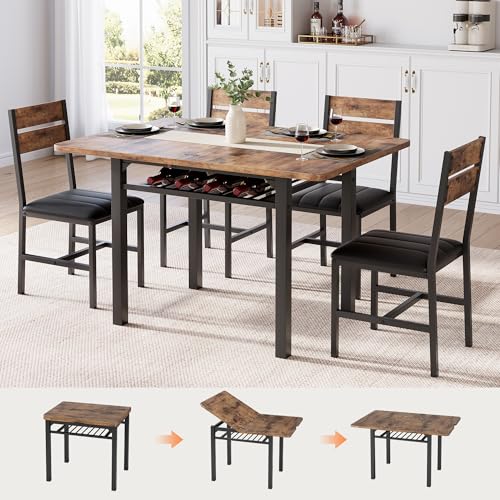
MapleGrace Extendable Dining Table Set for 4 with Built-in Shelf Rack Brown | Kitchen Table Set with 4 PU Leather Upholstered, Wood Dining Room Chairs for Dining & Small Spaces
Check price on Amazon
LITTLE TREE 55 Inches Kitchen Island with Storage, 3-Tier Farmhouse Wooden Stationary Island Table with Large Worktop & Leg Room, Modern Coffee Bar Table with Storage Shelf for Kitchen, Rustic Brown
Check price on Amazon
LITTLE TREE Round Dining Table for 4-6 People, 47 Inches Dining Room Table with Wooden Pedestal Base, Circle Kitchen Tables for Dining Room, Kitchen, Living Room, Rustic Brown
Check price on AmazonStyling Your Rustic Kitchen Table
A rustic table is a versatile canvas. The way you dress it determines whether your kitchen leans cozy farmhouse or crisp modern-rustic.
Farmhouse Warmth
Pair a distressed pine or oak table with cross-back wooden chairs, a linen table runner, and a ceramic pitcher holding seasonal branches. Add a rustic sideboard against the nearest wall to continue the wood tone and provide serving surface.
Modern Rustic Contrast
Set a reclaimed-wood table against matte white cabinetry and black metal chairs. A linear pendant in aged brass or matte black overhead draws the eye down the table's length. This contrast approach keeps the rustic element as a deliberate focal point rather than a full-room theme.
Coastal Rustic
Whitewashed or light-oak tables work beautifully with woven pendants, linen slipcovers, and soft blue-green accents. Keep the tabletop simple — a low bowl of fruit and a pair of candlesticks is often enough.
If you want to coordinate seating with your table's tone, our rustic dining chairs guide covers upholstered, slat-back, and bench options. For a coordinated set that removes guesswork, browse rustic dining table and chairs combinations. Benches are another excellent rustic pairing — the rustic farmhouse table with bench and chairs layout maximizes seating along one side while keeping the look relaxed.
Construction Details That Signal Quality
Two tables can look identical in a photograph yet differ enormously in how they age. When evaluating a rustic kitchen table, inspect these construction signals:
- Joinery: Mortise-and-tenon or doweled joints outperform stapled or screwed butt joints. Visible through-tenons are both a strength and style statement.
- Base design: Trestle and pedestal bases offer generous legroom and resist wobble. Four-leg tables should include corner blocks or aprons for rigidity.
- Finish: A rubbed oil or matte lacquer finish is typical for rustic pieces. Oil finishes are repairable at home; lacquer offers more spill resistance but is harder to spot-repair.
- Wood movement allowance: Quality tables use breadboard ends or floating tops that allow seasonal wood expansion without cracking.
For long-term upkeep, see our guide to scratch repair tips — a small investment of time keeps a rustic table looking intentional rather than worn out.
Smart Buying Tips Before You Order
- Measure twice, order once. Tape the table's footprint on your floor with painter's tape and walk around it for a day to confirm clearance.
- Check delivery access. Solid wood tables are heavy and often ship in two boxes. Confirm doorway widths and stair turns before checkout.
- Read the assembly notes. Many rustic tables ship with bolt-on legs. Confirm whether you need two people or specific tools.
- Verify the wood species. "Solid wood" can mean a thin solid top over engineered panels. Look for species-specific descriptions such as "solid oak top."
- Consider the finish warranty. Reputable makers specify how the finish handles heat, moisture, and sunlight.
If your shopping timeline is flexible, our sales and clearance tips explain how seasonal cycles affect availability of dining furniture. For households considering a pre-owned piece, the second-hand dining furniture guide covers inspection checklists for solid wood tables.
Caring for a Rustic Wood Kitchen Table
Rustic tables are low-maintenance by design, but a simple routine extends their life significantly:
- Daily: Dust with a soft microfiber cloth. Wipe food and liquid spills promptly with a damp cloth followed by a dry one.
- Weekly: Clean with a mild soap solution and dry immediately. Avoid abrasive pads and ammonia-based cleaners.
- Every 6–12 months: Apply a quality wood conditioner or furniture wax to nourish the grain and refresh the finish.
- Always: Use coasters under drinks and trivets under hot dishes. Keep the table out of direct sunlight and away from radiators to limit seasonal movement.
Frequently Asked Questions
What is the best wood for a rustic kitchen table?
Oak, pine, and reclaimed wood are the most popular choices. Oak offers exceptional durability and a prominent grain pattern, pine provides a softer farmhouse look, and reclaimed wood brings unique character and sustainability. Walnut and mango are excellent premium options that balance hardness with visual warmth.
How do I choose the right size rustic kitchen table?
Allow 24 inches of table width per person and 30 to 36 inches of clearance around all sides for chair pull-out. A rectangular table measuring 60 to 72 inches long comfortably seats four to six people, while 84 to 96 inches accommodates six to eight. Always measure your kitchen footprint and traffic paths before ordering.
Are rustic kitchen tables durable for everyday family use?
Yes. Solid wood rustic tables are among the most durable dining surfaces available. A quality hardwood top finished with a protective seal handles daily meals, homework sessions, and craft projects. Reclaimed and distressed finishes also hide minor scratches and wear far better than polished high-gloss surfaces.
How do I maintain a rustic wood kitchen table?
Dust regularly with a soft cloth, wipe spills promptly with a damp cloth, and avoid harsh chemical cleaners. Reapply a wood conditioner or furniture wax every six to twelve months to nourish the grain. Use coasters and trivets to prevent heat rings, and keep the table away from direct sunlight and radiators.
Can a rustic kitchen table work in a modern home?
Absolutely. A rustic wood table acts as a warm anchor in contemporary interiors. Pair it with sleek modern chairs, a linear pendant light, and a neutral rug for a balanced transitional look. The contrast between raw wood texture and clean modern lines creates visual interest without clashing.