
Sideboard Cabinet with Drawers: The Complete Buying & Styling Guide
Everything you need to know about choosing a sideboard cabinet with drawers for your dining room — storage layouts, materials, sizing, and styling that actually works.
EXPLORE RECOMMENDED PICKSWhy this guide matters: A sideboard cabinet with drawers is one of the hardest-working pieces in a dining room. It stores flatware, linens, serveware, and seasonal decor while doubling as a serving surface and a display backdrop. This guide walks you through every decision point so you can choose with confidence and buy once.
What Is a Sideboard Cabinet with Drawers?
A sideboard cabinet with drawers is a dining room storage piece that combines closed cabinet doors with one or more rows of pull-out drawers. The cabinet section handles bulky items — platters, soup tureens, folded tablecloths, and spare dinnerware — while the drawers keep smaller essentials sorted and within arm's reach.
Unlike a pure buffet or a china cabinet, the drawer-forward layout is designed for daily usability. You can grab a set of flatware or a stack of napkins without opening a wide door and rummaging through a deep shelf. For households that entertain often, that difference in access speed matters more than raw cubic storage.
Sideboards also anchor the dining room visually. A long, low cabinet against a wall creates a horizontal line that makes a room feel grounded and intentional. When you are ready to build out the rest of the space, our guide to dining area furniture explains how each piece relates to the others.
Why Drawers Make a Difference
Drawers are the most requested feature on dining storage for a simple reason: they impose order. A deep cabinet shelf becomes a pile within a month. A drawer with dividers stays sorted because the walls of the drawer physically limit how much clutter can accumulate.
Consider what typically lives in a dining sideboard:
- Flatware and cutlery — best in a shallow felt-lined drawer with dividers.
- Cloth napkins and placemats — stack flat in a medium-depth drawer.
- Candles, matches, and lighters — small drawer near the top for quick access.
- Serving utensils and carving sets — long drawer or a divided compartment.
- Chargers and small plates — heavier drawers with reinforced bottoms.
If your table styling routine involves frequent changes, drawers shorten the setup time dramatically. You can see our approach to formal place setting and the accessories that go with it — nearly all of those accessories benefit from dedicated drawer space.
Sideboard Drawer Layouts Explained
Not all drawer configurations serve the same purpose. Before you shop, decide which layout matches how you actually use your dining room.
1. The Center-Drawer Layout
Two cabinet doors flank a single wide drawer in the middle. This is the most common configuration and the most versatile. The center drawer is typically shallow and works well for flatware, coasters, and small tools. The flanking cabinets hold larger serveware.
2. The Stacked Drawer Layout
One side (or both sides) of the cabinet is replaced by a vertical stack of three or four drawers. This layout is ideal if you have many small categories to separate — one drawer for napkins, one for candles, one for cutlery, one for miscellaneous. It sacrifices some tall-item storage, so measure your tallest platter before committing.
3. The Full-Width Drawer Row
A single row of two or three drawers runs across the entire top of the cabinet, with doors below. This gives you generous shallow storage across the full width, which is excellent for long table runners and full sets of flatware. The lower cabinets remain available for bulky items.
4. The Asymmetric Layout
Doors on one side, a drawer stack on the other. This suits rooms where the sideboard does double duty — for example, storage on the side nearest the kitchen and display on the side facing the table. It is a practical compromise when you cannot decide between drawer-heavy and door-heavy storage.
Whichever layout you choose, keep a mental inventory of your tallest and widest items. Interior shelf height and drawer depth are the two measurements that most often cause returns.
Materials and Construction: What to Look For
The material of a sideboard cabinet with drawers determines how it ages, how much weight it holds, and how it responds to humidity. Here is how the common options compare.
Solid Wood
Solid hardwood — oak, walnut, mango, acacia, or maple — offers the most durable construction and can be refinished if it scratches. It is heavier and typically sits in the premium to luxury tier. Solid wood expands and contracts with humidity, so joinery quality matters: look for dovetail or mortise-and-tenon joints rather than glue-and-staple assembly. If you appreciate natural grain and long-term resilience, browse options like this burl wood sideboard to see how grain pattern changes the character of a piece.
Engineered Wood with Veneer
MDF or particleboard core with a real wood veneer delivers a smooth, uniform surface at a mid-range position. Modern veneers are convincing and resist warping better than solid wood in dry climates. The weak point is moisture at the seams, so avoid placing a veneered sideboard directly against a damp wall.
Lacquered and Painted Finishes
Painted finishes hide minor dents and suit modern, minimalist, and farmhouse interiors. A factory-applied lacquer is far more durable than a DIY paint job. If your dining room leans toward clean lines, the principles in our modern minimalist guide apply directly — fewer visible seams, matte finishes, and hardware kept minimal.
Metal and Mixed Materials
Steel frames with wood or glass panels suit industrial and loft-style rooms. Metal is dimensionally stable and easy to wipe down, but it can feel cold in a soft traditional dining room. Mixed-material pieces are a good bridge if your room mixes eras.
Construction check: Open and close every drawer before buying. A well-built drawer slides smoothly with one hand, has no side-to-side wobble, and closes flush without a gap. Entry-level models often use basic roller glides; mid-range and above usually offer soft-close or full-extension undermount glides. That single detail predicts how the piece will feel after five years of daily use.
Sizing Your Sideboard Correctly
Sideboards are not one-size-fits-all. The wrong length makes a room feel cramped or oddly empty, and the wrong depth blocks circulation. Use these guidelines as a starting point.
| Room Context | Suggested Length | Suggested Depth | Best For |
|---|---|---|---|
| Compact dining nook | 36–48 inches | 15–17 inches | Apartments and breakfast corners |
| Standard dining room | 54–66 inches | 17–19 inches | Everyday dining and occasional hosting |
| Formal or open-concept room | 72–84 inches | 18–20 inches | Large serveware and display arrangements |
| Wall-facing accent use | 48–60 inches | 14–16 inches | Hallways and narrow wall segments |
A useful rule of thumb: leave at least 36 inches of clear walking space in front of the sideboard when drawers are fully open. If you plan to use it as a serving station during gatherings, increase that clearance so guests can pass behind someone who is serving.
Height is often overlooked. Most sideboards sit between 30 and 36 inches tall — roughly counter height — which is comfortable for serving food and for resting a tray. If the cabinet will sit beneath a window, verify that the top edge does not block the sill line.
Where to Place It in the Dining Room
Placement affects both function and visual balance. The three most reliable positions are:
- Opposite the table. This is the classic arrangement. Guests see the sideboard as a backdrop while the serving surface stays within easy reach. It also balances the visual weight of a large table.
- Along the longest uninterrupted wall. A long sideboard on a long wall emphasizes the room's proportions and creates a clean sight line. Avoid centering it under a window unless the piece is shorter than the window width.
- Adjacent to the kitchen doorway. If your dining room connects to the kitchen, placing the sideboard near the threshold turns it into a staging area for plated dishes and used serveware. This is especially useful in open layouts.
One arrangement to avoid: a tall sideboard directly beside the head of the table. It creates a wall-like obstruction that makes the seating feel enclosed. If space is tight, look at the layout strategies in our guide to small dining areas and apply the same clearance logic.
If the sideboard will hold a table lamp or a decorative arrangement, plan the cord route before you commit to a spot. A sideboard without a nearby outlet forces visible cabling that undercuts a polished look.
Styling a Sideboard Cabinet with Drawers
A sideboard top is prime display real estate, but it is easy to overload. The most effective arrangements follow a simple structure: one large anchor, one vertical element, one low cluster, and generous negative space.
The Anchor Piece
Start with something substantial — a large vase, a framed artwork leaning against the wall, or a decorative bowl. This establishes scale. Without an anchor, small objects look scattered and the sideboard reads as a clutter shelf.
Vertical Interest
Add height with a table lamp, a tall candlestick, or a stack of books topped with a small sculpture. Vertical elements break the horizontal line of the cabinet and draw the eye upward. Just keep the tallest element at roughly two-thirds the height of the wall space above the sideboard.
Low Cluster
Group two or three small objects — a pair of candlesticks, a small bowl, a decorative box — on one side. Asymmetry is more interesting than perfect symmetry. The remaining side stays relatively open so the arrangement breathes.
For seasonal refreshes, swap the anchor piece rather than rearranging everything. Our ideas for dining room centerpieces translate well to sideboard tops, and the principles of balance apply equally to both surfaces.
What to Keep Off the Top
Avoid storing mail, keys, and loose papers on the sideboard. Once a surface becomes a drop zone, it stops functioning as a display. If your household needs a landing spot, dedicate one drawer for keys and incoming mail so the top stays clear.
Organizing the Drawers and Cabinets
An organized sideboard saves time during meals and makes the piece feel purposeful. A simple zoning system works well:
- Top drawer (nearest the table): flatware, napkin rings, and the items used every day.
- Second drawer: cloth napkins, placemats, and table runners, folded flat.
- Third drawer: candles, matches, and small decor accents.
- Cabinet left: dinnerware stacks and serving bowls.
- Cabinet right: large platters, pitchers, and seasonal serveware.
Use felt-lined dividers for flatware and shallow trays inside deeper drawers to create a second level. For heavier items like stoneware stacks, place them on the cabinet floor rather than on a high shelf — lifting heavy stacks from above the shoulder is how most sideboard accidents happen.
If you keep table linens in the sideboard, fold them around a piece of acid-free tissue to prevent crease lines. Rotate seasonal items to the back of the cabinet so the most-used pieces stay in front.
Care and Long-Term Maintenance
Sideboards age well when you address three things: moisture, sunlight, and drawer hardware.
Moisture. Solid wood and veneer both respond to humidity swings. Keep the sideboard at least two inches from an exterior wall and away from direct heat sources. In dry seasons, a room humidifier prevents the hairline cracks that appear at joints. Never place a wet glass directly on the top — use a coaster or a felt pad.
Sunlight. Direct sun fades wood finish and yellows painted surfaces unevenly. If the sideboard faces a bright window, rotate decorative objects periodically so fading stays even, or use a sheer curtain during peak afternoon sun.
Hardware. Drawer glides collect dust. Vacuum the tracks every few months and apply a dry silicone lubricant — not oil, which attracts grit. If a drawer starts to stick, check whether the cabinet has settled unevenly rather than assuming the glide is failing. Our general chair repair guidance on tightening and re-gluing joints applies to sideboard frames as well.
For everyday cleaning, a slightly damp microfiber cloth is sufficient. Avoid spray polishes with silicone on lacquered finishes; they build up a film that dulls the surface over time.
Common Buying Mistakes to Avoid
- Buying by length alone. Depth and interior height matter just as much. Measure your tallest platter and your narrowest walkway before ordering.
- Ignoring drawer glide quality. Basic glides on a heavy drawer feel rough within a year. Soft-close undermount glides are worth prioritizing at the mid-range level.
- Overlooking cable management. If you plan to place a lamp on top, check for a back panel cutout or plan a cord route.
- Choosing a finish that clashes with the table. The sideboard does not need to match the dining table, but the undertones should agree. A cool gray sideboard beside a warm honey oak table can look accidental.
- Forgetting the table in the room. The sideboard should complement the dining set, not compete with it. Browse set ideas for dining sets for four if you are furnishing the room from scratch.
Coordinating with the Rest of the Dining Room
A sideboard rarely stands alone. It shares the room with a table, chairs, lighting, and often a rug. Three coordination principles keep the space cohesive:
Repeat one material. If your table is solid oak, a sideboard with oak veneer or oak-toned drawer fronts ties the two together without matching exactly. If your chairs have black metal legs, choose a sideboard with black hardware or a black frame detail.
Vary the heights. A sideboard at 32 inches beside a 30-inch table can look repetitive. If you want visual contrast, choose a sideboard that is noticeably taller or shorter than the table surface — or place a tall lamp on top to create a second height level.
Keep the palette to three tones. Wood tone, a neutral, and one accent color is enough. Adding a fourth tone usually makes the room feel busy. If you are unsure, look at how our mid-century modern styling approach limits the palette to let form and grain do the talking.
Recommended Sideboard Cabinets with Drawers
⚠️ AFFILIATE DISCLOSURE: This website contains affiliate links. As an affiliate Associate, we earn from qualifying purchases. If you make a purchase through these links, we may receive a small commission at no additional cost to you. Read our full affiliate policy.

HOSTACK 60" W Sideboard Buffet Cabinet with Storage, Kitchen Cabinet, White | 36 Tall Kitchen Buffet Storage Cabinet with 4 Drawer, Large Coffee Bar Cabinet, Modern Buffet Table for Dining Living Room
Check price on Amazon
VASAGLE Farmhouse Buffet Cabinet, Coffee Bar with 2 Drawers | Honey Brown Sideboard, 55.1 x 15.7 x 31.5 in, Adjustable Shelves, Honey Brown, LIRY Collection, UBBK381K01V1
Check price on Amazon
VASAGLE Buffet Cabinet, Coffee Bar with 3 Drawers, Adjustable Shelf | Sideboard Storage with Cable Hole, Drawer Divider, Rustic White and Honey Brown, LIRY Collection UBBK371W01V1
Check price on Amazon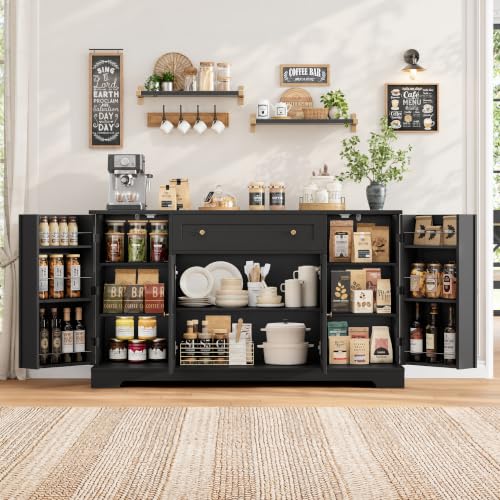
HITHOS 54" W Kitchen Buffet Cabinet with Storage, Coffee Bar Cabinet, Black | Dual Swing-Out Door Racks, Drawer & Adjustable Shelves, Modern Sideboard Storage Cabinet for Kitchen Living Room
Check price on Amazon
ONBRILL 63" Sideboard Buffet Cabinet, Large Credenza with Drawers Walnut | Kitchen Buffet Storage Cabinet, Coffee Bar Cabinet, Console Table, Wood, with 4 Doors, for Living Room Hallway
Check price on Amazon
SILKYDRY Buffet Cabinet, 47" Vintage Sideboard w/ Adjustable Shelves(Green) | Mid Century Credenza w/ 3 Drawers,2 Doors,Anti-tip Kits; Accent Storage Cabinet for Dining&Living Room,Entryway & Coffee Bar
Check price on Amazon
FINETONES Buffet Cabinet with Storage, Kitchen Storage Cabinet for Home | 55.1" Large Sideboard Buffet, Farmhouse Kitchen Cabinet, Wood Coffee Bar Table for Kitchen, Green
Check price on Amazon
WAMAPT Buffet Cabinet with 4 Doors&2 Drawers, Large Wood Sideboard Table | Oak Coffee Bar Table 68 inch Kitchen Storage Cabinets, Modern Farmhouse Sideboard Credenza for Dining Room
Check price on AmazonFinal Buying Checklist
Before you commit to a sideboard cabinet with drawers, run through this list:
- Measure the wall length and confirm at least 36 inches of clearance in front.
- Confirm interior shelf height against your tallest platter.
- Check drawer depth against your longest serving utensil.
- Test drawer glide smoothness and look for soft-close or full-extension hardware.
- Verify the back panel has a cutout if a lamp will sit on top.
- Confirm the finish undertone agrees with your dining table.
- Check whether the piece arrives assembled or requires assembly, and whether the hardware is included.
- Review the warranty and return terms before ordering.
Taking thirty minutes to run these checks prevents the most common returns and ensures the piece fits your room for years. If you are still deciding between storage formats, the same measurement logic in our guide to dining area furniture applies to sideboards, buffets, and china cabinets alike.
Frequently Asked Questions
What is the main advantage of a sideboard cabinet with drawers?
Drawers keep small items such as flatware, napkins, candles, and serving tools organized and easy to access, while the cabinet doors handle larger pieces like platters and linens.
How deep should a sideboard cabinet be?
Most dining room sideboards are between 15 and 20 inches deep. A deeper cabinet offers more storage but may crowd narrow walkways, so measure your clearance before deciding.
Do drawer glides matter on a sideboard?
Yes. Entry-level models often use basic side-mounted glides, while mid-range and premium sideboards typically feature soft-close, full-extension, or undermount glides that feel smoother and last longer.
Can a sideboard be used in an open-plan room?
Yes. In open layouts, a sideboard often works as a visual divider between the dining and living zones. Keep the back panel finish attractive if it will be visible from the living area, and choose a length that does not block the natural walking path.
How do I prevent drawer fronts from sticking?
Keep the cabinet level, avoid overloading the drawers, and clean the glides periodically. Wood drawer fronts can swell in humid conditions — a dehumidifier in damp seasons prevents the binding that often gets blamed on the hardware.